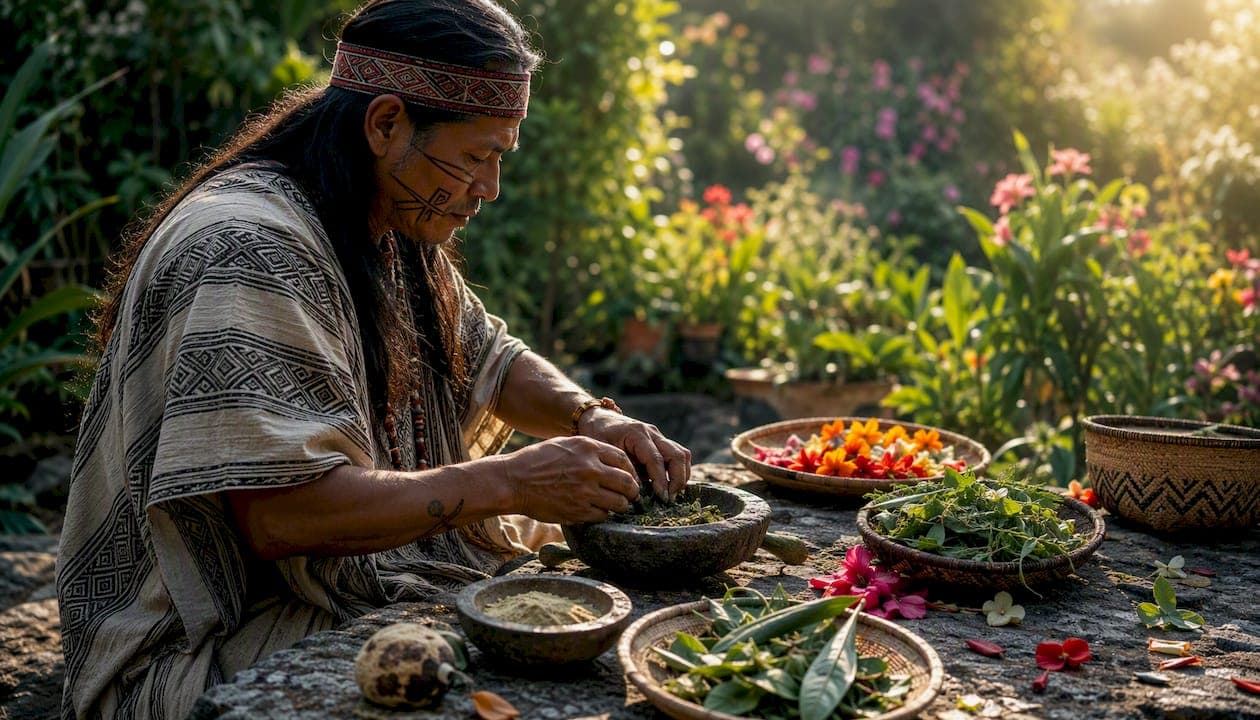
Indigenous sourcing matters for plants because it protects biodiversity, honors cultural rights, and creates fair economic returns for the communities who have stewarded these species for generations. Three consequences follow immediately: ecosystems managed under Indigenous authority hold a disproportionate share of the world's remaining biodiversity; plant knowledge embedded in language and ceremony disappears when those communities lose control of their resources; and extractive sourcing models transfer value away from source communities without consent or compensation. The Convention on Biological Diversity and its Nagoya Protocol on Access and Benefit-Sharing provide the international legal architecture that governs how plant genetic resources and traditional knowledge may be accessed. For anyone working with plant-based wellness products, understanding why Indigenous sourcing matters for plants is the foundation of responsible practice.
- Biodiversity: Indigenous-managed lands protect species that commercial agriculture and conventional conservation often miss.
- Cultural continuity: Plant knowledge lives inside language, ritual, and intergenerational practice. Severing the sourcing relationship severs the knowledge chain.
- Ethical fairness: Communities that developed and maintained plant traditions deserve co-ownership, consent, and a share of any commercial value created.
Key Takeaways
Ethical Indigenous sourcing requires transferring real authority, documented benefit-sharing, and verifiable provenance to source communities, not just sustainability claims.
| Point | Details |
|---|---|
| Indigenous governance is non-negotiable | Communities must hold decision-making authority over sourcing, IP, and commercialization from the start. |
| FPIC is ongoing, not a one-time step | Consent must be renewed and communities must retain the right to decline at any stage. |
| Traceability protects everyone | Provenance records, including digital tools, verify that benefits reach the source community. |
| Legal frameworks have real limits | U.S. buyers face exposure in Nagoya-implementing countries; early legal due diligence prevents costly failures. |
| Consumer choices drive change | Asking brands for named cooperatives, benefit-sharing terms, and provenance documentation shifts market incentives. |
Table of Contents
- 1. How Indigenous stewardship supports biodiversity and climate resilience
- 2. Cultural and rights-based reasons Indigenous sourcing matters
- 3. Legal frameworks buyers and practitioners need to know
- 4. Core principles of ethical, reciprocal Indigenous sourcing
- 5. How you can evaluate ethically sourced plant products
- 6. Real-world case summaries: good practice and common failures
- 7. Practical steps businesses and researchers can take
- 8. Common pitfalls and how to avoid them
- 9. Where this guidance comes from
- 10. An honest perspective on what ethical sourcing actually requires
- Sources
1. How Indigenous stewardship supports biodiversity and climate resilience
Indigenous land management practices, including set-asides, sacred forests, and territorial monitoring, deliver measurable biodiversity and climate outcomes that many conventional conservation models cannot replicate. Research published in Humanities and Social Sciences Communications found that traditional management practices were consistently cited by Indigenous experts as central to climate resilience, linking territorial stewardship directly to ecological stability.
The mechanisms are concrete. Sacred groves function as de facto reserves. Rotational cultivation maintains soil health and genetic diversity across crop varieties. Territorial monitoring by community members catches encroachment and habitat loss faster than remote sensing alone. Long-standing cultivation of native plants also preserves genetic diversity that modern breeding programs depend on.
Key finding: Evidence compiled by ENESI argues that Indigenous peoples protect a disproportionate share of the world's remaining biodiversity, making their continued stewardship one of the most cost-effective conservation strategies available.
For buyers of plant-based products, this means that sourcing from Indigenous-managed lands is not just an ethical preference. It is a practical investment in the long-term availability of the plants you rely on. Rainforest preservation and plant medicine are inseparable from this equation.
2. Cultural and rights-based reasons Indigenous sourcing matters
Cultural continuity and Free, Prior, and Informed Consent (FPIC) sit at the center of why Indigenous plant traditions matter beyond ecology. Plant knowledge is not stored in databases. It lives in languages, ceremonies, seasonal practices, and the relationships between people and specific places.
Peer-reviewed research in Nature confirms that Traditional Ecological Knowledge (TEK) is dynamic and directly linked to language and cultural practice. When a language declines, plant-use expertise encoded in that language erodes with it. A community that loses control of its land and resources loses the conditions that make knowledge transmission possible in the first place.
Food security compounds this. Indigenous plant knowledge underpins local food systems that support nutritional diversity and resilience against crop failure. The UN's Sustainable Development Goal 12 on responsible consumption calls for supply chains that do not externalize costs onto source communities. Sourcing that bypasses Indigenous authority does exactly that.
Pro Tip: Before engaging with any plant-based product or tradition, research whether the source community has a published protocol for outside engagement. Many nations and cooperatives have formal consultation processes that are publicly accessible and take only a short time to review. This single step signals respect before any conversation begins.
Understanding the cultural significance of Amazonian plants is a good starting point for anyone new to this space.
3. Legal frameworks buyers and practitioners need to know
The Convention on Biological Diversity and the Nagoya Protocol are the two instruments that shape legal access to plant genetic resources and traditional knowledge globally. The Nagoya Protocol requires Prior Informed Consent from source countries and communities, and Mutually Agreed Terms for benefit-sharing, before genetic resources or associated knowledge can be accessed for research or commercial use.
In practice, researchers note that ABS procedures can act as an impediment, particularly when national implementations are rigid or when a project involves multiple communities with overlapping claims. The United States has not ratified the Nagoya Protocol, which creates a jurisdictional gap: U.S.-based importers and brands are not directly bound by Nagoya domestically, but they face legal exposure in supplier countries that have implemented it, and reputational risk everywhere.
Key practical points for U.S. buyers:
- Verify whether the source country has implemented Nagoya-derived ABS legislation and whether your supplier holds a valid permit.
- Confirm that FPIC was obtained from the specific community, not just the national government.
- Document benefit-sharing arrangements in writing, including both monetary and non-monetary terms.
- Monitor WIPO's Intergovernmental Committee developments on traditional knowledge protections, which may create new obligations.
- Consult legal counsel familiar with the source country's biodiversity law before commercializing any product derived from Indigenous plant knowledge.
The role of ancestral wisdom plants in healing provides additional context on how these frameworks intersect with ceremonial traditions.
4. Core principles of ethical, reciprocal Indigenous sourcing
Ethical sourcing rests on five principles: FPIC, co-development and co-ownership of intellectual property, documented benefit-sharing, Indigenous governance authority, and supply-chain traceability. Research in Nature Communications recommends shifting from extractive raw-material access to reciprocal co-development that includes all five, arguing this is the foundation of an ethical bioeconomy.
- FPIC: Communities must be able to approve or decline any project affecting their resources, with full information and without coercion. Consent is ongoing, not a one-time signature.
- Co-ownership of IP: Knowledge developed with Indigenous input belongs, at minimum jointly, to the community. Transfer of IP to an Indigenous cooperative is the gold standard.
- Benefit-sharing: Both monetary returns (royalties, revenue shares) and non-monetary returns (capacity building, infrastructure, cultural programs) must be documented and delivered.
- Indigenous governance: Decision-making authority over how a plant is sourced, processed, and marketed stays with the community, not the buyer.
- Traceability: Provenance records, whether paper-based or digital, allow buyers and consumers to verify that the chain of custody is intact from harvest to product.
The ethical sourcing in plant medicine framework expands on how these principles translate into sourcing relationships.
5. How you can evaluate ethically sourced plant products
The four strongest signals of ethical sourcing are Indigenous governance over the supply chain, documented benefit-sharing agreements, verifiable provenance, and confirmed FPIC. Community governance and provenance systems have been shown to prevent exploitative outcomes in real projects.
Consumer checklist:
- Does the brand name the specific community or cooperative it sources from?
- Is there a published benefit-sharing agreement or a statement of how returns flow back to the source community?
- Can the brand provide harvest location data, a cooperative certificate, or a traceability record?
- Does the brand describe how FPIC was obtained, not just claim it was?
- Is there third-party or Indigenous-led verification of sourcing claims?
Questions to ask directly: "Which community harvests this plant, and what percentage of revenue returns to them?" and "Who holds the intellectual property for this blend or formula?"
Labels and marketing copy alone are not sufficient. Look for named cooperatives, published agreements, or certification bodies with Indigenous representation. Eco-friendly healing product criteria offer a useful parallel framework for evaluating sourcing claims in the wellness space.
6. Real-world case summaries: good practice and common failures
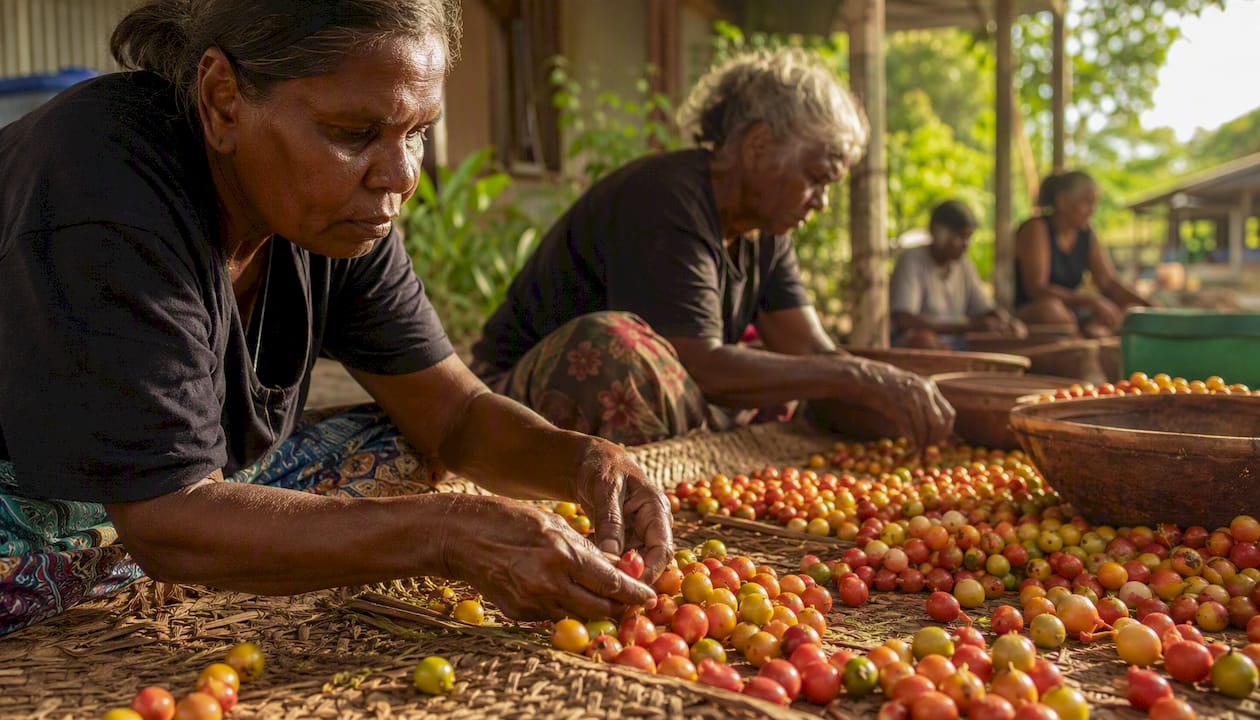
Kakadu plum co-development (Australia). A university-led project collaborated with the Balanggarra Bardi Jawi Enterprises and Enterprises Cooperative (BBIEC) to develop a native Kakadu plum beverage. IP and commercial control were transferred to the Indigenous cooperative. The project used a blockchain-based traceability app called ausTukka to document provenance. The resulting product had lower sugar and comparable vitamin C to orange juice. Lesson: transferring IP to the community, not just consulting them, changes the power dynamic entirely.
Biopiracy pattern (extractive model). Across multiple documented cases, pharmaceutical and cosmetic companies have accessed plant compounds identified through Indigenous knowledge without consent or compensation, then patented derivatives. The source community receives nothing while the company captures commercial value. Lesson: any sourcing model that takes knowledge without FPIC and benefit-sharing replicates this pattern, regardless of intent.
Pillars of Light hap'e (EEAT example). Pillars of Light hap'e operates as an online and retail apothecary in Old Town Spring, Texas, carrying 75+ varieties of Amazonian Hapé with an explicit commitment to ethical sourcing, Indigenous traditions, and rainforest preservation. The brand publishes educational content on Indigenous plant traditions and frames its sourcing relationships around cultural respect. Lesson: a retailer's public commitment to Indigenous authority and educational transparency is a meaningful signal, not a marketing afterthought.
7. Practical steps businesses and researchers can take
Establishing Indigenous governance and co-design from the outset is the highest-priority step. Everything else builds on it.
- Map your supply chain to identify which communities are the actual source of each plant or ingredient.
- Initiate respectful outreach through community-designated contacts or Indigenous-led intermediaries, not government agencies alone.
- Conduct FPIC with full information sharing, adequate time for community deliberation, and a clear process for communities to decline.
- Co-develop the project with community members as partners, not consultants. Define IP ownership before any product development begins.
- Implement traceability using cooperative certificates, harvest records, or digital tools that communities can access and verify.
- Document benefit-sharing in a written agreement that specifies both monetary and non-monetary returns and includes a review schedule.
- Build capacity within the community: training, infrastructure, and resources that strengthen their ability to participate on equal terms.
Pro Tip: Start with a small pilot project on a single ingredient or product line. Define measurable outcomes (e.g., percentage of revenue returned, number of community members employed, traceability records completed) before scaling. A documented pilot builds trust and gives the community evidence to evaluate before committing to a larger relationship.
Decolonized plant medicine approaches offer a deeper framework for organizations ready to restructure their sourcing relationships.
8. Common pitfalls and how to avoid them
The most common failures in Indigenous sourcing are biopiracy (taking knowledge without consent), token engagement (consulting communities without giving them decision-making authority), and provenance gaps (claiming ethical sourcing without documentation).
- Biopiracy: Taking plant knowledge or genetic material without FPIC and benefit-sharing. Mitigation: obtain written FPIC before any research or product development begins.
- Token consultation: Holding meetings with community members but retaining all decision-making power internally. Mitigation: give communities veto authority over project design, not just input.
- Vague provenance claims: Labeling products "sustainably sourced" or "ethically harvested" without naming the community or providing documentation. Mitigation: publish the cooperative name, harvest region, and benefit-sharing terms.
- ABS bureaucracy: Nagoya Protocol compliance can be slow and complex, tempting buyers to skip it. Mitigation: engage a legal advisor with ABS experience early; delays in compliance are far less costly than reputational or legal exposure later.
- One-time consent: Treating FPIC as a box to check rather than an ongoing relationship. Mitigation: build consent renewal into annual project reviews.
9. Where this guidance comes from
This article draws on peer-reviewed research from Nature Communications, Nature, and Humanities and Social Sciences Communications, plus case evidence from Plants, People, Planet and the Botany One platform. All citations are linked inline to their primary sources.
Pillars of Light hap'e is an online and retail apothecary based in Old Town Spring, Texas, specializing in Amazonian ceremonial products including Hapé (Rapé), Kuripes, Tepis, and master plant allies. The brand's commitment to ethical sourcing and Indigenous cultural preservation informs the perspective throughout this article. Educational resources on Indigenous plant traditions are available at Pillarsoflighthape.
The author, Manifest Light, writes from direct engagement with Amazonian plant traditions and the sourcing relationships that sustain them.
10. An honest perspective on what ethical sourcing actually requires
Most conversations about ethical sourcing stop at certification labels and sustainability pledges. The harder truth is that ethical sourcing requires a genuine transfer of authority, not just a transfer of funds. Communities are not vendors. They are knowledge holders, land stewards, and the original developers of the plant traditions that the wellness industry now profits from.
What gets underestimated is the relational dimension. FPIC is not a form. It is a process that takes time, requires trust, and can result in a community saying no. Brands that treat it as a compliance step rather than a genuine negotiation will eventually face the consequences, whether through legal exposure under Nagoya-implementing jurisdictions, reputational damage, or the quiet withdrawal of community cooperation.
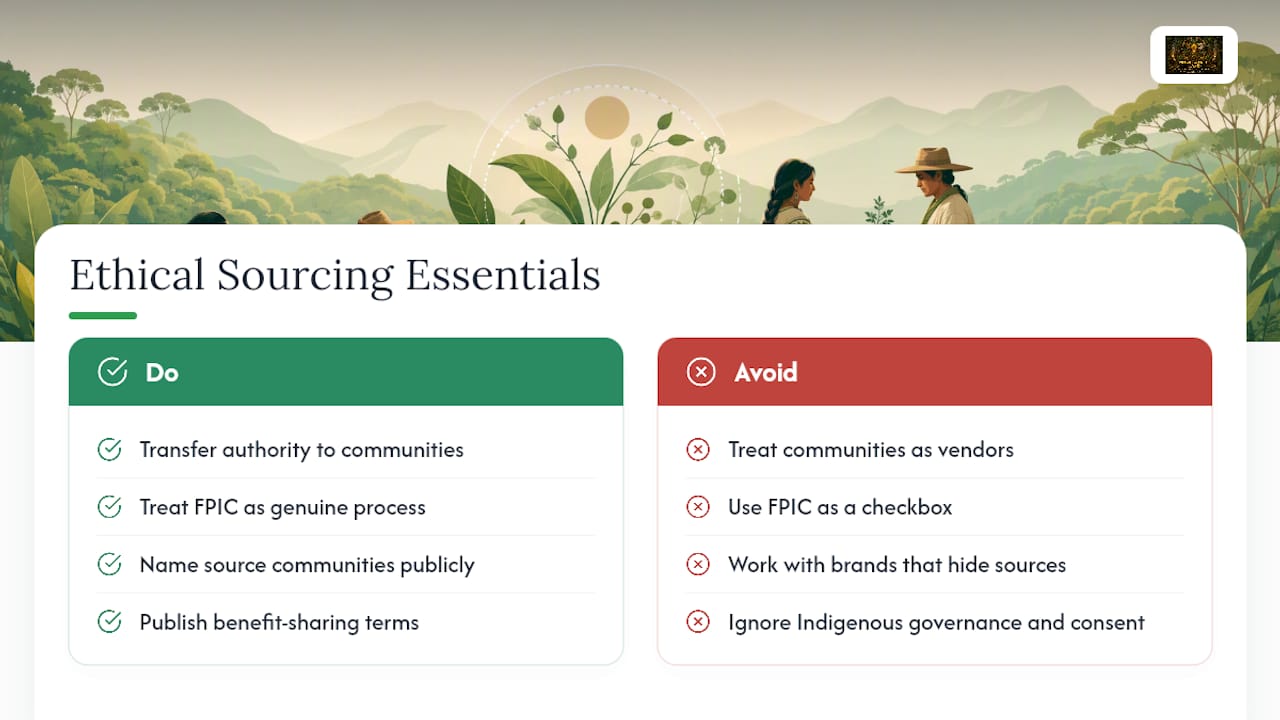
The consumer side matters too. Choosing products from brands that name their source communities, publish benefit-sharing terms, and support Indigenous governance is not a niche preference. It is the only sourcing model that keeps the plants, the knowledge, and the communities intact for the next generation. The checklist in this article gives you the tools to tell the difference.
Pillars of Light hap'e sources Amazonian ceremonial products with a commitment to Indigenous authority and cultural respect. Explore ethically sourced ceremonial tools and Amazonian master plant allies sourced with transparency and care.
Sources
- Indigenous Peoples’ knowledge systems and practices for climate survival | Humanities and Social Sciences Communications
- Partnerships with Indigenous Peoples for an ethical bioeconomy | Nature Communications | Springer Nature Link
- From traditional knowledge to market: A pathway for ethical commercialisation of Indigenous food products
- Fizz With a Conscience: Reintegrating Indigenous Knowledge Into Australia’s Native Food Industry