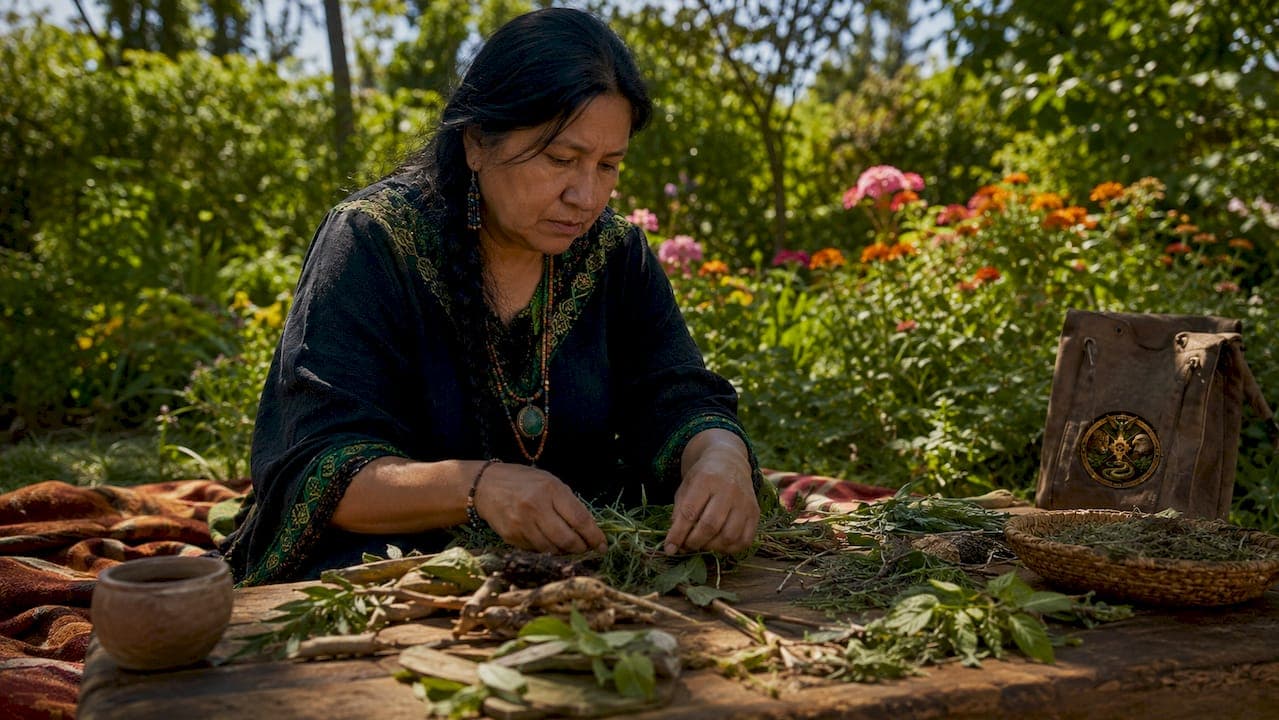
Decolonized plant medicine is defined as a healing framework that centers Indigenous self-determination, cultural safety, and biocultural heritage over colonial biomedical models. It treats health as inseparable from land, spirit, and community. Rather than isolating plant compounds for pharmaceutical use, this approach honors the full ecological and ceremonial relationships that give plant medicine its meaning. The term "herbal decolonization" is gaining traction in alternative medicine circles, but the underlying concept is rooted in decades of Indigenous scholarship and lived practice. Understanding what it actually means, and what it demands of you, is the first step toward engaging with it honestly.
What is decolonized plant medicine, and why does it matter?
Decolonized plant medicine is a healing framework that prioritizes Indigenous sovereignty and rejects the extraction of plant knowledge from its cultural and ecological context. It is not simply "natural medicine" or "herbal medicine" with a new label. The distinction matters because conventional phytotherapy, the recognized industry term for plant-based therapy, often operates within the same biomedical hierarchy that has historically dismissed or appropriated Indigenous knowledge.
Research documents pharmacopoeias with over 180 medicinal species maintained through intergenerational learning in Brazilian Indigenous communities. That figure represents living knowledge systems, not museum artifacts. Decolonized plant medicine insists those systems deserve protection and autonomy on their own terms, without requiring Western scientific validation to be considered legitimate.
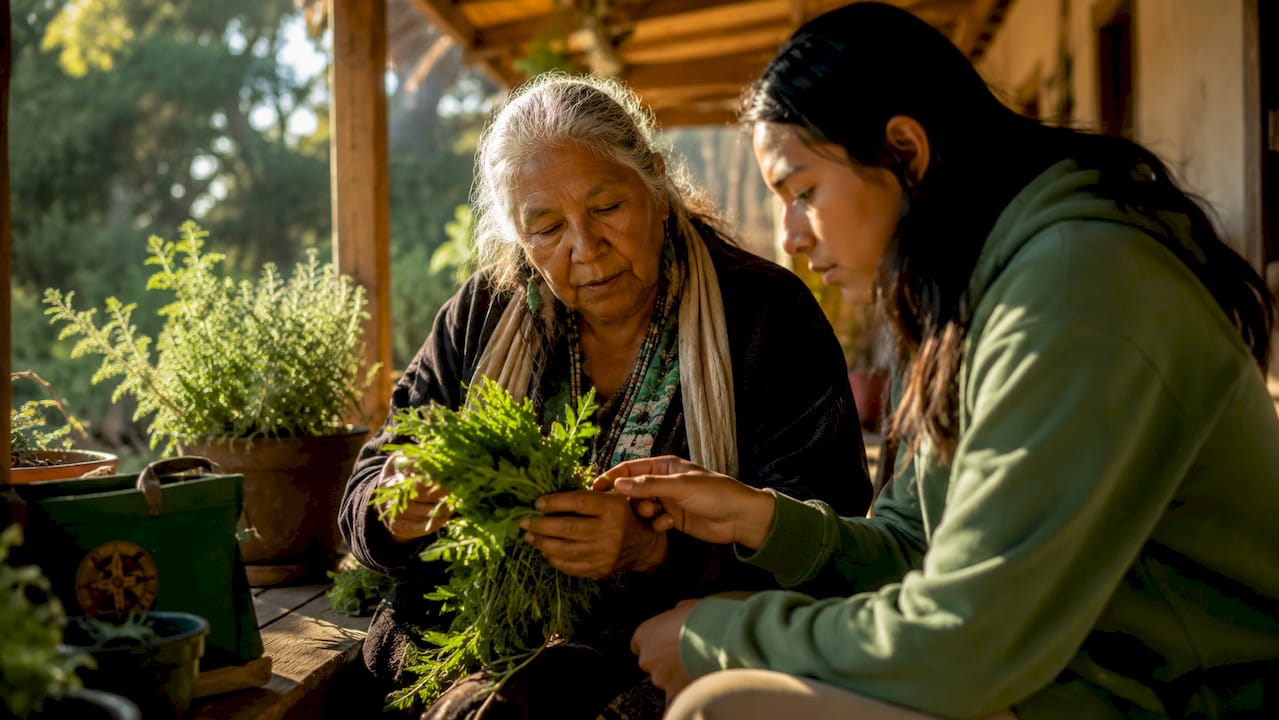
The Wáts'iyus Harvest Basket Model, developed within Sḵwx̱wú7mesh Nation research, offers one of the clearest frameworks for what this looks like in practice. It centers land-based learning, relational accountability, and community governance as the foundation of any ethnobotanical inquiry. This model is not a metaphor. It is a structured research and healing methodology grounded in specific cultural teachings.
What historical and colonial impacts shaped the need for this approach?
Colonial suppression did not just erase plant names from memory. It fractured the social structures through which plant knowledge traveled. Forced relocation, missionary activity, and the criminalization of Indigenous ceremony all severed the relationships between knowledge holders, land, and community.
The fragility of that transmission is measurable. Among the Pataxó Hãhãhãi people in Brazil, 81% of documented plants are known by only 1 to 3 individuals. That concentration of knowledge in so few people means a single death can erase a plant's medicinal history entirely. Colonial dietary changes compounded this by introducing new health conditions that traditional pharmacopoeias were not originally designed to address, forcing communities to adapt their medicine under duress.
Coloniality also shapes how diaspora communities relate to plant medicine today. Many migrant communities maintain medicinal plant use as a primary healthcare source precisely because they distrust Western pharmaceutical systems. That distrust is not irrational. It is a rational response to centuries of epistemic injustice, the systematic dismissal of non-Western knowledge as inferior or unscientific.
- Colonial suppression fragmented oral knowledge networks, concentrating plant wisdom in very few remaining elders.
- Forced dietary shifts created new health conditions that traditional medicine had to adapt to without institutional support.
- Diaspora communities often practice plant medicine privately to avoid scrutiny or ridicule from biomedical providers.
- Epistemic injustice causes some communities to abandon plant practices entirely under social pressure, even when those practices are effective.
Pro Tip: When reading about Indigenous plant medicine, ask who documented the knowledge, under what conditions, and whether the community consented to and benefited from that documentation.
How does decolonized herbal medicine differ from conventional phytotherapy?
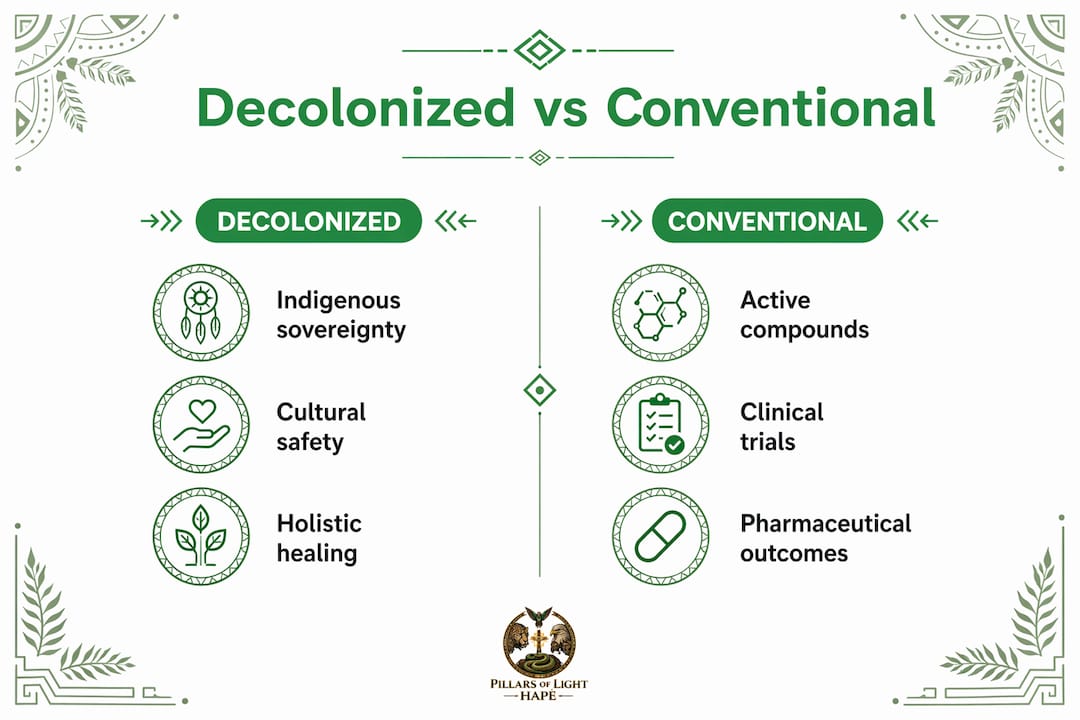
Conventional phytotherapy isolates active compounds, runs clinical trials, and measures success through pharmaceutical outcomes. Decolonized herbal medicine measures success by community wellness and ecological restoration, not by the extraction of a single molecule. These are fundamentally different goals, not just different methods.
Biomedical validation often strips away the spiritual, ecological, and social contexts that give traditional herbalism its coherence. A plant like Hapé, the sacred Amazonian snuff used in ceremony, carries meaning through its preparation, its ceremonial application, and the relationship between the facilitator and the recipient. Reducing it to its alkaloid content misses the point entirely.
Decolonized practice also insists on Indigenous intellectual property rights. Ethnobotany has shifted toward reflexive science that acknowledges ongoing Indigenous ownership of plant knowledge. This means communities, not researchers or corporations, hold authority over how their knowledge is used, shared, or commercialized.
| Dimension | Conventional phytotherapy | Decolonized plant medicine |
|---|---|---|
| Goal | Isolate active compounds for clinical use | Support community wellness and cultural continuity |
| Knowledge authority | Academic and pharmaceutical institutions | Indigenous knowledge holders and communities |
| Measure of success | Clinical trial outcomes | Ecological restoration and community health |
| Spiritual dimension | Excluded as non-scientific | Central to the healing relationship |
| Intellectual property | Often claimed by researchers or corporations | Held by originating Indigenous communities |
Pro Tip: Before purchasing any plant medicine product, research whether the sourcing involves direct benefit-sharing with the Indigenous communities who developed and maintain that knowledge.
What ethical considerations arise when engaging with plant healing practices?
Cultural appropriation is the most visible risk, but it is not the only one. Superficial use of the word "decolonized" as a marketing term actively undermines the political and land-based work that actual decolonization requires. True decolonization involves structural, political, and land-based processes. It cannot be reduced to a product label or a wellness trend.
Indigenous knowledge transmission is often oral, communal, and deliberately guarded. Requests for public documentation or external validation can themselves be colonial impositions. When a community chooses not to share certain knowledge, that choice deserves respect, not pressure.
Ethical engagement with plant medicine cultural practices requires you to understand several things clearly:
- Indigenous sovereignty includes the right to control who accesses plant knowledge and under what conditions.
- Benefit-sharing means financial and cultural returns flow back to originating communities, not just acknowledgment in a footnote.
- Supporting Indigenous-led research means funding, amplifying, and deferring to Indigenous scholars and healers, not just citing them.
- Cultural safety in healthcare means Indigenous people can access care without having to suppress or defend their healing traditions.
- Anti-racist work is inseparable from decolonizing medicine. Relationship-building and reciprocal support are not optional extras.
The cultural implications of plant healing extend beyond the individual practitioner. Every purchase, every ceremony attended, and every piece of content shared either reinforces or challenges the colonial structures that have suppressed these traditions for centuries.
How do Indigenous communities sustain their medicinal plant knowledge today?
Indigenous communities are not waiting for outside institutions to validate or preserve their knowledge. They are actively leading their own revitalization efforts through land-based research, intergenerational ceremony, and community health governance.
- Land-based learning programs reconnect youth with plant habitats, seasonal harvesting cycles, and the ecological relationships that give plants their medicinal context.
- Participatory ethnobotany, as modeled by the Wáts'iyus Harvest Basket approach, places community members as co-researchers rather than subjects of study.
- Ceremonial renewal transmits knowledge that cannot be written down, preserving the relational and spiritual dimensions of plant medicine through lived practice.
- Mutual aid networks support community herbalists and healers who operate outside biomedical institutions, ensuring plant medicine remains accessible within communities.
- Adaptation of pharmacopoeias addresses new health challenges introduced by colonial dietary and environmental changes, keeping traditional medicine relevant to contemporary conditions.
The spiritual dimensions of plant medicine are central to this revitalization, not peripheral. Ceremonies are not decorative additions to a botanical curriculum. They are the curriculum.
| Revitalization method | Primary function |
|---|---|
| Land-based learning | Reconnects youth with ecological plant relationships |
| Participatory ethnobotany | Centers community authority in research |
| Ceremonial transmission | Preserves oral and relational knowledge |
| Mutual aid networks | Sustains community-based healers outside institutions |
What practical steps can individuals take to support this work respectfully?
Respectful engagement starts with recognizing that plant medicine is relational, not transactional. You are not a consumer extracting a product. You are entering a relationship with a living tradition that has survived enormous pressure.
- Source plant medicines from suppliers who practice ethical sourcing and maintain transparent relationships with originating Indigenous communities.
- Learn the cultural context of any plant you use, including its ceremonial role, its geographic origin, and the community that developed its use.
- Prioritize Indigenous teachers, healers, and scholars when seeking education. Pay them fairly and credit them fully.
- Avoid framing plant medicine as a personal wellness product divorced from its land and community of origin.
- Support organizations and policies that advance Indigenous land rights, because land rights are the foundation of plant medicine sovereignty.
Pro Tip: Ask any plant medicine provider directly: "Which community does this come from, and how do they benefit from this sale?" A trustworthy supplier will answer without hesitation.
Key Takeaways
Decolonized plant medicine requires centering Indigenous sovereignty, ecological relationships, and cultural safety, not just substituting herbs for pharmaceuticals.
| Point | Details |
|---|---|
| Core definition | Decolonized plant medicine prioritizes Indigenous self-determination and biocultural heritage over biomedical extraction. |
| Colonial impact | Among the Pataxó Hãhãhãi, 81% of documented plants are known by only 1 to 3 individuals, showing how fragile knowledge transmission has become. |
| Key distinction | Success is measured by community wellness and ecological restoration, not by isolating active compounds. |
| Ethical engagement | Respectful practice requires benefit-sharing, cultural safety, and deference to Indigenous knowledge holders. |
| Revitalization | Indigenous communities lead their own knowledge recovery through land-based learning, ceremony, and participatory research. |
Why "decolonized" demands more than good intentions
I have watched the word "decolonized" travel from Indigenous scholarship into wellness marketing in a remarkably short time. That migration worries me. When a label that describes a structural, political, and land-based struggle gets applied to a tincture or a retreat package, something important gets lost. The word stops pointing toward accountability and starts pointing toward aesthetics.
What I have come to understand is that decolonizing medicine is not a destination you arrive at by buying the right products or attending the right ceremonies. It is an ongoing practice of accountability. It requires you to ask who holds power in any given healing relationship, and whether that power arrangement reflects or resists the colonial patterns that caused harm in the first place.
The communities doing this work, the Sḵwx̱wú7mesh researchers behind the Wáts'iyus Harvest Basket Model, the Pataxó Hãhãhãi healers protecting knowledge held by only a handful of elders, are not asking for admiration. They are asking for structural support: land rights, funding autonomy, and the freedom to define health on their own terms. Pluralistic health systems that genuinely respect Indigenous knowledge autonomy are possible. But they require more than good intentions from outsiders. They require political will and material redistribution.
— Manifest Light
Authentic ceremonial tools rooted in Indigenous tradition
Pillars of Light hap'e carries over 75 varieties of traditional Amazonian Hapé, along with handcrafted Kuripes, Tepis, and a full range of ceremonial items sourced with direct respect for the Indigenous traditions that created them. Every product reflects a commitment to ethical sourcing and cultural preservation, not extraction.
For those called to work with Amazonian plant allies, the master plant collection offers an entry point grounded in cultural context and ceremonial integrity. Pillars of Light hap'e is based in Old Town Spring, Texas, and ships across the country. The work of engaging respectfully with plant medicine begins with knowing where your medicine comes from and who it honors.
FAQ
What is the difference between decolonized and traditional plant medicine?
Decolonized plant medicine explicitly addresses the political and historical conditions that suppressed Indigenous healing traditions, while "traditional" medicine is a broader term that does not always engage with those power dynamics. Decolonized practice centers Indigenous sovereignty and rejects colonial extraction as its defining principle.
Is decolonized herbal medicine the same as ethnobotany?
Ethnobotany is the academic study of plant-human relationships, while decolonized herbal medicine is a healing practice and political framework. Ethnobotany can support decolonization when it operates reflexively and centers Indigenous intellectual property rights, but the two are not the same thing.
Why is knowledge transmission so fragile in Indigenous plant medicine?
Colonial suppression concentrated plant knowledge in very few surviving elders. Among the Pataxó Hãhãhãi, 81% of documented plants are known by only 1 to 3 individuals, meaning a single death can permanently erase that knowledge from the community.
Can non-Indigenous people engage with decolonized plant medicine?
Yes, but engagement requires accountability. Non-Indigenous people should prioritize Indigenous teachers, support benefit-sharing, respect knowledge that communities choose not to share, and avoid framing plant medicine as a personal wellness product separate from its cultural and land-based origins.
What does "epistemic injustice" mean in the context of plant medicine?
Epistemic injustice refers to the systematic dismissal of Indigenous plant knowledge as unscientific or inferior. It causes communities to abandon effective healing practices under social pressure and is one of the primary reasons decolonization in medicine remains necessary.