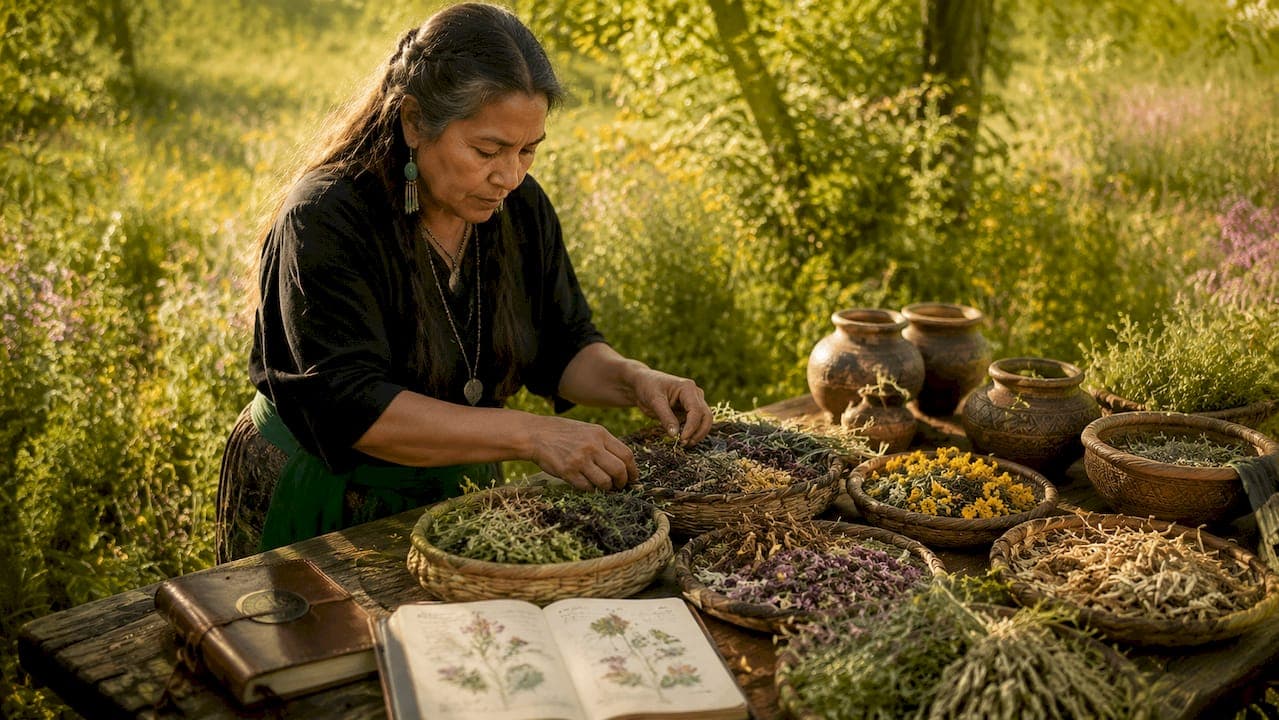
Ancestral wisdom plants are defined as species whose medicinal, spiritual, and ecological knowledge has been cultivated and transmitted across generations within traditional communities. The role of ancestral wisdom plants extends far beyond simple herbal remedies. These plants anchor cultural identity, guide spiritual practice, and sustain ecosystem health in ways that modern pharmacology has only begun to document. Recent ethnobotanical research from Hakka communities in China and sacred grove studies in the Himalayas confirms that these plants function as living libraries of human knowledge. Losing them means losing medicine, memory, and meaning at the same time.
What is the role of ancestral wisdom plants in traditional healing?
Ancestral wisdom plants are the foundation of traditional healing systems worldwide. Ethnobotanists classify the most critical among them as medicinal keystone species, a term drawn from ecology to describe species whose removal causes disproportionate harm to the system around them. Within a One Health framework, these plants connect human health, animal health, and ecosystem stability into a single web.
The Hakka communities of southern China offer one of the clearest documented examples. Researchers recorded 108 medicinal bath plants used in postpartum care, with 10 species reaching 100% cultural fidelity, meaning every healer in the community named them as indispensable. That level of consensus across an entire community signals something beyond preference. It signals necessity.
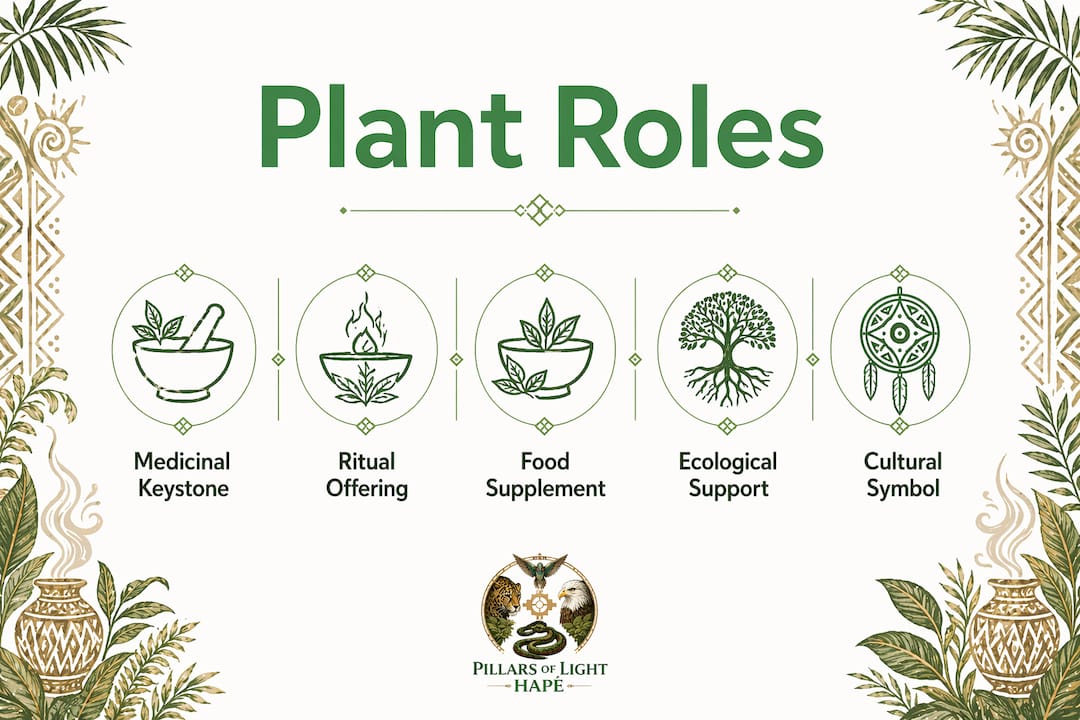
These plants also serve multiple domains at once. A single plant may function as medicine, ritual offering, food supplement, and ecological indicator. Removing it from the community's practice does not just reduce treatment options. It fractures a knowledge system that took centuries to build.
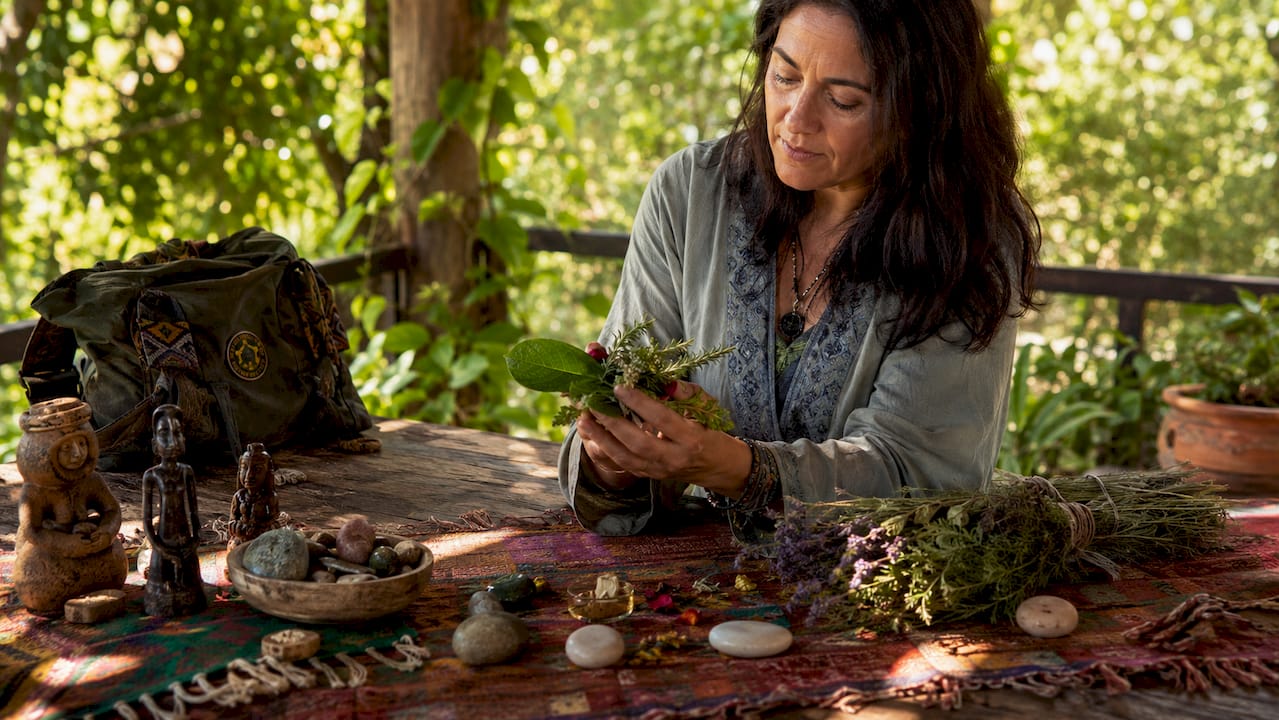
Pro Tip: When studying any traditional plant system, look for species with the highest cultural fidelity scores first. These are the plants a community cannot afford to lose, and they reveal the deepest layers of ancestral knowledge.
| Plant role | Community function |
|---|---|
| Medicinal keystone species | Treats illness and anchors the broader healing system |
| Spiritual anchor | Used in ceremony, prayer, and rites of passage |
| Ecological indicator | Signals ecosystem health through presence or absence |
| Nutritional resource | Provides micronutrients often absent from modern diets |
| Cultural identity marker | Defines community belonging and intergenerational memory |
How do spiritual protocols shape ancestral plant use?
Traditional plant use is not simply a matter of harvesting and applying. Plants are treated as ensouled relatives, requiring ethical engagement before, during, and after collection. This worldview is documented across Indigenous communities from the Amazon to the Himalayas, and it shapes every aspect of how plants are gathered, prepared, and administered.
The spiritual protocols surrounding ancestral plant use typically include:
- Offerings before harvest. Tobacco, cornmeal, water, or song are given to the plant before anything is taken. This act acknowledges the plant's agency and asks permission.
- Prayers and invocations. Specific words, chants, or intentions are spoken to activate the plant's healing properties. Many practitioners hold that the medicine does not work without this step.
- Sustainable collection limits. Traditional harvesters take only what is needed and never strip a plant entirely. This practice protects both the species and the healer's relationship with the land.
- Timing based on natural cycles. Many traditions specify harvesting at particular moon phases, seasons, or times of day, aligning collection with the plant's peak vitality.
- Reciprocal care of the habitat. Healers who gather plants often tend the surrounding area, removing invasive species and protecting water sources. Indigenous plant knowledge evolved alongside ecosystems, shaping sustainable practices that maintain biodiversity.
In the Himalayas, 218 traditional healers documented by researchers in India treat sacred groves as conservation units where plants like Cordyceps sinensis, Tetrataenium nepalense, and Artemisia vulgaris are protected by community spiritual law. The grove is not just a forest. It is a pharmacy governed by reverence.
Pro Tip: If you work with any ancestral plant tradition, learn the harvest protocols before you learn the plant's chemistry. The protocol carries as much of the medicine as the molecule.
How is ancestral plant knowledge passed down, and what threatens it?
Intergenerational transmission is the primary vehicle for ancestral plant knowledge. The process is personal, relational, and deeply tied to place. Among the Garo communities of northeastern India, over 90% of members acquire botanical knowledge directly from parents and grandparents. That statistic reveals how fragile the system is. When one generation breaks the chain, the knowledge does not migrate to books. It disappears.
The main threats to this transmission follow a predictable pattern:
- Rural to urban migration. Young people leave ancestral lands for cities, losing daily contact with the plants and the elders who know them. Physical distance breaks the learning relationship.
- Reliance on processed and imported foods. As traditional diets shift, the plants that once anchored nutrition and medicine become unfamiliar. Knowledge erosion accelerates when plants are no longer part of daily life.
- Habitat loss and deforestation. Plants cannot be taught if they no longer exist. Deforestation in the Amazon and the Himalayas removes the living classroom where knowledge is transmitted.
- Lack of formal documentation. Most ancestral plant knowledge exists only in oral tradition. Without community-led recording efforts, it has no backup.
- Intellectual property risks. When outside researchers document Indigenous plant knowledge without community consent, communities lose control of their own heritage. Ethical documentation requires Indigenous ownership of the resulting records.
Women are disproportionately the primary knowledge holders in many traditions. Their role as healers, midwives, and food preparers places them at the center of plant knowledge transmission. When women's traditional roles are disrupted by economic or social change, the knowledge they carry is the first to erode.
Community-led documentation projects offer the most effective response. These efforts work when communities control the process, own the records, and decide what is shared publicly and what remains protected.
What are the practical benefits of ancestral plant wisdom today?
The benefits of ancestral plant wisdom are not confined to traditional communities. Modern ethnobotany and nutritional science are confirming what Indigenous healers have practiced for generations. The most significant finding is that traditional plant systems do not work through isolated compounds. They work through architecture.
Traditional food systems function as nutrient optimization architectures, combining fermentation, complementary pairing, and preparation timing to amplify bioavailability in ways that no single supplement can replicate. Fermented cassava, for example, reduces antinutrients while increasing mineral absorption. Pairing iron-rich plants with vitamin C sources is a practice documented across dozens of unrelated traditional cultures, each arriving at the same solution independently.
| Approach | Traditional system | Modern equivalent |
|---|---|---|
| Nutrient enhancement | Fermentation of staple plants | Probiotic supplementation |
| Bioavailability pairing | Iron-rich plants with citrus | Iron supplements with vitamin C |
| Anti-inflammatory use | Artemisia vulgaris in ritual teas | Standardized artemisinin extracts |
| Cognitive support | Adaptogenic plants in daily diet | Nootropic capsules |
| Immune modulation | Cordyceps sinensis in Himalayan healing | Isolated beta-glucan supplements |
The modern versions are real. They work. But they strip the plant from its context, and that stripping has costs. Viewing ancestral plants solely through biochemical properties ignores their roles as biocultural keystone species. Removing them from cultural context risks losing both efficacy and ecological balance. The molecule is not the medicine. The medicine is the molecule plus the relationship, the protocol, and the ecosystem that produced it.
Medicinal keystone species also serve as practical targets for conservation policy, linking biodiversity preservation with public health outcomes. Protecting a sacred grove protects both the healer and the plant. That is not a coincidence. It is a design.
Key Takeaways
Ancestral wisdom plants are biocultural keystone species whose loss simultaneously damages human health, cultural identity, and ecosystem integrity.
| Point | Details |
|---|---|
| Medicinal keystone species | Plants with 100% cultural fidelity are indispensable to community health and cannot be replaced by substitutes. |
| Spiritual protocols matter | Harvest rituals and reciprocal practices are not ceremonial extras. They are core to how the medicine works. |
| Knowledge transmission is fragile | Over 90% of Garo community members learn from elders directly, making migration and modernization existential threats. |
| Traditional systems are architectures | Fermentation, pairing, and timing amplify plant benefits beyond what isolated compounds can achieve. |
| Conservation and healing are linked | Protecting medicinal keystone species serves biodiversity, public health, and cultural survival at the same time. |
Plants as relatives, not resources
I have spent years working with Amazonian ceremonial traditions, and the single most important shift I have seen in people who engage these plants seriously is this: they stop treating plants as tools and start treating them as teachers.
That shift is not metaphor. It is methodology. When you approach a plant with the protocols its tradition requires, including the offerings, the prayers, the restraint in harvest, you are not performing ritual for its own sake. You are entering a relationship that changes how you receive what the plant offers. The healers I have learned from in the Amazon do not separate the spiritual from the medicinal. They find the distinction confusing, the way you might find it confusing if someone asked you to separate your thinking from your brain.
What concerns me most about the modern interest in ancestral plants is the tendency to extract the compound and discard the context. You can isolate an alkaloid. You cannot isolate a tradition. The research on biocultural keystone species makes this plain: the plant and the culture that carries its knowledge are a single system. Protect one and you protect both. Ignore one and you lose both.
The most respectful thing you can do with ancestral plant wisdom is learn it on its own terms, support the communities that hold it, and resist the urge to simplify it into a supplement label.
— Manifest Light
Ancestral ceremonial tools at Pillars of Light hap'e
Pillars of Light hap'e carries over 75 varieties of traditional Amazonian Hapé, along with handcrafted Kuripes, Tepis, and master plant products sourced with direct respect for Indigenous protocols.

Every product at Pillars of Light hap'e is chosen with the same reverence this article describes. The Hapé blends come from Amazonian communities where ancestral plant relationships are still intact, where harvest protocols are still honored, and where the medicine is still understood as a living relationship. Pillars of Light hap'e ships from Old Town Spring, Texas, and supports rainforest and cultural preservation efforts with every order. Explore Amazonian ceremonial tools that carry the full weight of tradition behind them.
FAQ
What are ancestral wisdom plants?
Ancestral wisdom plants are species whose medicinal, spiritual, and ecological uses have been developed and transmitted across generations within traditional communities. They function as biocultural keystone species, meaning their loss harms health, culture, and biodiversity simultaneously.
What makes a plant a medicinal keystone species?
A medicinal keystone species is a plant so central to a community's healing system that its absence cannot be compensated by other plants. Research on Hakka communities identified 10 species with 100% cultural fidelity, meaning every healer named them as irreplaceable.
How is ancestral plant knowledge at risk of being lost?
Migration, habitat loss, and reliance on processed foods all break the intergenerational chain of transmission. Among Garo communities, over 90% of botanical knowledge comes directly from elders, so when younger generations leave, the knowledge leaves with them.
Can ancestral plant wisdom be integrated with modern healthcare?
Traditional plant systems enhance bioavailability through fermentation, complementary pairing, and preparation timing in ways that isolated supplements cannot replicate. Modern ethnobotany increasingly recognizes these systems as nutrient optimization architectures worth studying and preserving.
What is the spiritual significance of ancestral plant use?
Many Indigenous traditions treat plants as ensouled relatives requiring offerings, prayers, and sustainable harvest practices before use. This relational approach is documented across cultures from the Amazon to the Himalayas and is considered integral to the plant's healing efficacy.