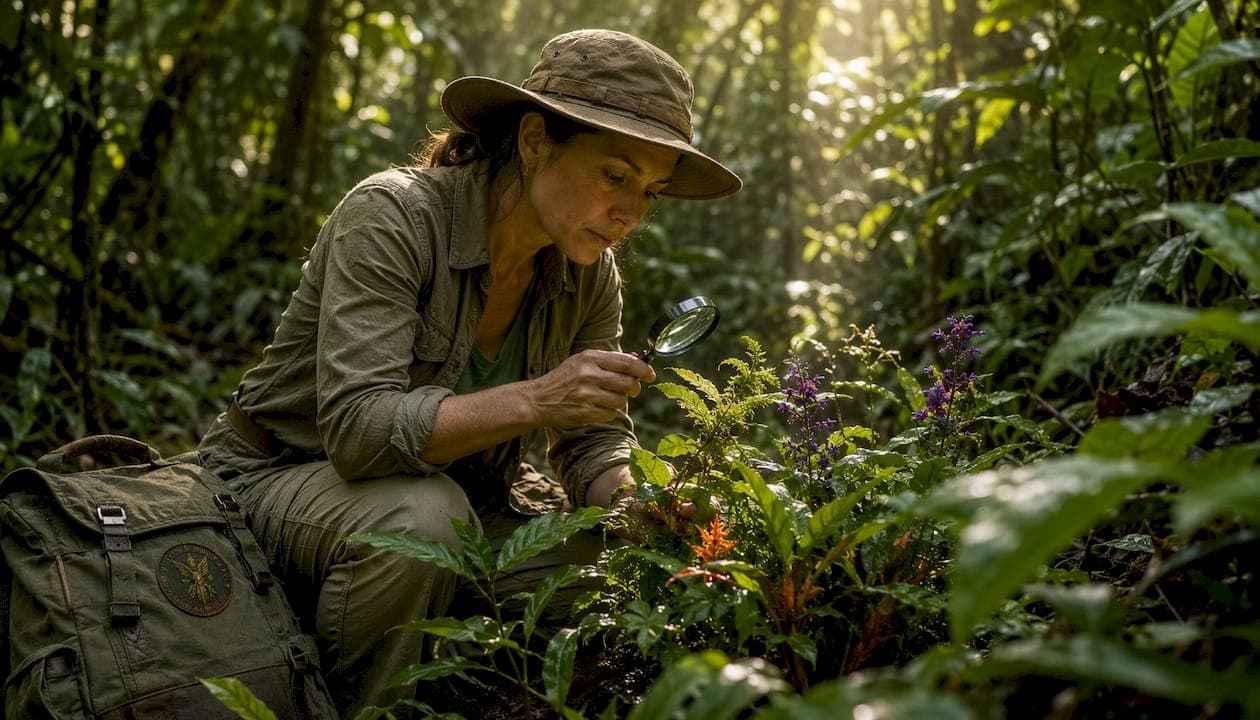
Preserving tropical rainforest habitat is the single most decisive factor in keeping Amazonian ceremonial plant medicines available, potent, and ethically sourced. Before reading further, take one action: buy only from sellers who document leaf-based sourcing, name their indigenous partners, and share benefit-sharing arrangements openly. Pillars of Light hap'e is one such source.
- The Amazon holds an extraordinary concentration of medicinal species, many found nowhere else on Earth.
- A Nature analysis projects climate-driven range contractions across 72% of plant families and 68% of genera used medicinally in Amazonia.
- Non-timber species like Pentaclethra macroloba show how forest products can generate community income without clearing a single tree.
- Traceable, leaf-based sourcing from indigenous-partnered suppliers is the most direct way a U.S. buyer can support conservation right now.
Table of Contents
- 1. Why the Amazon is irreplaceable for plant medicine
- 2. The real threats shrinking medicinal plant populations
- 3. Sustainable harvesting practices that actually work
- 4. Traditional Ecological Knowledge and why it drives better outcomes
- 5. A practical checklist for U.S. buyers of ceremonial plant medicines
- 6. How Pillars of Light hap'e sources and supports preservation
- 7. What you can do beyond buying to support rainforest conservation
- Key Takeaways
- The forest knows what it's carrying
- Pillars of Light hap'e: ethically sourced ceremonial medicines, shipped from Texas
- Useful sources and further reading
1. Why the Amazon is irreplaceable for plant medicine
Tropical rainforests hold a density of bioactive chemistry found nowhere else. Roughly one quarter of the pharmaceuticals in use today trace their origins to tropical rainforest plants, and an estimated 70% of plants active against cancer cells grow exclusively in these forests. Vinblastine and vincristine, derived from the Madagascar periwinkle, transformed survival rates for childhood leukemia. Ceremonial medicines like Hapé (Rapé) draw on this same living pharmacy.
The cultural dimension is equally irreplaceable. Indigenous peoples of the Amazon have documented thousands of plant uses tied to specific languages, places, and cosmologies. Losing forest means losing that knowledge before it can be recorded. As ethnobotanical research confirms, much of this knowledge is localized and vanishes when communities are displaced or languages disappear. The sacred relationship between Amazonian plants and indigenous peoples is not metaphor — it is a living archive of medicinal intelligence.
Statistic to know: The Nature analysis projects range contractions across 72% of Amazonian medicinal plant families under current climate trajectories.
2. The real threats shrinking medicinal plant populations
Four pressures drive the loss of herbal remedies from rainforests, and they compound each other.
- Deforestation and agricultural expansion directly eliminate habitat. Nine of the twelve top-selling medicinal plants in eastern Amazonia are forest-based species; five have already been targeted for timber, reducing bark and oil availability.
- Climate-driven range contraction pushes species toward higher elevations or cooler latitudes, often into already-fragmented habitat with no room to move.
- Destructive harvesting — pulling roots or removing whole plants — exhausts local populations faster than any other single practice. Conservation literature is clear: root and whole-plant removal drives species decline; leaf, flower, and bud collection does not.
- Illegal logging and land conversion remove the canopy cover that many shade-dependent medicinal species require to survive.
Statistic to know: The same Nature study projects range contractions across most Amazonian medicinal plant genera, placing ceremonial species at disproportionate risk.
Pro Tip: When evaluating a supplier, ask specifically whether their Hapé or master plant ingredients are sourced from leaves, flowers, or bark — not roots. Root-based sourcing is a red flag for destructive harvesting.
3. Sustainable harvesting practices that actually work
The good news: sustainable sourcing is technically achievable. The challenge is consistency and scale.
Harvest method matters most. Favoring leaves, flowers, and bark over roots or whole plants allows populations to regenerate between harvests. Rotation schedules and harvest-volume limits tied to population surveys extend that regeneration window. Awareness of reproductive seasons — avoiding harvest during flowering or seed-set — protects the next generation of plants.
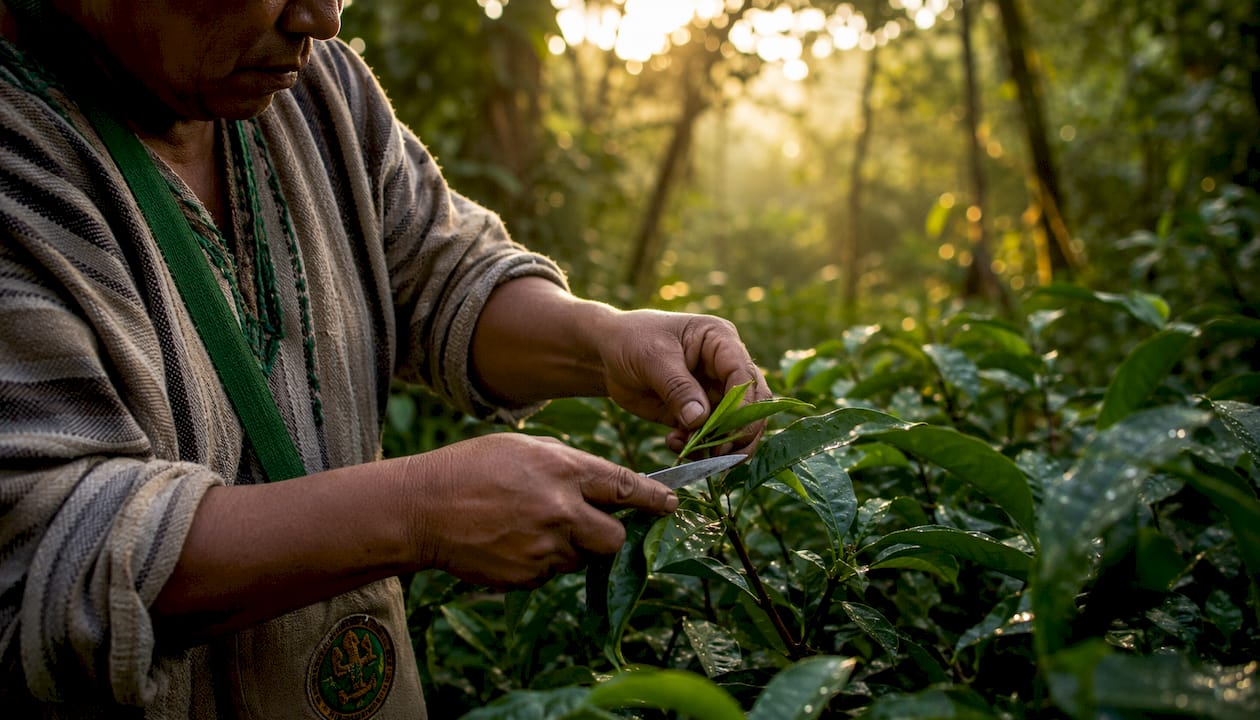
Conservation strategies work best in combination. Global conservation reviews recommend pairing in situ protection (protected forest areas, community-managed reserves) with ex situ methods: wild nurseries, botanic garden collections, and seed banks that preserve genetic diversity as insurance. Small-scale cultivation by indigenous communities adds a third layer, reducing pressure on wild populations.
Pro Tip: Sustainable cultivation requires species-specific training. Some plants can be harvested by cutting stolons rather than pulling roots, preserving the parent plant entirely. Ask suppliers whether their source communities have received technical cultivation support.
Non-timber forest products (NTFPs) like oils and resins from Pentaclethra macroloba demonstrate the economic logic of preservation. Markets for NTFPs align community income with standing forest, making logging economically irrational. Living Indigenous Pharmacy models take this further, treating medicinal species as living libraries that generate recurring income and sustain cultural practice simultaneously.
4. Traditional Ecological Knowledge and why it drives better outcomes
Top-down conservation without community involvement consistently underperforms. Integrating Traditional Ecological Knowledge (TEK) with scientific strategies produces more durable outcomes because indigenous communities hold species-specific knowledge that no external researcher has yet documented. They also have the strongest incentive to manage resources well: the forest is their livelihood and their pharmacy.
Benefit-sharing closes the loop. When communities receive fair compensation for the medicines they steward, conservation becomes self-funding. When they are excluded, the economic pressure to convert forest to agriculture or accept logging contracts becomes overwhelming. The role of community in plant ceremony is inseparable from the role of community in conservation.
5. A practical checklist for U.S. buyers of ceremonial plant medicines
Before purchasing Hapé blends, kuripes, tepis, or master plant allies, run through these verification steps.
Vendor checklist:
- Does the seller name the indigenous community or region of origin?
- Is sourcing explicitly leaf-based, bark-based, or flower-based (not root-based)?
- Does the seller describe a benefit-sharing arrangement with source communities?
- Is harvest timing and method documented anywhere on the product page or blog?
- Are handcrafted tools (kuripes, tepis) attributed to named artisans or communities?
What to expect by product type:
-
Hapé (Rapé) blends: 75+ varieties exist across suppliers; look for blend-specific sourcing notes, not just generic "Amazon sourced" language.
-
Kuripes (self-applicators) and Tepis (facilitator applicators): handcrafted pieces should name the artisan tradition; mass-produced pieces carry no conservation benefit.
-
Master plant allies: provenance is especially important here; ask for the specific plant species and harvest region.
Practical U.S. purchasing notes: Reputable suppliers ship domestically from U.S. locations, which simplifies customs. Ceremonial-grade Hapé blends vary widely in price depending on rarity and sourcing depth; handcrafted kuripes and tepis reflect artisan labor and materials. Pricing that seems unusually low often signals undisclosed sourcing shortcuts.
Pro Tip: Request photos of the source community or harvest site. Legitimate suppliers with indigenous partnerships can usually provide them. A supplier who cannot show any visual evidence of provenance is worth questioning.
For deeper guidance on ethical sourcing in plant medicine, the verification framework applies equally to blends and tools.
6. How Pillars of Light hap'e sources and supports preservation
Pillars of Light hap'e operates as an apothecary in Old Town Spring, Texas, carrying 75+ varieties of Hapé alongside handcrafted kuripes, tepis, master plant allies, and ceremonial tools. The brand's stated commitments include ethical sourcing, respect for indigenous traditions, cultural preservation, and active support for rainforest initiatives.
What that looks like in practice:
- Product pages include sourcing context and blend-specific descriptions.
- The educational blog covers rainforest medicine traditions, indigenous plant knowledge, and ceremony guidance.
- Spiritual consultations and ceremonies are offered alongside products, grounding the commercial offering in lived practice.
- Handcrafted kuripes and tepis are sourced from Amazonian artisans, not mass-produced.
Buyers can use the product pages and blog to cross-reference sourcing claims before purchasing. The educational content is genuinely useful for anyone learning to evaluate suppliers, not just for Pillars of Light hap'e customers.
7. What you can do beyond buying to support rainforest conservation
Purchasing from ethical suppliers matters. It is not the whole picture.
- Donate to vetted conservation and indigenous-rights funds that work directly in the Amazon. Organizations focused on indigenous land titling protect far more forest per dollar than most other interventions.
- Support NTFP markets by choosing products made from sustainably harvested forest goods, which signals to producers that the market rewards preservation.
- Advocate for indigenous land rights at the policy level. Secure land tenure is the single strongest predictor of forest retention in the Amazon.
- Build long-term supplier relationships rather than shopping for the lowest price. Consistent demand stabilizes community income and reduces the economic pressure that drives logging.
- Fund sustainable cultivation initiatives that train communities in species-specific harvesting techniques, reducing wild-harvest pressure over time.
Consumer demand for ethically sourced plant medicines, when paired with benefit-sharing, creates direct financial incentives for forest retention. Your purchasing pattern is a conservation signal.
Key Takeaways
Rainforest preservation is the foundation of sustainable plant medicine: without intact forest, the medicinal species, indigenous knowledge, and ceremonial traditions that make Amazonian Hapé and master plants meaningful cannot survive.
| Point | Details |
|---|---|
| Climate risk is documented | A Nature analysis projects range contractions across 72% of Amazonian medicinal plant families and 68% of genera used medicinally in Amazonia. |
| Leaf-based sourcing protects populations | Root or whole-plant harvesting drives species decline; leaf, flower, and bark collection allows regeneration. |
| TEK integration improves outcomes | Indigenous-led management with benefit-sharing produces more durable conservation than top-down approaches. |
| Buyer verification steps matter | Ask for provenance documentation, named indigenous partners, and harvest method before purchasing. |
| Pillars of Light hap'e | Carries 75+ Hapé varieties with ethical sourcing commitments, handcrafted tools, and educational resources for U.S. buyers. |
The forest knows what it's carrying
The conventional framing around rainforest preservation tends to focus on carbon and biodiversity metrics. Those matter. But for anyone working with Amazonian ceremonial medicines, the stakes are more immediate: the specific alkaloid profile of a Hapé blend, the resin of a master plant, the bark of a species used in ceremony for generations — these are not interchangeable. Climate-driven range contraction and destructive harvesting do not just reduce supply. They degrade quality, sever cultural continuity, and eliminate knowledge that cannot be reconstructed once it is gone.
What gets underestimated is how much the buyer's decision shapes the supply chain. A supplier who cannot answer basic provenance questions is not just ethically suspect — they are economically disconnected from the communities whose stewardship keeps these medicines alive. Choosing traceable, indigenous-partnered sources is not a premium option. It is the only option that keeps the medicine real.
Pillars of Light hap'e: ethically sourced ceremonial medicines, shipped from Texas
75+ Hapé varieties, handcrafted kuripes and tepis, and master plant allies — all sourced with indigenous partnerships and transparent provenance. That is the concrete difference between Pillars of Light hap'e and a generic online vendor: every product carries sourcing context you can actually verify, and the educational resources to help you do it.
Browse the ceremonial items collection to find Hapé blends, applicators, and tools with full sourcing notes. For handcrafted applicators made by Amazonian artisans, the kuripes and tepis category shows the range. Sourcing questions? Reach out directly — the team in Old Town Spring answers them.
Useful sources and further reading
Peer-reviewed and primary sources:
- The forest of knowledge under global change — Nature analysis on climate-driven range contractions for Amazonian medicinal plant families and genera. Priority read for buyers wanting to understand the urgency.
- Conservation and sustainable use of medicinal plants — PMC review of in situ and ex situ conservation strategies, including wild nurseries and seed banks.
- Destructive harvesting and sustainable alternatives — Documents why root removal drives species decline and recommends leaf-based sourcing.
- Medicinal potential of tropical rainforest plants in cancer therapy — Pharmaceutical stakes of rainforest loss.
- Sustainable pharmaceutical development and the bio-economy — How consumer demand for ethical sourcing creates conservation incentives.
- Integrating TEK with conservation strategies — Evidence for indigenous-led management producing better outcomes.
- Dwindling tropical rainforests and lost medicines — NTFP markets and the economic case for forest retention.
- Living Indigenous Pharmacy — Community-run models that combine conservation, income, and cultural practice.
- Taxonomy of medicinal plants from tropical rainforests — Taxonomic survey of 47 rainforest medicinal species and their pharmaceutical derivatives.
Pillars of Light hap'e education pages:
- What is fair-trade plant medicine? — Practical guide to evaluating supplier claims.
- Indigenous plant medicine traditions — Cultural context for TEK and community stewardship.
- Amazonian master plants — Product and educational landing page with sourcing context.