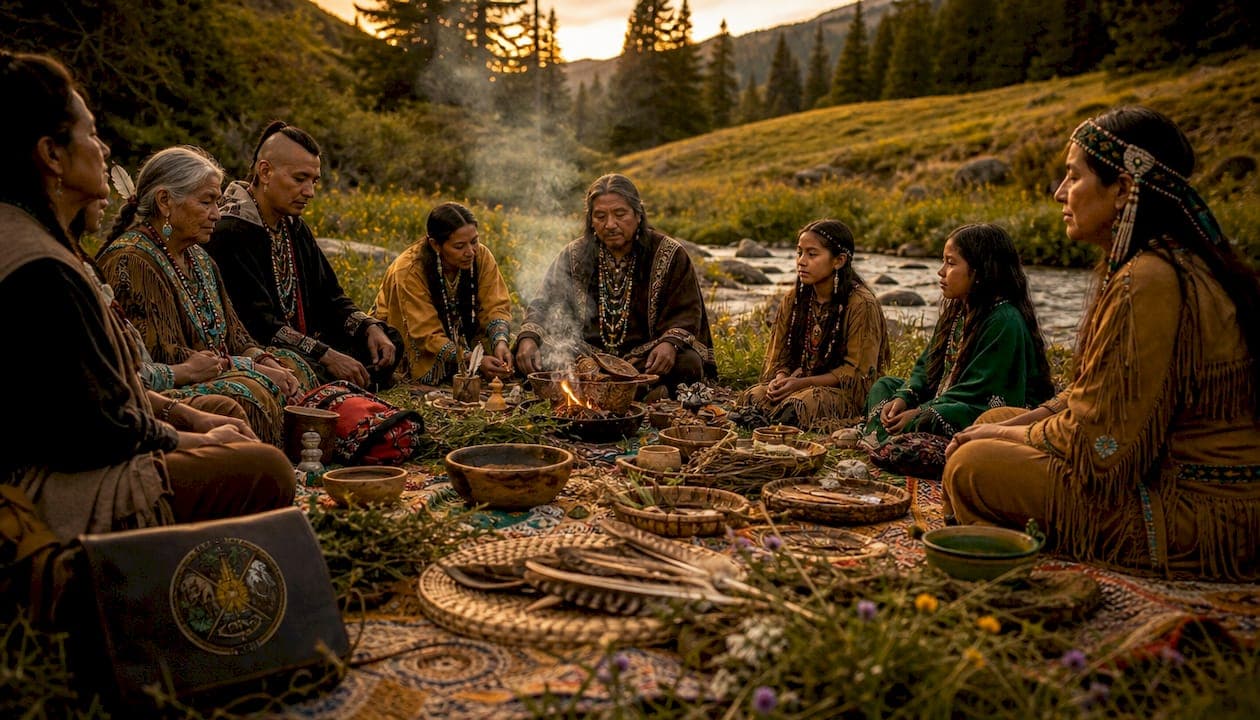
Community is the living foundation of every plant ceremony. Without it, the ritual loses its spiritual weight, its cultural memory, and its power to heal. The role of community in plant ceremony extends far beyond showing up. It includes preparing the space, tending the plants, holding the intention, and passing the knowledge to the next generation. Research on Indigenous traditions across the Amazon, Indonesia, and Brazil confirms that communal participation is not a backdrop to these ceremonies. It is the ceremony itself.
How does community participation shape plant ceremonies?
Community participation in plant ceremonies builds social bonds that outlast the ritual itself. Collective ritual participation reproduces social capital by generating trust and strengthening intergenerational networks among all who take part. That trust does not disappear when the ceremony ends. It becomes the connective tissue of daily life.
Ethnographers studying rural Indonesian communities found that repeated involvement in shared rituals produced measurable increases in social trust among participants. The act of showing up together, again and again, rewires how people relate to one another. This is the quiet power of ceremony that outsiders often miss.
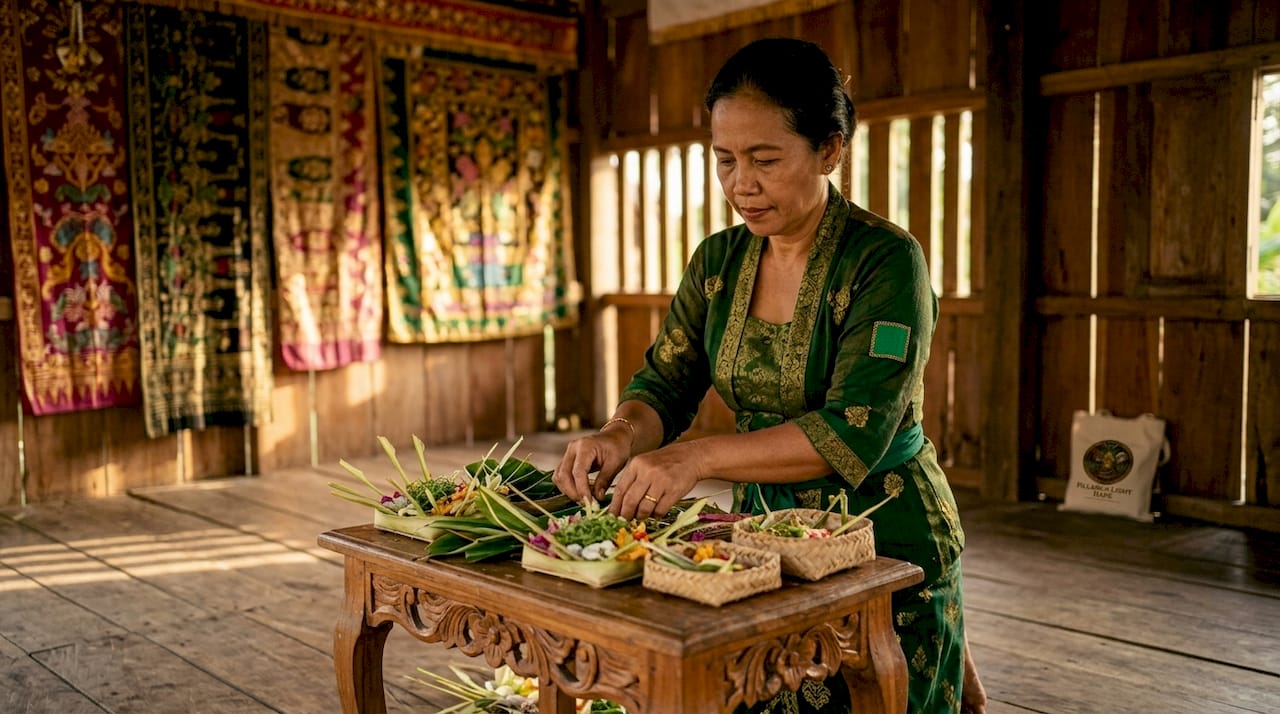
The mechanism behind this is what sociologists call collective effervescence, a state of shared emotional intensity that arises when people move, breathe, and intend together. Ritualized bodies internalize community norms through repeated movements and processions, not through reading or instruction. The body learns what the mind cannot fully articulate.
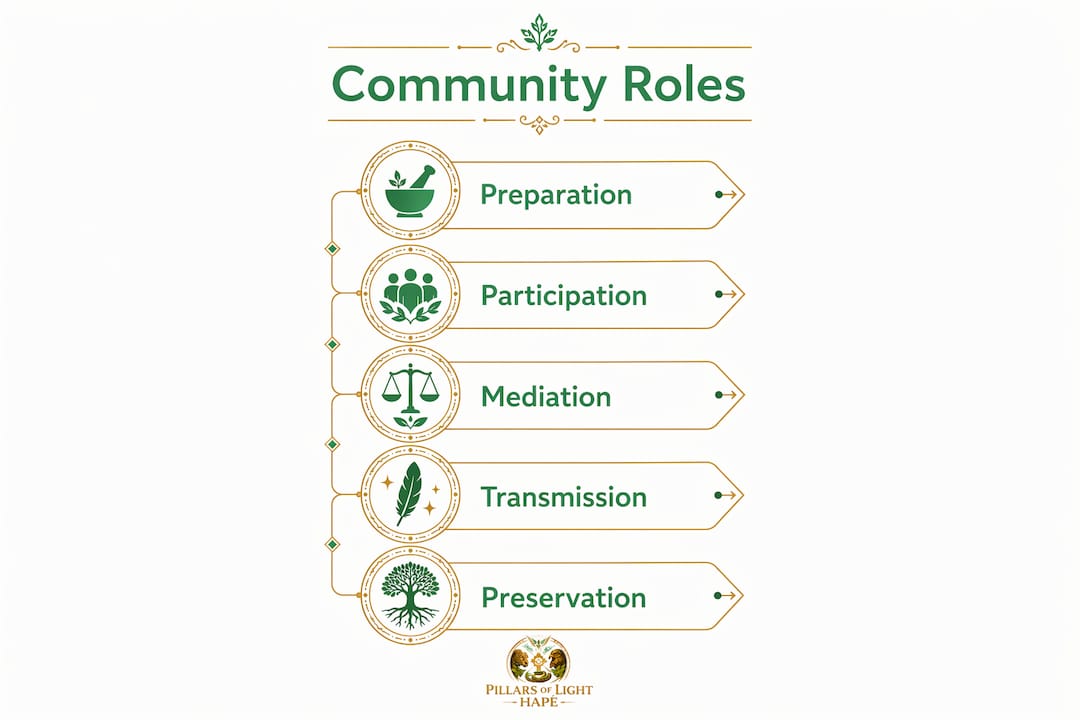
Within most plant ceremony traditions, roles are clearly divided. Some members gather and prepare the plants. Others construct the ritual space. Elders hold the ceremonial knowledge. Younger participants carry materials, prepare food, and assist the specialists. Each role carries responsibility, and that responsibility binds people to the group.
- Gatherers source and prepare the plants according to traditional protocols
- Builders construct or cleanse the ceremonial space before the ritual begins
- Elders and specialists guide the ceremony and transmit oral knowledge
- Participants hold collective intention and support one another through the experience
- Cooks and preparers provide shared food and offerings that mark communal care
Pro Tip: If you are new to plant ceremonies, ask how you can contribute before the ritual begins. Taking on a preparation role, even a small one, deepens your connection to the ceremony and to the group.
Why are plants treated as community members, not just tools?
Plants in Indigenous ceremony traditions are regarded as relatives, not resources. Indigenous knowledge treats plants as kin, placing collective stewardship at the center of any ceremonial use. This shifts the entire framework from individual consumption to shared responsibility.
That responsibility is visible in how communities tend their plants. Research on the Aneuk Jamee tribe in Aceh, Indonesia identified 78 plant taxa used in ceremonial contexts, with 77.2% of those species actively cultivated in community home gardens. That number tells a clear story. These plants are not wild-harvested by individuals on a whim. They are grown, protected, and passed down as community assets.
The cultural significance of plants in ceremony also shapes social structure. In Afro-Brazilian Candomblé, plants mediate social hierarchy during rites of passage and funerary ceremonies, defining roles and relationships within the community. The plant is not passive. It actively organizes the people around it.
Here is what this means in practice for communities that maintain these traditions:
- Designate plant stewards. Specific community members take responsibility for growing, harvesting, and storing ceremonial plants across seasons.
- Follow harvest protocols. Harvesting requires permission, often through prayer or offering, before any plant is taken.
- Maintain living gardens. Community gardens serve as both seed banks and teaching spaces for younger members.
- Document plant knowledge. Elders record or transmit the names, uses, and spiritual properties of each plant to the next generation.
- Treat the plant as a participant. The plant is invited into the ceremony, not simply used in it.
This approach to Amazonian sacred plants reflects a worldview where ecology and spirituality are inseparable. The health of the community and the health of the plants are the same thing.
How do plant ceremony traditions vary across Indigenous communities?
Plant ceremony traditions differ widely across Indigenous groups, but the communal structure remains constant. What changes is the specific plant, the ritual stage, and the role of the specialist.
Among the Dayak Kanayatn tribe in Borneo, wedding ceremonies involve five distinct ritual stages. Three of those five stages require 13 specific plant species to summon ancestral spirits and validate the spiritual bond between families. The plants are not decorative. They are functional participants that connect the living community to its ancestors.
| Tradition | Region | Key Plant Role | Community Function |
|---|---|---|---|
| Aneuk Jamee ceremonies | Aceh, Indonesia | 78 taxa, 77.2% home-grown | Biocultural identity and garden stewardship |
| Dayak Kanayatn weddings | Borneo | 13 species across 3 ritual stages | Ancestral connection and family validation |
| Afro-Brazilian Candomblé | Brazil | Plants define rites of passage | Social hierarchy and community organization |
| Amazonian Hapé traditions | Amazon Basin | Sacred snuff used in ceremony | Collective intention and spiritual alignment |
Shamans and ritual specialists serve as community mediators in all of these traditions. They do not perform the ceremony for the group. They perform it with the group, translating between the visible and invisible worlds on behalf of everyone present. Their authority comes from the community and returns to it.
Contemporary communities face real pressure to adapt these traditions. Urbanization, displacement, and cultural erosion all threaten the transmission of plant ceremony knowledge. Many groups now use audio and video documentation alongside oral transmission to preserve what elders carry. The adaptation does not dilute the tradition. It protects it.
How do communities prepare for and transmit plant ceremonies?
The preparation for a plant ceremony is itself a sacred act. Social labor like constructing ritual spaces and gathering materials functions as a form of sacred responsibility, binding the community before the ceremony even begins. The work is the prayer.
Elders hold the most critical role in transmission. They carry the names of plants, the sequence of ritual acts, the songs, and the protocols that make a ceremony valid within its tradition. When an elder dies without passing this knowledge on, the community loses something that cannot be recovered from a book. This is why intergenerational education is treated as urgent, not optional.
- Oral transmission through storytelling, song, and direct instruction remains the primary method in most traditions
- Shared food preparation before ceremonies signals communal care and creates a shared energetic field
- Collective offerings of flowers, resins, or foods mark the group's intention and invite plant spirits into the space
- Visual documentation through photography and video helps communities archive ceremonies for future generations
- Youth apprenticeship places younger members alongside specialists during preparation and ceremony to learn by doing
Pro Tip: If your community is working to preserve plant ceremony knowledge, record elders speaking about specific plants and their ceremonial roles. Even informal recordings create an archive that future generations can learn from.
Ceremonies also serve as social repair mechanisms. Communal rituals manage group tensions through phases of intensity followed by social restabilization. This is why communities return to ceremony during times of conflict or grief. The ritual holds the space for difficulty and then restores order. That function is only possible when the whole community participates. You can read more about plant medicine ceremony types to understand how different traditions structure this process.
Key Takeaways
Community is not a supporting element in plant ceremonies. It is the ceremony's core structure, its memory, and its healing mechanism.
| Point | Details |
|---|---|
| Community builds social trust | Repeated ritual participation strengthens intergenerational bonds and social cohesion within the group. |
| Plants are collective heritage | Indigenous traditions treat ceremonial plants as kin, requiring community stewardship, not individual use. |
| Roles divide the sacred labor | Gatherers, elders, builders, and participants each carry specific responsibilities that bind the group together. |
| Preparation is part of the ceremony | Social labor like cooking, building, and gathering materials is itself a sacred act before the ritual begins. |
| Transmission requires active effort | Oral teaching, youth apprenticeship, and documentation all protect plant ceremony knowledge across generations. |
What I've learned from watching community hold ceremony
I have sat in enough circles to know that the most powerful moment in any plant ceremony rarely happens during the ritual itself. It happens in the hours before, when people are chopping vegetables together, sweeping the floor, or quietly arranging offerings. That shared labor is where the ceremony actually begins.
What most outside observers miss is that community involvement in rituals is not about numbers. A circle of five people who have prepared together with full intention carries more spiritual weight than a gathering of fifty strangers who showed up for an experience. The role of ancestral wisdom plants becomes real only when the people around them are genuinely invested in one another.
The hardest thing to teach newcomers is that you cannot extract the healing from the community context and still receive the full medicine. The plant and the people are a single system. When you show up to a ceremony, you are not a consumer of an experience. You are a load-bearing member of a living structure.
My honest advice is this: before you seek out a plant ceremony, ask yourself what you are willing to contribute. Not just financially. Ask what labor you can offer, what knowledge you can receive with humility, and what responsibility you are prepared to carry forward. That orientation changes everything about what you receive.
— Manifest Light
Authentic tools for community-centered ceremonies
Ceremonies grounded in Indigenous tradition deserve tools that carry the same integrity.

Pillars of Light hap'e sources ceremonial items with direct respect for the communities that created them. From handcrafted Kuripes and Tepis to 75+ varieties of traditional Amazonian Hapé, every item reflects the cultural knowledge and labor of the people who made it. These are not decorative objects. They are functional tools designed to support the kind of communal, intentional ceremony this article describes. Whether you are building a personal practice or supporting a group circle, Pillars of Light hap'e offers Kuripes and Tepis crafted by Amazonian artisans who understand what ceremony actually requires.
FAQ
What is the role of community in plant ceremony?
Community provides the spiritual, social, and logistical structure that makes plant ceremonies function. Without communal participation, including shared labor, collective intention, and role division, the ceremony loses its cultural validity and healing power.
Why do Indigenous traditions treat plants as kin?
Indigenous knowledge systems place plants within a relational framework where they are regarded as family members requiring care and respect. This means harvesting requires community permission and protocol, not individual decision-making.
How does community involvement strengthen social bonds?
Repeated participation in collective rituals reproduces social capital by building trust and reinforcing intergenerational networks. Research on rural Indonesian communities shows that shared ritual participation directly increases social trust among participants.
How do communities pass down plant ceremony knowledge?
Elders transmit plant ceremony knowledge through oral instruction, song, storytelling, and direct apprenticeship with younger members. Many communities now supplement this with audio and video documentation to protect knowledge from being lost.
Can plant ceremonies function without a full community?
Small, well-prepared groups can hold meaningful ceremonies, but the communal structure, shared roles, collective preparation, and group intention, remains the essential framework. Reducing ceremony to an individual experience removes the relational context that gives it meaning.