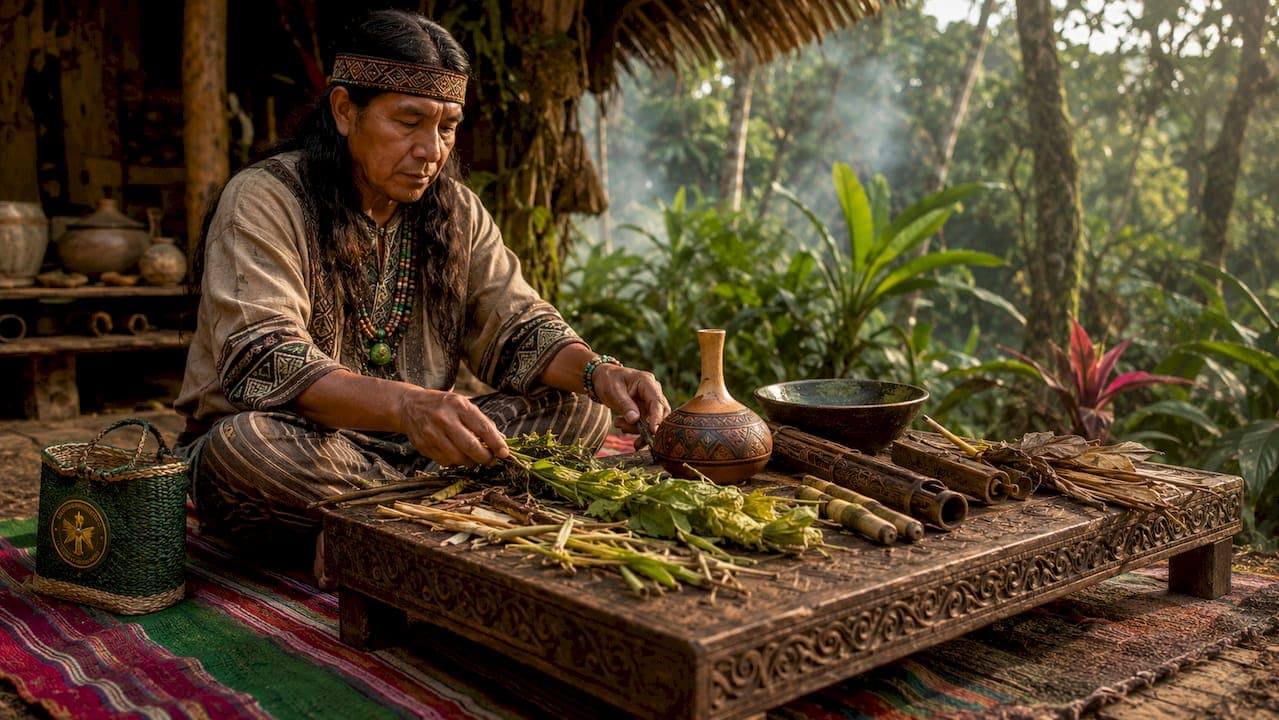
Combining master plants in ceremonial practice is a disciplined spiritual process defined by the structured union of plant allies to amplify healing, deepen consciousness, and strengthen the practitioner's relationship with plant spirits. The recognized term for this work is the master plant dieta, a formal apprenticeship rooted in Shipibo and broader Amazonian tradition. When you combine master plants with intention, preparation, and respect for ancestral protocols, the results reach far beyond what any single plant can offer. This guide walks you through every stage: preparation, ceremony, biochemical synergy, and the integration that makes the work last.
How to combine master plants in ceremonial practice
The master plant dieta is the foundational framework for combining plant allies in ceremony. Traditional Shipibo dietas last about 14 days and include five ayahuasca ceremonies alongside daily ingestion of a chosen master plant, with guidance from experienced maestros. That structure is not arbitrary. It gives each plant enough time to establish a relationship with your body and spirit before the next layer is added.
The core principle is sequencing. You do not consume multiple master plants simultaneously without guidance. Instead, you work with one primary plant teacher while ayahuasca acts as the ceremonial amplifier, opening perception so the master plant's teachings can be received clearly. This is why the Shipibo tradition pairs specific plants with specific ceremony counts and isolation periods.

Amazonian master plants like Bobinsana, Chiric Sanango, and Ajo Sacha each carry distinct energetic and biochemical properties. Combining them without understanding their individual characters is like speaking two languages at once without knowing either. The dieta teaches you to listen to one voice at a time, then gradually introduces harmony.
What preparations are required before combining plant allies?
Preparation is the most underestimated part of sacred plant practices. Strict dietary and behavioral restrictions define the dieta: no salt, no sugar, no alcohol, no processed foods, and no sexual activity. These are not arbitrary rules. They thin the interference between your ordinary consciousness and the plant's communication.
The ceremonial space matters as much as the body. You need a clean, quiet environment with minimal sensory distraction. Isolation is standard in traditional settings because solitude forces the confrontation with your own consciousness that makes the healing possible. Most newcomers underestimate how difficult this solitude becomes by day three or four.
| Preparation | Purpose |
|---|---|
| Dietary restriction (no salt, sugar, alcohol) | Reduces energetic interference; sharpens plant communication |
| Behavioral isolation | Focuses awareness inward; deepens plant-human connection |
| Setting clear intention | Gives the plant a specific direction to work with |
| Preparing ceremonial space | Creates a container that holds the spiritual work safely |
| Consulting a maestro or experienced guide | Ensures correct plant selection and dosage sequencing |
Intention-setting is the spiritual counterpart to dietary preparation. Write your intention before the ceremony begins. Be specific. "I want to heal" is too broad. "I want to understand the grief I carry from my father's death" gives the plant a clear entry point.
Pro Tip: When adapting traditional dieta protocols to a modern context, honor the lineage by researching the specific tribe's practices and, where possible, working with an Indigenous facilitator or a practitioner trained directly in that tradition.

Step-by-step process for working with combined plant teachers
Working with multiple master plants in ritual requires a clear sequence. Skipping steps creates confusion at best and spiritual or physical harm at worst. Replicating plant combinations without expert guidance poses real risks. Mastery includes understanding both the recipe and the ritual context.
-
Select your primary master plant. Work with a knowledgeable guide to identify which plant teacher aligns with your current healing need. Bobinsana opens the heart. Chiric Sanango works on fear and cold emotional patterns. Ajo Sacha sharpens clarity and removes energetic blockages.
-
Consult before combining. If you plan to combine your primary plant with ayahuasca ceremonies, confirm the timing and compatibility with your facilitator. Not every plant pairs well with every ceremony structure.
-
Prepare the plants correctly. Proper preparation methods including specific ratios and boiling times are critical for both safety and efficacy. Cold infusions and improvised preparations are often ineffective and sometimes dangerous.
-
Enter isolation. Begin your dietary and behavioral restrictions at least three days before the first ceremony. This primes your system and signals to the plant that you are serious.
-
Engage the ceremony with icaros and meditation. Icaros are the sacred songs sung by Shipibo maestros to call and direct plant spirits. Even if you are not a trained singer, silent meditation and focused breath serve a similar anchoring function during ceremony.
-
Rest and receive between ceremonies. The space between ceremonies is where integration begins. Dreams, body sensations, and spontaneous emotions are all plant communication. Record them.
-
Close the dieta with gratitude. A formal closing acknowledges the plant's work and signals the end of the formal contract. Skipping this step leaves the energetic relationship unresolved.
Pro Tip: Keep a dedicated ceremony journal. Write immediately after each ceremony and again the following morning. Patterns across entries often reveal the plant's central teaching more clearly than any single session.
What is the spiritual and biochemical synergy in plant combinations?
The most studied example of ceremonial plant combinations is ayahuasca, which combines Banisteriopsis caapi with Psychotria viridis. Indigenous Amazonian shamans identified this pairing long before modern pharmacology could explain it. The beta-carbolines in Banisteriopsis caapi inhibit the enzymes that would otherwise neutralize the DMT from Psychotria viridis. Without that inhibition, the DMT is simply digested and produces no effect.
That biochemical fact carries a spiritual lesson. Neither plant works alone. The vine creates the conditions for the leaf to speak. This is the model for all combined plant healing: each plant serves a distinct role, and the combination produces something neither could achieve independently.
The concept of extended multispecies liminality describes what happens when this combination works at its deepest level. Dietas produce lasting somatic and perceptual changes that dissolve the boundary between human and plant consciousness. These changes persist years beyond the formal ceremony period. That is not metaphor. Practitioners report ongoing dream communication, spontaneous plant guidance, and a sustained shift in sensory perception long after the dieta ends.
Key principles of plant synergy in ceremony:
- Each plant in a combination must be understood individually before it is combined with others.
- The preparation method determines whether biochemical synergy activates at all.
- Plant spirit relationships are cumulative. Each ceremony deepens the connection established in the last.
- Discipline during the dieta period directly affects the quality of the synergy experienced.
- The role of plant spirit ceremonies extends beyond the ceremony itself into the practitioner's daily life and perception.
How do you integrate combined plant teachings into daily life?
Integration is when the plant medicine truly takes root. The ceremony opens the door. What you do in the weeks and months after determines whether you walk through it. Continued engagement through dreams, icaros, and lifestyle adjustments is the real work of the dieta.
Intentional daily practices like meditation, journaling, and dream work enhance the long-term benefits of ceremonial plant work. These are not optional supplements to the ceremony. They are the continuation of it. The plant communicates through the quiet spaces in your day, not just through ceremony.
Practical integration practices include:
- Morning journaling. Write three to five sentences about your dreams and your emotional state before you check your phone or speak to anyone.
- Plant contact. Spend time with living plants daily. Tend a garden, sit under a tree, or keep the master plant you worked with in your home as a living reminder of the relationship.
- Song and sound. Even humming a melody that arose during ceremony keeps the channel open. You do not need to be a trained singer.
- Dietary continuity. Maintain a simplified diet for at least two weeks post-ceremony. Reintroducing heavy foods too quickly can dull the sensitivity the dieta cultivated.
- Community. Share your experience with others who understand the practice. Isolation after ceremony can become stagnation rather than integration.
Active participation in plant preparation and harvesting deepens the respectful connection with tradition and accelerates integration. Handling the plants physically, not just consuming them, restores the ancestral relationship between human and plant that modern life has largely severed.
Key Takeaways
Combining master plants in ceremonial practice requires structured preparation, expert guidance, and sustained integration to produce lasting spiritual and physical transformation.
| Point | Details |
|---|---|
| Sequencing is everything | Work with one primary plant teacher before layering additional allies into ceremony. |
| Preparation is a spiritual contract | Dietary and behavioral restrictions are not optional; they determine the quality of plant communication. |
| Biochemical synergy is real | The Banisteriopsis caapi and Psychotria viridis pairing proves that preparation method determines whether plant combinations work at all. |
| Integration extends the ceremony | Dreams, journaling, and daily plant contact carry the teaching forward long after the formal dieta ends. |
| Expert guidance protects the work | Replicating plant combinations without a trained facilitator risks both physical safety and spiritual harm. |
What I've learned from years of working with plant teachers
The hardest thing about combining master plants in ceremony is not the diet or the isolation. It is the humility required to let the plant lead. Most practitioners arrive with a specific outcome in mind. The plant almost always has a different agenda. Learning to receive that redirection without resistance is the real discipline.
Ancestral knowledge is not a resource to extract. It is a relationship to enter. When you work with Shipibo protocols or any Indigenous ceremonial framework, you are borrowing a living tradition. That borrowing carries responsibility. Honor the lineage by learning its history, supporting the communities that hold it, and never presenting yourself as a master after a single retreat.
Modern dietas now include regional plants like Rose, Lavender, and Mugwort alongside Amazonian allies. This accessibility is genuinely valuable. But accessibility should not become casualness. The protocols exist for reasons that took generations to discover. Adapt them thoughtfully, not conveniently.
The most lasting change I have witnessed from combined plant work is not dramatic. It is a quiet, persistent shift in how a person listens. To themselves, to others, to the natural world. That shift is the plant's real teaching. Everything else is preparation for it.
— Manifest Light
Authentic plant allies and ceremonial tools for your practice
Pillars of Light hap'e carries a carefully sourced collection of Amazonian master plants and ceremonial tools for practitioners who take this work seriously. Every product is selected with attention to ethical sourcing and respect for the Indigenous traditions that gave these plants their meaning.
Whether you are preparing for your first dieta or deepening an established practice, the right tools matter. Pillars of Light hap'e offers ceremonial items including handcrafted Kuripes, Tepis, and traditional Hapé blends sourced directly from Amazonian communities. The apothecary is based in Old Town Spring, Texas, and ships across the United States. Explore the full collection and find the allies that call to you.
FAQ
What is a master plant dieta?
A master plant dieta is a structured ceremonial apprenticeship in which a practitioner works with one or more plant teachers under strict dietary and behavioral protocols. Traditional Shipibo dietas last 14 days and include five ayahuasca ceremonies alongside daily master plant ingestion.
How do you safely combine master plants in ceremony?
Safe combination requires working with an experienced facilitator, understanding each plant's individual properties, and following traditional preparation methods. Attempting to replicate plant combinations without expert guidance poses both physical and spiritual risks.
Why does ayahuasca require two plants to work?
The beta-carbolines in Banisteriopsis caapi inhibit the enzymes that would otherwise break down the DMT from Psychotria viridis before it reaches the brain. Without this biochemical synergy, the DMT is simply digested and produces no effect.
How long does integration after a plant dieta take?
Integration is an ongoing process that extends well beyond the formal ceremony period. Research on extended multispecies liminality shows that the somatic and perceptual changes from dietas can persist for years, making daily integration practices essential.
Can master plant dietas be done outside the Amazon?
Yes. Modern dietas now incorporate regional plants like Rose, Lavender, and Mugwort while maintaining traditional ceremonial protocols. The key is preserving the structure and intention of the practice, not just the geographic location.