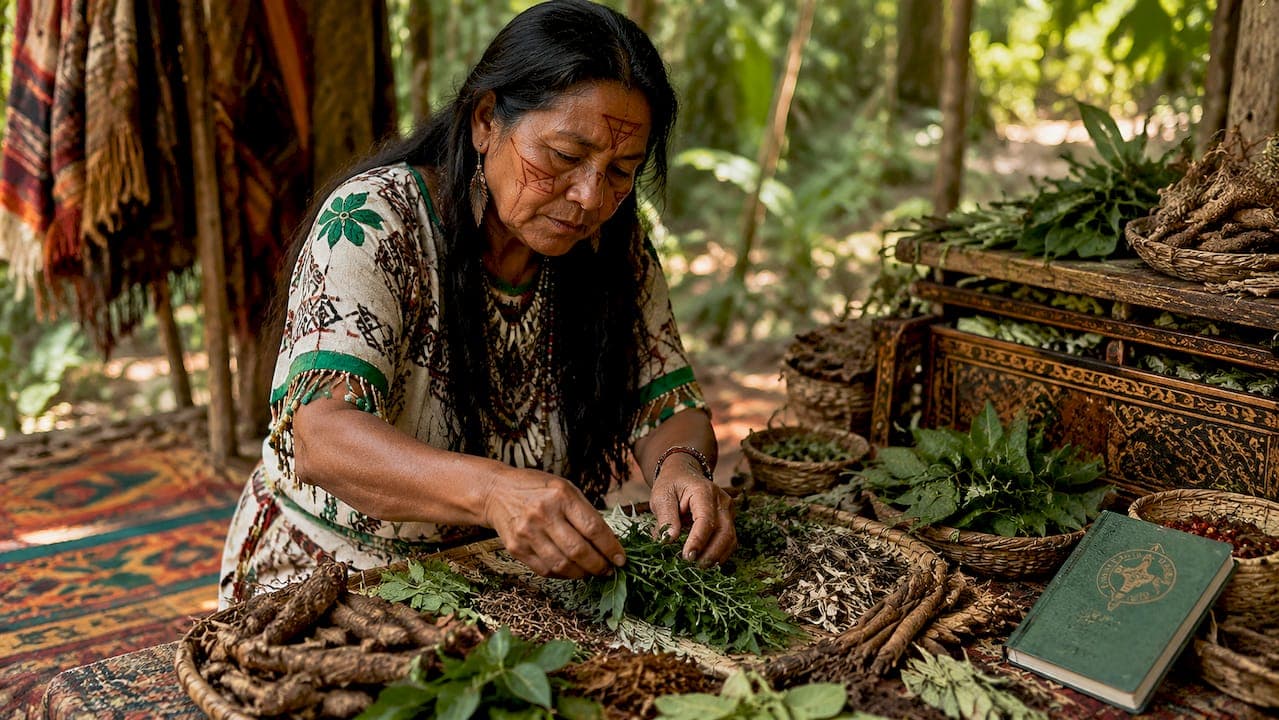
Rainforest medicine tradition is defined as a living healthcare system in which indigenous peoples use medicinal plants, animal-based remedies, and spiritual rituals to restore physical health and maintain harmony with the natural world. This is not folklore preserved in museums. Communities across the Brazilian Amazon and Southeast Asia practice these rainforest healing practices daily, relying on oral knowledge passed from elders and women to younger generations. The tradition treats health as inseparable from the forest, the river, and the land. Ethnobiology research confirms this system functions as a fully legitimate, socially recognized form of healthcare, not a supplement to modern medicine but a parallel and often primary system.
What is rainforest medicine tradition and how does it work?
Rainforest medicine tradition operates on a core principle: the body, the community, and the environment are one system. When any part of that system falls out of balance, illness follows. Healers address the physical symptom, the spiritual cause, and the ecological condition simultaneously. That three-part approach is what separates this tradition from single-remedy folk medicine.
Physical symptoms in this system often signal what ethnobiology describes as cosmic disequilibrium, a disruption of internal heat and environmental relationships. A healer does not simply prescribe a plant. The healer identifies whether the imbalance is rooted in the body, in a broken relationship with the land, or in a spiritual disruption. Treatment addresses all three layers.
The tradition transmits entirely through oral practice. Elders and women hold the knowledge and pass it through direct observation, apprenticeship, and daily use. A 2026 study of 62 residents in the Novo Remanso community in the Brazilian Amazon confirmed that this system remains socially legitimized and actively used both for daily prevention and for treating acute illness. That finding matters because it proves the tradition is not fading. It is functioning.
How do rainforest healing practices incorporate plants, animals, and spiritual rituals?
The plant repertoire in rainforest medicine is vast. Communities in the Brazilian Amazon use species like boldo, salva-de-marajó, mastruz, mint, and lemon for common ailments ranging from digestive problems to respiratory infections. In Southeast Asian rainforest communities, plants like kekapal and bawang lia are combined with verbal incantations to treat wounds and fevers. A 2026 study confirms that these plant-based treatments remain highly effective and vital even where modern clinics exist nearby.
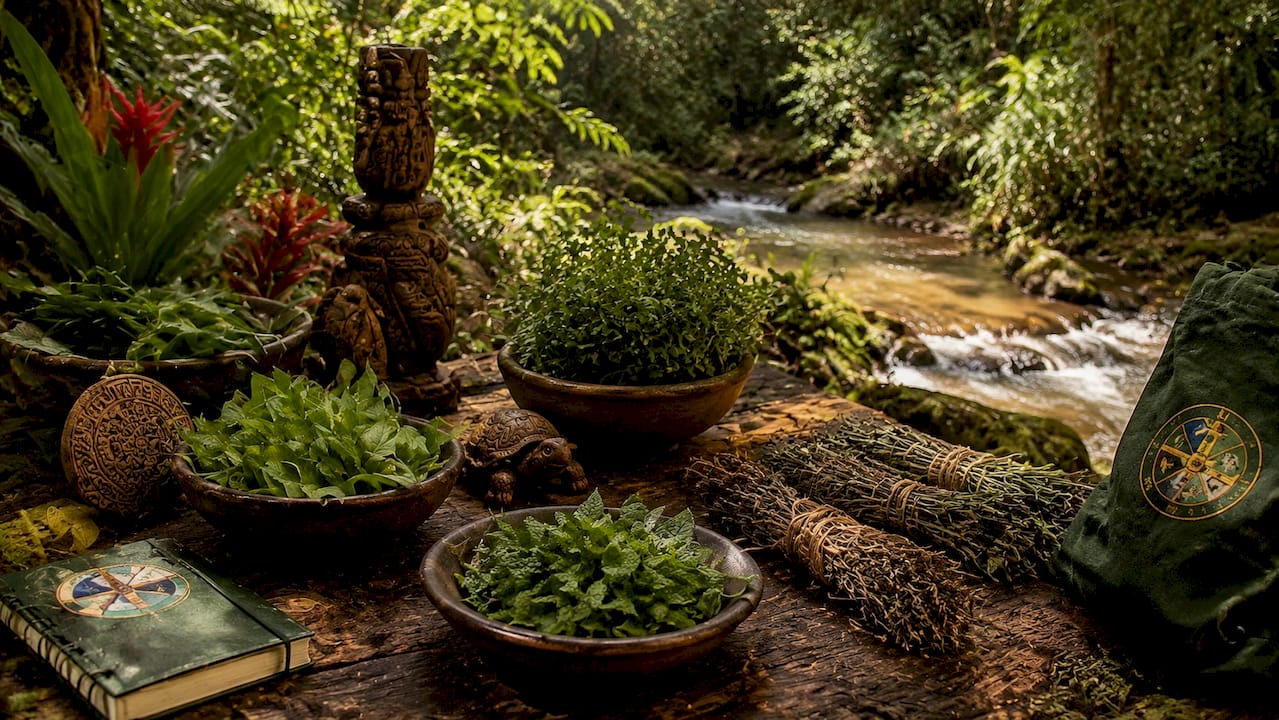
Animal-based remedies, known in ethnobiology as zootherapy, play an equally significant role. Research from April 2026 found that 89.36% of Brazilian Amazonian community members use animal-based remedies. That figure reflects a deep cultural belief: animals are not just food or symbols but mediators between the physical and spiritual dimensions of health. Fat from specific animals treats skin conditions. Bones and organs address internal ailments. The animal's spiritual energy is considered part of the cure.
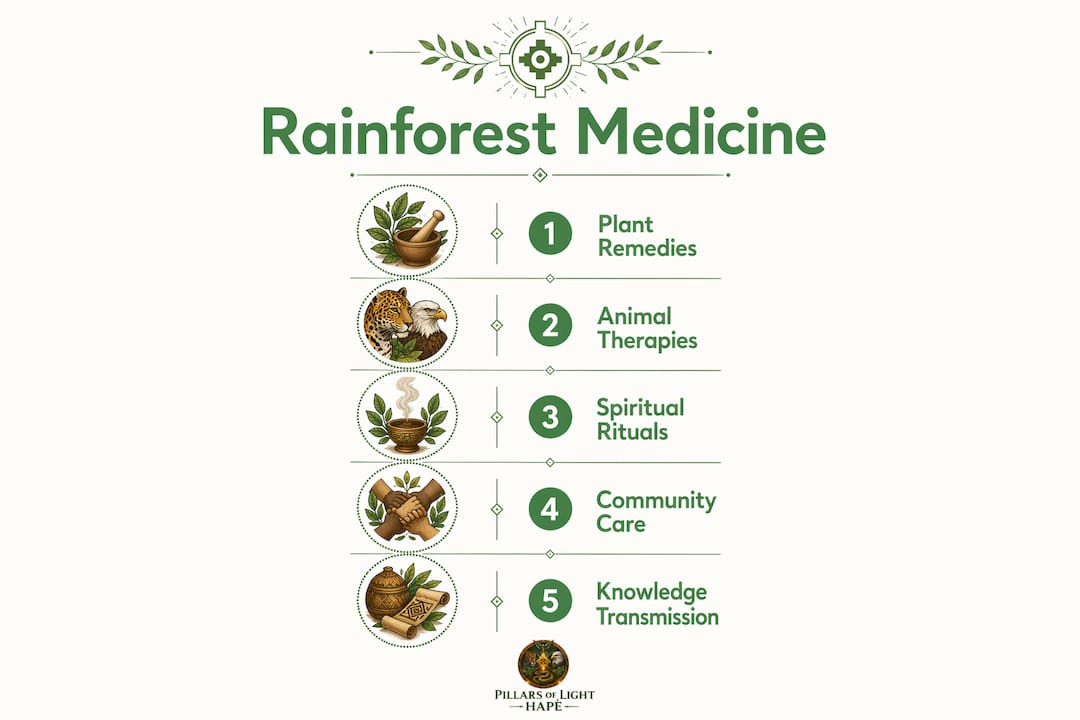
Spiritual rituals are not decorative additions to physical treatment. They are active, functional medicine. The Shipibo people of the Peruvian Amazon use icaros, healing songs sung by trained healers, to cleanse the body and shift energies before plant medicines are administered. Among Amazonian groups in Colombia, bahsese chants serve a similar purpose, preparing the body to receive healing. These rituals modify energy patterns in the body. They are not metaphor.
Key elements of the three-part healing approach:
- Phytotherapy: Medicinal plants prepared as teas, poultices, or smoke for physical ailments
- Zootherapy: Animal-derived remedies used for both physical symptoms and spiritual protection
- Icaros and bahsese: Healing songs and chants that cleanse and prepare the body energetically
- Ritual sequencing: Spiritual work precedes or accompanies physical remedies, never replaces them
Pro Tip: If you are studying these traditions, pay attention to the sequence of treatment. Healers apply spiritual preparation before physical remedies for a reason. The order is not incidental. It reflects a precise understanding of how the body receives medicine.
What is the cultural and ecological significance of rainforest medicine?
Health in Amazonian medicine is not a personal condition. It is a collective and ecological state. Caring for the forest, the rivers, and the land is the same act as caring for the body. João Paulo Barreto, an indigenous scholar and practitioner, states directly that health, food, and territory are inseparable in Amazonian medicine. Destroy the ecosystem and you destroy the medicine. That is not poetry. It is a clinical observation.
"True indigenous care extends beyond individuals to include rivers, forests, and animals as integral to wellbeing." This principle, documented in legal and social analyses of Amazonian communities, means that territorial care is a healthcare act. Pollution of a river is a public health crisis in the same way a disease outbreak is.
Women and elders carry the weight of cultural transmission in this system. They identify plants, prepare remedies, and teach the next generation through daily practice, not formal instruction. This oral transmission is precise and detailed. It encodes botanical knowledge, preparation methods, dosage, and ritual context across generations without a single written text. The loss of one elder can mean the loss of irreplaceable medical knowledge.
The importance of rainforest medicine extends beyond the communities that practice it. Pharmaceutical research has drawn on indigenous plant knowledge for decades. The role of ancestral plants in modern drug development is well documented, though indigenous communities rarely receive credit or compensation. Recognizing the tradition as a complete healthcare system, not a curiosity, is the first step toward ethical engagement with it.
How is traditional rainforest medicine practiced and transmitted today?
Traditional rainforest medicine is practiced daily, not only during illness. Prevention is built into routine life through diet, plant teas, and relationship with the land. The Novo Remanso community study shows that residents use medicinal plants consistently for both prevention and episodic treatment, with women and elders guiding the knowledge. This daily integration is what keeps the tradition alive and functional.
Modern healthcare and traditional medicine coexist in most Amazonian communities. Healers refer patients to clinics for injuries or conditions that require surgery. Clinics refer patients back to healers for conditions that Western medicine struggles to address, including grief, spiritual distress, and chronic conditions tied to social or environmental disruption. The two systems are not in conflict. They serve different layers of the same patient.
| Practice | Role in daily life | Who transmits it |
|---|---|---|
| Medicinal plant teas | Daily prevention and minor ailments | Women and elders |
| Zootherapy | Episodic treatment and spiritual protection | Healers and elders |
| Icaros and bahsese | Ritual preparation and energetic cleansing | Trained healers |
| Dietas | Preparation for deep healing work | Healers and apprentices |
| Territorial care | Ongoing ecological health maintenance | Whole community |
Pro Tip: When reading accounts of indigenous medicine, notice whether the source distinguishes between prevention and treatment. Communities that use these practices daily for prevention are demonstrating a far more sophisticated healthcare model than one that only responds to illness.
What are practical applications and examples of rainforest medicine today?
Rainforest medicine shows up in concrete, specific practices that you can study and understand. The following examples come from documented community use across Amazonian and Southeast Asian rainforest traditions.
- Boldo and mint teas treat digestive complaints and are prepared by women in Novo Remanso as a first-line response before any other intervention.
- Mastruz (Dysphania ambrosioides) is applied as a poultice for wounds and taken internally for respiratory infections across multiple Amazonian communities.
- Animal fat from specific hunted species treats skin conditions and joint pain, with the animal's spiritual energy considered part of the therapeutic effect.
- Icaros sung by Shipibo healers are performed before ayahuasca ceremonies and other plant medicine sessions to prepare the energetic field of the patient.
- Dietas, periods of ritual isolation and dietary restriction, are required before working with powerful plant medicines. They allow the body to properly receive and integrate the medicine without interference from ordinary social life.
- Hapé (Rapé), a sacred Amazonian snuff made from tobacco and medicinal plants, is used ceremonially to clear the mind, ground the body, and open the practitioner to healing work. Pillars of Light hap'e carries 75+ varieties of Hapé, each sourced from specific indigenous traditions with distinct plant combinations and ceremonial purposes.
The ceremonial tools used in these practices, including kuripes and tepis for Hapé administration, are not accessories. They are functional instruments with specific ritual roles. Using them correctly requires understanding the tradition they come from.
Key Takeaways
Rainforest medicine tradition is a complete, active healthcare system that integrates plant remedies, animal-based treatments, and spiritual rituals within an ecological framework that treats forest health and human health as the same thing.
| Point | Details |
|---|---|
| Active healthcare system | Rainforest medicine is used daily for prevention and episodic treatment, not only in crisis. |
| Three-part healing approach | Phytotherapy, zootherapy, and spiritual rituals work together in sequence, not in isolation. |
| Ecological health is human health | Caring for forests and rivers is a direct act of healthcare in Amazonian medicine philosophy. |
| Oral transmission by women and elders | Knowledge passes through direct practice and apprenticeship, making elder preservation critical. |
| Modern coexistence | Traditional and Western medicine operate alongside each other in most Amazonian communities today. |
Why I think we misread rainforest medicine entirely
Most people approach rainforest medicine as a collection of interesting plant remedies. They want the list. Which plant treats which symptom. That framing misses the entire point, and I say that after years of working closely with Amazonian traditions and the communities that carry them.
The plant is not the medicine. The relationship is the medicine. A healer who knows boldo does not just know a leaf. The healer knows the soil it grows in, the season it is most potent, the chant that prepares the patient to receive it, and the dietary restrictions that make it work. Strip any one of those elements and you have a weaker intervention. Strip all of them and you have a tea.
What strikes me most about these traditions is how ecologically honest they are. The idea that healing depends on territorial care is not mysticism. It is systems thinking. A community that poisons its river loses its medicine. A community that protects its forest protects its pharmacy. Western medicine is only beginning to articulate what indigenous healers have known for generations.
The other thing I want you to sit with: this knowledge is not ancient in the sense of being past. It is ancient in the sense of being deep. These practices are alive, practiced today, and under genuine threat from deforestation, cultural erasure, and the death of elders without apprentices. Respecting this tradition means supporting the conditions that allow it to survive.
— Manifest Light
Pillars of Light hap'e and the living tradition
Pillars of Light hap'e was built on the belief that Amazonian ceremonial traditions deserve to be shared with care and accuracy. The apothecary, based in Old Town Spring, Texas, carries 75+ varieties of Hapé and ceremonial tools sourced through ethical relationships with indigenous communities. Each product reflects a specific tradition, a specific plant combination, and a specific ceremonial purpose. Kuripes and tepis are handcrafted instruments, not decorative items. Master plant products are selected for their documented ceremonial roles. Pillars of Light hap'e also supports rainforest preservation and cultural continuity through its sourcing practices and educational content. If you want to engage with these traditions honestly, that starts with knowing where your tools come from and who made them.
FAQ
What is rainforest medicine tradition in simple terms?
Rainforest medicine tradition is a complete healthcare system used by indigenous communities that combines medicinal plants, animal-based remedies, and spiritual rituals to treat illness and maintain health. It treats the body, the community, and the environment as one interconnected system.
How does rainforest medicine work differently from Western medicine?
Rainforest medicine addresses physical symptoms, spiritual causes, and ecological conditions at the same time, while Western medicine focuses primarily on the physical body. Healers use plant preparations, healing chants like icaros, and ritual practices such as dietas to restore balance across all three dimensions.
What plants are used in traditional rainforest remedies?
Documented plants include boldo, mastruz, salva-de-marajó, mint, lemon, kekapal, and bawang lia, used for ailments ranging from digestive issues to respiratory infections and wound care. Preparation methods vary by community and include teas, poultices, and ceremonial smoke.
Why is the importance of rainforest medicine growing today?
Rainforest medicine is gaining recognition because it offers a complete healthcare model that integrates prevention, treatment, and ecological stewardship. Research from 2026 confirms these systems remain active and effective in Amazonian communities even where modern clinics are available.
What is Hapé and how does it relate to indigenous medicine in rainforests?
Hapé (also spelled Rapé) is a sacred Amazonian snuff made from tobacco and medicinal plants, used ceremonially to clear the mind and prepare the body for healing work. It is a direct product of rainforest medicine tradition, with each blend tied to a specific indigenous community and plant knowledge system.