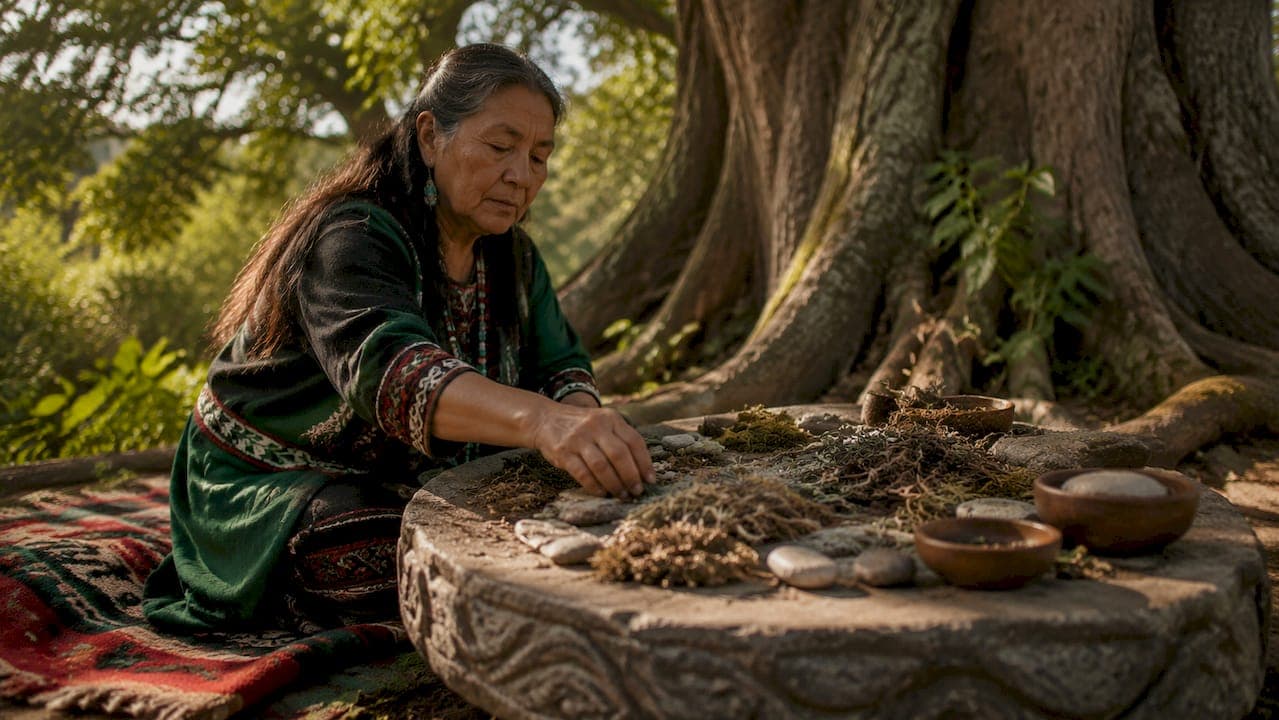
Ancestral medicine is defined as the collective body of healing knowledge, rituals, and practices passed down through generations within a specific cultural lineage. It treats health as inseparable from family history, community bonds, and the natural world. Unlike conventional Western medicine, which focuses on the individual body in isolation, ancestral medicine addresses the multi-generational web of physical, emotional, and spiritual health. Traditions as distinct as Ayurveda, traditional Chinese medicine, Curanderismo, and Aboriginal bush medicine all fall under this definition. Understanding what does ancestral medicine mean requires recognizing that healing, in this framework, is never a solo act.
What does ancestral medicine mean across cultures?
Ancestral medicine encompasses diverse knowledge and practices rooted in cultural, Indigenous, and ancestral beliefs aimed at health and the healing of inherited trauma. That breadth is the point. No single tradition owns the concept. Ayurveda from South Asia, traditional Chinese medicine, African spiritual traditions, and Indigenous practices like Curanderismo and Aboriginal bush medicine each carry their own logic, tools, and ceremonies. What unites them is a shared premise: the health of the living is connected to the health of those who came before.
The meaning of ancestral medicine also carries an ecological dimension. Land, water, and plants are not passive backdrops. They are active participants in the healing process. A San healer in Botswana reads the land as carefully as a pulse. An Amazonian curandero selects medicinal plants based on knowledge refined over centuries. This relational view of nature sets ancestral medicine apart from any system that treats the body as a machine to be repaired.
What are the core practices of ancestral healing?
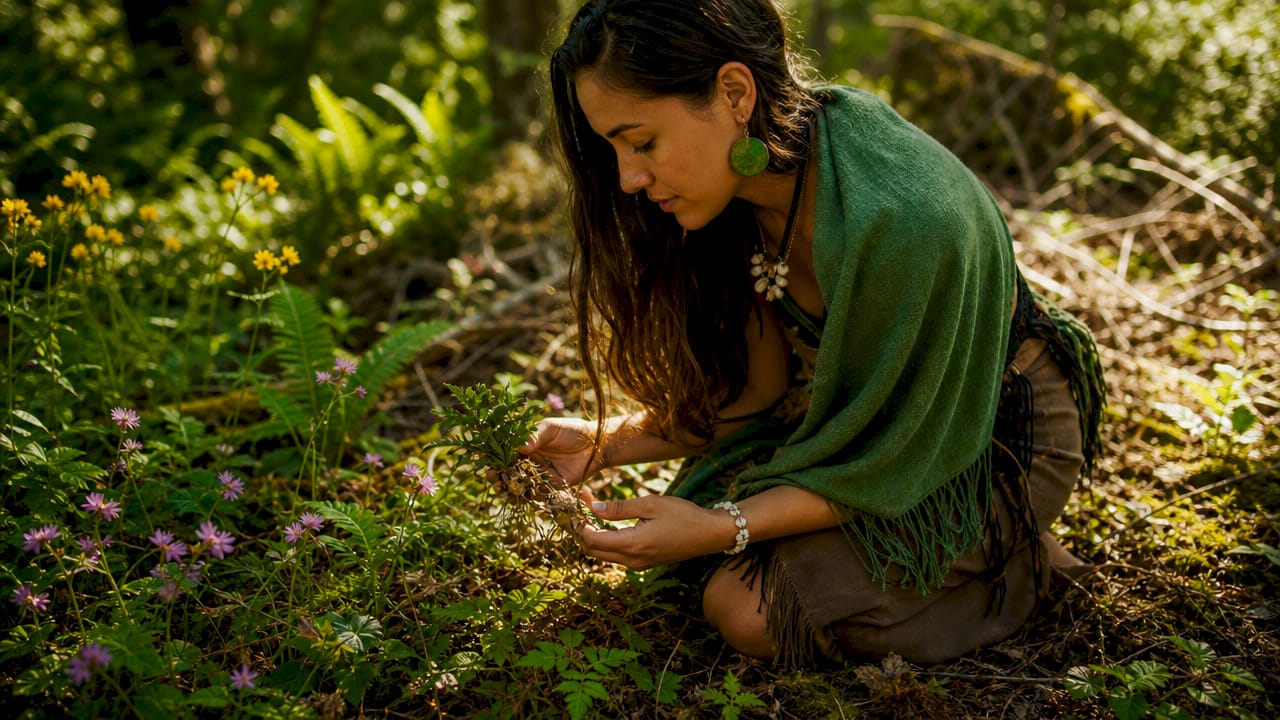
Ancestral healing practices span herbal medicine, spiritual rituals, meditative movement, and community support circles. Each method serves a distinct function within the larger healing system.
The most common practices include:
- Herbal medicine: Plants native to a specific region are prepared as teas, poultices, or smoke medicines. Amazonian traditions use Hapé, a sacred powdered plant medicine, as both a cleansing and grounding tool.
- Spiritual rituals: Cleansing ceremonies, prayer, altar tending, and offerings maintain connection with ancestral spirits and mark life transitions.
- Movement practices: Tai Chi, sacred dance, and ceremonial movement integrate the body into the healing process. Indigenous communities in Botswana use spiritual dances alongside plant medicines and rites of passage.
- Shamanic journeys: Breathwork, massage, and guided trance states help practitioners access ancestral memory and release inherited patterns.
- Community circles: Healing is understood as relational. Group ceremonies and support circles distribute the weight of trauma across a community rather than placing it on one person.
The environment matters as much as the method. Ancestral medicine requires connection with the natural world, including land, plants, and water, as active participants in healing within relational cultural frameworks. A ceremony performed far from its native land, without its native plants, is a diminished version of itself.
Pro Tip: If you are new to ancestral healing practices, start with the most accessible entry point in your own lineage. Research the plant medicines, prayers, or seasonal rituals your own ancestors used before reaching for traditions from other cultures.
How does ancestral medicine compare to modern clinical care?
Ancestral medicine and Western clinical medicine operate from fundamentally different premises. The comparison below clarifies where they diverge and where they can work together.
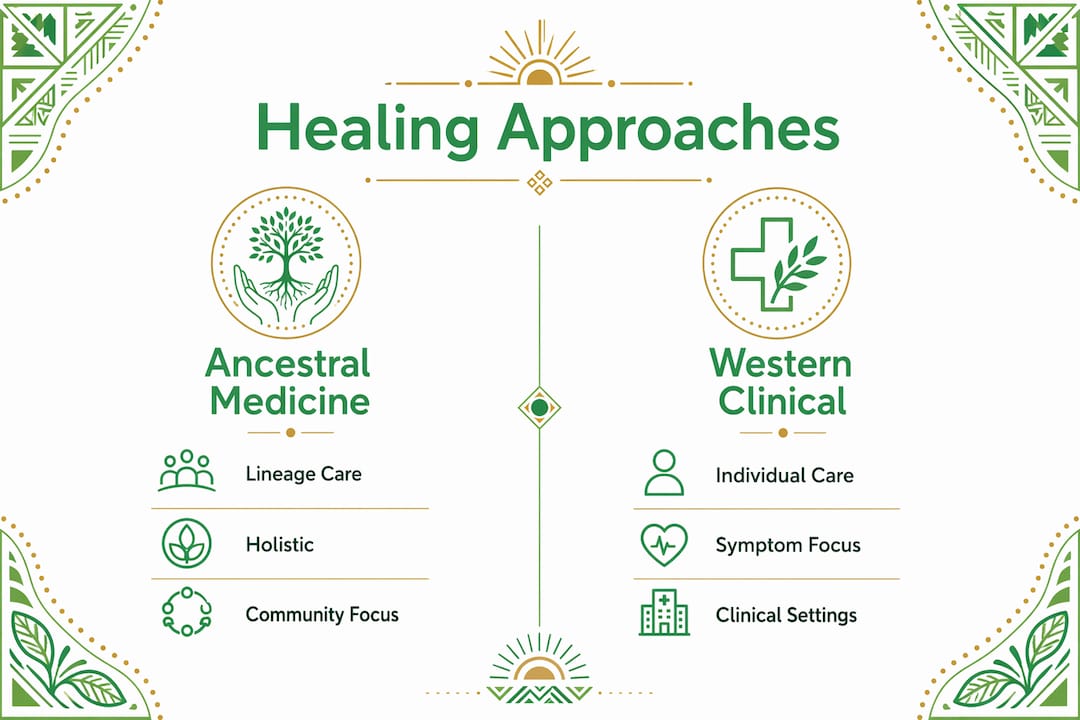
| Dimension | Ancestral medicine | Western clinical medicine |
|---|---|---|
| Unit of care | Lineage and community | Individual patient |
| Root cause focus | Inherited trauma, spiritual imbalance, cultural disconnection | Biological dysfunction, pathogen, or injury |
| Tools | Plants, ceremony, ritual, community | Pharmaceuticals, surgery, diagnostics |
| Time horizon | Multi-generational | Acute or chronic episode |
| Cultural context | Central to the method | Often absent |
The Ancestral Wisdom Health Model integrates ancestral foods and mindful movement into chronic disease care for BIPOC communities to improve cultural relevance and patient trust. It uses foods like okra, moringa, and turmeric as therapeutic anchors that carry cultural meaning alongside nutritional value. That cultural validation is not a soft benefit. It directly improves engagement and health outcomes in communities where Western medicine has historically failed to build trust.
Cultural identity validation through ancestral wisdom is key to building trust and effective healthcare for diverse communities. This insight challenges the assumption that clinical neutrality is the gold standard. For many people, a medicine that ignores their history is a medicine that cannot fully heal them.
Pro Tip: When working with a conventional healthcare provider, bring your ancestral food traditions and movement practices into the conversation. Many integrative medicine practitioners actively welcome this information as part of a complete health picture.
What is ancestral trauma, and how does healing work?
Ancestral trauma is defined as the emotional, psychological, and physiological wounds passed down through a family lineage via epigenetic memory and learned behavioral patterns. Trauma is stored in the body epigenetically and passed down through generations, requiring healing by descendants to resolve intergenerational wounds. That means the anxiety, grief, or chronic illness you carry may not have originated in your own lifetime.
Symptoms of ancestral trauma often include:
- Recurring patterns of fear, shame, or rage with no clear personal origin
- Chronic physical conditions that resist standard treatment
- Relational patterns that repeat across generations within a family
- A persistent sense of disconnection from identity or place
The healing process works in both directions. Ancestral healing rituals such as prayers, ceremonies, and plant medicine enable processing of inherited patterns and energetic weight. Ceremonies involving Ayahuasca and Kambô, a frog-derived secretion used in Amazonian traditions, help uncover the roots of trauma. Healing travels reciprocally through the lineage, meaning that when you heal, the effect reaches both your ancestors and your descendants.
This is not a quick process. True ancestral healing involves deep engagement, accountability, and willingness to face discomfort. It is a long-term, relational practice, not a superficial trend. Practitioners consistently emphasize that the work requires navigating discomfort and building a genuine relationship with the ancestral world rather than extracting a single ceremony as a shortcut.
How can you engage with ancestral medicine today?
Meaningful engagement with ancestral healing practices starts with respect and research, not with purchasing a ceremony. The steps below reflect what experienced practitioners recommend.
- Research your own lineage first. Identify the healing traditions, plants, and rituals specific to your ancestry. This grounds your practice in something personal rather than borrowed.
- Connect with the land. Spend time in natural environments. Learn the names of local plants. Ancestral medicine is relational and animist in nature, requiring interaction with active non-human participants in the healing process.
- Seek qualified practitioners. Look for healers who carry lineage authority, meaning they were trained within the tradition they practice. Ask about their training, their community ties, and their ethical commitments.
- Start with accessible rituals. Lighting a candle for your ancestors, preparing a traditional meal, or learning a prayer from your lineage are low-barrier entry points that carry real meaning.
- Commit to the long work. The popularity of ancestral practices stems from a yearning for identity and connection. Intention and accountability are what separate genuine healing from trend-following.
Cultural appropriation is a real risk in this space. Adopting ceremonies from traditions outside your lineage without proper initiation, permission, or training extracts the form while discarding the meaning. The benefits of ancestral medicine come from depth of relationship, not novelty of experience.
Pro Tip: Before attending any ceremony, ask the facilitator directly about their lineage, their training, and their relationship with the source community. A trustworthy practitioner will answer these questions without hesitation.
Key Takeaways
Ancestral medicine is a lineage-based healing system that addresses physical, emotional, and spiritual health across generations through culturally rooted practices, community connection, and relationship with the natural world.
| Point | Details |
|---|---|
| Core definition | Ancestral medicine treats health as inseparable from lineage, culture, and the natural environment. |
| Cultural diversity | Traditions like Ayurveda, Curanderismo, and Aboriginal bush medicine all qualify as ancestral medicine. |
| Ancestral trauma | Trauma is stored epigenetically and passed through generations, requiring descendants to actively heal it. |
| Modern integration | The Ancestral Wisdom Health Model shows ancestral practices can improve outcomes in chronic disease care. |
| Meaningful engagement | Depth of relationship and cultural respect determine whether ancestral practice becomes genuine healing. |
What I have learned from working close to these traditions
Ancestral medicine is not a wellness trend you can sample and set aside. Every tradition I have encountered through this work, from Amazonian plant ceremonies to Indigenous rites of passage, carries the same underlying message: healing is a responsibility, not a product.
What strikes me most is how communal these systems are. Western wellness culture has trained us to think of healing as a personal project. Ancestral medicine insists that your healing belongs to your lineage. When you do the work, you are not just helping yourself. You are clearing something for the people who came before you, and for those who will come after.
The hardest part for most people is the accountability. These traditions ask you to look at your family honestly, to sit with inherited pain, and to stay in the discomfort long enough for something to shift. That is not comfortable. But it is the work.
Approach these traditions with genuine respect, find practitioners who carry real lineage authority, and be patient with the pace. The depth is the point.
— Pillars
Ceremonial tools that support your ancestral practice
Ancestral healing rituals are grounded in physical ceremony, and the tools you use carry meaning.
At Pillarsoflighthape, we carry 75+ varieties of traditional Amazonian Hapé, handcrafted Kuripes, Tepis, and master plant products, all ethically sourced with respect for the Indigenous traditions they come from. Every item in our collection connects back to living ceremonial lineages. Whether you are beginning a personal practice or deepening an existing one, our ceremonial tools and Hapé are sourced and shipped from our apothecary in Old Town Spring, Texas. We also offer spiritual consultations for those who want guidance on where to start.
FAQ
What is the simplest definition of ancestral medicine?
Ancestral medicine is a system of healing knowledge and practices passed down through cultural lineages, addressing physical, emotional, and spiritual health across generations. It includes traditions like Ayurveda, traditional Chinese medicine, and Indigenous healing systems worldwide.
How does ancestral healing differ from conventional therapy?
Conventional therapy focuses on the individual's lived experience, while ancestral healing addresses inherited trauma stored epigenetically across generations. The process involves ceremony, plant medicine, and community rather than clinical sessions alone.
What are the main benefits of ancestral medicine?
The benefits of ancestral medicine include resolution of inherited trauma patterns, stronger cultural identity, improved community connection, and, in clinical settings, better patient engagement for BIPOC communities managing chronic disease.
Is ancestral medicine safe to practice without a trained guide?
Entry-level practices like ancestral prayer, traditional cooking, and land connection are accessible without a guide. Deeper ceremonies involving plant medicines like Ayahuasca or Kambô require an experienced practitioner with legitimate lineage training.
How do I know if a practitioner is legitimate?
A legitimate ancestral healing practitioner can clearly explain their lineage, their training, and their relationship with the source community. They do not offer ceremonies as one-size-fits-all experiences, and they prioritize your cultural context within the work.