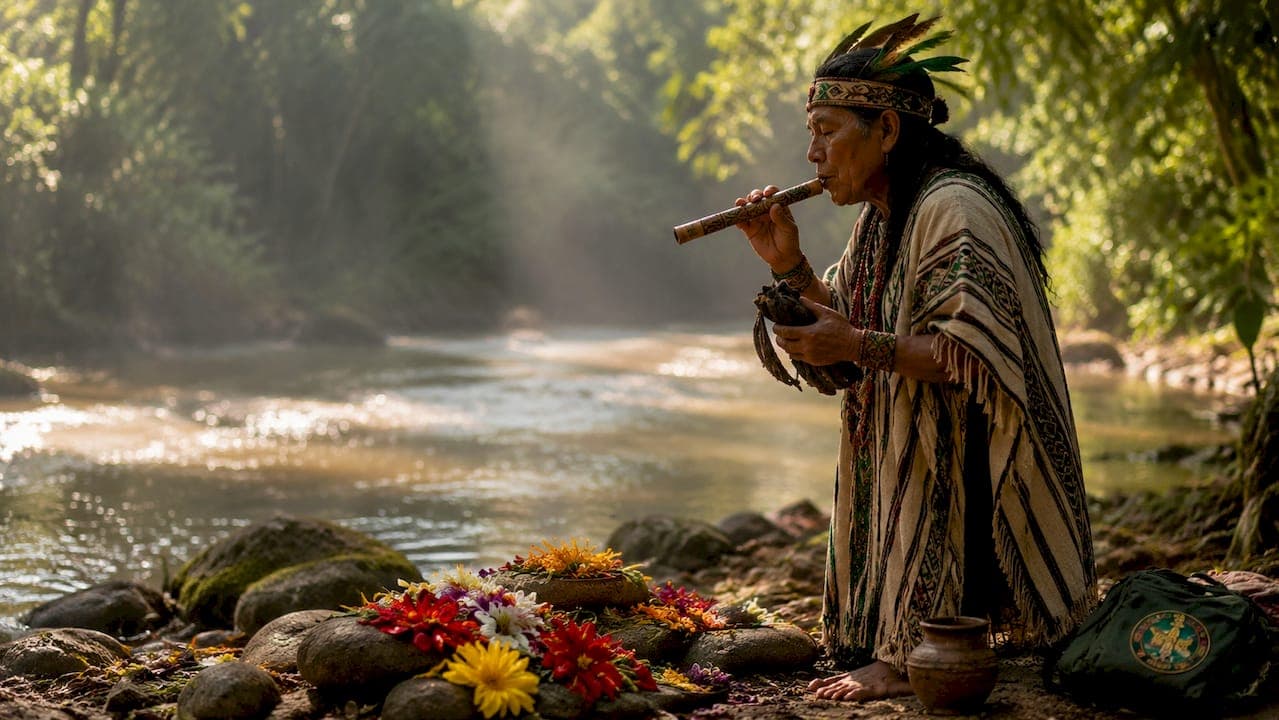
Amazonian healing traditions are defined as nature-based, relational health systems developed by Indigenous peoples of the Amazon basin that treat the body, spirit, and environment as one interconnected whole. The WHO recognizes traditional medicine as codified and non-codified health systems rooted in cultural origins, emphasizing personalized, nature-based care. These systems go far beyond herbal teas and plant poultices. They include sacred ceremonies, animal-based therapies, ritual cleansing, and a cosmology in which illness is understood as a break in the relationship between a person and their world. For anyone studying Indigenous healing practices, cultural anthropology, or alternative medicine, understanding these traditions on their own terms is the only honest starting point.
What makes Amazonian healing traditions different from Western medicine?
Amazonian medicine practices treat illness as a relational problem, not a biological malfunction. A healer does not simply identify a pathogen and prescribe a remedy. Instead, the healer assesses the relationship between the patient's body, their environment, their community, and the spiritual world. That framing alone separates these traditions from the diagnostic logic of Western biomedicine.
The Tukano healing system called bahsese illustrates this clearly. Bahsese involves no standardized protocols. Each body part requires distinct gestures, words, and ritual sequences tailored to the individual case. Two patients with the same physical complaint may receive entirely different treatments because the healer reads each situation as unique.
Ritual cleansing is the standard first step in many Amazonian healing rituals. Cleansing removes physical and spiritual impurities and prepares the individual to receive treatment. It also conditions food and animal products used in subsequent rituals, ensuring the entire healing environment is aligned.
Diagnosis in these systems reads the body alongside its relational and environmental context. A healer considers what the patient has eaten, where they have been, which spiritual forces may be involved, and how the community is functioning. That breadth of assessment has no direct equivalent in a clinical intake form.
- Treatments are case-specific, not protocol-driven
- Diagnosis includes body, environment, spirit, and community
- Cleansing rituals precede active treatment
- Food, crops, and homes can also receive healing attention
- No separation exists between physical and spiritual illness
Pro Tip: If you are studying Amazonian medicine practices academically, read ethnobotanical fieldwork from the Tukano, Yawanapi, and Shipibo peoples before drawing any cross-cultural comparisons. Each group carries a distinct cosmology.
What role do plants and animals play in Amazonian medicinal practices?
Plants and animals are not simply raw materials in Amazonian healing. They are understood as living agents with spiritual properties that mediate between the human world and forces beyond it. That distinction matters enormously when evaluating these traditions from the outside.
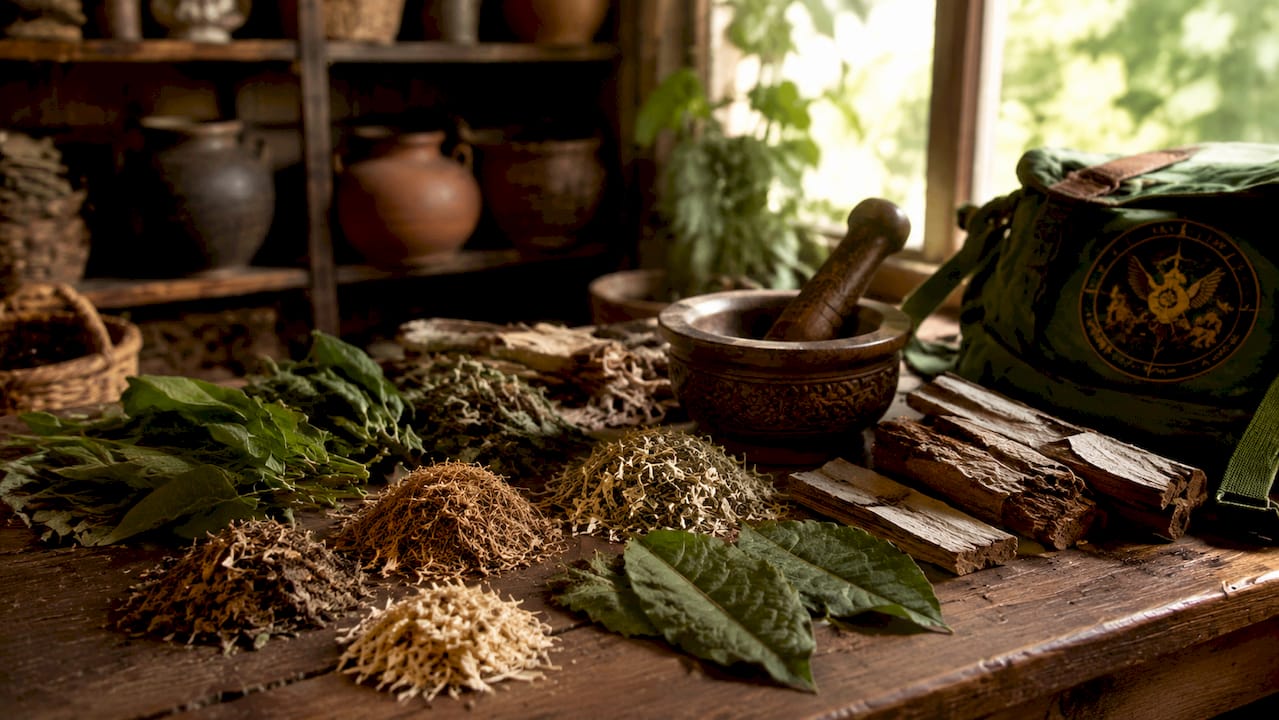
Ayahuasca is the most globally recognized plant in this context. Ayahuasca healing ceremonies use a brew made from the Banisteriopsis caapi vine and Psychotria viridis leaves to induce visionary states. Healers use these states to diagnose illness, communicate with ancestral spirits, and guide patients through psychological and spiritual transformation. The ceremony is not recreational. It is a structured ritual led by a trained practitioner called a curandero or ayahuascero.
Rapé, a sacred tobacco-based snuff made from Nicotiana rustica and plant ashes, is another central plant medicine. Rapé is used ceremonially to cleanse the mind, sharpen focus, and strengthen connections with ancestors. Its preparation and application vary significantly across Indigenous groups, and its spiritual meaning is inseparable from its physical effects.
Animal-based therapies, known as zootherapeutics, are equally widespread. Research shows that 89.36% of participants in studied Amazonian communities use animals or animal parts in traditional medicine. Animals are viewed as mediators of cosmic energy, capable of restoring spiritual and physical balance.
| Medicine type | Primary role | Example |
|---|---|---|
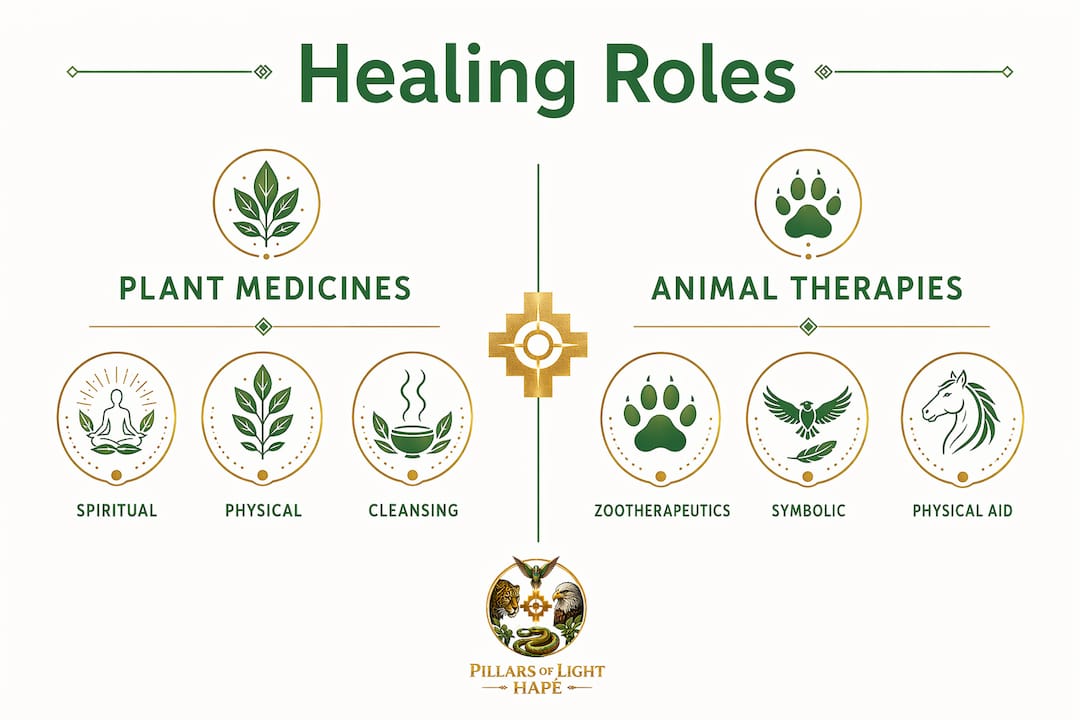
| Medicinal plants | Spiritual and physical healing | Ayahuasca, rapé, cat's claw |
| Animal-based therapies | Cosmic energy mediation | Dolphin fat, snake venom preparations |
| Plant and animal combinations | Ritual cleansing and protection | Contraveneno snakebite mixtures |
Traditional Amazonian snakebite treatment uses plant mixtures called contraveneno alongside animal products like dolphin fat. These remedies reflect deep zootherapeutic knowledge, though some preparations carry health risks that require careful intercultural health education.
Pro Tip: When reading about healing plants of the Amazon, distinguish between plants used for physical symptoms and those used in ceremonial contexts. Conflating the two leads to serious misunderstanding of how these systems actually work.
How do Amazonian healing traditions address spiritual and communal health?
Spiritual healing in the Amazon is not a supplement to physical treatment. It is the foundation. Illness is understood as a disruption in the web of relationships connecting a person to their ancestors, the living forest, and the spirit world. Restoring health means restoring those connections.
Bahsese rituals extend well beyond the individual body. Healing in this framework protects and restores crops, food stores, and homes, not just human patients. That scope reflects a cosmology in which human health and environmental health are the same thing. A sick community garden is as much a healing concern as a sick person.
Rapé plays a central role in this communal and spiritual dimension. Used in ceremony, it is not simply inhaled. It is administered through a kuripe (self-applicator) or tepi (facilitator applicator) as part of a structured ritual that marks intention, connection, and respect. The act of receiving rapé is understood as an act of ancestral connection, not a wellness trend.
The ethical stakes around these practices are real and growing. As global interest in shamanic traditions of the Amazon increases, sacred substances and ceremonies are increasingly sold as consumer experiences. That commodification strips away the cultural context that gives these practices their meaning and can actively harm Indigenous communities by eroding their sovereignty over their own knowledge.
- Spiritual ceremonies restore relationships between humans, ancestors, and the forest
- Rapé is administered ceremonially, not casually
- Healing extends to crops, homes, and community spaces
- Commodification of sacred practices raises serious ethical concerns
- Indigenous communities hold the right to define how their knowledge is used
What are the challenges facing Amazonian healing traditions today?
Amazonian healing traditions face pressure from multiple directions at once. Urbanization, biomedical dominance, global commercialization, and misinformation all threaten the integrity of these systems. Understanding these pressures is part of understanding the traditions themselves.
-
Urban adaptation. Indigenous healers now practice in cities like Manaus and Belém, far from the forest ecosystems their knowledge was built within. Bahsese and similar systems are adapting to urban contexts, but the relocation creates real gaps in access to plants, animals, and ceremonial space.
-
Health risks from uninformed use. Informational gaps about toxic substances in traditional remedies can worsen outcomes when patients or practitioners lack cultural and botanical training. Some zootherapeutic preparations and plant mixtures carry genuine risks outside their intended context.
-
Intercultural health integration. The WHO actively promotes evidence-based, culturally respectful integration of traditional medicine into public health systems. That integration requires genuine collaboration with Indigenous communities, not just extraction of useful compounds.
-
Knowledge protection. Global demand for ayahuasca ceremonies and rapé has created a market that often bypasses Indigenous practitioners entirely. Protecting Indigenous intellectual and spiritual sovereignty requires legal frameworks, community consent, and consumer awareness.
-
Misrepresentation. Online content about Amazon rainforest healing frequently strips practices from their cosmological context. A ceremony described as a "psychedelic retreat" and the same ceremony understood as a diagnostic and healing ritual within a living tradition are not the same thing.
The path forward runs through ancestral medicine frameworks that center Indigenous voices, not outside interpreters. Intercultural health programs in Brazil, Peru, and Colombia are building models that blend traditional and biomedical care while keeping Indigenous practitioners in authority over their own knowledge.
Key takeaways
Amazonian healing traditions are relational, spiritually grounded systems that treat illness as a disruption across body, community, and environment, requiring individualized ritual responses rather than standardized protocols.
| Point | Details |
|---|---|
| Relational diagnosis | Healers assess body, spirit, environment, and community together, not symptoms in isolation. |
| No standardized protocols | Each treatment is case-specific, with distinct gestures and sequences per body part and individual. |
| Plants and animals as agents | Ayahuasca, rapé, and zootherapeutics serve spiritual and physical roles, not purely pharmacological ones. |
| Communal scope of healing | Rituals like bahsese extend protection to crops, homes, and community spaces, not just individuals. |
| Ethical engagement required | Commodifying sacred practices without Indigenous consent erodes cultural sovereignty and knowledge integrity. |
Why context is everything in these traditions
I have spent years working with Amazonian ceremonial materials, and the single most common mistake I see is treating these traditions as a menu of techniques. Someone reads about rapé and thinks: "I'll try that for focus." Someone else hears about ayahuasca and books a retreat for personal growth. The practice gets extracted from its web of meaning and becomes something else entirely.
What strikes me most about Indigenous healing techniques is how thoroughly they resist that kind of reduction. The Tukano bahsese system has no standardized protocol because standardization would contradict the entire premise. Every person, every illness, every moment in a community's life is specific. The healer reads all of it. That is not inefficiency. That is the system working exactly as designed.
The ethical questions here are not abstract. When sacred substances are sold without cultural context, the communities that developed those substances over generations lose control of their own heritage. I think anyone genuinely interested in these traditions has a responsibility to ask: who benefits from this transaction, and who holds the knowledge?
Supporting Indigenous sovereignty means buying from sources that work directly with Indigenous communities, learning the names and histories of the peoples involved, and resisting the urge to flatten a living tradition into a wellness product. These are not ancient relics. They are living systems, actively practiced and actively defended.
— Manifest Light
Authentic Amazonian ceremonial tools at Pillars of Light hap'e
Pillars of Light hap'e carries 75+ varieties of traditionally sourced Hapé (Rapé), along with handcrafted Kuripes and Tepis, master plant products, and ceremonial accessories, all ethically sourced with direct respect for Indigenous traditions.
Every product at Pillars of Light hap'e is selected with cultural integrity in mind. The store, based in Old Town Spring, Texas, also offers spiritual consultations and ceremonies for those seeking guided engagement with these traditions. Rapé is not a casual purchase here. It is offered as what it is: a sacred ceremonial substance with deep roots in Amazonian healing cosmology. If you are ready to engage with these traditions respectfully, Pillars of Light hap'e is a grounded place to start.
FAQ
What is the core principle of Amazonian healing traditions?
Amazonian healing traditions treat illness as a relational disruption across body, spirit, and environment rather than an isolated physical condition. Healing restores balance across all three dimensions simultaneously.
How does rapé differ from other traditional herbal remedies?
Rapé is a sacred tobacco-based snuff made from Nicotiana rustica and plant ashes, used ceremonially to cleanse the mind and strengthen ancestral connections. Unlike general herbal remedies, its use is embedded in specific ritual protocols and spiritual cosmology.
Are Ayahuasca healing ceremonies safe for non-Indigenous participants?
Ayahuasca ceremonies carry real psychological and physical risks, particularly outside their traditional context and without a trained practitioner. The WHO and intercultural health researchers emphasize that safety depends on cultural knowledge, proper preparation, and qualified guidance.
What are zootherapeutics in Amazonian medicine?
Zootherapeutics are animal-based treatments used in traditional Amazonian healing, where animals and their parts are understood as mediators of spiritual and physical energy. Research documents their widespread use across Amazonian communities, though some preparations require careful health consideration.
How can someone engage with Amazonian healing traditions ethically?
Ethical engagement means learning from Indigenous sources, supporting practitioners and suppliers who work directly with Indigenous communities, and refusing to treat sacred ceremonies as consumer products. Protecting Indigenous knowledge sovereignty is the baseline standard.