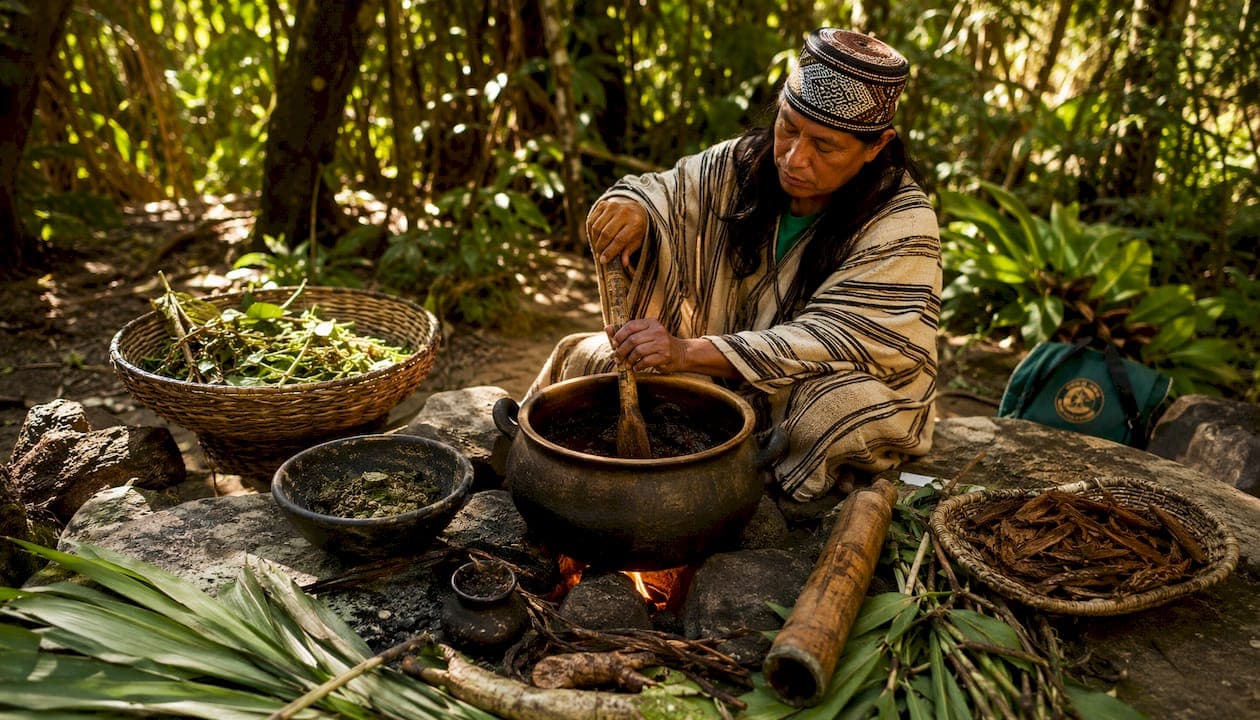
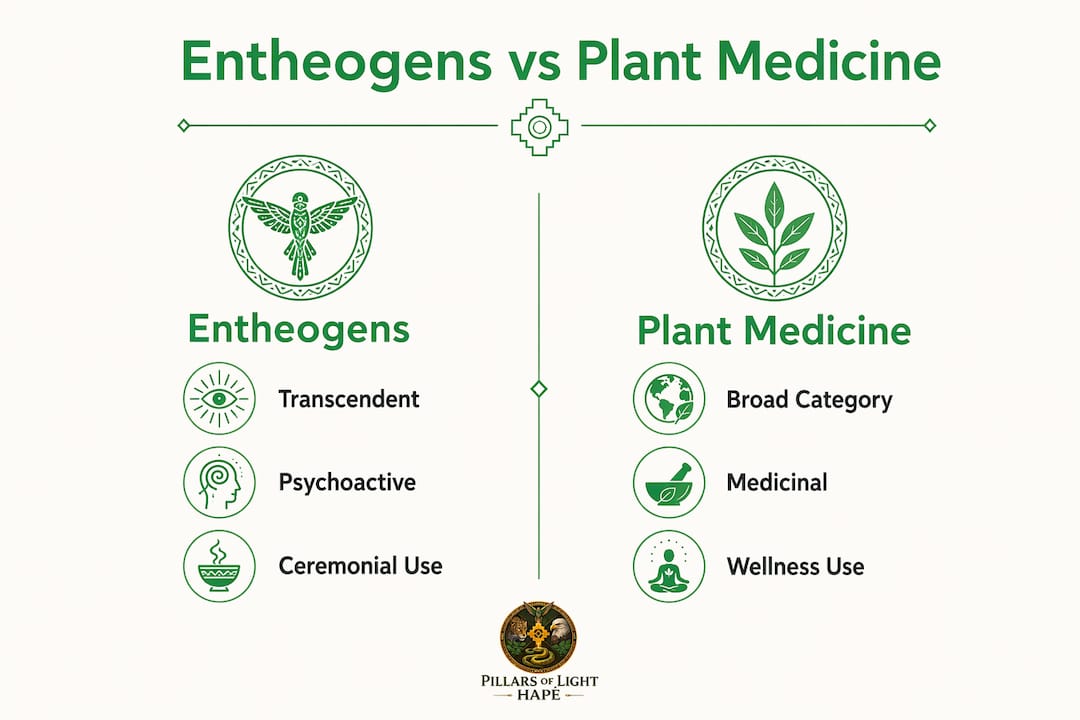
Entheogens are a specific subset of plant and fungal medicines used to reliably generate sacred, transcendent, or spiritually significant experiences. Plant medicine is the broader category — any plant used for healing, wellbeing, or ritual, whether it alters consciousness or not. The difference is purpose and effect, not origin.
Three quick distinctions worth holding in mind:
- Definition and framing: Plant medicine covers everything from chamomile tea to ayahuasca brew. Entheogens are only those medicines whose defining purpose is inducing an altered or mystical state, typically within a ceremonial container.
- Intended use: Entheogens are used for spiritual awakening, ritual healing, or deep psychological work. General plant medicines address physical ailments, emotional balance, or everyday wellness without necessarily touching the transcendent.
- Preparation and administration: Entheogens are usually prepared and administered within ceremony — brewed, smoked, or insufflated under the guidance of a trained facilitator. Everyday plant medicines are more often taken as teas, tinctures, salves, or capsules with no ceremonial structure required.
One canonical entheogen: ayahuasca, a brew combining Banisteriopsis caapi vine and Psychotria viridis leaves, used in Amazonian ceremony for visionary healing. One common non-entheogenic plant medicine: chamomile tea, brewed from Matricaria chamomilla and taken for relaxation or digestive ease, with no psychoactive effect.
Table of Contents
- What do "entheogen" and "plant medicine" actually mean?
- How have entheogens and plant medicines been used across cultures?
- How are entheogens and plant medicines used today?
- How do entheogens and other plant medicines work in the body?
- What is the legal status of entheogens in the United States?
- Safety, screening, and harm reduction for entheogenic work
- What does the science say about therapeutic uses?
- When should you use the terms "entheogen," "plant medicine," "psychedelic," or "herbal"?
- Indigenous perspectives, ethical sourcing, and what to look for in a responsible vendor
- Key Takeaways
- Why the language we use around plant medicine is more consequential than most people realize
- Pillars of Light hap'e: where Amazonian ceremony meets ethical sourcing
- Useful sources and further reading
What do "entheogen" and "plant medicine" actually mean?
The word entheogen was coined in 1979 by scholar Carl Ruck and his colleagues as a deliberate, respectful alternative to "hallucinogen" and "psychedelic." It comes from the Greek entheos ("god within") and genesthai ("to come into being") — literally, "generating the divine within." The intent was to honor the spiritual and religious dimensions of these substances rather than pathologizing them with clinical or countercultural labels.
Plant medicine, by contrast, has no single coinage moment. It is a broad, functional category: any plant preparation used with healing intent. That includes non-psychoactive herbs like valerian root and elderberry, as well as visionary plants like peyote. Plant medicines range from everyday herbs to powerful visionary plants; entheogens are only those used to reliably generate transcendent experiences. The subset relationship matters because it shapes expectations, preparation, and the ethical obligations that come with use.
Psychedelic overlaps with entheogen but carries different connotations. Coined by psychiatrist Humphry Osmond in 1957, "psychedelic" emphasizes the mind-manifesting quality of a substance and is now the dominant term in clinical research. "Entheogen" is preferred in ceremonial and Indigenous contexts because it centers spiritual purpose rather than psychological mechanism.
Language shapes the experience itself. Framing a substance as a sacred medicine encourages a relational, intentional mindset that measurably affects how people process the experience therapeutically. Calling the same substance a "drug" activates fear and stigma; calling it an "entheogen" activates reverence and preparation. Neither framing is neutral.
Pro Tip: Choose your language deliberately. In a clinical or research setting, "psychedelic" is the accepted term. In ceremony, "entheogen" or the plant's Indigenous name honors the tradition. In casual conversation, "plant medicine" is inclusive and non-alarming. Using the wrong register in the wrong room can signal disrespect or ignorance — and in ceremony, it can genuinely affect the container.
How have entheogens and plant medicines been used across cultures?
The use of psychoactive plants in ritual is not a modern phenomenon. Archaeological evidence places peyote use among Indigenous peoples of the Chihuahuan Desert at least several millennia ago. Psilocybin mushrooms appear in Mesoamerican stone carvings from roughly thousands of years ago. Ayahuasca traditions in the Amazon basin are estimated to be centuries old, though exact timelines are debated. Iboga use among the Bwiti people of Central Africa is documented in ethnographic records stretching back many generations ago.
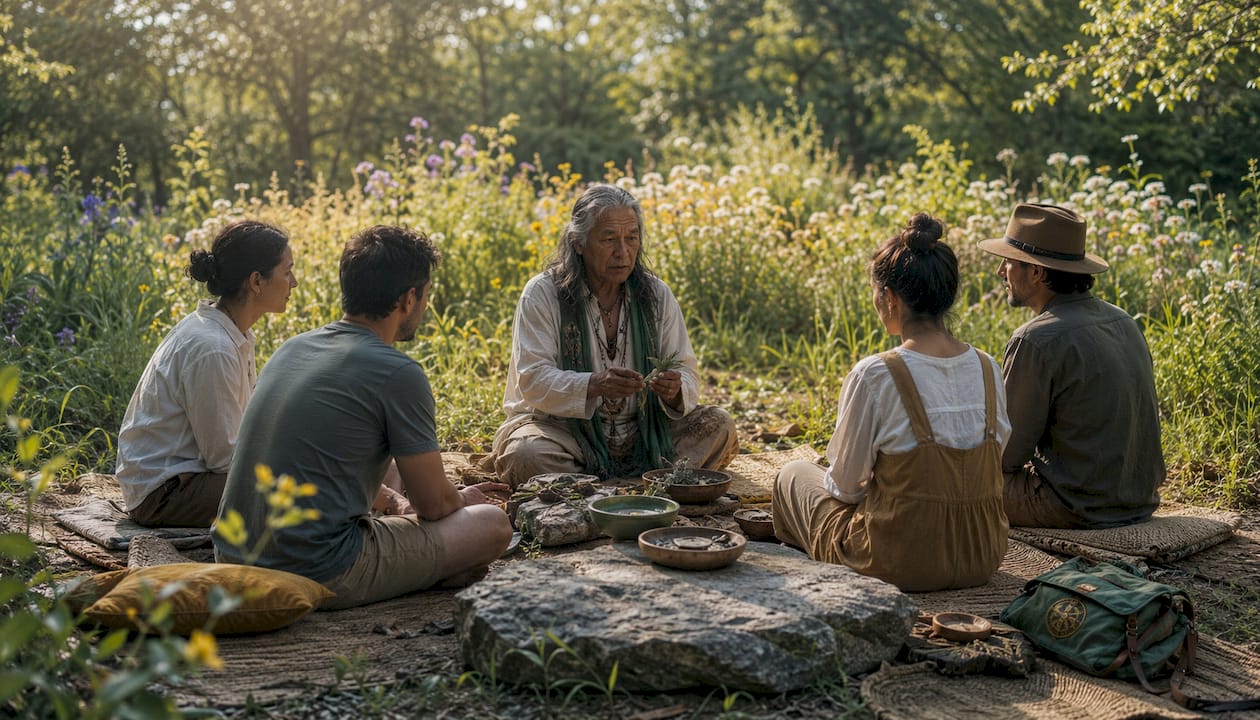
These were never casual or recreational uses. Each tradition embedded the plant within a ceremonial container: specific songs, dietary restrictions (dietas), trained healers, and community protocols that shaped the experience and its integration. The plant was not a tool to be picked up and put down. It was a relationship.
Broader plant medicine traditions operated differently. Herbalism, phytotherapy, and traditional medicine systems like Ayurveda and Traditional Chinese Medicine used plants primarily for physical and emotional healing — treating fever, infection, pain, and grief through teas, poultices, and decoctions that did not require altered states. These were household and community practices, passed through lineages of healers and midwives, not exclusively through ceremonial specialists.
A few canonical entheogens and their cultural homes:
- Peyote (Lophophora williamsii): Used by the Native American Church and numerous Indigenous nations of the American Southwest and Mexico for prayer, healing, and community ceremony.
- Psilocybin mushrooms (Psilocybe spp.): Central to Mazatec healing ceremonies in Oaxaca, Mexico, where curandera María Sabina brought them to Western attention in the 1950s.
- Ayahuasca: A brew from the Amazon basin used by dozens of Indigenous nations for diagnosis, healing, and communication with plant spirits; now practiced globally through syncretic churches like Santo Daime and União do Vegetal.
- Iboga (Tabernanthe iboga): Used in Bwiti initiation rites in Gabon and Cameroon; a multi-day experience considered a rite of passage and a medicine for addiction.
- Hapé (Rapé): A sacred Amazonian snuff made from tobacco and other medicinal plants, used by numerous Indigenous tribes for grounding, clearing, and ceremonial focus. Unlike many entheogens, Hapé is not primarily visionary but is deeply ceremonial. You can explore its Amazonian healing traditions and cultural lineage in depth.
The contrast with everyday plant medicine is not about potency alone. It is about the container. A healer administering iboga in a Bwiti ceremony and a grandmother brewing elderberry syrup for a child's cold are both practicing plant medicine. Only one is working with an entheogen.
How are entheogens and plant medicines used today?
Contemporary use spans four distinct contexts, and the same plant can appear in all of them depending on who is using it and why.
Ceremonial and shamanic settings remain the most traditional context. Ayahuasca ceremonies, peyote prayer circles, and Hapé sessions led by trained facilitators follow protocols inherited from Indigenous lineages. The plant is treated as a living teacher, and the ceremony provides the container that makes the experience safe and meaningful. These settings prioritize preparation, intention, and integration — the work before and after the medicine is as important as the experience itself.
Clinical and psychedelic-assisted therapy is the fastest-growing contemporary context. Psilocybin is in Phase 2 and Phase 3 trials for treatment-resistant depression and end-of-life anxiety. MDMA-assisted therapy for PTSD is under advanced regulatory review, though full approval remains pending. In these settings, the substance is administered in a controlled clinical environment with trained therapists, and the framing is explicitly therapeutic rather than spiritual. The word "entheogen" rarely appears in clinical literature; "psychedelic" is the standard term.
Recreational use exists and is worth naming honestly. Some people use psilocybin mushrooms, cannabis, or other psychoactive plants without ceremonial or therapeutic intent. This is a reality, and it carries different risk profiles than guided ceremonial or clinical use. The absence of a container, a guide, and an integration practice changes the experience and the safety calculus significantly.
Everyday herbal wellness is the largest and most familiar category. Millions of Americans use non-psychoactive plant medicines daily: valerian for sleep, echinacea for immune support, herbal teas for calming the nervous system, and turmeric for inflammation. These are plant medicines in the fullest sense, but they are not entheogens. No altered state, no ceremonial container, no facilitator required.
One tension worth noting: the wellness industry has begun using "plant medicine" as a marketing term that sometimes blurs these lines. A product labeled "plant medicine" might be a capsule of isolated compounds with no ceremonial context and no connection to the Indigenous traditions that originally held these plants. Western biomedical practice often isolates molecules; Indigenous traditions emphasize whole-plant integrity and ceremonial context. When a brand uses "plant medicine" to sell an extract, ask what tradition it comes from and who benefits.
Pro Tip: If you are considering participating in an entheogenic ceremony, the setting matters as much as the substance. A well-held ceremony with a trained, lineage-connected facilitator is a fundamentally different experience from the same plant taken informally. Research the facilitator's training, the tradition they work within, and what integration support they offer before you commit.
How do entheogens and other plant medicines work in the body?
Classic entheogens — psilocybin, mescaline (from peyote and San Pedro cactus), and DMT (the active compound in ayahuasca) — primarily act as agonists at serotonin 5-HT2A receptors in the brain. This receptor activation disrupts default-mode network activity, the brain's self-referential "background noise," and produces the characteristic dissolution of ordinary ego boundaries, visionary states, and heightened emotional sensitivity. The experience is not simply a chemical reaction; set, setting, and intention shape it profoundly.
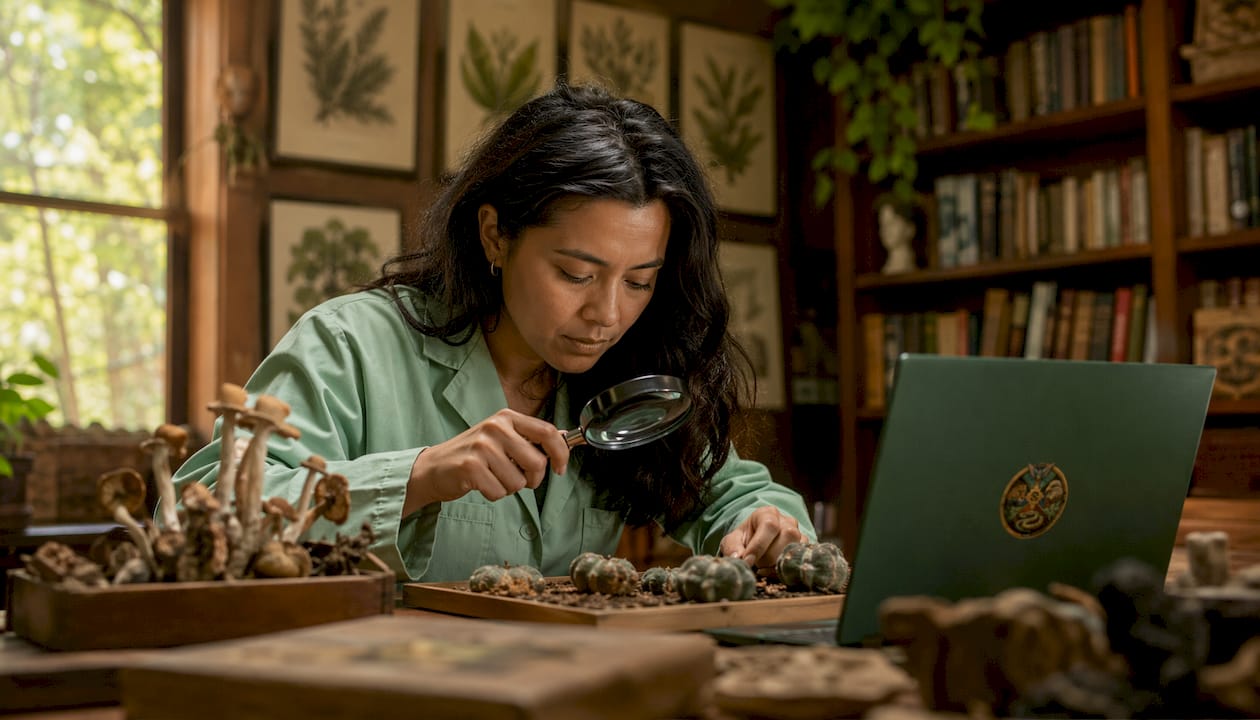
Non-psychoactive plant medicines work through entirely different mechanisms. Anti-inflammatory herbs like turmeric act on COX-2 pathways. Adaptogens like ashwagandha modulate cortisol and the HPA axis. Antimicrobial plants like oregano oil disrupt bacterial cell membranes. Plants synthesize complex bioactive molecules that have been the basis for major pharmaceuticals — paclitaxel (Taxol) from the Pacific yew tree is one well-known example. The category is vast.
One pharmacological dimension that distinguishes whole-plant preparations from isolates is the entourage effect: the idea that multiple compounds in a plant interact synergistically, producing effects that no single isolated compound replicates. Ayahuasca is a clear example. The brew combines DMT (the primary psychoactive) with beta-carboline alkaloids from the Banisteriopsis caapi vine, which inhibit the enzyme that would otherwise break down DMT in the gut. Neither plant alone produces the full experience. Many plant alkaloids evolved as defensive compounds against herbivory; their effects on the human nervous system were recognized and incorporated into ritual pharmacopeias over millennia.
| Substance | Typical Form | Psychoactive? | Common Uses |
|---|---|---|---|
| Psilocybin mushrooms | Dried fungi, tea, capsule | Yes | Ceremonial healing, clinical depression trials |
| Ayahuasca | Brewed tea (vine + leaf) | Yes | Amazonian ceremony, PTSD, addiction |
| Peyote | Dried cactus buttons | Yes | Native American Church prayer ceremony |
| Iboga | Root bark, extract | Yes | Bwiti initiation, addiction treatment |
| Hapé (Rapé) | Insufflated snuff | Mildly (tobacco-based) | Amazonian ceremony, grounding, clearing |
| Chamomile | Tea, tincture | No | Relaxation, digestive support, sleep |
| Turmeric | Powder, capsule | No | Anti-inflammatory, joint support |
| Valerian root | Tea, capsule | No | Sleep, anxiety relief |
| Echinacea | Tea, tincture, capsule | No | Immune support, cold prevention |
Pro Tip: Potency varies significantly between wild-harvested whole plants and concentrated extracts. A ceremonial dose of peyote buttons consumed in a traditional prayer circle is a very different pharmacological event from a standardized mescaline extract. If you are working with any entheogen, know the preparation method and source — and never assume that "natural" means predictable.
What is the legal status of entheogens in the United States?
Under the federal Controlled Substances Act, most classic entheogens are classified as Schedule I substances: psilocybin, peyote, DMT (the active compound in ayahuasca), and ibogaine all carry this designation, meaning the federal government considers them to have no accepted medical use and high potential for abuse. Non-psychoactive plant medicines — chamomile, valerian, echinacea, turmeric — are unscheduled and freely available as dietary supplements under FDA oversight.
The federal picture is not the whole picture. State and municipal reforms have moved quickly in recent years. Oregon passed Measure 109 in 2020, creating a licensed psilocybin services framework that launched in 2023. Colorado voters approved Proposition 122 in 2022, decriminalizing personal use of several psychedelic plants and fungi and establishing a regulated access system. Cities including Denver, Oakland, Santa Cruz, Detroit, and Washington D.C. have decriminalized possession of psilocybin mushrooms or enacted broader natural psychedelic decriminalization measures. The Native American Church retains a federal exemption for peyote use in bona fide religious ceremonies for enrolled tribal members.
Practical legal risk varies by context. Possession in a decriminalized city is a different situation from possession near a federal facility or during interstate travel. Ceremony participation is not automatically protected by religious freedom claims outside the Native American Church exemption, though some legal challenges are ongoing. Before participating in any entheogenic work, verify your local and state law through primary sources: the DEA scheduling database, your state's controlled substances statute, and, if relevant, your city's municipal code. This article is general information, not legal advice — confirm your specific situation with a qualified attorney.
Safety, screening, and harm reduction for entheogenic work
Not all plant medicines are inherently safe simply because they come from nature. Powerful plant medicines carry clear physiological contraindications that require medical screening before use. Ibogaine, for example, carries documented cardiac risk, including QT interval prolongation that can trigger fatal arrhythmia in people with underlying heart conditions. Ayahuasca interacts dangerously with SSRIs, MAOIs, and several common medications. Psilocybin can precipitate psychotic episodes in people with a personal or family history of schizophrenia or bipolar I disorder.
A responsible preparation sequence before any entheogenic ceremony:
- Complete a full medical history review with a qualified practitioner, disclosing all medications, supplements, and relevant diagnoses.
- Screen for cardiac conditions if working with ibogaine or high-dose ayahuasca — an EKG is standard practice in responsible retreat settings.
- Taper or discontinue contraindicated medications only under medical supervision; never stop psychiatric medications abruptly on your own.
- Assess mental health history honestly, including any personal or family history of psychosis, mania, or severe dissociative episodes.
- Research the facilitator's training and lineage — ask directly about their experience, the tradition they work within, and what happens if a participant has a difficult experience.
- Prepare your set and setting — your mindset, your intention, and the physical environment all shape the experience as much as the pharmacology does.
- Plan for integration — identify a therapist, integration circle, or trusted community to process the experience with afterward.
Key harm-reduction practices during and after ceremony:
- Never combine entheogens with alcohol, stimulants, or unknown substances.
- Have a sober, trained facilitator present — not just a friend who has "done it before."
- Know the location of the nearest emergency medical facility before the ceremony begins.
- Start with lower doses, especially with a new preparation or a new facilitator.
- Respect the dieta (dietary and behavioral protocols) that many traditions prescribe before ceremony — these exist for pharmacological as well as spiritual reasons.
- After the experience, give yourself time before returning to high-stress environments. Integration is not optional; it is where the healing actually happens.
Pro Tip: Two red flags that should stop you from proceeding: a facilitator who dismisses your medical history as irrelevant, and a retreat center that does not conduct any pre-screening. Legitimate ceremonial and therapeutic settings take contraindications seriously. If someone tells you "the plant will handle it," that is not reassurance — it is a warning sign.
What does the science say about therapeutic uses?
Clinical interest in entheogens has grown substantially since the early 2000s, and the evidence base is genuinely promising in several areas — though it remains early-stage for most applications. Recent trials and reviews show promising outcomes for psilocybin and MDMA in controlled settings, while also highlighting small sample sizes and regulatory hurdles that limit definitive conclusions.
| Substance | Condition Studied | Evidence Stage |
|---|---|---|
| Psilocybin | Treatment-resistant depression | Phase 2/3 trials; promising but not FDA-approved |
| Psilocybin | End-of-life anxiety | Phase 2 trials; strong effect sizes in small samples |
| MDMA | PTSD | Phase 3 trials; regulatory breakthrough designations |
| Ayahuasca | Depression, addiction | Early-phase trials and observational studies |
| Ibogaine | Opioid addiction | Observational studies; no US clinical trials approved |
| Mescaline/Peyote | Depression, alcohol use | Observational and survey data only |
Limitations are real and worth stating plainly. Most trials are limited in sample size. Blinding is difficult — participants usually know whether they received an active dose. Therapist effects are significant and hard to control for. Regulatory barriers under Schedule I status make large-scale US trials expensive and logistically complex. Plant-based phytochemical research shows strong preclinical signals across multiple organ systems, but clinical translation is limited by heterogeneity in preparations and regulatory frameworks. The science is moving, but it has not arrived at the certainty that popular media sometimes implies.
For non-psychoactive plant medicines, the evidence landscape is equally mixed. Some herbs have solid clinical backing: St. John's Wort for mild-to-moderate depression, melatonin (plant-derived forms) for sleep, and berberine for blood sugar regulation. Many others are supported primarily by traditional use and preclinical data. As Penn State researchers note, just because something comes from a plant does not mean it is safe or effective — and the lack of pharmaceutical industry incentive to study unpatentable plants means many promising compounds remain understudied.
When should you use the terms "entheogen," "plant medicine," "psychedelic," or "herbal"?
Word choice is not just semantics. In ceremony, using the wrong term signals that you have not done the cultural homework. In a clinical setting, using "entheogen" instead of "psychedelic" can mark you as outside the research conversation. In a wellness retail context, "herbal" carries specific regulatory meaning under FDA guidelines. Getting this right is a form of respect — and practical competence.
Here is a working map:
In ceremonial and Indigenous contexts: Use the plant's Indigenous name when you know it, or "entheogen" when you need a general term. "Psychedelic" is acceptable but carries Western clinical connotations that can feel reductive in ceremony. Avoid "drug" entirely — it pathologizes what the tradition treats as sacred relationship.
In clinical research and medical settings: "Psychedelic" is the standard. Researchers use it because it is pharmacologically descriptive and value-neutral within the scientific register. "Entheogen" signals a spiritual framing that may not match the study's intent.
In consumer wellness and journalism: "Plant medicine" is broadly understood and inclusive. It covers both psychoactive and non-psychoactive preparations without triggering the stigma that "psychedelic" or "drug" can carry. Use it when you want to be accessible without being reductive.
In everyday conversation: "Herbal" works well for non-psychoactive preparations. "Plant medicine" works for the broader category. If you are specifically discussing a visionary or ceremonially used plant, "entheogen" is precise and respectful.
An ethics note embedded here: avoid using Indigenous plant names or ceremonial terms as casual branding. Calling a product "shamanic" or "sacred" without connection to the tradition that holds those words is a form of appropriation. Centering Indigenous terminology means using it in context, with attribution, and with awareness of who originally held that knowledge. For a deeper look at this, the decolonized plant medicine framework is worth reading carefully.
Pro Tip: When in doubt, ask. If you are entering a ceremony or working with a facilitator from a specific tradition, ask them what language they prefer. That question alone signals respect and opens a real conversation.
Indigenous perspectives, ethical sourcing, and what to look for in a responsible vendor
In many Indigenous frameworks, the plant is not a substance. It is a living spirit, a teacher, a relative. Healing in these traditions depends not only on pharmacology but on the ceremonial container, the healer's relationship with the plant, and the reciprocal obligations that come with that relationship. You receive something; you give something back. That reciprocity is not metaphorical — it includes material support for the communities and ecosystems that hold these traditions.
The contemporary renaissance of plant medicine in the United States creates real tension here. Indigenous frameworks demand ceremony, reciprocity, and community protocols; Western biomedical models favor isolates and controlled trials. Neither approach is wrong in its own context, but problems arise when Western markets extract the plant and the practice while leaving the community behind.
When evaluating a vendor or retreat center, these are the questions worth asking:
- Provenance: Where does the plant material come from, and can the vendor trace it to a specific community or region?
- Community partnerships: Does the vendor have direct relationships with the Indigenous communities who hold the tradition? Are those relationships ongoing and reciprocal, not transactional?
- Benefit-sharing: Does any portion of the revenue flow back to source communities, rainforest preservation, or cultural continuity programs?
- Transparency: Is the sourcing story publicly available, or is it vague marketing language?
- Facilitator lineage: For ceremony, does the facilitator have genuine training within the tradition, or did they attend a weekend workshop?
Responsible vendors make their sourcing story visible. They name the communities they work with, describe their benefit-sharing arrangements, and do not claim more cultural authority than they have. Ethical sourcing in plant medicine is not a checkbox — it is an ongoing relationship that requires accountability.
Pro Tip: If a vendor's sourcing story is vague ("sustainably harvested from the Amazon"), ask for specifics. A vendor with genuine community relationships can tell you the tribe, the region, and the name of the person they work with. Vagueness is not humility — it is often a sign that the supply chain has not been examined.
Key Takeaways
Entheogens are a subset of plant medicine defined by their capacity to generate transcendent states, and understanding that distinction shapes every decision about language, safety, legality, and ethical sourcing.
| Point | Details |
|---|---|
| Subset relationship | Entheogens are a specific subset of plant medicine; not all plant medicines are entheogens. |
| Language matters | Use "entheogen" in ceremony, "psychedelic" in clinical research, and "plant medicine" for broad wellness contexts. |
| Legal risk is real | Most classic entheogens are Schedule I federally; state and municipal reforms vary — verify local law before participating. |
| Safety requires screening | Medical screening for cardiac conditions, psychiatric history, and medication interactions is non-negotiable before entheogenic work. |
| Pillars of Light hap'e | Offers ethically sourced Amazonian ceremonial products, including a broad variety of Hapé powders, with transparent Indigenous sourcing from Old Town Spring, Texas. |
Why the language we use around plant medicine is more consequential than most people realize
The debate over "entheogen" versus "psychedelic" versus "plant medicine" can look like academic hair-splitting. It is not. The word you choose determines the framework you enter — and the framework shapes the experience, the safety practices, the legal exposure, and the ethical obligations that follow.
What most articles on this topic miss is that the subset relationship runs in both directions. Yes, entheogens are a subset of plant medicine. But the reverse is equally true in practice: when Western culture extracts the entheogenic experience from its plant medicine context — strips away the ceremony, the dieta, the community, the reciprocity — it often produces something that is neither good medicine nor good ceremony. The clinical trial setting is not a ceremony, and a ceremony is not a clinical trial. Both can be valuable. Neither should pretend to be the other.
The wellness industry's co-optation of "plant medicine" as a brand aesthetic is a real problem, and it is worth naming directly. When a supplement company calls its ashwagandha capsule "plant medicine" and uses imagery borrowed from Amazonian ceremony, it is not honoring a tradition — it is borrowing cultural authority it has not earned. The plants themselves do not care about marketing. The communities that have held these relationships for generations do.
For anyone approaching this territory — whether out of curiosity, therapeutic need, or spiritual seeking — the most honest starting point is humility. These are old relationships. The plants have been doing this work far longer than any of us have been asking questions about them.
Pillars of Light hap'e: where Amazonian ceremony meets ethical sourcing
If this article has clarified what you are looking for, Pillars of Light hap'e offers a direct path to ceremonial-grade Amazonian medicines with the sourcing transparency and Indigenous respect this work deserves.
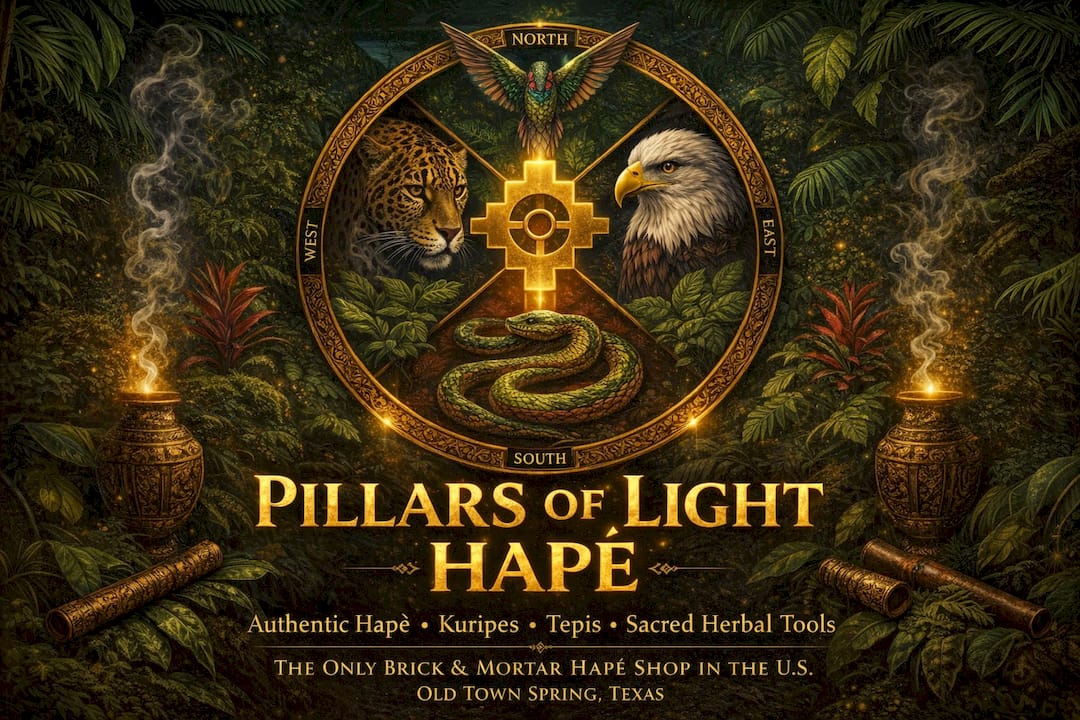
Based in Old Town Spring, Texas, Pillars of Light hap'e carries 75+ varieties of Hapé, handcrafted Kuripes and Tepis made by Amazonian artisans, and a curated selection of master plant allies — all sourced through direct relationships with Indigenous communities. Every product comes with a lineage story, not a vague “sustainably harvested” label. The mission is cultural preservation as much as commerce: a portion of proceeds supports rainforest and community initiatives.
For those ready to work with ceremonial tools, the ceremonial items collection is a good starting point. Browse the full range, read the sourcing notes, and reach out with questions — the team at Pillars of Light hap'e welcomes the conversation.
Useful sources and further reading
These sources cover the legal, clinical, ethnobotanical, and harm-reduction dimensions of this topic. Use them to verify claims, dig into primary research, or check current legal status.
-
Entheogen: an evolutionary medicine for neuropsychiatric conditions (PMC) — Peer-reviewed overview of entheogenic compounds and their emerging clinical applications; a strong starting point for the therapeutic evidence landscape.
-
Safety considerations for powerful plant medicines (PMC) — Clinical review of contraindications, adverse events, and screening protocols for high-risk plant medicines including ibogaine. Essential reading before any entheogenic work.
-
Framing effects in psychedelic and entheogenic therapy (PubMed) — Research on how language and expectation shape therapeutic outcomes in psychedelic-assisted therapy; supports the "why words matter" section.
-
DEA Drug Scheduling Database — Primary federal source for current scheduling status of controlled substances. Always check here for up-to-date legal classification before any entheogenic work.
-
FDA — Breakthrough Therapy Designation information — Official FDA resource for understanding the clinical trial and approval pathway relevant to MDMA and psilocybin research.
-
Alkaloids and ethnobotany (Wright State University corescholar) — Ethnobotanical analysis of how plant alkaloids evolved as defensive compounds and were incorporated into human medicinal systems; useful for the pharmacology and historical sections.
-
Penn State: What does science say about plants as medicine? — Accessible Q&A with a Penn State researcher on the evidence base, limitations, and future of plant-based medicine research.
-
Indigenous plant medicine traditions: a cultural guide (Pillars of Light hap'e blog) — Practical cultural context for understanding Indigenous frameworks, ceremonial protocols, and the ethical obligations of working with traditional medicines.
-
Psychedelic medicine and Indigenous reciprocity (Psychedelic.Support) — Discussion of the tensions between Western research models and Indigenous frameworks of reciprocity and community protocol; essential for the ethics section.
-
Harnessing phytochemicals for health (Springer/Human Genomics) — Peer-reviewed review of plant-derived bioactive compounds, their mechanisms, and the translational challenges between preclinical promise and clinical application.
-
Plant Medicine Ceremony Types: a complete guide (Pillars of Light hap'e blog) — Practical overview of ceremony types, preparation practices, and set and setting considerations for those exploring entheogenic work.