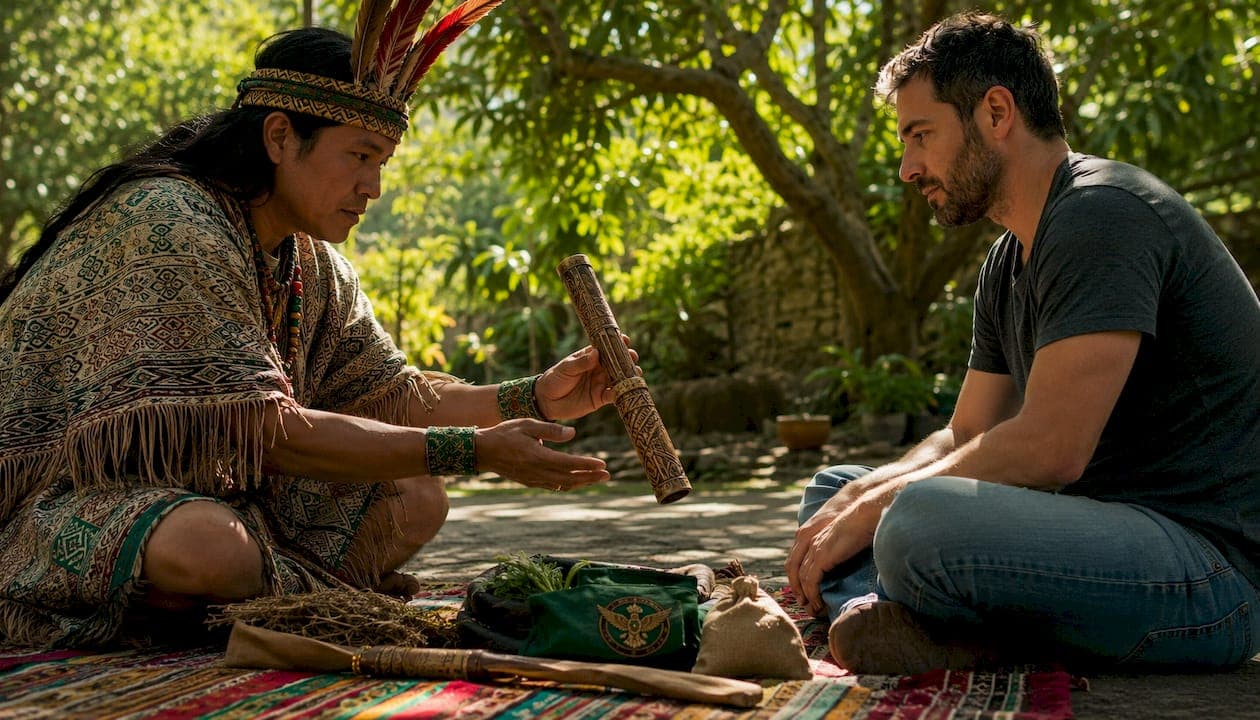
Yes, you can gift a tepi — but only when three non-negotiable conditions are met first.
Before you wrap the pipe and write a card, pause and check these:
- Recipient readiness: The person receiving the tepi has training or is actively seeking it from a qualified facilitator or elder.
- Explicit consent and relationship: You have had a direct conversation about the gift, and the recipient has expressed genuine interest in serving Rapé to others.
- Ethical sourcing and clean condition: The tepi comes from a maker with transparent provenance, and the pipe is physically clean and energetically clear.
A tepi is not a collectible or a decorative piece. It is a ceremonial tool that carries the obligation to serve another person with skill, intention, and respect. Gifting one without meeting these conditions risks harm to the recipient, to the people they may serve, and to the Indigenous traditions the tool comes from.
Table of Contents
- What is a tepi, and how does it differ from a kuripé?
- How is a tepi used in practice?
- How do you choose the right tepi to give as a gift?
- What is the proper etiquette for gifting a tepi?
- How should you accept a gifted tepi?
- How do you clean and maintain a tepi before and after gifting?
- What cultural and ethical obligations come with gifting a tepi?
- Key Takeaways
- Why we treat tepis as gifts of responsibility
- Pillars of Light hap'e: ethically sourced tepis for gifters who take it seriously
- Useful sources and further reading
What is a tepi, and how does it differ from a kuripé?
A tepi is a facilitator's serving pipe used to deliver Rapé (also written Hapé, pronounced "ha-PÉH") into another person's nostrils through a controlled, intentional breath called a soplada. It is the standard ceremonial form of Rapé application among peoples including the Yawanawá, Huni Kuin (Kaxinawá), Kuntanawa, and Nukini of the Brazilian state of Acre and neighboring regions of Peru and Colombia. The act of receiving medicine from another person carries a symbolic dimension: trust, community, and the conscious choice not to face a moment alone.
A kuripé, by contrast, is a short V-shaped or L-shaped pipe, typically 5–15 cm long, designed for self-application. The user places one end at the nostril and the mouthpiece at the lips, then delivers a single breath to transfer the powder. Kuripés are considered personal objects and are not shared. They suit daily practice, preparation for prayer or meditation, and personal alignment work.
The tepi runs 15–35 cm, straight or slightly curved, and requires a second experienced person to operate. That structural difference is the whole point: a tepi exists because some moments call for another human being to hold the medicine and deliver it with intention.
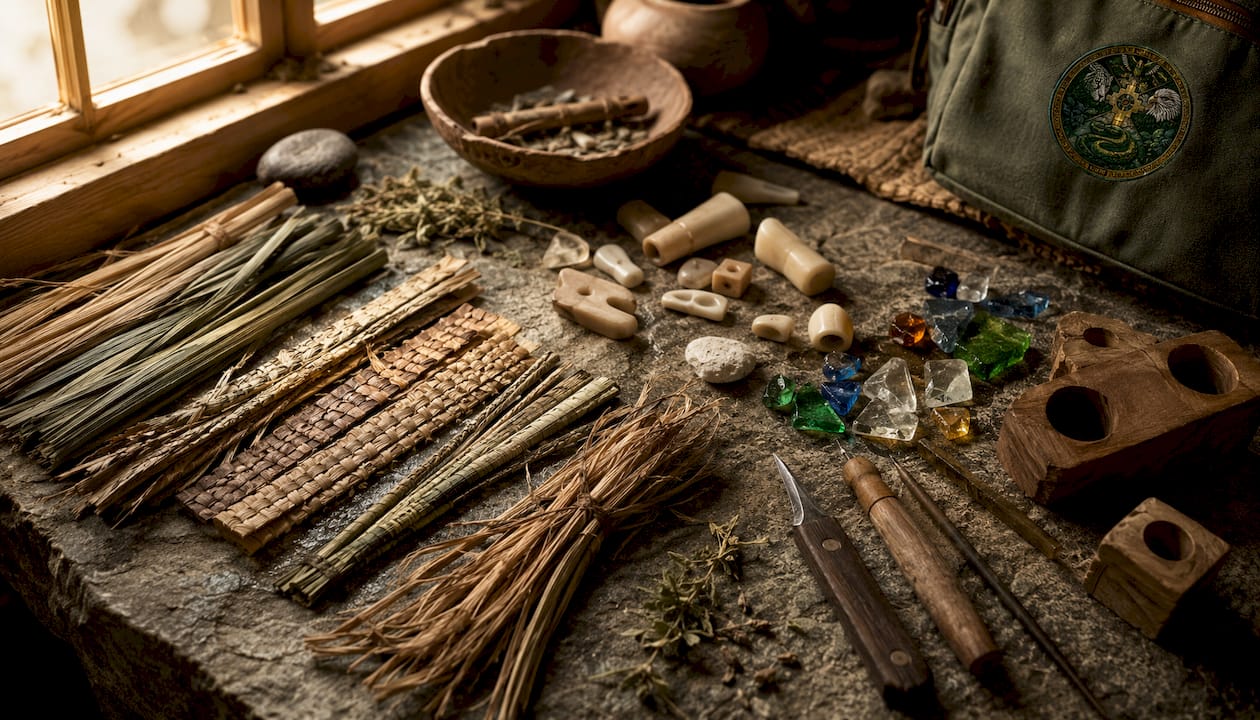
Common materials include bamboo, hardwood, and bone. In some Amazonian communities, bamboo represents clarity and purity; bone, particularly from birds or tapirs, connects the user to the animal's qualities; hardwood anchors the practice in the earth. These meanings are community-specific and cosmologically grounded. For gifters outside these traditions, the material choice still matters practically: hardwood tepis are durable and develop a relationship with their keeper over time, while bamboo is lighter and more accessible. Carved adornments, feathers, and sacred attachments are common on ceremonially significant pieces.
How is a tepi used in practice?
The tepi is a facilitator's tool. The person blowing sends their intention and spirit to the person receiving, so the quality of the soplada depends far more on the blower's presence and focus than on the force of the breath. A steady, forceful but not explosive breath is the target technique. Too strong a breath irritates the nasal mucosa; too large a portion causes an unnecessarily intense physical reaction.
Here is the basic serving sequence:
- Find a quiet location. Both people sit face to face, upright, with the spine aligned. Ground into the present moment before anything else.
- Connect and orient. Look the recipient in the eyes. Explain what to expect, invite them to set an intention, and ask how much Rapé they would like and how firm a soplada they prefer.
- Begin with prayer or intention. Connect with the spirit of the medicine and ask for blessing on the recipient before loading the pipe.
- Load the tepi. Place a small portion of Rapé into the far end. For beginners, a pea-sized amount per nostril is a reasonable starting point.
- Position and deliver the first soplada. Place the tepi snug against one nostril (traditionally the left side first in some lineages). The recipient exhales gently, then contracts the throat muscles to close the back of the nasal passage. Deliver a steady, mindful breath.
- Check in. Ask the recipient how they feel. Adjust force or amount for the second nostril based on their response.
- Deliver the second soplada to the opposite nostril using the same care and presence.
- Support the integration. After both nostrils, you may trace the bridge of the nose toward the crown or brush downward along the sides of the head to assist in clearing. Close with a prayer, Haux, or Aho.
- Allow the recipient to rest. Physical responses — tears, the urge to cough, salivation — are normal. Do not rush the person out of the experience.
Safety basics: Always start with smaller doses for anyone new to the practice. Keep open, verbal communication throughout. Never serve someone who has not consented clearly. If breathing difficulties arise, stop immediately and ensure the person is comfortable and supported. For a deeper grounding in safe ceremonial use, the Hapé safety and traditions guide at Pillars of Light hap'e covers dosing, set and setting, and contraindications in detail.
How do you choose the right tepi to give as a gift?
Start with the recipient's experience level. The pipe should match where they actually are, not where you hope they will be.
| Recipient Profile | Recommended Tepi Characteristics |
|---|---|
| Beginner / new to facilitating | Shorter length (15–15 cm), simple bore, no elaborate sacred attachments, easy-to-clean material |
| Experienced practitioner | Mid-length (15–35 cm), quality hardwood or bamboo, modest carved detail, maker-provenance note included |
| Ceremonial facilitator | Full-length (15–35 cm), hand-carved or community-made, sacred adornments appropriate to their lineage, full provenance documentation |
Selection criteria to evaluate:
- Length and bore diameter: A longer pipe delivers a more even transfer but requires more breath control. A wider bore is more forgiving for beginners.
- Mouthpiece design: Smooth, well-finished mouthpieces reduce fatigue during longer ceremonies. Check for splinters or rough edges on wooden pieces.
- Material durability: Hardwood outlasts bamboo with proper care. Bone pieces are rare and carry specific symbolic weight — confirm the recipient's lineage connection before choosing one.
- Carved adornments: Beautiful, but only appropriate when the designs come from the maker's own tradition. Never gift a tepi with sacred designs that were reproduced without community authorization.
Ethical sourcing checklist: Confirm the maker's name and community. Ask whether the piece was made with community authorization and whether the maker received fair payment. Avoid mass-produced pieces labeled "sacred" or "ceremonial" with no maker information. When tepis circulate globally, provenance is the primary trust signal that ensures communities benefit from the sale.
Condition: A new tepi is the cleanest gift. A pre-owned tepi is acceptable only when it has been physically cleaned, smoke-cleared, and accompanied by an explicit conversation about its history and prior use. See the care section below for the full cleaning protocol.
Pro Tip: Include a handwritten note with the tepi that names the maker, the material, and any care instructions you received. This small act of documentation honors the maker and gives the recipient a record they can pass forward.
What is the proper etiquette for gifting a tepi?
Gifting a tepi is gifting responsibility and authority to serve. The pipe carries the expectation that its keeper will use it with skill, consent, and reverence. That means the conversation before the gift matters as much as the gift itself.
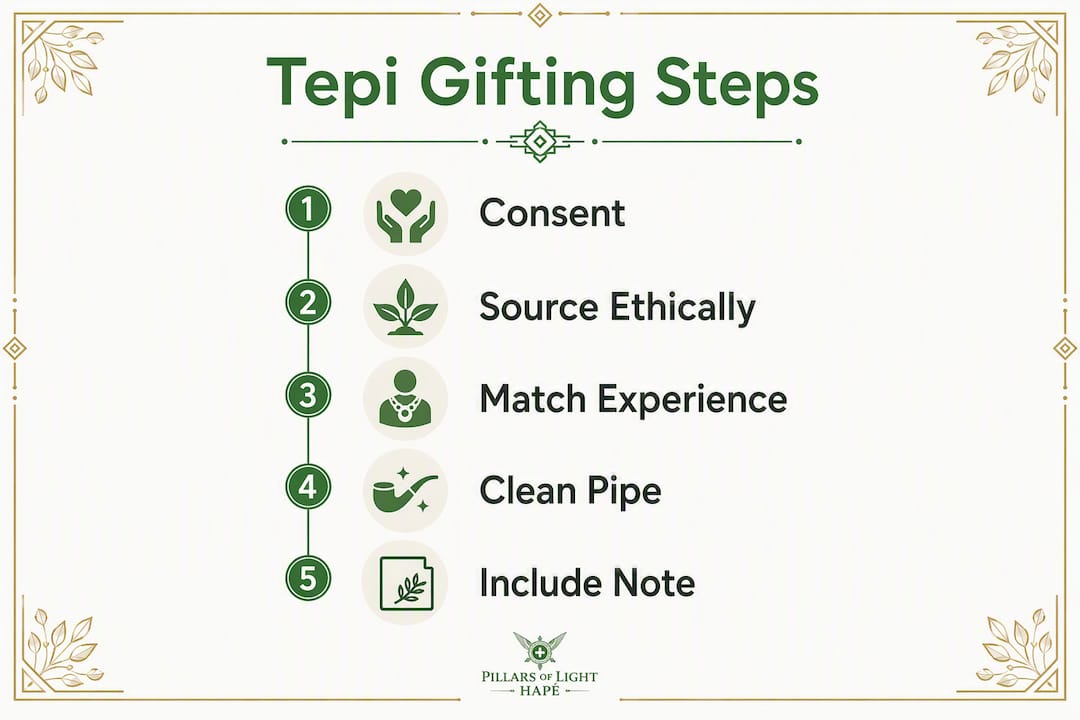
The core rule: never present a tepi as a surprise. Always seek explicit consent and confirm readiness first.
Step-by-step gifting protocol:
- Have the pre-gift conversation. Ask directly whether the person has interest in facilitating Rapé for others. If they have not expressed this themselves, do not assume.
- Seek an elder's or teacher's input. If you practice within a lineage or community, consult a traditional teacher before gifting a ceremonial tool to someone outside that circle. This is especially true for pieces with sacred adornments or lineage-specific designs. Consulting plant medicine ritual resources and trained teachers is a recognized step in ethical ceremonial practice.
- Choose the setting. A private, quiet presentation is appropriate for most gifting situations. A ceremonial presentation, where the tepi is passed during a circle or ceremony, is appropriate only when both giver and recipient are active members of that community and an elder is present to witness.
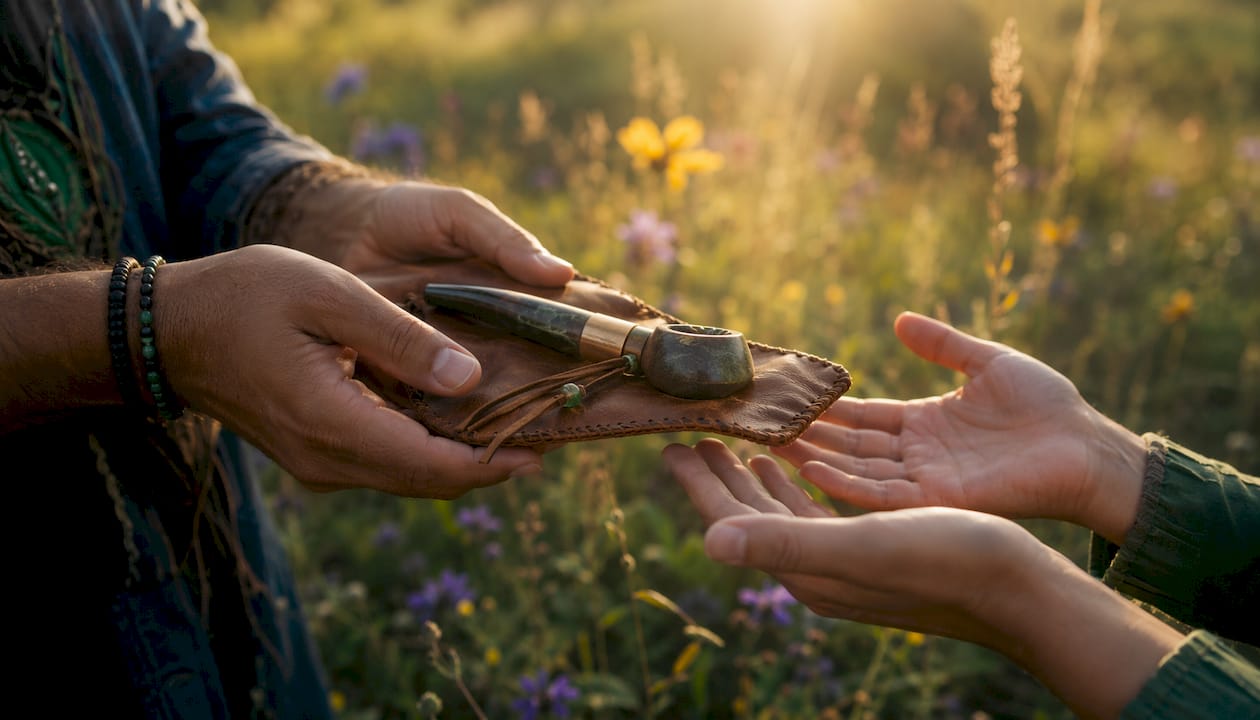
- Physically present the tepi with both hands. Hold the pipe at the center, not by the mouthpiece or the nose end. This posture signals respect for the tool and for the recipient.
- State your intention aloud. Keep it brief and honest.
Example phrases for different contexts:
- Private gift: "I'm offering you this tepi because I've seen your commitment to this practice. I ask that you receive it with the understanding that it carries the responsibility to serve with care and consent."
- Ceremonial presentation: "With the blessing of [elder's name], I pass this pipe to you as a sign of trust and readiness. May it serve the medicine well."
- Passing a pre-owned tepi: "This pipe was used by [name or lineage, if known]. It has been cleaned and cleared. I pass it to you with full knowledge of its history."
Gifting do's and don'ts:
| Do | Don't |
|---|---|
| Ask permission and explain your intention before gifting | Offer a tepi as a surprise without prior conversation |
| Include provenance notes and care instructions | Gift a pipe with no maker information or sourcing details |
| Confirm the recipient has or is seeking training | Assume enthusiasm for Rapé equals readiness to facilitate |
| Cleanse the tepi before presenting it | Gift a used pipe without disclosing its history |
| Offer to connect the recipient with training resources | Present the gift in a public or casual social setting |
| Consult an elder or teacher when in doubt | Gift sacred adornments from a lineage the recipient has no connection to |
Consent checklist before presenting:
- Has the recipient expressed interest in facilitating Rapé for others?
- Do they have access to training or mentorship?
- Have you disclosed the pipe's full history (if pre-owned)?
- Is the sourcing transparent and ethically verified?
Pro Tip: Add a small cleansing step to the presentation itself. Light a piece of palo santo or copal, pass the tepi through the smoke, and offer it to the recipient while the smoke is still present. This brief ritual signals that the gift is being transferred with intention, not just handed over.
The role of Indigenous reciprocity culture in ceremony is worth understanding before you gift: the expectation of reciprocity runs through every exchange in these traditions, and a tepi gift creates an ongoing relational obligation, not a one-time transaction.
How should you accept a gifted tepi?
Accept the pipe with gratitude and a clear, spoken acknowledgment of the responsibility it carries. Silence or a simple "thank you" is not enough. The giver has made a significant gesture; meet it with equal intention.
Acceptance script examples:
- "I receive this with gratitude and with the understanding that it asks something of me. I commit to learning how to use it with care and respect."
- "Thank you. I accept this pipe and the responsibility that comes with it. I will seek guidance before I serve with it."
Immediately after receiving the tepi, take these steps before your first use:
- Inspect the pipe for physical damage, cracks, or mold.
- Clean it according to the material-specific protocol in the care section below, even if it appears new.
- Seek training or mentorship from an experienced facilitator before serving anyone. A tepi is not a tool to learn on alone.
How to decline respectfully:
If you are not ready, say so directly and warmly. "I'm honored by this, and I'm not yet in a place to receive it responsibly. I'd ask you to hold it until I've completed the training I need." This response preserves the relationship and honors the tool. Accepting a tepi you are not prepared for is more disrespectful than declining.
How do you clean and maintain a tepi before and after gifting?
Clean and energetically clear a tepi before gifting it. For a new pipe, this means a first-use cleaning and a smoke-clearing. For a pre-owned piece, the protocol is more thorough.
What "clean" means depends on the material:
- Porous materials (wood, bamboo): Surface cleaning only. Avoid soaking or harsh chemical immersion, which can damage the material and leave residue in the bore.
- Non-porous parts (bone inserts, metal fittings): High-proof isopropanol or a neutral high-proof spirit (vodka, grain spirit) is appropriate for flushing and disinfecting.
Step-by-step cleaning routine:
- First clean (new or gifted pipe): Run a dry pipe cleaner through the bore to remove any dust or debris. Pass the pipe through palo santo or copal smoke for energetic clearing. Allow it to air dry completely.
- After each use: Knock the tool dry and run a soft, dry brush or pipe cleaner through the channel to remove Rapé residue. Never store while wet.
- Weekly or after use by another person: Flush the channel with high-proof isopropanol and allow it to dry fully before storing. This step is non-negotiable when a tepi has been used in a shared ceremonial context.
- Seasonal deep clean: Inspect for cracks, mold, or wear. For wooden tepis, apply a small amount of beeswax or coconut oil with a soft cloth to protect the wood from drying and cracking. Check all joints and fittings.
When not to gift a tepi: Do not gift a pipe that shows mold, structural cracks, or damage to the bore. Do not gift a pre-owned piece without disclosing its full history and completing the deep-clean protocol. A pipe with unresolved energetic history from prior ceremonies should be cleared by a knowledgeable practitioner before it changes hands. For guidance on energetic clearing practices, the aura cleansing with ceremonial tools resource at Pillars of Light hap'e offers practical steps.
What cultural and ethical obligations come with gifting a tepi?
Gifting a tepi without cultural awareness risks appropriation and real harm. The risks are specific: sacred designs reproduced without authorization, maker communities excluded from the economic benefit of their own craft, and recipients using a ceremonial tool without the training to do so safely.
Ethical checklist before you buy or gift:
- Is the maker named, and is their community identified?
- Does the purchase price reflect fair payment to the maker?
- Are the materials disclosed, and are any sacred designs used with community authorization?
- Does the vendor have a transparent sourcing policy and a stated relationship with the producing community?
- Is the piece sold as a ceremonial tool with appropriate context, or as a decorative item with ceremonial language attached for marketing purposes?
When to stop and consult an elder or teacher: If you cannot answer the questions above, pause. Reach out to a traditional teacher, a trusted ceremonial community, or a vendor with documented sourcing relationships before proceeding. The Indigenous ceremony etiquette guide at Pillars of Light hap'e outlines community protocols and consent norms in detail.
Pro Tip: When you purchase from a vendor with documented maker relationships, ask for a provenance card or maker note to include with the gift. This small piece of paper connects the recipient directly to the source and signals that the purchase supported the community, not just the supply chain.
For deeper context on why these plants and tools carry the weight they do, the why Amazonian plants are sacred guide is a grounding read before any ceremonial purchase.
Key Takeaways
Gifting a tepi responsibly requires explicit consent, verified ethical sourcing, a clean and documented pipe, and a recipient who has or is actively seeking proper training before serving anyone.
| Point | Details |
|---|---|
| Consent is non-negotiable | Never gift a tepi as a surprise; confirm the recipient's interest and readiness in a direct conversation first. |
| Provenance protects everyone | Choose a tepi with a named maker, transparent sourcing, and fair payment to the producing community. |
| Clean before you gift | Run a physical cleaning and a smoke-clearing on any tepi before presenting it, new or pre-owned. |
| Recipient training is required | A gifted tepi should come with an offer to connect the recipient with a qualified facilitator or training resource. |
| Presentation carries meaning | Use both hands, state your intention aloud, and include a written provenance note with the pipe. |
| Pillars of Light hap'e | Offers ethically sourced tepis and kuripes with maker notes, plus consultation bookings for recipients who need training guidance. |
Why we treat tepis as gifts of responsibility
The conventional framing around gifting ceremonial tools tends to focus on aesthetics: is it beautiful, is it authentic-looking, does it feel special? That framing misses the point entirely.
A tepi is not a symbol of spiritual interest. It is a functional tool that will be placed against another person's nostril and used to deliver medicine directly into their body. The person holding the mouthpiece is making a physiological and energetic intervention in another human being's experience. That is a serious act, and the pipe that enables it carries the weight of every ceremony it has been part of and every ceremony it will be part of.
What gets overlooked in most gifting guides is the relational dimension. In Amazonian traditions, the tepi is not owned in the Western sense. It is kept. The keeper is accountable to the medicine, to the maker, and to every person they serve. When you gift a tepi, you are not transferring an object. You are transferring an accountability. The recipient needs to understand that before they unwrap the pipe, not after.
The practical implication: the most important part of this tepi pipe gifting etiquette guide is the pre-gift conversation, not the presentation ritual. Get that conversation right, and the rest follows naturally. Skip it, and no amount of ceremonial wording at the handover will make the gift appropriate.
Pillars of Light hap'e: ethically sourced tepis for gifters who take it seriously

Pillars of Light hap'e, based in Old Town Spring, Texas, carries handcrafted tepis and kuripes with documented maker provenance, care instructions, and the sourcing transparency this guide asks you to verify. Every piece in the ceremonial items collection is selected with the same ethical checklist outlined above: named makers, community relationships, and fair compensation built into the price.
For gifters who want to go further, Pillars of Light hap'e offers spiritual consultation and ceremony bookings, so the recipient of your gift can access trained guidance before they serve with the pipe. The kuripe and tepi collection includes options suited to beginners through experienced facilitators, with product pages that carry the maker notes and care details you need to include with any responsible gift.
Browse the collection, book a consultation, or reach out directly through the site to ask about provenance for a specific piece before you buy.
Useful sources and further reading
- Tepi and Kuripe: Tools for Rapé Application — Detailed breakdown of both tools, application technique, materials, and hygiene protocol.
- How to Give Someone a Soplada of Sacred Amazonian Hapé Medicine — Step-by-step soplada guidelines for both giver and recipient.
- Plant Medicine Healing Ritual: A Practical Guide — Ethical preparation, ancestral protocols, and guidance on consulting traditional teachers.
- Hapé Safety and Traditions Guide — Pillars of Light hap'e's comprehensive internal resource on safe use, dosing, and ceremonial context.
- Indigenous Ceremony Etiquette — Community protocols, consent norms, and respectful participation guidance.
- Why Amazonian Plants Are Sacred — Cultural and spiritual context for master plants and ceremonial tools.
- Ceremonial Items Collection at Pillars of Light hap'e — Ethically sourced tepis, kuripes, and ceremonial tools with maker provenance.
This article is general educational information, not medical, legal, or ceremonial advice. Confirm current protocols and safety guidance with a qualified traditional teacher or trained facilitator for your specific situation.