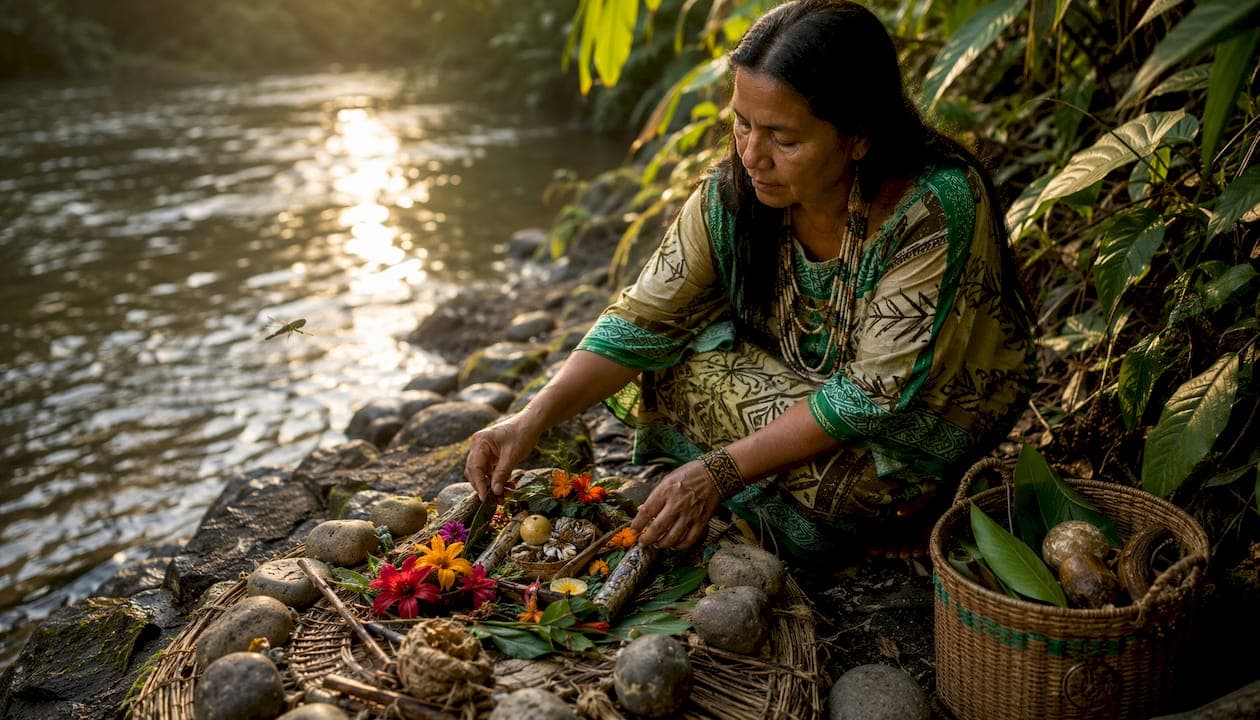
Indigenous reciprocity culture is the living relational ethic at the heart of Amazonian ceremonial life. It is not a philosophy confined to texts or rituals performed once a year. It is the daily practice of giving, receiving, and stewarding the gifts of the natural world with accountability and reverence. For those drawn to Amazonian ceremonial products like Hapé, understanding this culture is not optional background knowledge. It is the foundation that gives every ceremony its meaning.
Here is what that foundation looks like in practice:
- Reciprocity as relational ethic: Indigenous reciprocity keeps the gift from nature in motion through self-perpetuating cycles of giving and receiving, sustaining mutual flourishing between people and the natural world.
- Ceremony as relationship: Products like Hapé, Kuripes, and master plants are not commodities. They are sacred gifts used to honor and maintain bonds with the more-than-human world.
- Community and ecological balance: Reciprocity practices sustain social cohesion and environmental stewardship across generations within Amazonian communities.
- Pillars of Light hap'e sources and offers these ceremonial products with direct respect for these principles, making ethical engagement accessible to spiritual practitioners across the United States.
Table of Contents
- How Indigenous reciprocity opens a path to real transformation
- Reciprocity is spiritual communication, not transaction
- How Amazonian ceremonial products fit within reciprocity culture
- How to engage ethically with Indigenous ceremonial traditions
- How reciprocity practices developed across history
- What reciprocity looks like across Amazonian communities
- Reciprocity's role in Indigenous economic life today
- What threatens Indigenous reciprocity traditions today
- Key Takeaways
- Reciprocity is the practice, not the idea
How Indigenous reciprocity opens a path to real transformation
Reciprocity is not a cultural curiosity. Irene Teixidor-Toneu and colleagues argue that it is a necessary lens for social-ecological change, one that requires privileging Indigenous knowledge and expertise over Western scientific paradigms rather than simply borrowing from them.
"Tools for harmony with nature exist within Indigenous systems, but they require a shift from Western science to Indigenous expertise for sustainable social-ecological relations." — Irene Teixidor-Toneu et al.
That shift is significant. Western frameworks tend to treat nature as a resource to be managed. Indigenous reciprocity treats nature as a partner with legal and moral standing. Reciprocity, in this sense, is a legal responsibility and moral perspective that foregrounds many Indigenous worldviews, as documented in ethnoecological research across Pacific Northwest territories. When you engage with Amazonian ceremony through that lens, you are not consuming a product. You are entering a relationship with obligations attached.
The impact of reciprocity in Indigenous communities extends to rebuilding healthy relations with nature and sustaining long-term ecological balance. Communities that practice reciprocity actively set aside resources, protect ecosystems, and pass stewardship responsibilities across generations. That is the transformative potential this culture carries.
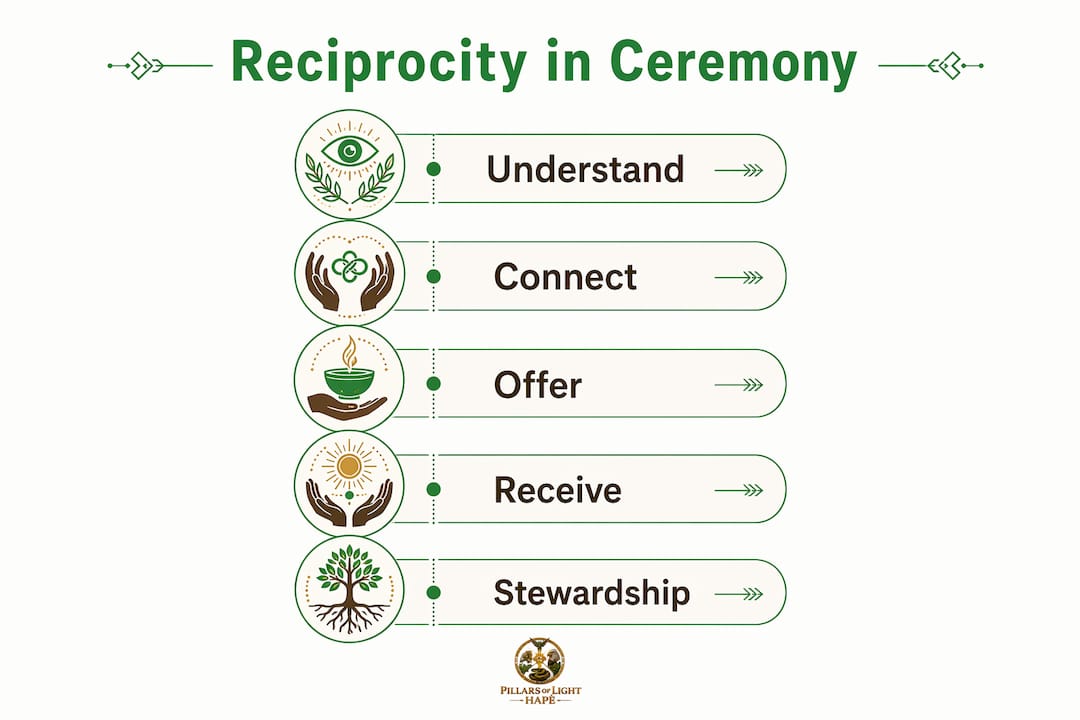
Reciprocity is spiritual communication, not transaction
Researcher Crystal Arnold's work makes a distinction that changes how you approach ceremony entirely. Reciprocity, she notes, involves yarning with the natural world, a form of genuine dialogue and communication with nature rather than a simple transactional exchange. Healing personal and communal relationships with the more-than-human world is a prerequisite for spiritual wellbeing, not a byproduct of it.
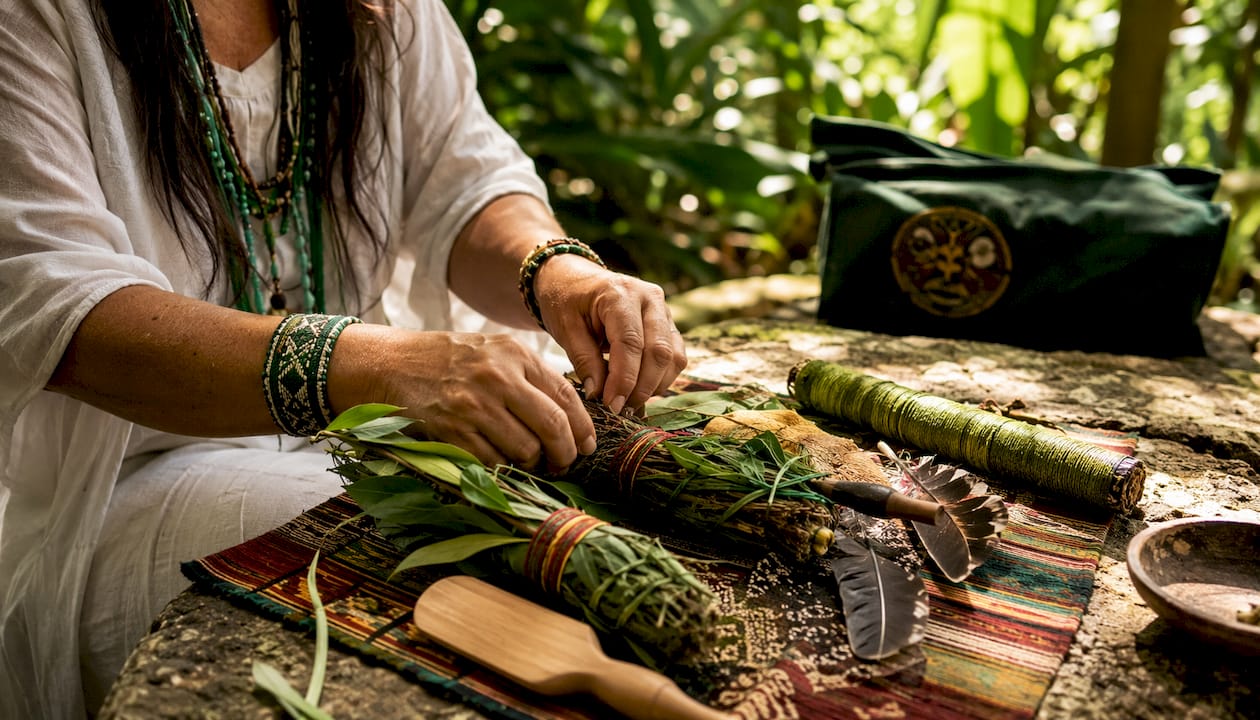
Indigenous worldviews attribute sentience and agency to plants, animals, and the land itself. A plant like the ones used in Hapé blends is not an inert ingredient. It is a being with its own knowledge and relational presence. Engaging with it ceremonially means accepting a responsibility, not just receiving a benefit.
Pro Tip: Before working with any Amazonian ceremonial product, take time to sit quietly with it. Acknowledge where it came from, who tended it, and what you are asking of it. That moment of recognition is the beginning of reciprocity.
Accountability and stewardship replace the consumer mindset here. Transitioning from passive consumer to active participant in reciprocity is what distinguishes authentic ceremonial engagement from superficial use. You can explore how plant spirit medicine traditions embody this relational responsibility across cultures.
How Amazonian ceremonial products fit within reciprocity culture
Hapé, Kuripes, Tepis, and master plants are not accessories to ceremony. They are the physical expression of reciprocal relationships maintained over generations. Each product carries the knowledge, labor, and intention of the Indigenous communities who created it.
Ceremonial products used within reciprocity frameworks serve specific relational functions:
- Hapé (Rapé): A sacred snuff prepared from Amazonian tobacco and medicinal plants, used to clear the mind, open spiritual channels, and honor the plant spirits involved in its preparation.
- Kuripes: Self-applicator pipes, often handcrafted by Amazonian artisans, that allow individual practitioners to administer Hapé in personal ceremony.
- Tepis: Facilitator pipes used when one person administers Hapé to another, embodying the relational dimension of reciprocity between practitioner and recipient.
- Master plants: Amazonian botanical allies regarded as teachers, used in ceremony to deepen connection with the natural world and support healing.
| Product | Ceremonial Role | Reciprocity Dimension |
|---|---|---|
| Hapé (Rapé) | Spiritual clearing and connection | Honoring plant spirits and ancestral knowledge |
| Kuripe | Personal ceremony application | Individual accountability and stewardship |
| Tepi | Shared ceremony facilitation | Relational giving between practitioner and recipient |
| Master plants | Healing and teaching | Long-term relationship with plant intelligence |
Pillars of Light hap'e carries 75+ varieties of Hapé alongside handcrafted Kuripes and Tepis, each sourced with attention to the cultural protocols that make these items meaningful rather than merely decorative.
How to engage ethically with Indigenous ceremonial traditions
Ethical engagement with Indigenous reciprocity culture is not complicated, but it does require honesty about your intentions and a willingness to commit beyond a single purchase.
- Ask permission, not forgiveness. Approach Indigenous ceremonial traditions with humility. Research the origins of what you are working with before you begin.
- Give thanks explicitly. Acknowledge the communities, the land, and the plants involved. Gratitude is not performative here. It is structural to the practice.
- Honor protocols. Each tradition carries specific ways of preparing, administering, and closing ceremony. Follow them.
- Commit long-term. Indigenous reciprocity is not a weekend retreat. It is a long-term relational commitment that deepens over time.
- Avoid commodification. Purchasing ceremonial items as novelties or aesthetic objects severs the relational thread they carry.
- Source ethically. Pillars of Light hap'e prioritizes Indigenous community wellbeing and cultural preservation in every sourcing decision, making it a trustworthy starting point for practitioners in the U.S.
You can also explore Indigenous tradition preservation efforts globally to understand the broader stakes of cultural respect.
How reciprocity practices developed across history
Indigenous reciprocity did not emerge from a single moment or teaching. It developed over thousands of years as Amazonian and other Indigenous communities learned to live within ecosystems that required careful, sustained attention. Reciprocity became embedded in customary law, spiritual cosmology, and daily practice simultaneously. The United Nations recognizes that traditional knowledge managed by Indigenous communities since time immemorial uses customary law embedded in spiritual cosmology as its governing framework.
Colonization disrupted these systems significantly. Imposed legal and knowledge frameworks undermined reciprocity practices and severed intergenerational transmission in many communities. What survives today often does so through deliberate cultural revitalization, elder knowledge-keeping, and the work of communities who refused to let these practices disappear.
What reciprocity looks like across Amazonian communities
The Shipibo-Conibo of Peru are among the most recognized practitioners of ceremonial reciprocity in the Amazon. Their Hapé preparations and healing ceremonies are governed by protocols that treat plants as living teachers requiring respect and relationship. The Yawanapi and Huni Kuin communities similarly maintain reciprocal relationships with the forest through ceremony, song, and seasonal stewardship practices that regulate how much is taken and what is returned.
In western Ecuador, research on the Commune of Salanguillo documents how Indigenous peoples build reciprocal contributions with culturally significant plant species across institutional, biophysical, and symbolic dimensions. Reciprocity there is not metaphorical. It shapes land management decisions, community governance, and identity formation in concrete, measurable ways.
Reciprocity's role in Indigenous economic life today
Contemporary Indigenous economic systems in the Amazon often operate on reciprocity principles that run parallel to, and sometimes in direct tension with, market economies. Gift economies, communal labor exchanges, and resource-sharing networks distribute goods and services without the transactional logic of profit-first markets. These systems prioritize ecosystem health and community wellbeing over individual accumulation.
When ethical brands source ceremonial products directly from Indigenous artisans and communities, they participate in extending that economic reciprocity outward. The exchange becomes meaningful rather than extractive when fair compensation, cultural credit, and ongoing relationship replace one-time transactions.
What threatens Indigenous reciprocity traditions today
The pressures are real and ongoing. Deforestation in the Amazon destroys the ecosystems that reciprocity practices are designed to sustain. Language loss severs the transmission of knowledge embedded in Indigenous terms, songs, and ceremonial protocols. UNESCO's International Decade of Indigenous Languages (2022–2032) reflects global recognition of how urgent this crisis has become.
Commodification of ceremonial products without cultural context strips reciprocity of its meaning and reduces sacred traditions to aesthetic trends. When Hapé is sold without acknowledgment of its origins or the communities who created it, the relational thread breaks. Supporting brands that actively fund cultural preservation and maintain transparent sourcing relationships is one direct way practitioners in the U.S. can counter these pressures.
Key Takeaways
Indigenous reciprocity culture is the relational foundation that gives Amazonian ceremony its depth, sustainability, and spiritual integrity.
| Point | Details |
|---|---|
| Reciprocity is relational, not transactional | It involves long-term stewardship and dialogue with nature, not a one-time exchange. |
| Ceremonial products carry relational weight | Hapé, Kuripes, and master plants embody reciprocal bonds between people, plants, and communities. |
| Ethical sourcing honors the culture | Purchasing from providers like Pillars of Light hap'e supports Indigenous communities and cultural preservation. |
| Spiritual engagement requires accountability | Authentic practice means accepting duties to the ecosystem, not just receiving personal benefit. |
Reciprocity is the practice, not the idea
Most people who come to Amazonian ceremony arrive through curiosity or a desire for healing. That is a legitimate starting point. What the culture of reciprocity asks, though, is that you do not stop there.
The gap between consuming a ceremonial product and genuinely participating in reciprocity is the gap between taking and relating. It is not a moral judgment. It is a practical distinction with real consequences for the traditions you are engaging with. When ceremony is reduced to personal benefit, the relational web that sustains it begins to fray. When it is approached as a mutual exchange with accountability attached, something different happens. The practice deepens. The community around it strengthens. The knowledge survives another generation.
What strikes me most about Indigenous reciprocity is how little it asks of the individual in terms of complexity and how much it asks in terms of consistency. You do not need specialized training to begin. You need the willingness to show up repeatedly, to give thanks genuinely, and to let the relationship teach you rather than the other way around. That is the shift. And it is available to anyone willing to make it.