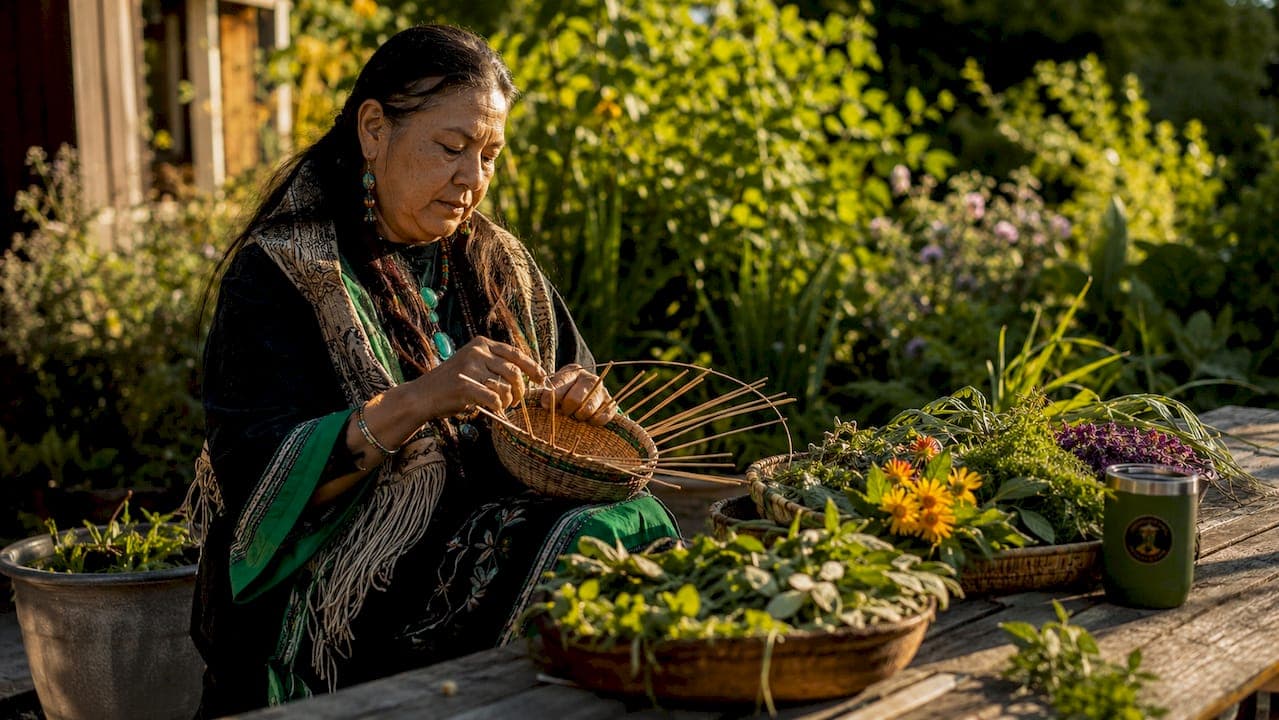
Indigenous tradition preservation is defined as the active, community-led practice of sustaining cultural knowledge, ecological relationships, and ancestral customs across generations. The most compelling indigenous tradition preservation examples share one trait: they treat culture as a living system, not a museum artifact. UNESCO frames living heritage as something continuously created through kitchens, workshops, and ritual spaces. That principle separates preservation that works from preservation that fades. From Meghalaya's root bridges to the Gullah Geechee coast, the strongest models combine ecological stewardship, intergenerational practice, and genuine community authority.
1. Indigenous tradition preservation examples: Meghalaya's living root bridges
Meghalaya's living root bridges are the clearest proof that indigenous engineering and ecological knowledge can outlast any concrete structure. The Khasi and Jaintia peoples of northeastern India have guided the roots of rubber fig trees across rivers for generations, creating bridges that grow stronger with age. These are not relics. They are maintained, extended, and passed down through direct practice.
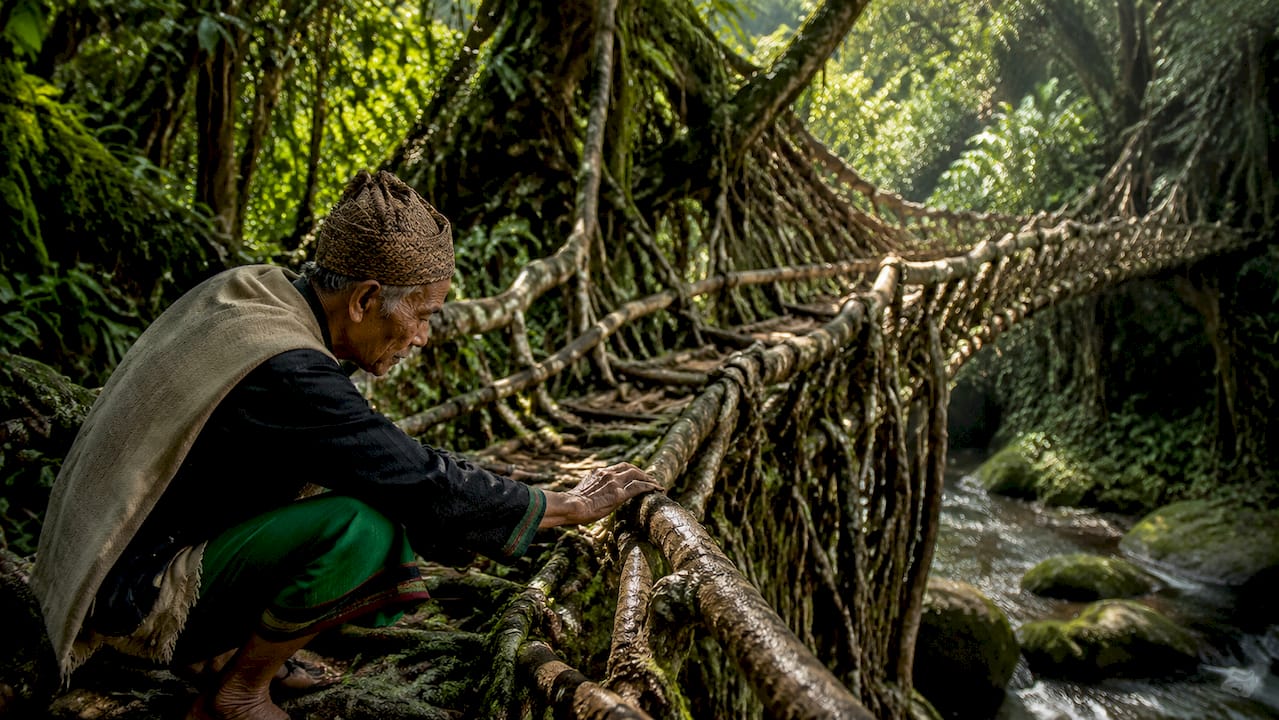
The Meghalaya Basin Development Authority now partners with indigenous villages to protect over 120 living root bridges. The partnership has established 26 nature homes and learning centers, plus 25 nurseries that propagate native species. That infrastructure keeps both the ecology and the cultural knowledge alive simultaneously.
What makes this model worth studying is the governance structure. External agencies act as equal partners rather than directors, strengthening traditional village leadership instead of replacing it. The bridges are also under consideration for UNESCO World Heritage nomination, which would formalize their global significance.
- Communities retain decision-making authority over bridge maintenance schedules
- Nurseries supply native species to sustain the biological foundation of each bridge
- Learning centers transmit construction knowledge to younger generations through hands-on practice
- The partnership model rejects top-down management in favor of co-stewardship
Pro Tip: When studying this model, focus on the governance structure first. The ecological outcomes follow directly from who holds authority.
2. Cowichan Tribes' ancient sea gardens and food sovereignty
The Cowichan Tribes of British Columbia practice one of the oldest forms of aquaculture on the continent. Their sea garden restoration reconnects the community with a 4,500-year-old rock wall site stretching 800 meters along the coastline. The site was not discovered by researchers. It was remembered by the community.
The restoration follows a two-phase annual cycle:
- Summer rebuilding phase: Community members work alongside the WSÁNEC Leadership Council and Parks Canada to physically reconstruct and reinforce the ancient rock walls.
- Winter harvesting phase: The community collects and cultivates shellfish, practicing the food sovereignty traditions the site was originally built to support.
- Knowledge transmission: Elders guide younger members through both phases, ensuring the ecological and cultural logic of the system transfers together.
- Site protection: Collaboration with Parks Canada formalizes protection of the physical site without removing community authority over its use.
"The sea gardens are not just a food source. They are a record of how our ancestors understood the ocean, the seasons, and their responsibility to both."
This project is a clear example of how indigenous heritage protection and food security reinforce each other. Restoring the site restores the knowledge. Restoring the knowledge restores the community's relationship with the land.
3. Maidu fire stewardship in California's Sierra Foothills
The Maidu Tribes of California's Sierra Foothills practice ancestral fire stewardship as both ecological management and cultural healing. Traditional controlled burns clear undergrowth, restore native plant communities, and reduce the fuel loads that drive catastrophic wildfires. The land responds to fire the way it always has, because the Maidu never stopped understanding it.
The cultural dimension runs equally deep. Past wildfires and forced displacement severed the Maidu's relationship with their ancestral territory. Returning to burn the land is not just land management. It is a direct act of healing from historical trauma. Fire stewardship revives both ecological health and the community's sense of belonging to a specific place.
- Community training programs teach controlled burn techniques rooted in ancestral practice
- Inter-tribal cooperation expands the reach of fire stewardship across connected territories
- Reduced wildfire risk benefits surrounding non-indigenous communities as well
- Cultural reconnection through fire practice addresses trauma that no documentation program could reach
Pro Tip: Fire stewardship programs work best when they are led by tribal members with cultural authority, not just ecological training. The two cannot be separated.
4. Vanuatu's co-designed communal houses and climate resilience
Vanuatu's Tanna Island offers one of the most carefully documented examples of vernacular architecture preservation under climate pressure. Cyclones regularly destroy traditional communal structures, and the standard response has been to replace them with concrete. That approach erases both the building and the cultural knowledge embedded in its construction.
The Tanna project took a different path. A four-year co-design process brought together village communities and researchers guided by UNESCO safeguarding principles. The project evaluated 90 design entries, testing how traditional building methods could be adapted to withstand cyclone-force winds without abandoning their cultural form.
- Traditional materials and spatial arrangements were preserved as non-negotiable design constraints
- Structural adaptations addressed cyclone resilience without replacing the vernacular aesthetic
- Community members participated in evaluation, not just construction
- UNESCO recognition in 2025 validated the co-design model as a replicable standard for indigenous heritage protection
The result is a building that looks, feels, and functions like a traditional communal house. It also survives storms that would have destroyed its predecessors. That combination is the goal of every serious cultural sustainability model.
5. Gullah Geechee women sustaining a living coastal heritage
The Gullah Geechee people of the U.S. Southeast coast carry one of the most intact African-descended cultural traditions in North America. Their heritage survived because it was never purely ceremonial. It was woven into daily life through basket weaving, food preparation, and direct stewardship of coastal ecosystems.
Gullah Geechee women are the primary carriers of this tradition. Basket weaving traces its techniques directly to West African origins, and the craft is transmitted from women to children through practice, not instruction manuals. Oyster reef conservation is equally active. Harvesting loosens soil and creates the seashell substrate that clam beds need to remain healthy. That is not passive stewardship. It is deliberate ecological management that mirrors ancestral intervention.
| Tradition | Cultural function | Ecological function |
|---|---|---|
| Basket weaving | Transmits West African craft knowledge | Sustains local plant harvesting practices |
| Oyster reef conservation | Connects community to coastal identity | Maintains reef structure and water quality |
| Culinary traditions | Preserves migration and resilience histories | Supports sustainable local food sourcing |
| Coastal stewardship | Reinforces land and water relationships | Protects shoreline ecosystems from degradation |
Food traditions carry the same weight. Gullah Geechee foodways are living archives of migration, survival, and adaptation. Every dish connects the present community to a specific history that no written record fully captures. These are traditional practices examples that demonstrate how indigenous plant medicine traditions and ecological knowledge overlap in daily life.
6. Intergenerational transmission as the core method
Every example above shares one mechanism: skills are transmitted through repeated active practice, not observation alone. Indigenous cultural transmission is cyclical. Knowledge is refined by taking skills apart and remaking them, involving youth in creation rather than passive watching. This is how fishing net weaving, fire management, and sea garden cultivation all survive across centuries.
Digitization has a role, but it is a supporting one. Community authority over what is recorded and what remains oral or secret is non-negotiable. Recording a ceremony without community consent does not preserve it. It extracts it. The methods for preserving indigenous traditions that actually work place the community in control of both the practice and the record.
The Amazonian healing traditions followed by communities across the Amazon basin follow the same logic. Hapé ceremonies, plant medicine knowledge, and ritual practices survive because they are practiced, not because they are archived. Living culture requires living practitioners.
Key Takeaways
Effective indigenous tradition preservation requires community authority, active practice, and ecological integration working together, not separately.
| Point | Details |
|---|---|
| Community authority is non-negotiable | Preservation fails when external agencies lead. Local governance must direct every phase. |
| Active practice beats documentation | Skills survive through repeated hands-on transmission, not records or observation alone. |
| Ecology and culture are inseparable | Sea gardens, fire stewardship, and root bridges all show that land health and cultural health reinforce each other. |
| Partnership models outperform top-down programs | Equal collaboration with traditional governance produces stronger, longer-lasting outcomes. |
| Living heritage is ongoing creation | UNESCO defines preservation as dynamic practice, not static safeguarding behind glass. |
Why the best preservation work makes me uncomfortable
The examples in this article are genuinely inspiring. They are also a quiet indictment of how most cultural preservation programs operate. I have watched well-funded organizations spend years digitizing ceremonies, cataloging plant knowledge, and publishing academic papers, while the communities those projects claimed to serve lost another generation of practitioners. The archive grew. The living culture shrank.
What the Maidu fire stewardship program, the Cowichan sea garden restoration, and the Meghalaya root bridge partnerships all have in common is that they are uncomfortable for institutions. They require giving up control. They require accepting that the community's timeline, the community's priorities, and the community's definition of success are the only ones that matter.
The hardest thing to accept is that you cannot preserve a culture from the outside. You can fund it, protect its land, and step aside. The rest belongs to the people who carry it. That is not a soft conclusion. It is the only one the evidence supports.
— Manifest Light
Honoring tradition through what you carry
The preservation work described here is rooted in the same principle that guides Pillars of Light hap'e: culture lives in practice, not in display cases. Pillars of Light hap'e sources 75+ varieties of Hapé directly from Amazonian communities, with ethical sourcing that supports the indigenous practitioners who create each blend. The ceremonial items collection includes handcrafted Kuripes, Tepis, and master plant products that carry the weight of living tradition. Each item connects you to a specific lineage of knowledge. Engaging with these tools respectfully is one concrete way to honor the cultural preservation work happening across the Amazon and beyond.
FAQ
What are the best examples of indigenous tradition preservation?
The strongest examples include Meghalaya's living root bridges, the Cowichan Tribes' sea garden restoration, Maidu fire stewardship in California, and Gullah Geechee coastal heritage practices. Each combines ecological management with active cultural transmission led by the community itself.
How do indigenous communities preserve their traditions?
Indigenous communities preserve traditions through active intergenerational practice, including hands-on craft transmission, seasonal land stewardship, and ceremonial participation. Documentation supports but never replaces direct practice.
What role does UNESCO play in indigenous heritage protection?
UNESCO provides safeguarding frameworks and recognition that formalize community-led preservation efforts, as seen in Vanuatu's communal house project and Meghalaya's root bridge nomination. UNESCO's own guidelines define living heritage as dynamic and practice-based, not static.
Why is community authority critical in cultural preservation?
Partnership models that empower indigenous governance consistently outperform top-down interventions. When external agencies lead, cultural knowledge is extracted rather than sustained.
Can digitization preserve indigenous traditions?
Digitization can support preservation, but only when the community controls what is recorded and what remains private. Recording without community consent extracts culture rather than protecting it.