What is Indigenous ceremony etiquette?
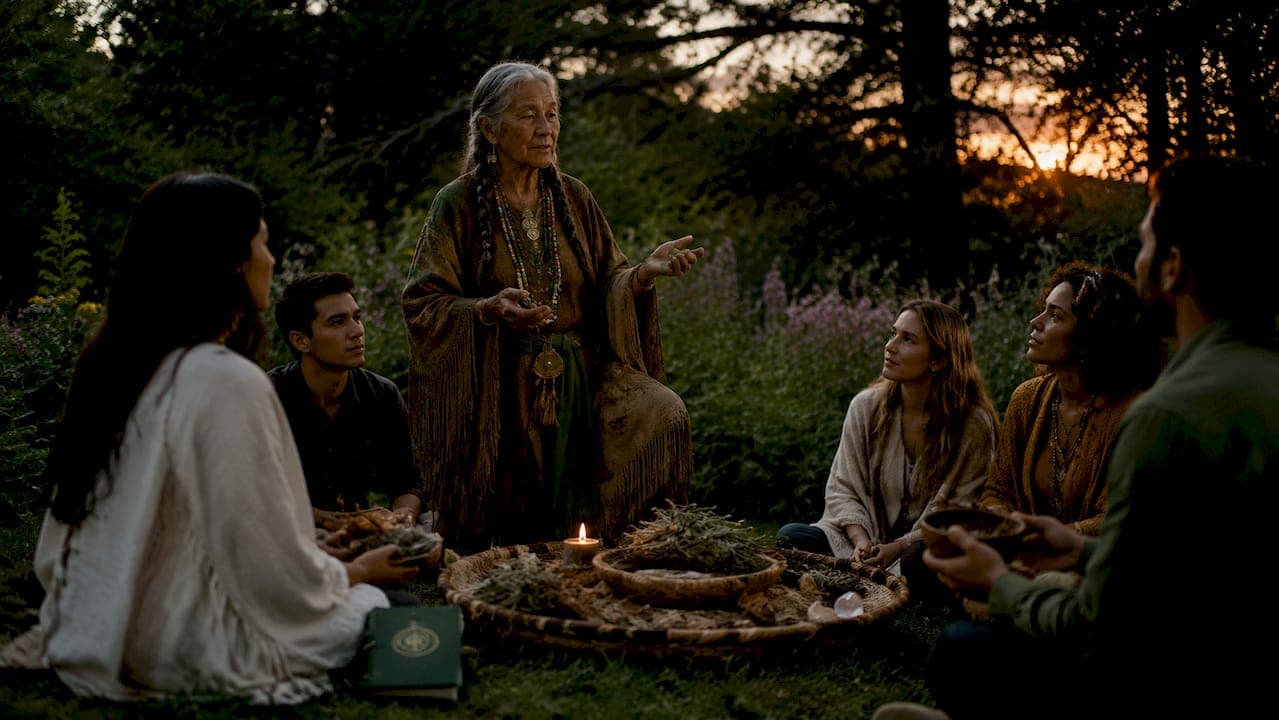
Indigenous ceremony etiquette is the practice of following community-specific protocols that honor sacred traditions, protect spiritual knowledge, and show genuine respect for the people who hold those traditions. It is not a single rulebook. Every nation, every ceremony, and every gathering carries its own living set of expectations, and your role as a visitor is to learn them before you arrive.
At its core, ceremony etiquette rests on a few non-negotiable foundations:
- Ceremonies are acts of nationhood and spirituality, not performances for outside observers
- Reciprocity and gratitude are the heart of all protocol, not just politeness
- Alcohol and recreational drugs are strictly prohibited; tobacco is sacred only when offered in a traditional ceremonial context
- Participation is by invitation, never assumed
- Respectful inquiry is always welcome; guessing is not
If you are approaching Amazonian plant medicine ceremonies specifically, these principles carry even deeper weight. The medicines, the tools, and the songs are inseparable from the communities that created them.
Table of Contents
- Core respectful behaviors to observe during Indigenous ceremonies
- How etiquette varies across nations, regions, and ceremony types
- How to seek guidance and participate respectfully
- Ethical sourcing and cultural preservation in Amazonian plant medicine
- Key takeaways
Core respectful behaviors to observe during Indigenous ceremonies
Showing up with good intentions is a start. Knowing how to act is what actually honors the space.
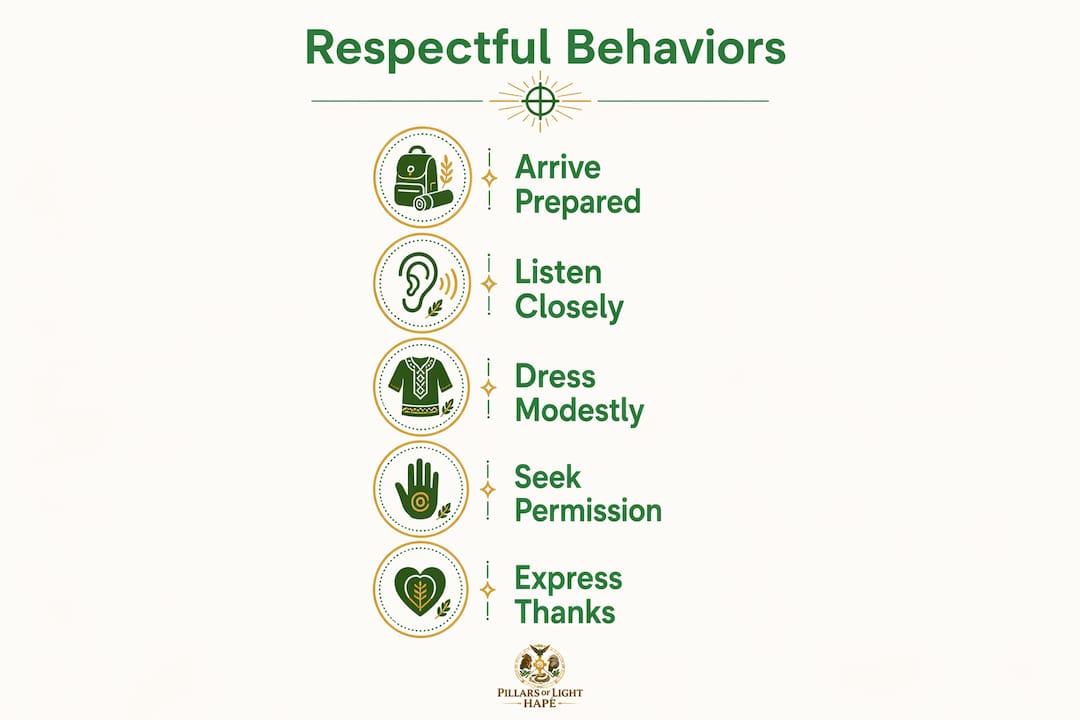
Listen to the Master of Ceremonies or Elders first. The MC or ceremonial leader will give you everything you need: when to sit, when to stand, when to speak, and when to stay still. Active listening is not passive. It means putting your phone away, staying present, and responding when the leader asks for response.
Dress with modesty and cultural awareness. Traditional attire carries deep spiritual meaning. You may be asked to wear ribbon shirts, long skirts, or other culturally significant clothing. Dress protocol varies by community, so ask your host in advance rather than assuming what you own is appropriate.
Never photograph or record without explicit permission. Photos, video, and social media sharing are restricted at most ceremonies. Sacred regalia, fires, and bundles are especially protected. If the MC announces a restriction, it applies to everyone.
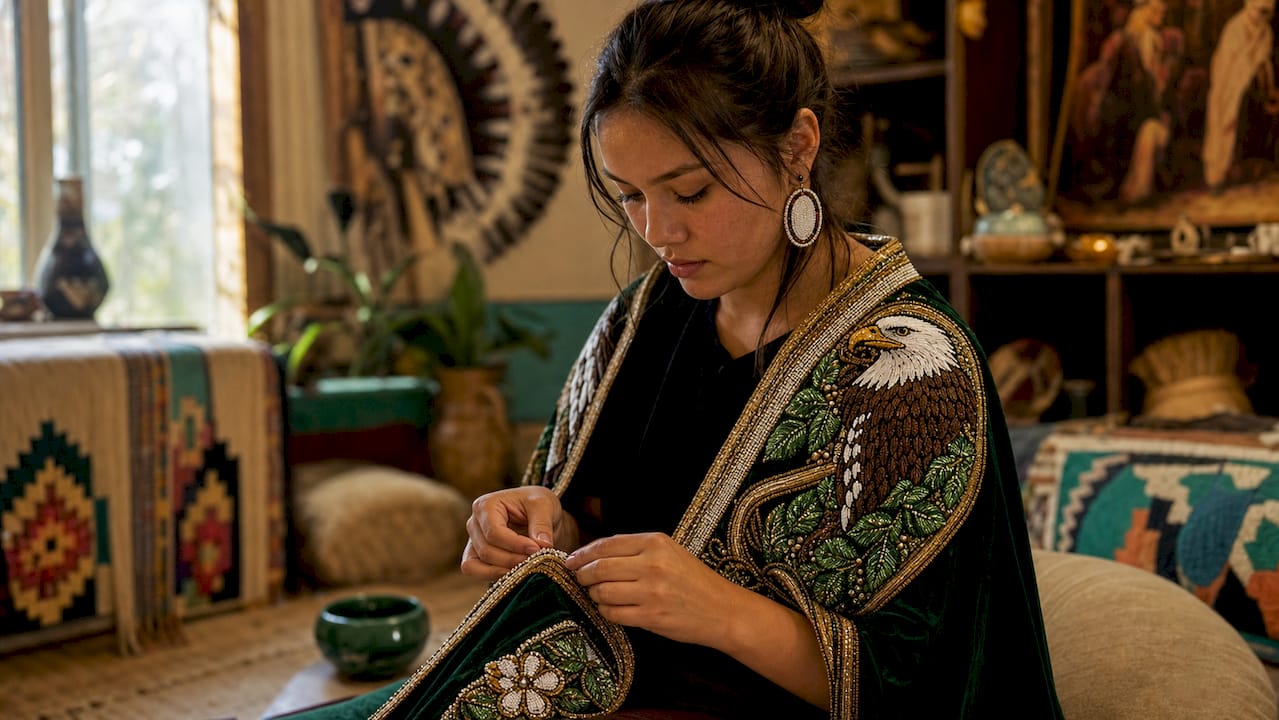
Do not touch sacred objects. Pipes, drums, eagle feathers, and ceremonial bundles are not artifacts to admire. They are living spiritual tools. Handle nothing unless you are explicitly invited to do so.
Additional conduct to observe:
- Silence your phone and keep it away throughout the ceremony
- Refrain from talking during solemn or ritual moments
- Stay seated and avoid moving through the ceremonial space while it is active
- When gifting a ceremonial leader, offer something modest: tobacco, cloth, or another culturally appropriate item. A modest gift reflects humility far better than an expensive one
- During smudging, never blow on burning herbs. Fan the smoke with a feather or let it extinguish naturally
- In a sweat lodge, remove metal jewelry before entering, and observe silence unless the lodge leader invites you to speak
Understanding the proper use of ceremonial tools deepens your respect for every moment inside the ceremony.
How etiquette varies across nations, regions, and ceremony types
There is no universal code. Cultural protocols vary significantly by nation, region, and ceremony type, and what is appropriate at a powwow in Ontario may be entirely different from what is expected at an Amazonian Hapé ceremony in the Amazon basin.
A few contrasts worth knowing:
- At a powwow, standing during Grand Entry and honor songs is required. At a sweat lodge, you enter in silence and follow the pourer's lead throughout
- Amazonian plant medicine ceremonies like those involving Hapé or Ayahuasca are guided by the curandero or ceremony facilitator, whose instructions are the only authority in the space
- Potlatches involve specific seating hierarchies, gift-giving protocols, and restrictions on photography that differ from open public gatherings
- Some ceremonies welcome observers but restrict participation; others require full engagement from everyone present
Indigenous cultures are not static. Protocols are actively maintained by living knowledge keepers, not preserved in books. What you read online is a starting point. The community itself is always the final authority. For a broader look at how Indigenous traditions are preserved across regions, the differences become even clearer.
How to seek guidance and participate respectfully
The most respected thing you can do as a newcomer is ask. When in doubt, ask the host, Elder, or ceremonial leader. Leaders are generally glad to guide visitors who show genuine desire to learn.
Before the ceremony:
- Contact the hosting community or facilitator in advance to ask about protocols, dress, and offerings
- Clarify your role: are you a participant or an observer? Each carries different expectations
- Ask whether photography is permitted, and confirm what offerings are appropriate to bring
During the ceremony:
- Follow the lead of community members around you
- If you feel uncomfortable participating in any portion, politely excuse yourself rather than disrupting the space
- Never pour water on sweat lodge stones unless the leader instructs you to do so
- Accept gifts offered to you with both hands and with gratitude; declining a gift can be considered disrespectful
After the ceremony, thank the hosts and ceremonial conductors directly. Expressing gratitude is not optional. It is part of the reciprocity that holds the whole experience together.
Pro Tip: Before attending any plant medicine ceremony, read about the role of community in that specific tradition. The preparation you do beforehand shapes the respect you carry inside.
Respectful participation in ceremonies from other cultural contexts, like those described in this Hawaii cultural etiquette guide, reinforces the same truth: every sacred space has its own language, and learning it is your responsibility.
Ethical sourcing and cultural preservation in Amazonian plant medicine
Respecting ceremony does not end when you leave the circle. For those working with Amazonian ceremonial plant medicines, the ethics of sourcing and use are inseparable from the etiquette of participation.
Pillars of Light hap'e was built on this understanding. Every blend, every Kuripe, every Tepi in the collection is sourced with direct respect for the Indigenous communities who created these traditions. The mission is not just to distribute sacred medicines. It is to protect the knowledge systems behind them.
Here is what ethical engagement looks like in practice:
- Choose medicines and tools from suppliers who maintain direct relationships with Indigenous artisans and communities
- Avoid purchasing ceremonial items from sources that cannot explain their origin or community connection
- Recognize that ethical sourcing supports both Indigenous sovereignty and rainforest preservation
- Educate yourself continuously. Humility and ongoing learning are not optional extras. They are the practice itself
- Honor the protocols of the tradition you are working with, even in private practice at home
Cultural appropriation happens when the medicine is extracted from its context. Cultural appreciation happens when you carry the protocols with you, inside and outside the ceremony space. The plant medicine traditions of the Amazon are living systems, not products to be consumed.
Pillars of Light hap'e invites you to explore its ceremonial items collection, ethically sourced and offered with the full weight of the traditions they come from.
Key takeaways
Indigenous ceremony etiquette requires following community-specific protocols, asking permission before participating, and honoring the living spiritual traditions that ceremonies embody.
| Point | Details |
|---|---|
| Ask before everything | Permission from the host or Elder is required before participating, photographing, or touching sacred objects. |
| Protocols vary by nation | No single rulebook applies; research the specific community and ask on site when uncertain. |
| Reciprocity is foundational | Gratitude, modest gifting, and active contribution are core to respectful ceremony participation. |
| Substances are restricted | Alcohol and recreational drugs are prohibited; tobacco is sacred only in traditional ceremonial use. |
| Ethical sourcing matters | Choosing ethically sourced ceremonial tools and medicines supports Indigenous sovereignty and cultural preservation. |