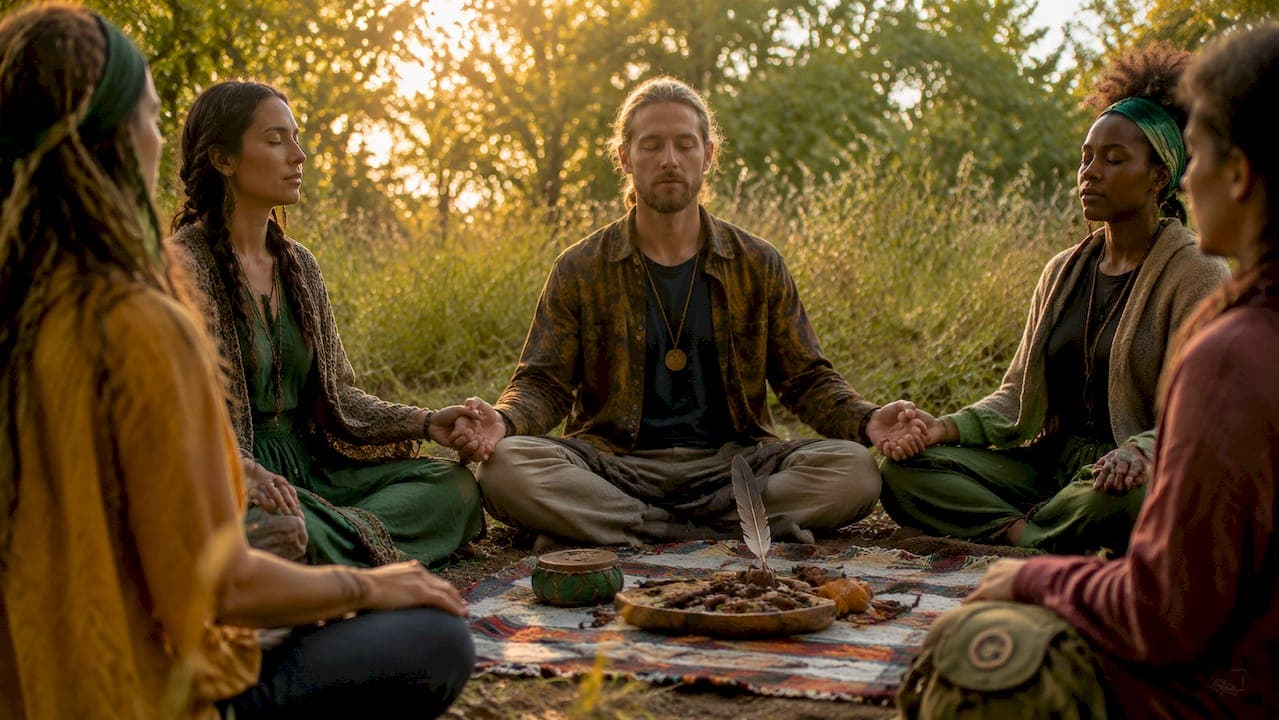
An open ceremonial sacred circle is a defined, intentional container created to hold spiritual connection, personal growth, and community safety within a shared space. Known in many traditions as a holy circle ceremony, this practice appears across Wiccan, Indigenous, Anglican, and earth-based spiritual paths. The structure is consistent regardless of tradition: prepare the space, open the circle with clear intent, hold the gathering with care, and close it properly. This open ceremonial sacred circle guide walks you through every step, with a focus on consent, inclusion, and respect for the people inside the circle.
What preparation and materials do you need before opening a sacred circle?
Preparation is the foundation of every effective ceremonial circle. Without it, the circle lacks the energetic clarity and physical safety that participants need to feel held.
Personal preparation comes first. Spend at least 10 minutes in meditation, breathwork, or quiet grounding before anyone arrives. This shifts your own nervous system from task mode into ceremonial presence. Facilitators who skip this step often find themselves managing logistics during the opening instead of holding space.
Energetic cleansing of the space follows personal preparation. Smudging with sage, palo santo, or cedar smoke is the most widely practiced method for clearing residual energy from a room. Cleansing ceremonial tools with the same smoke before the circle opens reinforces the boundary between ordinary and sacred time.
Physical setup defines the circle boundary and anchors the space. Sacred space at home can be created with as few as 3–5 symbolic items. Simplicity improves consistency because fewer objects mean fewer distractions. A typical altar might include:
- A focal anchor such as a candle or stone
- A natural element like a plant, feather, or water bowl
- A scent source such as incense or smudge
- A personally meaningful item that holds intention
- A talking piece for the sharing portion of the circle
Tools commonly used in ceremonial circles include an athame or wand for tracing the boundary, a talking piece passed during sharing, and directional markers placed at North, East, South, and West. These are not requirements. They are invitations.
Practical safety rounds out preparation. Confirm that participants know the duration (most circles run 1.5–2 hours), that participation is always optional, and that anyone may leave at any time without judgment. Verbal consent and a brief orientation before the circle opens prevent confusion once the ceremony begins.
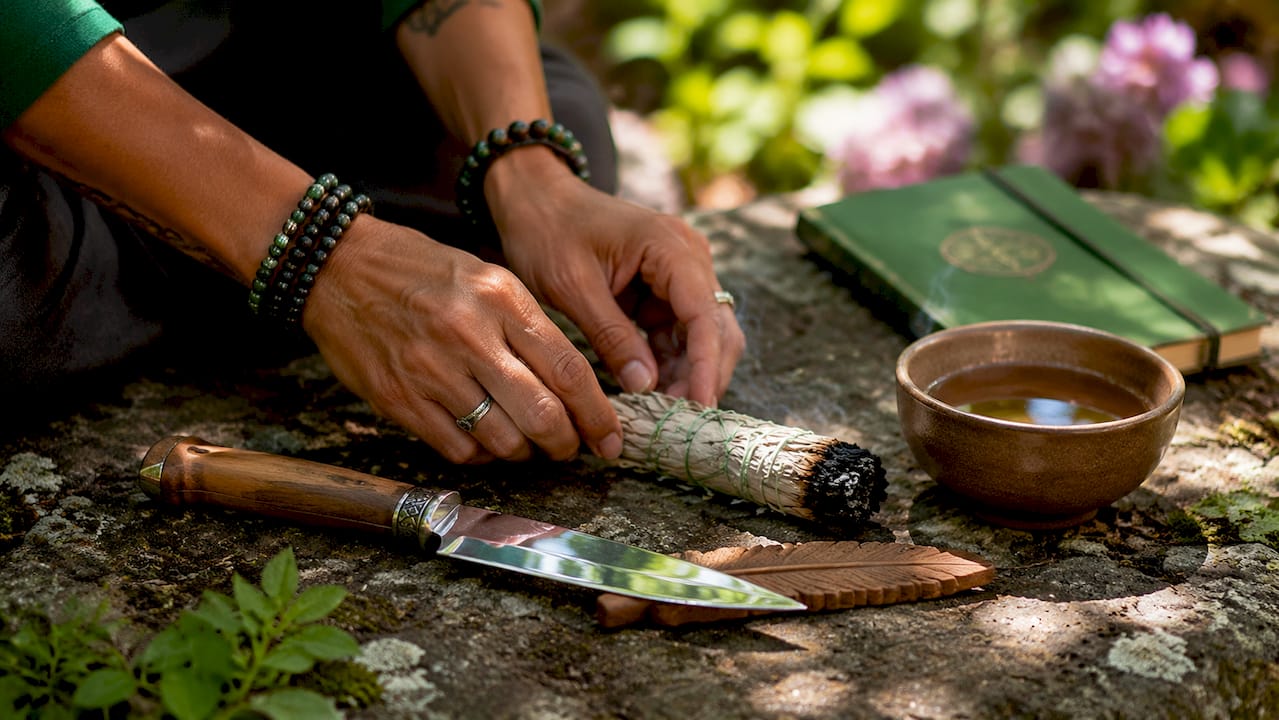
Pro Tip: Prepare a one-page orientation sheet for new participants. Cover the circle's purpose, the talking piece protocol, confidentiality, and the freedom to opt out. Handing it out before the circle opens saves time and builds trust.
How do you cast or open an open ceremonial sacred circle?
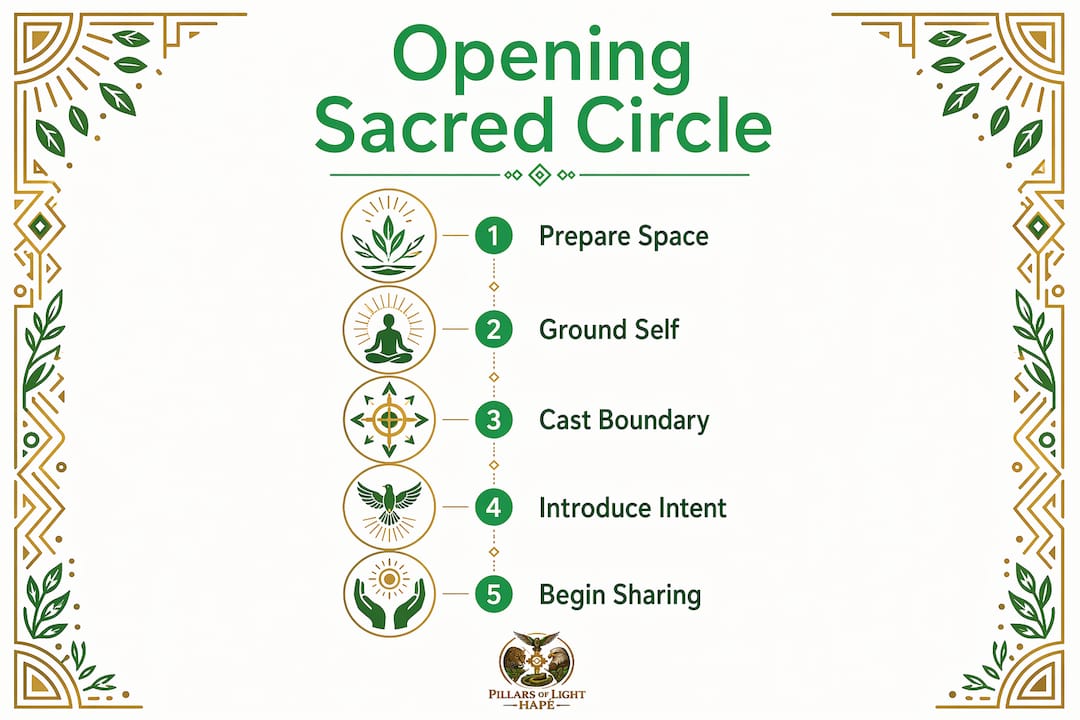
Opening sacred space moves participants from ordinary time into non-ordinary time, creating a healing sanctuary distinct from everyday awareness. The transition is both symbolic and felt. When done with intention, participants physically relax and mentally arrive.
The casting process follows a clear sequence:
- Ground yourself and the group. Stand or sit in silence for one to two minutes. Invite participants to feel their feet on the floor and their breath in their bodies.
- Trace the circle boundary. Walk clockwise around the perimeter of the space, or visualize a ring of white light or multicolored energy expanding outward from the center. Both methods work. Intent and alignment with participants' comfort matter more than the specific technique.
- Call in the four directions. Face North, East, South, and West in turn, speaking aloud the qualities each direction holds. Many traditions also acknowledge Above, Below, and Center. Use language that resonates with your group's background.
- State the shared intent. Name the purpose of the circle clearly. "We gather to support one another," or "We open this space for healing and truth," are simple and effective.
- Invite sacred presences. This step is optional and tradition-specific. Some groups call in ancestors, spirit guides, or the divine. Others simply acknowledge the land beneath them.
- Declare the circle open. A clear verbal statement, such as "The circle is cast and we are between the worlds," signals the transition. Ring a bell, strike a drum, or simply breathe together to mark the moment.
"Sharing circle casting among participants fosters inclusion and comfort. Encourage voluntary participation in casting roles, and respect refusals without pressure." The Aspen Tradition
Counterclockwise casting appears in some traditions for banishing or releasing work. For gathering and connection circles, clockwise is the standard direction in most Western and earth-based practices. When in doubt, ask your group what feels right and go from there.
What are the guidelines for participation and facilitation within the circle?
Clear guidelines protect every person inside the circle. Without them, well-meaning participants can accidentally dominate, interrupt, or breach privacy.
The talking piece is the most effective tool for managing sharing. Only the holder may speak; everyone else listens without interrupting. The piece passes clockwise. Sharing runs roughly 3–10 minutes per person, and participants may pass when they have nothing to add. The facilitator gently redirects anyone who speaks beyond the group's agreed time. The talking piece is not just a prop. It is an emotional safety technology that enables depth and respectful communication.
Participation is always invitation, not requirement. This principle comes directly from consent-centered ceremony design and prevents participants from feeling coerced or trapped in roles. A good permission ladder looks like this:
- Opt in to the circle itself
- Opt out of any specific activity during the circle
- Opt out of sharing when the talking piece reaches you
- Leave the circle at any time without explanation
Confidentiality is non-negotiable. What is said in circle stays in circle. State this explicitly at the opening and include it in any written orientation materials. Participants share more honestly when they trust that their words will not travel beyond the space.
Guest etiquette requires special attention in culturally rooted circles. Guests must enter with good intent, follow all protocols, and refrain from photography, audio recording, or video recording during vulnerable moments. Wandering in and out of the space disrupts the energetic container for everyone present.
Pro Tip: Open each circle with a brief round of community agreements. Ask participants to name one thing they need to feel safe. This takes five minutes and dramatically increases the depth of sharing that follows.
| Participation element | Guideline |
|---|---|
| Talking piece direction | Passed clockwise; only the holder speaks |
| Sharing length | 3–10 minutes per person; pass is always allowed |
| Confidentiality | Nothing shared leaves the circle |
| Media and recording | No photography or recording without explicit consent |
| Opt-out freedom | Any participant may skip any activity or leave at any time |
How do you properly close a sacred circle and re-ground participants?
Closing the circle is as important as opening it. Without a proper closing, participants may feel ungrounded or overly sensitive after the ceremony ends. The closing seals the work done inside the circle and returns everyone to ordinary awareness.
Follow these steps in order:
- Thank and release sacred presences. If you called in ancestors, guides, or the divine, formally thank them and release them. This is not dismissal. It is completion.
- Release the directions in reverse order. Begin with the last direction called and work backward. If you opened North, East, South, West, close West, South, East, North.
- Visualize the boundary dissolving. Walk counterclockwise around the space, or visualize the ring of light gently fading and returning to the earth. The circle opens but does not break. The work remains intact.
- Ground the group physically. Invite participants to press their palms to the floor, eat a small piece of food, or simply stomp their feet. Physical sensation anchors awareness back in the body.
- Close with a shared breath or sound. A single collective exhale, a bell tone, or a spoken phrase like "The circle is open but unbroken" marks the official end.
"Closing includes releasing and grounding steps. These are not optional. They complete the energetic arc of the ceremony and protect participants from carrying unprocessed energy out of the space." Chacana Spiritual Center
Aftercare and integration matter beyond the closing moment. Encourage participants to drink water, rest, journal, or spend time in nature after a deep circle. Some people need 24 hours to fully integrate what arose during ceremony. Naming this at the close normalizes the process and supports long-term wellbeing.
Key Takeaways
A sacred circle succeeds when preparation, consent, and a proper closing work together as one continuous practice.
| Point | Details |
|---|---|
| Prepare before you open | Cleanse the space, ground yourself, and orient participants before the circle begins. |
| Use 3–5 anchor objects | Minimal, meaningful items shift attention and define the sacred boundary reliably. |
| Build a permission ladder | Offer opt-in and opt-out at every stage so no participant feels coerced. |
| Pass the talking piece clockwise | Only the holder speaks; sharing runs 3–10 minutes with a pass option always available. |
| Close in reverse order | Release directions and ground participants physically to prevent post-ceremony sensitivity. |
What I have learned from years inside the circle
The most common mistake I see facilitators make is treating the opening as the main event and the closing as an afterthought. The closing is where the medicine lands. When you rush it or skip it entirely, participants walk out carrying unresolved energy, and they often do not know why they feel off for days afterward.
The second thing I have learned is that consent scaffolding is not a modern addition to ceremony. It is the oldest form of respect. Traditions that have held circles for generations always had protocols around who could enter, what could be said, and how people could leave. We are not inventing something new when we build permission ladders. We are recovering something that was always there.
Balancing tradition with modern inclusivity is real work. Not every participant shares the same cosmology, and calling in the four directions means something different to a Wiccan practitioner than it does to someone from an Amazonian plant medicine background or an Anglican prayer circle. The solution is not to flatten everything into a generic spiritual smoothie. The solution is to name your tradition clearly, hold it with integrity, and make space for participants to engage at whatever depth feels true to them.
The circles I have seen transform people are not the ones with the most elaborate altar setups or the most dramatic invocations. They are the ones where every person felt genuinely free to be exactly where they were. That freedom is the container. Everything else is decoration.
— Manifest Light
Ceremonial tools that support your sacred circle practice
The right tools do not make the circle. But they do deepen it. When a tool carries genuine tradition behind it, participants feel the difference.
Pillars of Light hap'e carries Amazonian ceremonial tools sourced directly from Indigenous traditions, including 75+ varieties of Hapé (Rapé), handcrafted Kuripes for self-application, and Tepis for facilitator use. Each tool is ethically sourced with attention to cultural preservation and rainforest support. Whether you are setting up a personal altar or equipping a community circle, Pillars of Light hap'e ships from Old Town Spring, Texas, with care for both the tradition and the people who carry it forward. Explore the full collection at pillarsoflighthape.com and find what belongs in your circle.
FAQ
What is an open ceremonial sacred circle?
An open ceremonial sacred circle is an intentionally created sacred space where participants gather for spiritual connection, sharing, and personal growth. It follows a structured flow: prepare, open, hold, and close.
How long does a typical sacred circle ceremony last?
Most sacred circles run 1.5–2 hours, though length varies by group size and purpose. Facilitators should communicate the expected duration before the circle opens.
Do you need special tools to open a ceremonial circle?
No special tools are required. As few as 3–5 symbolic items can define a sacred space effectively. A candle, a natural element, and a talking piece are enough to hold a meaningful circle.
What is the role of the talking piece in circle rituals for connection?
The talking piece ensures that only the holder speaks while others listen without interruption. It creates emotional safety and prevents dominant voices from overtaking the shared space.
How do you close a sacred circle properly?
Release the directions in reverse order, thank any sacred presences called in, and ground participants physically through touch, food, or breath. Skipping the closing can leave participants feeling ungrounded or emotionally raw after the ceremony ends.