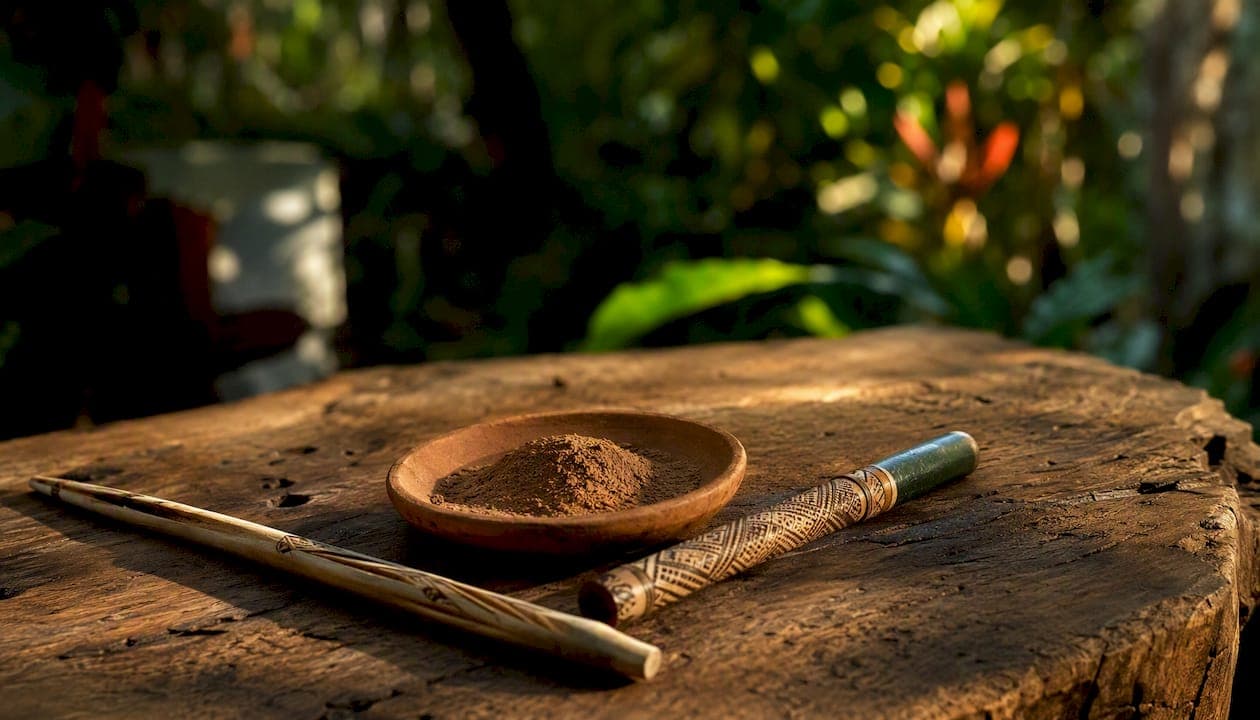
A community rapé ceremony is a short, prayer-led group ritual that uses Nicotiana rustica-based snuff and two applicator styles, tepi and kuripé, to ground participants and clear stagnant energy. Three common formats: a grounding circle (4 to 6 people, 30 to 45 minutes, single intention); a full ceremony with song and sharing (6 to 10 people, 90 minutes or more); and a kuripé self-application circle for smaller, self-paced groups. Safety and cultural respect come first, always.
Key Takeaways
A rapé ceremony is defined by three fixed elements: a Nicotiana rustica-based blend, a tepi or kuripé applicator, and a group container held by an experienced facilitator with a known lineage.
| Point | Details |
|---|---|
| Group size signals authenticity | Most ceremonies run 4 to 10 participants, allowing real space-holding rather than crowd management. |
| Canonical flow stays consistent | Opening, intention, consecration, administration, integration, and closing appear across nearly every tradition. |
| Composition matters for safety | Rapé's Nicotiana rustica and alkaline ash base carries real contraindications, including heart conditions and pregnancy. |
| Lineage is a trust marker | A facilitator who names their teacher and blend source is a stronger sign of legitimacy than vague credentials. |
| Pillars of Light Hapé models transparency | The apothecary sources blends with community attribution and offers both tepi and kuripé options for ceremony. |
Table of Contents
- Rapé Community Ceremony Examples You Can Recognize
- What Is the Canonical Rapé Ceremony Flow?
- What Is Rapé Made Of and What Tools Are Used?
- Who Leads a Rapé Ceremony and What Roles Exist?
- What Does Rapé Feel Like During and After Ceremony?
- How Should You Prepare for a Rapé Ceremony?
- Is Rapé Safe? Contraindications to Know
- How Pillars of Light Hapé Approaches Community Ceremony
- What the Research Actually Supports
- Bring Ceremony-Grade Materials Into Your Own Practice
- Frequently Asked Questions
- Sources
Rapé Community Ceremony Examples You Can Recognize
Ceremonies vary by lineage, region, and the host's training, but most communities draw from a handful of recognizable formats. Knowing these templates helps you spot authenticity fast, whether you're joining a friend's living room circle or a facilitator-led gathering tied to a specific tradition.
1. The grounding circle. This is the shortest and most common entry point. Four to six participants sit in a circle for a short duration typically around half an hour to three quarters of an hour. One facilitator, trained in tepi administration, moves person to person. The intention is simple: clear mental fog, settle the nervous system, open the day or a meeting with presence. There's little ceremony beyond a brief opening prayer and a closing moment of silence.
- Opening: 5 minutes of grounding words or a short prayer
- Administration: tepi, one or two blows per nostril
- Integration: 10 to 15 minutes of quiet sitting
- Closing: brief sharing or simple gratitude
2. The full ceremony with song and sharing. Larger groups gather for an hour and a half to two hours in ceremonies often including six to ten people. This format often includes icaros or prayer songs, a rapé round administered by tepi, and sometimes sequencing alongside other practices like cacao or breathwork. Practitioner accounts describe this common ceremonial sequence: space consecration, intention setting, tepi or kuripé administration, silent integration, and a short closing, with typical group sizes landing in that same 4 to 10 range.
- Opening: consecration of space, incense or prayer
- Intention: each participant states a private or spoken intention
- Administration: tepi rounds, sometimes multiple passes
- Integration and sharing: 20 to 40 minutes, often with music
- Closing: group gratitude or a final song
3. The kuripé self-application circle. Here, participants administer their own rapé using a kuripé rather than receiving it from a facilitator. This format respects individual autonomy and pacing. Groups tend to stay small, often under six people, and it works well for those who prefer not to be touched or who are new to rapé and want to control their own dosage. Consent is built into the structure itself since no one else is applying the medicine.
What Is the Canonical Rapé Ceremony Flow?
Most authentic ceremonies follow the same backbone: opening, intention, consecration, administration, quiet integration, closing. The order rarely changes even when the style, blend, or lineage does.
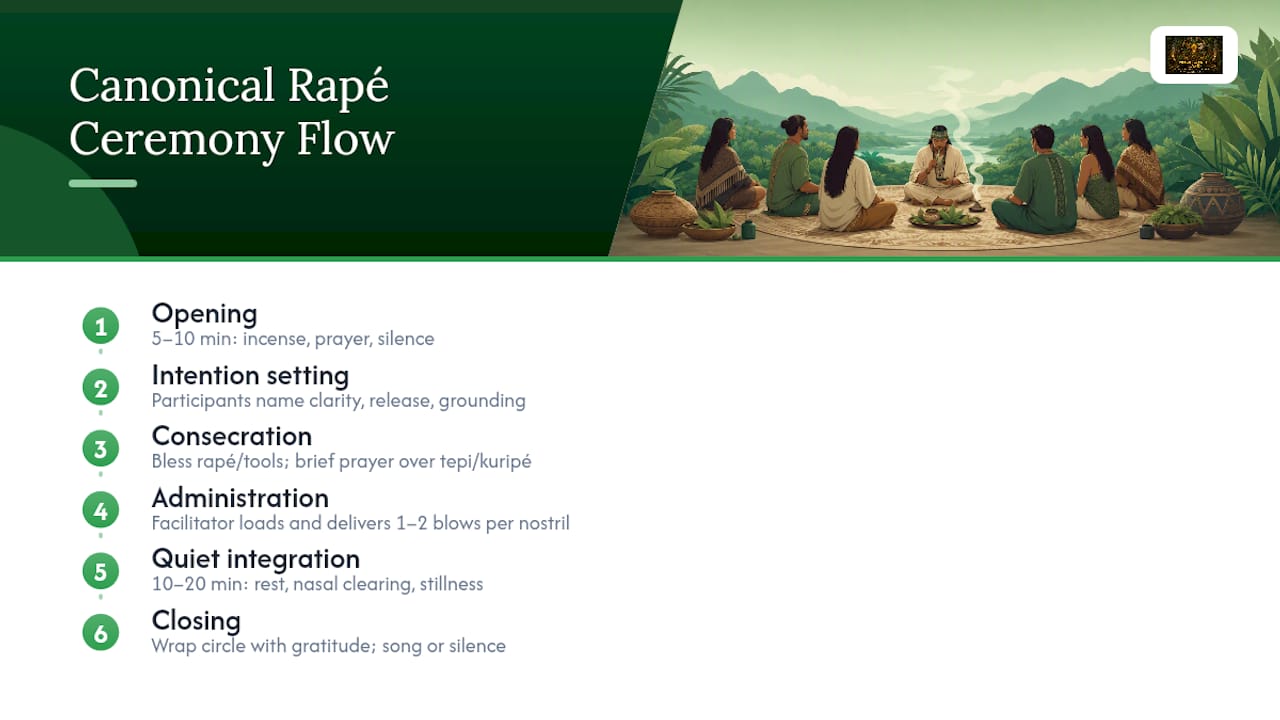
The opening (5 to 10 minutes) is usually led by the facilitator or a senior participant, often with incense, a prayer, or a moment of silence to settle the group. Intention setting follows, where each person silently or verbally names what they're seeking, whether clarity, release, or simple grounding. Consecration blesses the rapé itself and the tools, sometimes with a brief prayer over the tepi or kuripé.
Administration is the physical heart of the ceremony. A facilitator loads the rapé, often measuring it in a small vessel like a cacao nut before filling the tepi, then delivers one or two blows per nostril. Watering eyes, nasal clearing, and a wave of stillness are common signs the medicine has landed. Quiet integration runs 10 to 20 minutes, giving the nervous system time to settle. The closing wraps the circle with gratitude, sometimes a song, sometimes just silence.
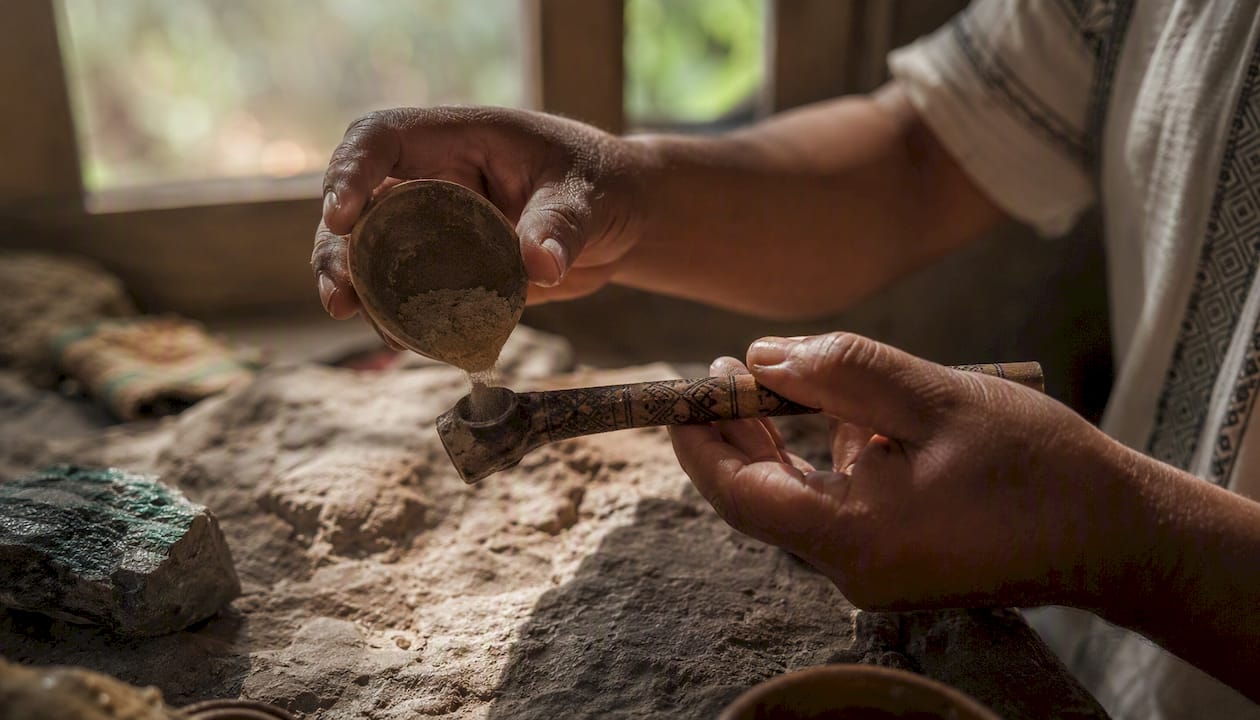
Pro Tip: Facilitators should ask participants to exhale fully and relax their shoulders right before the blow. Tense breathing makes the sensation sharper and increases sneezing.
What Is Rapé Made Of and What Tools Are Used?
Rapé is a fine powder made from Nicotiana rustica, a wild tobacco far stronger than commercial cigarette tobacco, blended with alkaline plant ashes such as Tsunu or Murici. Some blends fold in additional aromatic or medicinal plants for a specific effect. Grounding blends lean heavier on ash content for a slower, earthier feel, while clearing or uplifting blends use lighter ash ratios and sometimes mint, rosewood, or other aromatics for a sharper sensation.
- Grounding blends: heavier ash, slower onset, used to settle and center
- Clearing blends: lighter, brighter, used for mental fog or sinus clearing
- Uplifting blends: aromatic additions, used to open ceremony or shift mood
The tepi is a long blowpipe used by a facilitator to administer rapé to someone else; the kuripé is a small, usually V-shaped pipe a person uses to self-administer. Loading either tool takes practice: too much rapé or too forceful a blow causes unnecessary discomfort. Ethical sourcing matters here. Nicotiana rustica cultivation and ash preparation are often tied to specific Indigenous communities, and buying from vendors who name their source communities supports the people who developed these practices over generations.
Who Leads a Rapé Ceremony and What Roles Exist?
Every ceremony has a structure of roles, even informal ones. The facilitator (sometimes called a pajé in Indigenous contexts) administers rapé and holds the container for the group. Singers or song leaders carry icaros or prayers that shape the ceremony's rhythm. Assistants handle logistics like water, seating, and checking on participants mid-ceremony. Participants show up ready to receive, and in some circles, elders offer blessings or oversight without directly administering anything.
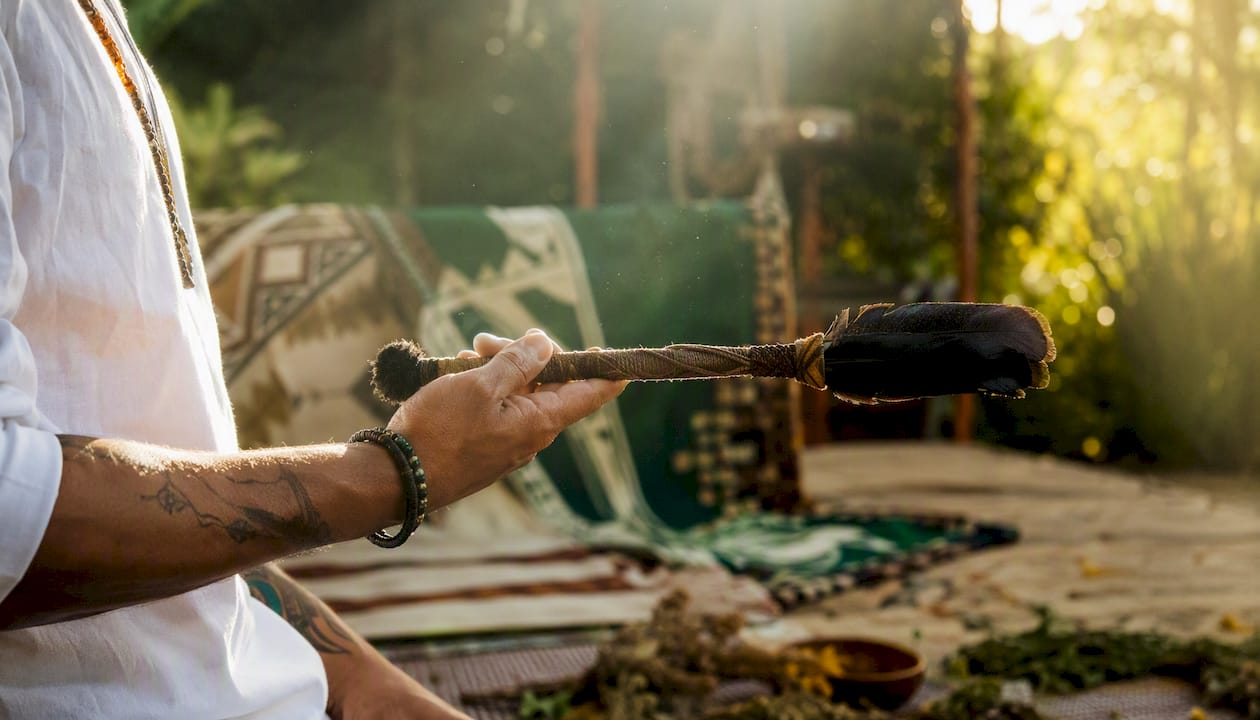
Lineage matters. Field practice notes emphasize that preparation, ash selection, and ceremonial protocol are typically taught orally by elders and pajés, passed down rather than learned from a manual. A facilitator who can name their teacher or tradition is a stronger sign of authenticity than one who cannot.
Pro Tip: Ask any host directly who taught them and which community's blend they use. A grounded answer, not a vague one, is one of the fastest ways to gauge legitimacy.
What Does Rapé Feel Like During and After Ceremony?
Expect immediate physical sensations: nasal clearing, watering eyes, sometimes a cough, and a rush of grounded presence that settles within a few minutes. Emotionally, people report anything from calm stillness to sudden tears or a surge of clarity.
- Silent integration time, usually held without conversation
- Gentle check-ins from assistants or the facilitator
- Water offered freely throughout
- Space to step outside or lie down if needed
The first 20 to 60 minutes are typically the most intense, with sensations softening as the group moves into integration. For the rest of the day, mild fatigue or unusual clarity is common. Over the following 24 to 72 hours, many people notice shifts in mood or sleep. Journaling, gentle breathwork, or a slow walk outdoors are simple, low-effort ways to support that window.
How Should You Prepare for a Rapé Ceremony?
Preparation is straightforward but matters. Set a clear intention beforehand, stay hydrated, and eat lightly rather than on a full stomach. Wear comfortable clothing and expect to sit upright for most of the ceremony.
- Do ask about the blend's origin and the facilitator's training
- Do communicate any health conditions privately beforehand
- Don't treat the ceremony as recreational or take photos without asking
- Don't feel pressured; declining a round should always be respected
Hosts should ask for verbal consent before administering rapé to anyone, and any participant should be able to step back or sit out a round without explanation.
Is Rapé Safe? Contraindications to Know
Rapé contains concentrated Nicotiana rustica and is not safe for everyone. It carries real physiological effects, and no ceremony setting changes that.
- Pregnancy or breastfeeding
- Heart conditions or uncontrolled hypertension
- Certain psychiatric conditions, especially with active medication
- MAOI interactions if combined with other plant medicines in the same session
- Recent nasal surgery or chronic sinus conditions
Nicotiana rustica delivers a much higher nicotine concentration than commercial tobacco, which is part of why facilitators should always have water, a seat with back support, and a plan for who to call if someone has a severe reaction. This is general information, not medical advice, and anyone with underlying health conditions should talk to a doctor before participating.
How Pillars of Light Hapé Approaches Community Ceremony
Two examples illustrate how this looks in practice. A recent grounding circle at Pillars of Light Hapé's Old Town Spring, Texas location brought together six participants for a 40-minute session using a Tsunu ash blend, administered by tepi with the facilitator naming the blend's community source before the round began. A second, longer ceremony paired a full circle of eight people with prayer songs and a rapé round sequenced alongside a master plant tea, closing with a shared integration period.
- Blends are sourced with attribution to the originating community
- Facilitators name their training lineage before administering
- Kuripés are available for those who prefer self-administration
Manifest Light, who writes on rapé technique and nervous system integration for Pillars of Light Hapé, notes that transparency about sourcing tends to correlate with more grounded, respectful ceremony spaces.
Pro Tip: If you're new to ceremony, ask to see the kuripé option even at a facilitator-led event. Most hosts carry one and won't mind offering it.
What the Research Actually Supports
Most guides treat rapé ceremony as a set of rules to memorize. That misses the point. The structure matters less than the transparency behind it. A facilitator who can't name their teacher or blend source isn't automatically a fraud, but a facilitator who volunteers that information without being asked is showing you something real about how they were trained.
Conventional advice tends to fixate on dosage and blow count, treating administration like a technical procedure. The stronger signal is relational: does the facilitator slow down, check in, and treat the tepi as a transmission rather than a delivery mechanism? That distinction shows up in the pacing of a ceremony far more than in any written protocol.
If you're evaluating a ceremony for the first time, prioritize the sourcing conversation over the ritual aesthetics. Song, incense, and circle formation can be learned from a video. Knowing exactly which community's ash and tobacco you're holding, and why, cannot.
Bring Ceremony-Grade Materials Into Your Own Practice
Pillars of Light hap'e gives you what most community ceremonies rely on but rarely explain clearly: ethically sourced blends and applicators you can trust without guessing at their origin. Instead of piecing together tools from unclear vendors, you get 75+ hapé varieties, handcrafted kuripés, and tepis sourced with attribution to the communities who developed them.

Whether you're hosting your own grounding circle or preparing to join one, starting with the right materials changes the entire experience. Browse the ceremonial items collection to find a kuripé or tepi suited to your practice, or explore the full hapé and ceremonial tools storefront to find a blend that matches your intention. If you're in the Old Town Spring, Texas area, stop by in person to ask questions before you buy.
Frequently Asked Questions
How many people are typically in a community rapé ceremony? Most ceremonies run between 4 and 10 participants, a range small enough for the facilitator to give individual attention while still holding a group container.
What's the difference between a tepi and a kuripé? A tepi is a longer blowpipe a facilitator uses to administer rapé to someone else. A kuripé is a smaller, self-applicator tool a person uses on themselves, offering more control over pacing and dosage.
Can I decline a round during ceremony? Yes. Respectful hosts always allow participants to sit out a round without explanation, and consent should be confirmed before each administration, not assumed from attendance alone.
What should I look for to confirm a ceremony is authentic? Ask the facilitator who trained them and which community's blend they're using. A clear, specific answer is a stronger signal than a polished ceremony aesthetic.
Is rapé safe for everyone? No. Rapé contains concentrated Nicotiana rustica and carries contraindications for pregnancy, heart conditions, uncontrolled hypertension, and certain psychiatric medications. Talk to a doctor if you have underlying health conditions before participating.
This article is general information, not a substitute for advice from a qualified doctor. Consult a qualified healthcare professional about your own circumstances before acting on anything here.
Sources
- Yawanawá Healing Path (Uni, Kambo, and Rapé)
- Rapé Ceremony: Tradition, Process & Safety – amama
- How to hold a sacred rapé ceremony (ritual and tools) - Arambol
- How to Give Someone a Soplada of Sacred Amazonian Hape Medicine – Step by Step - EntheoNation