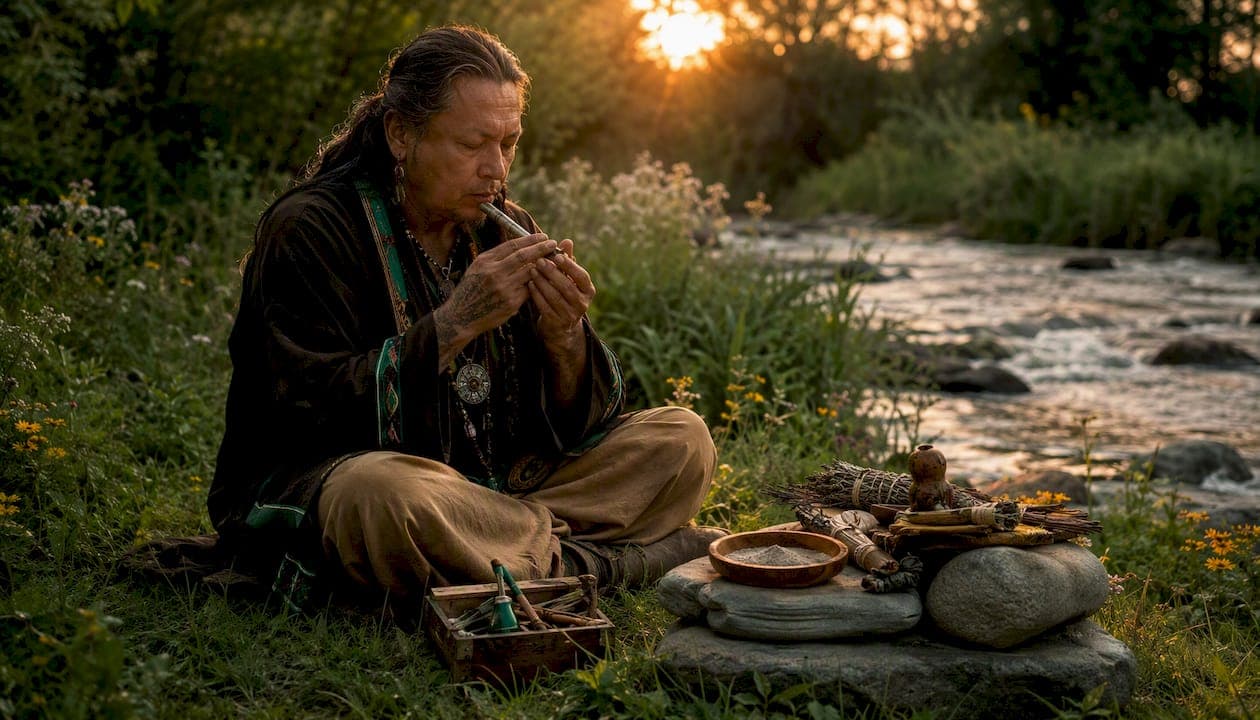
The rapé nervous system reset technique is a single, intentional intranasal application of Hapé (a ceremonial blend of Nicotiana rustica and alkaline ash) delivered through a kuripé or tepi, to interrupt habitual thought loops and ground the nervous system. If this is your first time, the most important step you can take right now is to work with a trained facilitator rather than going it alone.
What to expect immediately after application:
- A brief sympathetic spike: elevated heart rate, pressure behind the eyes, and lacrimation (tearing)
- Nasal clearing and increased salivation
- An integration window where the body settles into clarity and stillness
Pro Tip: Spit, don't swallow. Keep a small bowl nearby and release saliva freely during the first few minutes. Swallowing it can intensify nausea.
For a deeper grounding in what Hapé is and where it comes from, the foundational guide to sacred Amazonian snuff is a good place to start.
Table of Contents
- How do you apply rapé with a kuripé or tepi?
- How do you choose a grounding Hapé blend?
- Who should avoid rapé, and what do U.S. users need to know?
- How should you prepare for a session and integrate afterward?
- What should you ask before booking a facilitator?
- Key Takeaways
- The medicine is only as good as the relationship around it
- Pillars of Light hap'e: shop ceremony-grade blends or book a guided session
- Useful sources
How do you apply rapé with a kuripé or tepi?
The core difference: with a kuripé, your own breath controls the dose and force; with a tepi, a facilitator's blow is stronger, more precise, and carries relational intention. Both follow a left-then-right nostril sequence honored across many Amazonian lineages.
Kuripé (self-application)
- Sit upright on the floor or a chair with your spine straight and feet grounded.
- Measure a dose no larger than a grain of rice per nostril for your first session. Err smaller.
- Load the kuripé and bring it to your left nostril first, angling slightly upward.
- Take a slow breath in, then blow one steady, firm exhale through the mouthpiece. Do not blow in short bursts.
- Keep your eyes closed and remain seated. Do not stand up immediately.
- Repeat on the right nostril.
- Place the kuripé down. Rest your hands on your knees. Let the medicine work.
Handcrafted kuripe and tepi tools matter here. A poorly sealed tool scatters the blow and reduces the medicine's effectiveness.
Tepi (facilitator application)
- The facilitator loads the tepi with a pre-measured dose and sets a clear intention before approaching.
- The recipient sits upright, eyes closed, hands resting open on the knees.
- The facilitator places the tepi at the recipient's left nostril. The recipient breathes in gently.
- The facilitator delivers one steady, controlled blow. Not sharp, not hesitant.
- A moment of silence follows before moving to the right nostril.
- After both nostrils, the recipient remains still. The facilitator steps back and holds space quietly.
Timeline of effects
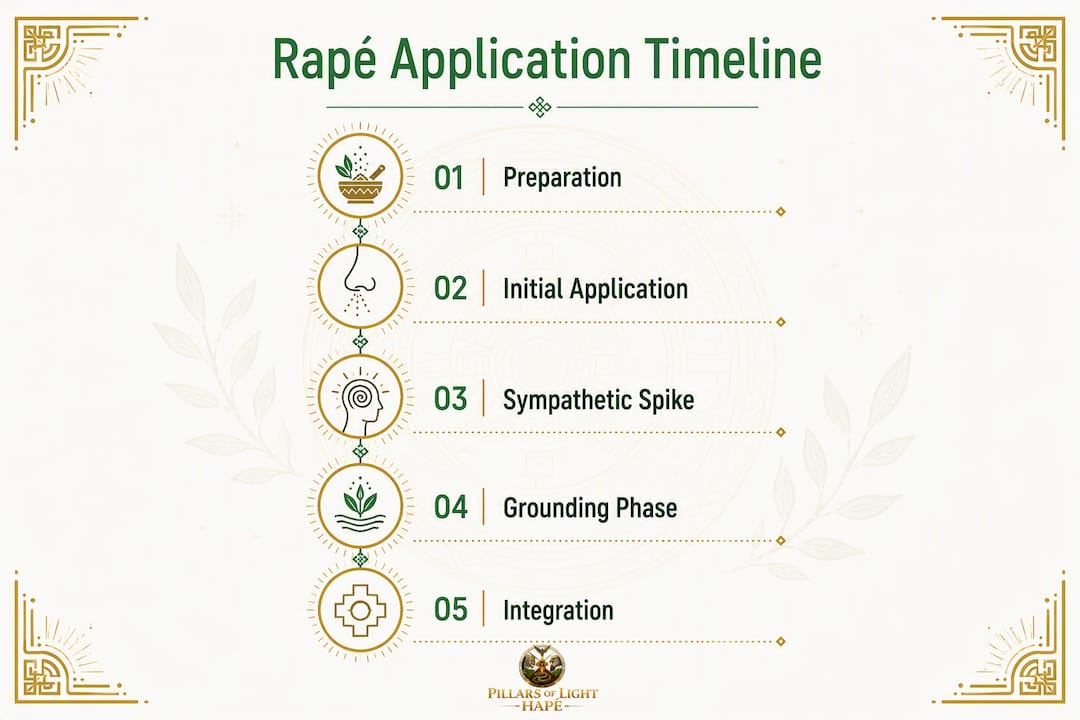
Nasal absorption of nicotine through the mucosa activates nicotinic acetylcholine receptors (nAChRs), producing rapid cortical arousal that can interrupt habitual thought patterns. The physiological sequence typically runs:
- 0–2 min: Acute pressure, tearing, nasal clearing, brief heart-rate elevation
- 5–20 min: Peak integration window; heightened presence, emotional release, or deep stillness
- 20–60+ min: Settled clarity; parasympathetic tone returns
The initial sympathetic spike is normal and expected. Staying seated and still during those first two minutes is what allows the parasympathetic settling to become perceptible. Rushing to stand or speak cuts the reset short.
Pro Tip: The quality of the blow seals the medicine. A steady, single breath of moderate force directed into the nostril is far more effective than a hard, short burst. Facilitator skill and a well-crafted tepi make a measurable difference in the experience.

How do you choose a grounding Hapé blend?
For nervous system regulation, choose blends labeled or described as "grounding" or Tsunu-based, and start with a ceremony-grade portion rather than a large quantity.
Tsunu refers to the ash derived from the Tsunu tree, used across several Amazonian lineages as a base that produces a balanced, grounding effect without the sharp intensity of some other ash sources. Tsunu blends tend to be favored for their clarity and relative gentleness, making them a natural starting point for anyone new to the rapé healing technique.
What to look for when selecting a blend:
- Nicotiana rustica (mapacho) as the tobacco base, not commercial tobacco
- Named ash source (Tsunu, Murici, Paricá) with a description of its traditional use
- Fine particle texture for smooth nasal absorption
- Ceremonial framing from the vendor, not recreational marketing language
- Documented sourcing: community name, region, or harvesting notes
- Batch transparency and repatriation or community-benefit commitments
The Tsunu Hapé blend page at Pillars of Light hap'e explains the traditional role of Tsunu in ceremony and offers curated options sourced directly from Indigenous communities. For a blend that combines Tsunu with Jurema and carries clear provenance from the Funi-ô and Yawanawá peoples, the Sacred Forest Fusion is a strong choice. Pillars of Light hap'e carries a wide variety of blends, so if you want guidance on which blend fits your intention, a consultation call is the most direct route.
Who should avoid rapé, and what do U.S. users need to know?
Rapé is not appropriate for everyone. Before purchasing or booking, screen honestly against this list.
Avoid rapé if you:
- Are pregnant or breastfeeding
- Have a serious cardiovascular condition (hypertension, arrhythmia, recent cardiac event)
- Are in an active psychotic episode or have a history of psychosis
- Take MAOIs or other medications with significant nicotinic or cardiovascular interactions
- Have high nicotine sensitivity or a history of nicotine dependence
- Are under 18
The brief sympathetic spike from nAChR activation raises heart rate and blood pressure transiently. For most healthy adults this resolves within minutes, but for someone with cardiovascular disease it carries real risk. A facilitator should conduct a brief medical screening before any session.
U.S. legal and ethical note: Rapé is sold in the United States as a ceremonial plant snuff. It is not regulated as a drug by the FDA in its traditional form, but users should verify their state and local rules and never make or accept medical claims about it. Ethical sourcing matters both culturally and legally: prefer vendors with transparent community relationships, not those marketing it as a wellness supplement.
If you experience a severe reaction (chest pain, difficulty breathing, extreme disorientation), stop use immediately and seek medical attention. First-time users should never practice alone.
This article is general educational information, not medical advice. Confirm your personal health situation with a qualified practitioner before use.
How should you prepare for a session and integrate afterward?
A short, intentional preparation produces a noticeably stronger reset than walking in cold. Set a clear intention, minimize stimulants for several hours beforehand, and arrange a calm, seated space.
Before the session:
- Hydrate well; eat lightly or observe a short fasting window (2–4 hours)
- Silence your phone and remove digital distractions
- Have a small bowl and water within reach
- If it's your first time, arrange a trusted sitter or book with a facilitator
Post-application timeline:
- First 5 minutes: Stay seated, eyes closed, breathe naturally. Spit into the bowl as needed.
- Minutes 5–20: Remain still. This is the peak window. Journaling prompts to hold mentally: What shifted? What am I releasing?
- Minutes 20–60: Gentle movement is fine. Avoid screens, loud music, and heavy conversation.
For same-day and next-day aftercare, limit repeated applications. Rapé is a ceremonial medicine, not a daily supplement. Reflect on frequency honestly, and if questions arise about what you experienced, schedule a follow-up consultation. Nervous system regulation is a practice, and pairing rapé with grounding integration techniques can deepen the benefit between sessions.
What should you ask before booking a facilitator?
A skilled facilitator markedly improves both safety and the quality of the reset. Prefer practitioners who offer a pre-session screening, a clear ceremony structure, and aftercare support.
Questions to ask before booking:
- What is your training background or lineage connection?
- Do you screen participants for medical contraindications?
- What blends do you use, and can you share their sourcing?
- What is your emergency protocol if someone has a strong reaction?
- What does the session include: intake, integration, follow-up?
- What is your group size, and is one-on-one available?
A typical guided ceremony runs from intake and intention-setting through the application sequence, a silent integration period, and an optional sharing circle. Some facilitators incorporate gentle breathwork or movement afterward. Expect to bring water, comfortable clothing, and an open posture toward stillness.
Pro Tip: Request a short pre-session call or intake form before committing. Ask specifically whether the facilitator uses ethically sourced blends. Pillars of Light hap'e offers consultations and guided ceremonies, and their ceremonial items collection is available to facilitators sourcing blends for their practice.
Key Takeaways
The rapé nervous system reset technique works when intention, correct application, and a grounding blend come together in a safe, prepared setting.
| Point | Details |
|---|---|
| Use a facilitator first | First-time users should work with a trained practitioner to learn correct dosage and technique safely. |
| Start with Tsunu blends | Tsunu-based Hapé is favored across Amazonian lineages for grounding and nervous system balance. |
| Dose small, stay still | A grain-of-rice dose per nostril and immediate seated stillness allow the parasympathetic settling to complete. |
| Screen for contraindications | Avoid rapé with cardiovascular disease, pregnancy, active psychosis, or MAOI use. |
| Pillars of Light hap'e | Offers ethically sourced blends, handcrafted kuripes and tepis, and guided ceremony bookings from Old Town Spring, Texas. |
The medicine is only as good as the relationship around it
Most people who come to rapé for the first time are looking for a reset, and that is a legitimate reason to explore it. What gets underestimated is how much the relational container shapes the outcome. The pharmacology is real: nicotine's action on nAChRs produces a measurable shift in cortical state. But the ceremonial relationship and the quality of intention are what determine whether that shift becomes a genuine grounding experience or just an uncomfortable few minutes.
The wellness world has a habit of extracting techniques from their context and marketing the mechanism while discarding the meaning. With rapé, that approach tends to produce poor results and occasionally real harm. The blow matters. The sourcing matters. The silence afterward matters. None of those things are optional add-ons to the pharmacology; they are the technique.
Pillars of Light hap'e's approach to safe use and ethical sourcing reflects this understanding. Carrying a variety of blends with documented provenance and offering in-person ceremony facilitation from Old Town Spring, Texas, they treat rapé as a living tradition rather than a product category.
Pillars of Light hap'e: shop ceremony-grade blends or book a guided session
Ceremony-grade Tsunu blends, handcrafted kuripes and tepis, and guided ceremony bookings in one place: that is what Pillars of Light hap'e offers adults who want to work with rapé the right way, not the shortcut way.
The ceremonial items collection covers everything from individual blends to full applicator sets, all shipped from Old Town Spring, Texas. If you want to go deeper before purchasing, a spiritual consultation connects you directly with a practitioner who can match a blend to your intention and walk you through the technique. Visit pillarsoflighthape.com to browse the full collection or book your first session.
Useful sources
These resources underpin the technique, pharmacology, and traditional context covered in this article.
- PubMed: nicotine pharmacology and nAChR effects
- The Story of Hapé — Temple of Hermes
- Rapeh and Mapacho blends (ethnobotanical synthesis) — ark.yaogara.org
- Rapé (sacred tobacco snuff) — ark.yaogara.org
- Rapé Ceremony: Tradition, Process & Safety — amama
- Rapé effects: Pharmacology & effects explained — amama
- The Sacred Tobacco: Understanding Rapeh Medicine — Yellow Seed Healing
- Hapé: Indigenous Tradition and Contemporary Gateway — Psychedelic Scene Magazine
- Hapé (Rapé): Sacred Amazonian Medicine — Pillars of Light hap'e
- Practitioner technique insight — We Are Avalon