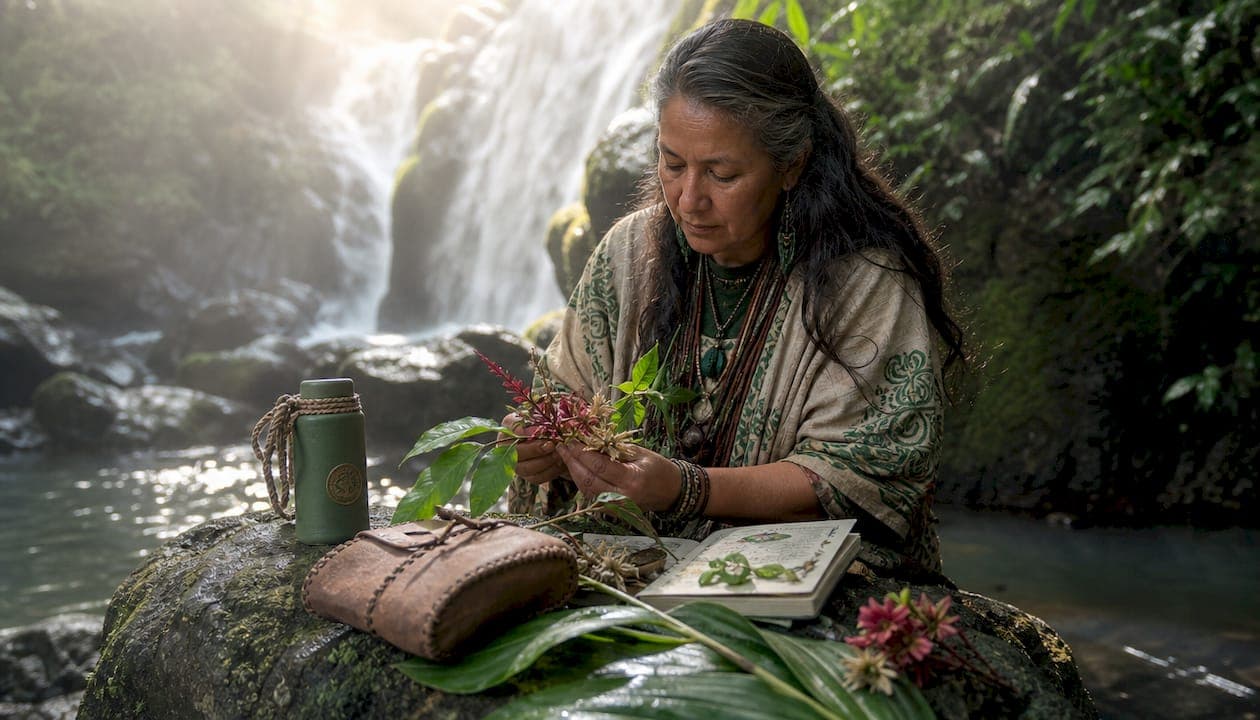
Master plants are defined in ethnobotany as botanical species used simultaneously for physical healing and spiritual teaching within indigenous medicine systems. These plants occupy a unique position: they are not simply herbal remedies but living teachers that communities consult for guidance, initiation, and identity. Chiric Sanango, Ayahuasca, and sacred Tobacco are among the most recognized examples globally. Understanding master plants traditional uses means recognizing that each plant carries a cultural role as significant as its biochemical one. The ancestral wisdom embedded in these traditions represents thousands of years of careful observation and relational knowledge between people and plants.
1. Master plants traditional uses across cultures
The breadth of master plant use spans continents, climates, and healing philosophies. Each plant below holds a distinct place in its culture of origin, serving medicinal, ritual, and symbolic functions that cannot be separated from one another.
Chiric Sanango (Brunfelsia grandiflora)
Chiric Sanango is one of the most respected master plants in Amazonian medicine. Traditional healers use it to treat rheumatism, inflammation, and psychological disorders. The Takiwasi Center protocol involves an 8-day retreat with preparatory Ayahuasca ceremonies, purgative ingestion twice daily, and psychotherapeutic support. That structure reflects how seriously indigenous traditions treat this plant's power.
Ayahuasca (Banisteriopsis caapi with Psychotria viridis)
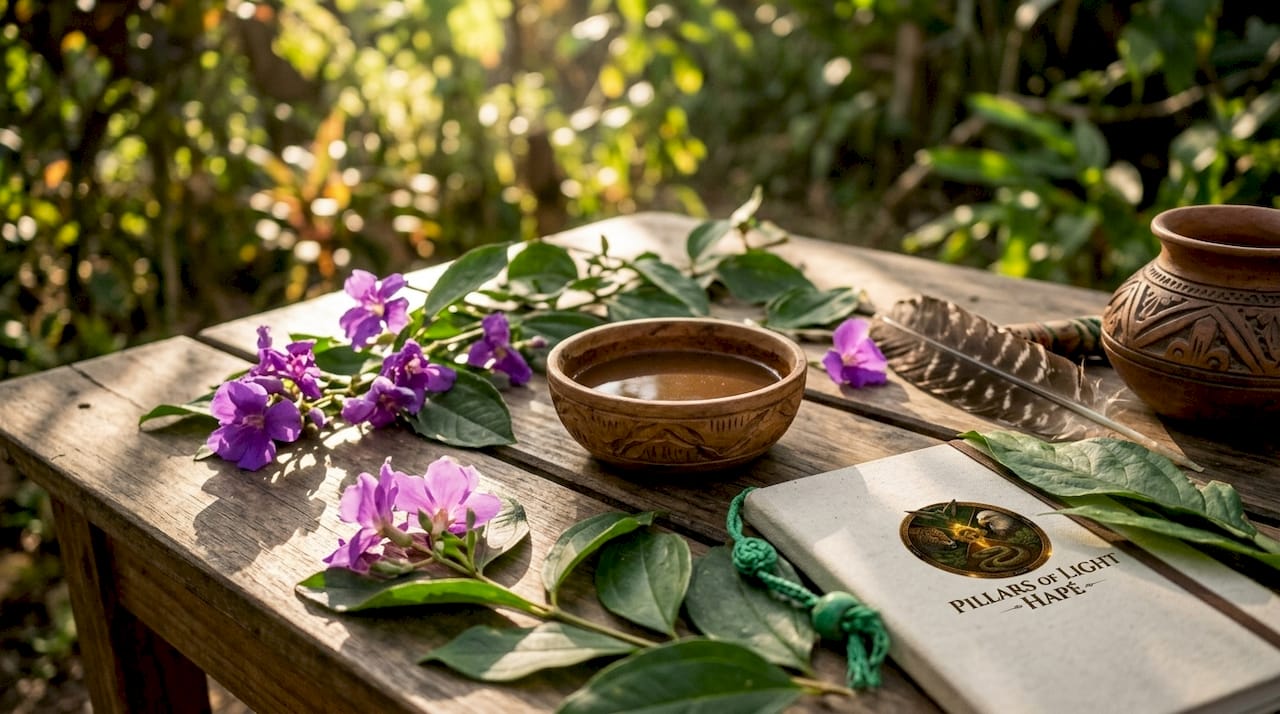
Ayahuasca is the most internationally recognized Amazonian master plant. Communities across Peru, Colombia, and Brazil use it as a visionary medicine for healing trauma, diagnosing illness, and communicating with plant spirits. The brew requires precise preparation: the vine is cooked with companion leaves over many hours. Healers regard it as a sovereign teacher, not a substance.
Sacred Tobacco (Nicotiana rustica)
Sacred Tobacco, known as Mapacho in Amazonian traditions, functions as a master plant for purification, protection, and grounding. Healers blow smoke over patients to clear energetic blockages and invite healing spirits. It is also the base ingredient in many Hapé blends. Its role is ceremonial first and pharmacological second.
Drymaria cordata
The Mangar community of the Eastern Himalayas relies on Drymaria cordata for treating bone fractures, wounds, and fever. Research confirms that this species holds one of the highest citation and use values among the 46 medicinal plant species documented in that region. That consensus across informants signals genuine cultural authority, not anecdotal use.
Ocimum tenuiflorum (Holy Basil / Tulsi)
Ocimum tenuiflorum appears in Ayurvedic and Himalayan healing systems as a master plant for respiratory conditions, fever, and stress. The Mangar community places it among their most frequently cited medicinal plants for respiratory issues. In Hindu tradition, it also carries deep spiritual significance as a sacred household plant.
Bobinsana (Calliandra angustifolia)
Bobinsana grows along Amazonian riverbanks and is used by healers to open the heart, reduce inflammation, and treat arthritis. It is often included in master plant dietas for its gentle but persistent teaching quality. Healers describe it as a plant that builds emotional resilience over time.
Ajo Sacha (Mansoa alliacea)
Ajo Sacha, or wild garlic vine, is used across the Amazon for clearing energetic blockages, treating rheumatism, and strengthening the body before ceremony. Its preparation typically involves a cold-water maceration or decoction of the bark and leaves. Healers prescribe it during dietas to sharpen perception and focus.
Nunu (Amazonian Tobacco Snuff)
Nunu is a traditional plant-based snuff used by communities in the Colombian and Brazilian Amazon for grounding, clarity, and ceremonial opening. It is applied through the nostrils using a Tepi or Kuripe applicator. Its use is deeply tied to specific tribal protocols and healer lineages.
Hakka Medicinal Bath Plants
In Guangdong, China, Hakka communities use 108 plant species in medicinal baths primarily for postpartum recovery, neonatal care, and skin conditions. Knowledge of these plants is held almost exclusively by older women. This matrilineal transmission model mirrors the lineage-based knowledge systems found in Amazonian traditions.
2. How master plants are prepared and integrated into healing
Preparation is not incidental to master plant healing. It is the healing. The Shipibo-Conibo tradition makes this explicit: the master plant dieta requires avoiding salt, sugar, alcohol, and sexual activity so the plant spirit can enter and teach without interference. These restrictions are not symbolic gestures. They create the physiological and energetic conditions the plant needs to work.
The Takiwasi Center in Peru formalizes this approach with structured retreats. The Chiric Sanango protocol pairs purgative plant ingestion with psychotherapeutic sessions and Ayahuasca ceremonies across eight days. That combination treats the physical, psychological, and spiritual dimensions of illness simultaneously. No single dimension is addressed in isolation.
Icaros, the sacred songs of Shipibo healers, play a central role in directing plant energy during ceremony. These songs are not decorative. They are the primary technology through which a healer guides the plant's influence within the patient. Knowledge of icaros passes through lineage, not books, which is why unsupervised dietas carry real risk.
Pro Tip: Always work with a trained healer from an established lineage before attempting any master plant dieta. The plant's effectiveness depends as much on the ceremonial container as on the plant itself.
3. Cultural, symbolic, and cognitive roles of master plants
Master plants function as symbolic mediators in human cognitive traditions, marking social identity, seasonal cycles, and communication with the sacred. This role goes far beyond pharmacology. A plant like Ayahuasca does not simply alter brain chemistry. It anchors a community's cosmology, its understanding of death, healing, and the nature of reality.
Ethnobotany research confirms that plants are embedded in cultural myths, symbols, and rituals that shape human cognition across generations. A community that loses its master plants loses more than medicine. It loses a living library of identity and meaning. That is why indigenous scholars describe these plants as cultural keystone species.
Cultural keystone species are defined as plants that play fundamental roles in indigenous cultures across diet, medicine, materials, social relationships, and spiritual practices. They connect Land, Water, and People into a single relational web. Remove one keystone species and the entire cultural ecosystem weakens.
"Global demand for medicinal plants risks ignoring cultural context and the sovereignty of indigenous knowledge holders. Sustainability requires ethical documentation and genuine respect for knowledge ownership."
United Nations report on sustainability and indigenous knowledge of medicinal plants
Plant spirits, in the Shipibo-Conibo worldview, are conscious entities that require respectful engagement. This is not metaphor. Healers treat plants as sentient partners in the healing process. That relational worldview shapes every aspect of how master plants are grown, harvested, prepared, and administered. Ethical engagement with indigenous plant medicine begins with accepting that framework on its own terms.
4. Comparing master plants by properties and cultural context
Multipurpose master plants form the core of traditional healing systems, while specialist plants address specific ailments with precise preparation methods. Understanding that distinction helps you approach each plant with appropriate expectations.
| Point | Details |
|---|---|
| Primary ailments treated | Ranges from rheumatism and respiratory issues (Chiric Sanango, Tulsi) to postpartum care (Hakka bath plants) and trauma (Ayahuasca) |
| Parts used | Bark, leaves, roots, and whole vine depending on species and tradition |
| Preparation method | Decoction, cold maceration, purgative ingestion, topical bath, or ceremonial inhalation |
| Cultural role | Ranges from household spiritual plant (Tulsi) to initiatory teacher (Ayahuasca) to purification agent (Mapacho) |
| Ceremony involved | Dieta retreats, Ayahuasca ceremonies, postpartum baths, and bone-setting rituals depending on tradition |
Choosing a master plant is not a consumer decision. It is a relational one. The plant, the healer, the community, and the seeker all participate. Preparation method and plant part selection directly affect both medicinal and spiritual outcomes, which is why decoction differs meaningfully from maceration in traditional protocols. A plant medicine ceremony provides the structured container that makes those distinctions meaningful.
Key Takeaways
Master plants are defined by their dual role as physical medicines and spiritual teachers, and their effectiveness depends entirely on the cultural protocols surrounding their use.
| Point | Details |
|---|---|
| Dual role of master plants | Every master plant serves both a medicinal and a spiritual teaching function within its tradition. |
| Preparation is non-negotiable | Dietary restrictions, isolation, and healer guidance are required for safe and effective plant work. |
| Cultural keystone status | Master plants anchor community identity, cosmology, and social relationships beyond their biochemical effects. |
| Lineage knowledge matters | Knowledge is held by elders and lineage healers; unsupervised use risks ineffectiveness or harm. |
| Ethical sourcing is required | Global demand must be met with respect for indigenous sovereignty and sustainable harvesting practices. |
What working with master plants has taught me about humility
Most people who come to master plants arrive with a goal. They want to heal something specific, understand something difficult, or break a pattern that has resisted every other approach. That goal-oriented mindset is understandable. It is also the first thing the plants tend to dismantle.
What I have seen, time and again, is that the plant does not care about your agenda. Chiric Sanango does not negotiate. Ayahuasca does not follow a schedule. The Shipibo-Conibo understanding that these plants are conscious teachers is not poetic language. It is a practical description of what actually happens when you enter a dieta with genuine humility versus when you enter it as a consumer.
The lineage matters more than most Western seekers realize. A healer who has worked with a plant for twenty years under the guidance of their own teacher carries knowledge that no book, retreat brochure, or online course can replicate. That knowledge lives in the icaros, in the timing, in the way the plant is harvested and prepared. Cutting corners on that lineage does not just reduce effectiveness. It can cause real harm.
My honest recommendation: slow down. Learn the cultural context before you seek the experience. Read about ethical sourcing in plant medicine and understand what you are asking of the communities who hold this knowledge. The plants will still be there when you are ready. They have been waiting for a very long time.
— Manifest Light
Authentic ceremonial tools for your master plant practice
Pillars of Light hap'e carries the ceremonial tools that traditional master plant healing requires. From handcrafted Kuripes and Tepis to ethically sourced Hapé blends and Amazonian ceremonial accessories, every product is selected with respect for the indigenous traditions behind it.
Pillars of Light hap'e sources its products with direct attention to cultural preservation and rainforest sustainability. The store, based in Old Town Spring, Texas, offers 75+ varieties of Hapé alongside master plant products and ceremonial tools. Whether you are preparing for your first dieta or deepening an existing practice, you will find tools that honor the traditions they come from. Visit Pillars of Light hap'e to browse the full collection and connect with a team that takes this work seriously.
FAQ
What are master plants in traditional medicine?
Master plants are botanical species used in indigenous healing systems for both physical treatment and spiritual teaching. They are regarded as conscious entities that require respectful preparation and ceremonial context to work effectively.
What is a master plant dieta?
A master plant dieta is a structured period of isolation, dietary restriction, and plant ingestion used in Shipibo-Conibo and other Amazonian traditions to receive a plant's teachings. It requires avoiding salt, sugar, alcohol, and sexual activity for the duration of the retreat.
Which master plants are most widely recognized?
Ayahuasca, Chiric Sanango, sacred Tobacco (Mapacho), Bobinsana, and Ajo Sacha are among the most widely recognized master plants in Amazonian traditions. Ocimum tenuiflorum and Drymaria cordata hold equivalent status in Himalayan and South Asian healing systems.
Are master plants safe to use without a healer?
Unsupervised use of master plants carries real risk because knowledge is concentrated among lineage-trained elders and healers. Plants are regarded as conscious entities requiring proper method and respectful engagement to avoid ineffectiveness or harm.
How do master plants differ from standard herbal remedies?
Standard herbal remedies target specific physical symptoms through known biochemical pathways. Master plants carry an additional cultural and spiritual role, functioning as symbolic mediators in community identity, ritual, and cosmology that extends far beyond their pharmacological effects.