What is an Amazonian ayahuasca ceremony?
An Amazonian ayahuasca ceremony is a sacred, guided ritual rooted in thousands of years of indigenous tradition, where participants consume a plant brew under the watchful care of an experienced shaman to facilitate deep healing and spiritual insight. This is not a recreational experience. It is a structured, spiritually oriented practice that has been carefully preserved and passed down through generations of Amazonian indigenous peoples, including the Shipibo-Conibo of Peru, and Quechua communities across Ecuador, Colombia, and Brazil.
The brew at the center of the ceremony combines two plants native to the Amazon rainforest:
- Banisteriopsis caapi — a vine containing harmala alkaloids that act as MAO inhibitors, often considered the "spirit" of the medicine itself
- Psychotria viridis (also called chacruna) — a leafy shrub whose leaves carry DMT, a naturally occurring psychoactive compound
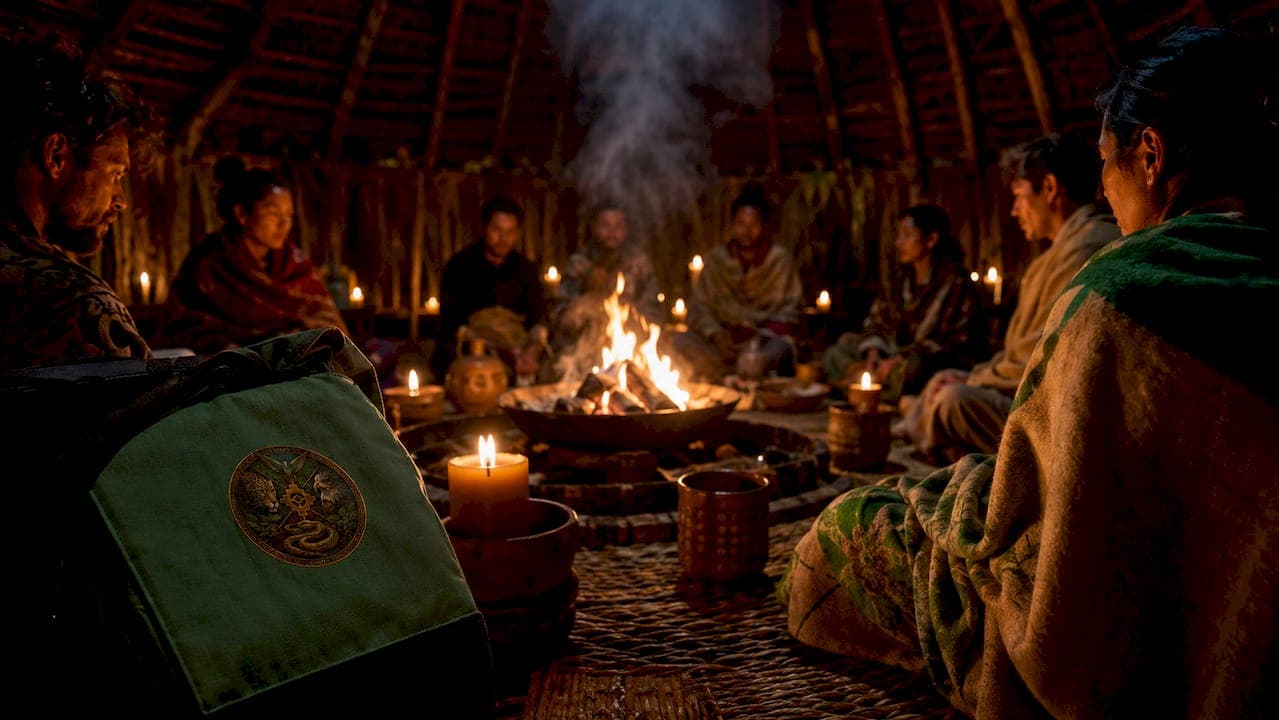
The ceremony typically takes place at night inside a maloca, a traditional circular ceremonial structure. Ceremonies last several hours into the night, with effects beginning 20–60 minutes after the brew is consumed. Throughout the night, a curandero (the trained shaman or ceremonial healer) guides and protects participants using icaros, sacred healing songs that are considered the primary healing instrument of the ceremony, not mere background music. Different icaros serve different purposes: some open visionary states, some offer protection, some help with purging, and some call in specific plant spirits.
Participants may experience vivid visions, emotional release, physical purging, and profound shifts in self-awareness. The curandero and support facilitators remain present throughout, monitoring each person's process and offering individual attention as needed. The ceremony closes with thanksgiving prayers and closing songs before participants rest.
How to prepare physically and mentally for your first ceremony
Preparation is not optional. Arriving unprepared is arriving unsafe, and the quality of your preparation directly shapes the quality of your experience.
The dieta: more than a diet
The dieta is the traditional pre-ceremony period of physical and spiritual discipline. It extends well beyond dietary restrictions into a genuine spiritual training period that sensitizes you to the medicine's teachings. Serious retreat centers typically begin dietary restrictions at least one week before ceremony, with some traditional lineages extending the dieta for weeks and including silence, social isolation, and the elimination of salt, sugar, oil, and most seasoning.
At minimum, you should avoid:
- Alcohol and recreational substances
- Pork and red meat
- Fermented foods and aged cheeses
- Spicy foods, excessive salt, and caffeine
- Certain medications, particularly SSRIs and other psychiatric drugs (see the safety section below)
- Sexual activity
Mental and emotional readiness
Approach the ceremony with humility and openness. The experience centers on confronting internal emotional patterns rather than simply witnessing dramatic visions. Many beginners arrive expecting a visual spectacle and find instead that the medicine asks them to sit with grief, fear, or long-avoided truths. That is the work.
Set a clear personal intention before you arrive. Ask yourself honestly why you are called to this practice and what you are genuinely seeking. Write it down. Spend time in quiet reflection or meditation in the days leading up to the ceremony. Arrive rested, with your schedule cleared for at least one full day of rest afterward.
- Complete medical and contraindication screening honestly
- Disclose every medication and supplement to your facilitators
- Fast for several hours before the ceremony begins
- Reduce stimulation and stress in the final days of preparation
Pro Tip: Don't try to "prepare" by reading accounts of other people's visions. Every ceremony is different. The most useful preparation is inner work: journaling your intentions, sitting quietly with your fears, and arriving with a willingness to be surprised.
What actually happens during an Amazonian ceremony, step by step
Understanding the ceremony's structure removes a lot of fear. Here is how a traditional Amazonian ayahuasca ceremony typically unfolds from opening to close.
Opening the sacred space
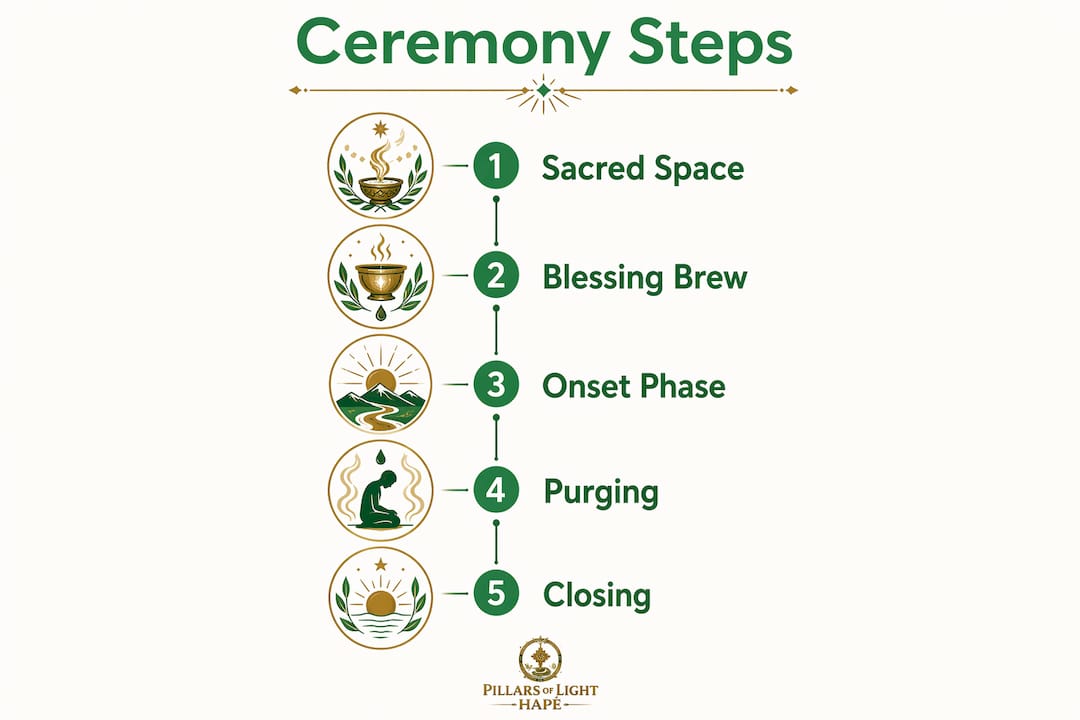
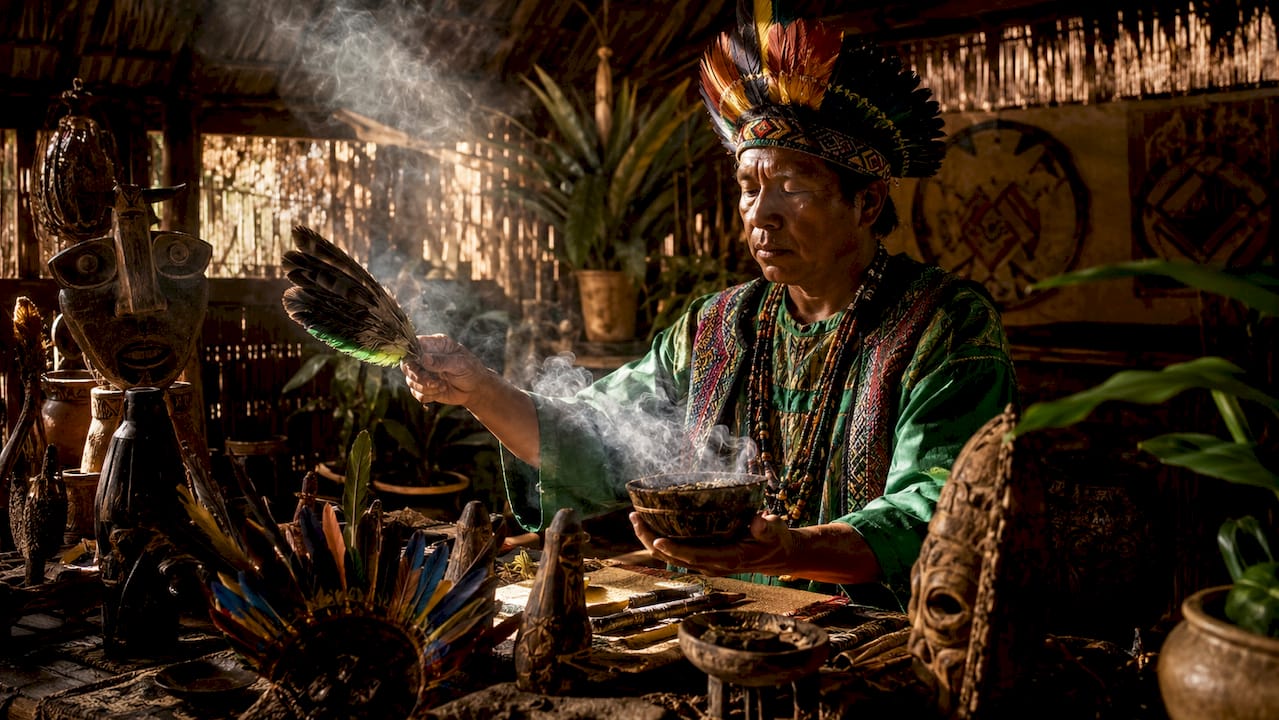
The ceremony begins before anyone drinks. The curandero cleanses the space using mapacho (sacred Amazonian tobacco) smoke blown in the four directions, offers prayers, and calls upon protective spirits. This ritual opening creates the spiritual container that holds participants safely throughout the night. Some traditions also use agua de florida or other plant preparations during this phase.
Drinking the brew
Participants approach the altar one by one. The curandero offers a brief blessing and pours a dose of the dark, intensely bitter brew. First-time participants typically receive a smaller dose, with the facilitator reading each person's needs individually. Nobody should be pressured toward a specific amount.
Onset and the long middle
| Phase | Approximate Timing | What Happens |
|---|---|---|
| Opening ritual | — | Space cleansing, prayers, intentions set |
| Brew consumed | — | Each participant drinks; ceremony begins |
| Onset | — | Effects begin 20–60 minutes after ingestion |
| Peak journey | several hours into the night | Visions, emotional release, purging, icaros |
| Gradual return | several hours into the night | Effects soften; shaman sings closing songs |
| Ceremony close | several hours into the night | Thanksgiving prayers, space formally closed |
As participants enter the altered state, the shaman begins singing icaros continuously, using these sacred songs to manage the energetic space, monitor each participant's process, and adjust the ceremony's flow. The shaman may also use a chakapa (leaf rattle), blow tobacco smoke, or move between participants to offer individual healing work. This is active, skilled guidance, not passive presence.
Purging
Purging is understood as intentional energetic and emotional cleansing, not a side effect. Shamans view it as the release of trapped emotional and spiritual material. Not every participant purges, and there is no "right" experience. Some people vomit early; others later; some not at all. Buckets are provided, and facilitators treat purging as a natural and respected part of the process.
Closing the ceremony
As effects gradually soften toward dawn, the curandero sings closing songs, offers thanksgiving prayers, and formally closes the ceremonial space. Participants rest quietly. Heavy food is avoided immediately after the ceremony ends. The experience does not conclude when the ceremony does.
Why cultural respect and ethics matter when you participate
Ayahuasca is not a wellness trend that emerged recently. It is a living spiritual practice carried by indigenous communities across the Amazon basin for centuries, possibly millennia. The Shipibo-Conibo, Quechua, Tatuyo, and dozens of other Amazonian peoples developed these ceremonies as central elements of their healing systems, community life, and spiritual worldview. The forest, the plants, and the songs are inseparable from that living tradition.
For beginners, this context shapes everything about how you should approach participation:
- Approach as a student, not a consumer. You are entering a tradition that belongs to communities who have protected and refined it across generations. Humility is not optional.
- Seek authentic lineage. A curandero with genuine training, years of plant dietas, and a clear ceremonial lineage is not the same as a facilitator who completed a weekend course. Ask direct questions about training and lineage before committing to a retreat.
- Reject commodification. The commercialization of sacred practices strips them of meaning and can cause real harm, both to participants and to the indigenous communities whose traditions are being borrowed. Choose retreat centers that actively support indigenous communities and ethical sourcing.
- Understand the ceremony as spiritual work. The brew is referred to in many traditions as a sacrament, a sacred medicine for communion with the divine, not a drug or a shortcut to enlightenment.
- Respect the container. The ceremonial framework, including preparation, the shaman's guidance, and post-ceremony integration, constitutes a complete healing methodology. Consuming ayahuasca outside of this context is strongly discouraged by traditional practitioners.
The sacred plants of the Amazon carry meaning that extends far beyond their pharmacological effects. Honoring that meaning is both an ethical responsibility and a practical one: ceremonies held with genuine reverence and skilled guidance produce fundamentally different experiences than those that do not.
Safety, risks, and what integration actually looks like
Safety in an ayahuasca ceremony depends almost entirely on the quality of the ceremonial container. Experienced, traditionally trained guides, thorough medical screening, and structured integration are what separate a predictable, supported experience from a genuinely dangerous one. The absence of any one of these elements raises risk considerably.
Medical contraindications you cannot ignore
The most critical safety fact for any beginner: ayahuasca contains natural MAO inhibitors. Combined with SSRIs, SNRIs, certain other antidepressants, and a range of other medications, this interaction can cause serotonin syndrome, a serious and potentially life-threatening reaction. This is not a minor caution.
- Disclose every prescription, supplement, and over-the-counter medication during intake screening
- Never stop an antidepressant on your own to qualify for a ceremony; tapering requires physician supervision and typically takes weeks to months
- A responsible retreat center will tell you "not yet" if your medications make the timing unsafe. That answer protects you.
- Certain heart conditions, psychiatric diagnoses, and family histories of psychosis also require careful evaluation
Common physical and emotional experiences
Most participants experience some combination of nausea, purging, intense emotional material, altered time perception, and visual phenomena. These are expected and supported within the ceremony. What you should not experience is being left alone, being pressured, or having no clear path to assistance if you need it. Facilitators and assistants remain present throughout the 4–6 hour ceremony for exactly this reason.
Integration: where the real work happens
Integration is where long-term healing actually occurs. The ceremony initiates the process; it does not conclude it. The insights and emotional material that surface during the night only become genuinely useful when you bring them back into daily life with intention and reflection.
Practical integration practices for beginners:
- Journal immediately. Write the morning after each ceremony without filtering. Images, emotions, fragments of memory. Return to this writing over the following days as meaning deepens.
- Rest fully. Plan at least one full day of quiet after the ceremony. Avoid overwhelming stimulation, alcohol, and heavy social commitments.
- Spend time in nature. Many traditions recommend several days of quiet reflection after a ceremony series.
- Arrange support in advance. A therapist, a trusted friend, or a community of people familiar with this work gives you somewhere to bring what the ceremony opens. You do not need a full integration team. You do need not to be completely alone with it.
Unregulated or inexperienced ceremony providers represent the clearest risk in this space. A center that skips medical screening, rushes intake, or cannot speak clearly about its facilitators' training is a center to walk away from.
Amazonian ceremonial tools every U.S. beginner should know about
An ayahuasca ceremony does not exist in isolation. Across the Amazon, a broader ecosystem of ceremonial tools and plant medicines supports, prepares, and deepens the work of the ceremony itself. For U.S. beginners, understanding these tools adds important context and opens a practical path for honoring Amazonian tradition in everyday life.
Hapé (Rapé)
Hapé, also spelled Rapé, is a sacred Amazonian snuff made from powdered tobacco and other medicinal plants. It has been used by indigenous Amazonian communities for centuries as a ceremonial medicine in its own right. Within ceremony, hapé is sometimes administered before the ayahuasca brew to clear the mind, sharpen focus, and prepare the participant's energy for the work ahead. The traditional use of hapé alongside ayahuasca reflects a sophisticated understanding of how different plant medicines work together within a ceremonial context.
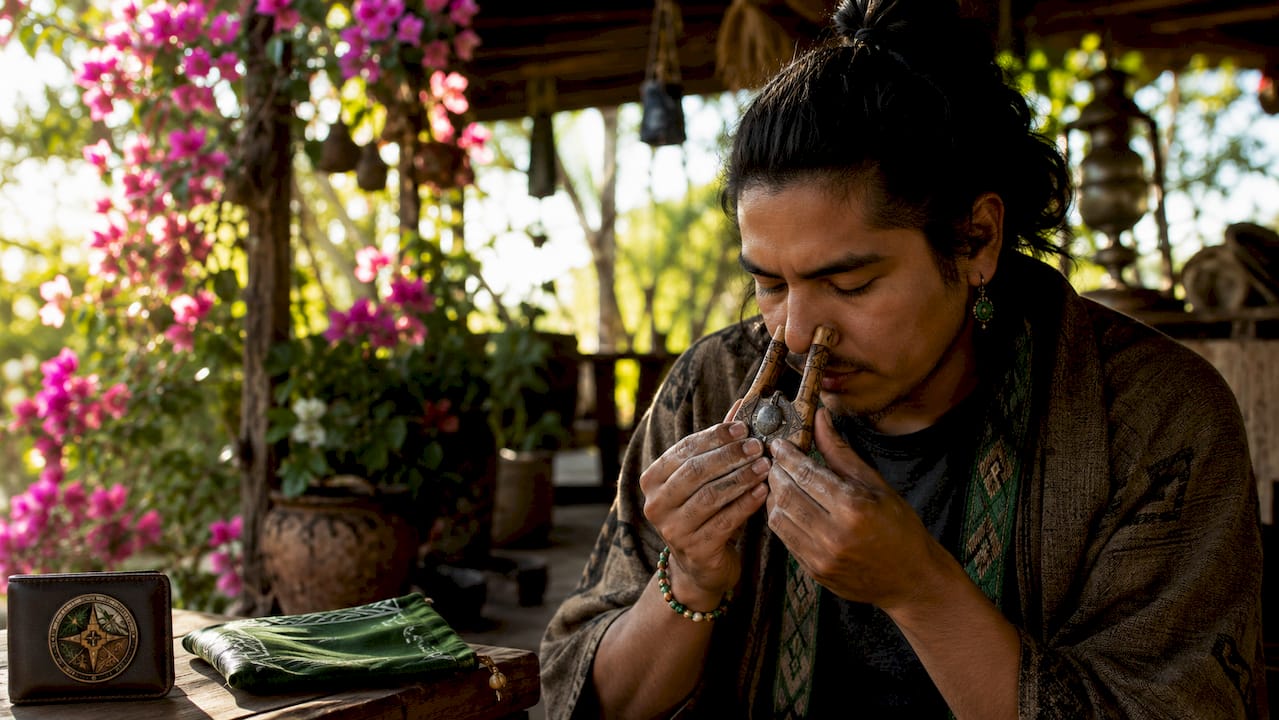
Hapé is administered through the nose using a pipe. The experience is grounding and clarifying, often described as cutting through mental noise and bringing the participant into the present moment. It is used in both group ceremony settings and personal practice.
Kuripe
A kuripe is a V-shaped self-applicator pipe used to administer hapé to oneself. One end is placed at the nostril; the other at the mouth. The practitioner blows the hapé into their own nose in a single, intentional breath. Handcrafted kuripes are made from a range of materials including wood, bone, and bamboo, often carved with symbolic imagery drawn from Amazonian traditions. The kuripe is a personal ceremonial tool, used in private practice and individual ritual.
Tepi
A tepi is a longer, straight pipe used when one person administers hapé to another. The facilitator places one end at the recipient's nostril and blows through the other end with a single, controlled breath. The tepi is the traditional tool of ceremony facilitators and is central to communal hapé practice. Like the kuripe, tepis are handcrafted and often carry deep cultural symbolism in their design.
Ethical sourcing and respectful use
Authentic Amazonian ceremonial tools carry real cultural meaning, and how they are sourced matters. Tools made by indigenous artisans using traditional methods support the communities that developed these practices. Mass-produced imitations do not. When you choose a kuripe or tepi made by Shipibo or other Amazonian craftspeople, you participate in a living tradition rather than simply consuming its aesthetic.
For U.S. beginners, these tools offer a tangible and respectful way to engage with Amazonian tradition outside of a full ceremony setting. Hapé practice can support meditation, intention-setting, and personal ceremony work when approached with the reverence the tradition deserves.
Pro Tip: If you are new to hapé, start with guidance from someone experienced in its use. The breath technique, the dosage, and the intention behind the practice all matter. Rushing into self-administration without preparation misses the point entirely.
Key Takeaways
An Amazonian ayahuasca ceremony is a sacred, guided ritual requiring proper preparation, a skilled curandero, and committed post-ceremony integration to be both safe and genuinely transformative.
| Point | Details |
|---|---|
| Ceremony structure | Ceremonies last 4 to 6 hours, guided by a curandero using icaros, with effects beginning 20–60 minutes after the brew is consumed. |
| Preparation is mandatory | Follow the dieta for at least one week before ceremony, avoiding alcohol, pork, fermented foods, and medications that interact with MAO inhibitors. |
| Safety depends on the container | Experienced facilitators, honest medical screening, and structured integration are what make a ceremony safe and predictable. |
| Cultural respect is non-negotiable | Ayahuasca belongs to living indigenous traditions; seek authentic lineage, support ethical sourcing, and approach participation as a student. |
| Integration completes the work | Rest, journaling, and reflection after the ceremony are where long-term healing happens, not during the ceremony itself. |