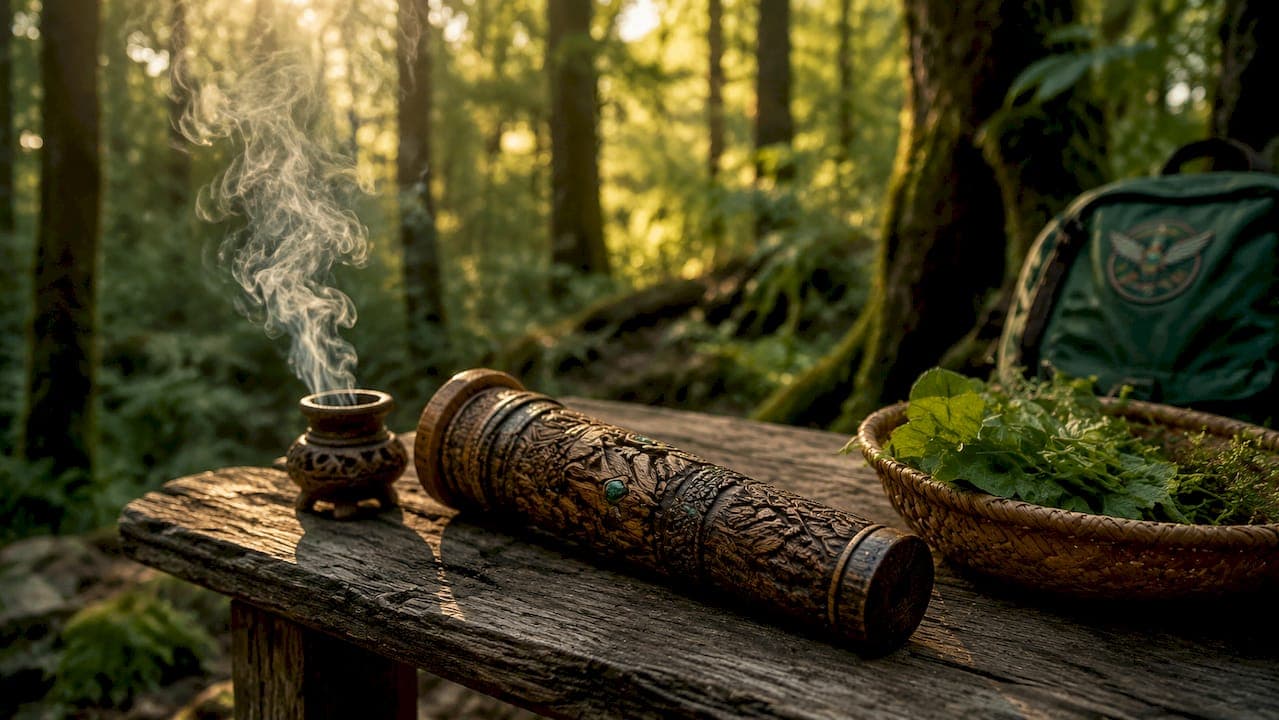
A sacred tool is defined as a consecrated object set apart from ordinary use and dedicated to spiritual or ceremonial purposes. The term "sacred" comes from the Latin sacer, meaning "set apart for divine service." Understanding what does sacred tool mean requires recognizing that sacredness is not a fixed physical property. It is conferred through ritual activation, communal recognition, and human intention. These objects serve as bridges between the everyday world and spiritual realms, enabling practitioners to communicate with divine or transcendent forces. From Amazonian Hapé pipes to Tibetan singing bowls, the significance of sacred tools spans every known culture and tradition.
What does sacred tool mean across world traditions?
A sacred tool is any physical implement that has been consecrated, activated through ritual, and recognized by a community as a vehicle for spiritual work. The sacred tool definition rests on three pillars: dedication, activation, and recognition. An object becomes sacred not because of its material composition but because of how it is treated, used, and understood within a living tradition.

The sacredness of an object is relational and dynamic, not a static quality baked into the material itself. A carved wooden pipe is just wood until it is blessed, named, and used in ceremony. At that point, it becomes a living participant in spiritual practice.
Examples of sacred tools appear across every major tradition:
- Buddhism and Hinduism: Ritual bells, incense burners, and offering bowls focus spiritual energy and convert ordinary space into sacred environments.
- Shamanic traditions: Drums, rattles, staffs, and pipes serve as instruments for traveling between worlds and communicating with spirits.
- Amazonian traditions: Kuripes (self-applicators for Hapé), Tepis (facilitator applicators), and sacred plant medicines function as ceremonial tools for healing and spiritual alignment.
- Masonic and Western mystical traditions: Working tools like the compass and square symbolize moral and spiritual development.
- Taoist practice: Sacred implements such as incense burners and ritual swords are associated with specific internal qualities the practitioner cultivates over time.
What unites all these examples is purpose. Each tool is used intentionally, within a recognized framework, to facilitate contact with something beyond the ordinary.
How do sacred tools function across different cultures?
Sacred tools reflect universal psychological needs for structure, symbolic meaning, and spiritual intention. Every human culture has developed physical objects that anchor spiritual practice. This is not coincidence. It reflects a deep human need to make the invisible visible and the abstract tangible.

Anthropologists describe this function as "symbolic compression." A single object compresses an entire worldview, a set of values, and a community's relationship with the unseen into one physical form. A shaman's drum does not just make sound. It carries the cosmology of an entire people.
Shared functions across cultures
Despite enormous cultural variety, sacred tools serve similar fundamental purposes worldwide:
- They organize attention and focus the practitioner's mind.
- They reinforce social roles and mark transitions between states of being.
- They connect individuals to their communities and to forces beyond everyday life.
- They provide a repeatable structure for spiritual practice.
Cultural variations in form
The form varies widely while the function stays consistent. West African traditions use iron staffs and calabash rattles. Indigenous North American traditions use medicine bundles and sacred pipes. Amazonian traditions use plant medicines, Kuripes, and Tepis. Hindu craftsmen honor their tools during Vishwakarma Puja, recognizing them as participants in cosmic creation rather than mere instruments.
| Cultural tradition | Example sacred tools | Primary function |
|---|---|---|
| Amazonian Indigenous | Kuripe, Tepi, Hapé | Healing, spiritual alignment |
| Buddhist | Singing bowl, incense burner | Focus, space consecration |
| Shamanic | Drum, rattle, staff | Spirit communication, journeying |
| Hindu | Ritual lamp, offering vessel | Devotion, cosmic participation |
| Masonic and mystical | Compass, square | Moral and character development |
The table above shows that no single culture invented the sacred tool. Every tradition arrived at the same insight independently: physical objects can carry spiritual weight.
What distinguishes a sacred tool from an ordinary object?
The line between a sacred tool and a decorative religious object is real and meaningful. A sacred tool is actively used in practice. A religious ornament may carry symbolic meaning but sits outside the circle of active ceremony. This distinction matters for anyone serious about working with these objects.
Three criteria separate a sacred tool from an ordinary object or mere ornament:
- Consecration: The object has been formally set apart through a blessing, ritual, or ceremony. This act of dedication changes its status within the community that recognizes it.
- Activation through use: Sacred tools are functional. They are engaged with repeatedly in ceremony, prayer, or healing work. A drum that is never played is not functioning as a sacred tool.
- Communal recognition: The community of practitioners acknowledges the object's sacred status. This shared recognition is what gives the tool its power within a tradition.
A piece of turquoise jewelry may be beautiful and carry cultural meaning. It becomes a sacred tool only when it is consecrated, used in ceremony, and recognized as such by the practitioner and their community. The significance of sacred tools lies in this living relationship, not in the object's appearance or age.
Pro Tip: If you are new to working with sacred tools, start by learning the specific consecration practices of the tradition you are drawing from. Using a tool without understanding its activation protocol is like playing an instrument you have never tuned.
The importance of sacred tools also lies in what they are not. They are not lucky charms, decorative pieces, or status symbols. Treating them as such strips them of the relational quality that makes them sacred in the first place.
How are sacred tools engaged with in practice and care?
Sacred tools in shamanic and Indigenous traditions are understood as living beings with their own spiritual needs. This is not metaphor. Practitioners in these traditions report that tools can call to their owners through dreams, energetic sensations, or unexpected encounters. The relationship between practitioner and tool is mutual.
Caring for sacred tools involves specific practices that vary by tradition. Common approaches include:
- Cleansing: Passing tools through sacred smoke, such as sage or Palo Santo, removes accumulated energies. Cleansing with sage smudge is one of the most widely practiced methods across North American and Amazonian traditions.
- Warming: Some tools, particularly drums and wooden instruments, are warmed near fire or sunlight before use to activate their resonance.
- Wrapping and storage: Sacred tools are often wrapped in natural cloth and stored separately from ordinary objects. This physical separation reinforces their set-apart status.
- Feeding: Certain traditions involve offering tobacco, water, or other substances to tools as a form of reciprocal care.
- Periodic ceremony: Tools may be re-consecrated or honored during seasonal ceremonies to renew their spiritual connection.
The practitioner's internal state is the most important factor in working with sacred tools. Intention, compassion, and connection to spirit are primary. The tool amplifies these qualities but does not generate power on its own. Over-reliance on the object itself, without cultivating the practitioner's inner state, is the most common error in ceremonial work.
Pro Tip: Before picking up any sacred tool, take three slow breaths and set a clear intention. This simple act shifts your internal state and signals to the tool that you are entering ceremonial space.
Understanding how to use sacred tools responsibly also means learning from the tradition that produced them. Reading about a practice is a starting point. Finding a teacher or community deepens the relationship significantly.
What symbolic meanings do sacred tools carry?
Sacred tools are tangible expressions of divine creative energy meeting human intention. In Hindu theology, tools are honored during Vishwakarma Puja not as idols but as participants in cosmic creation. The craftsman's hammer and chisel are recognized as extensions of the divine act of making. Suspending their ordinary use during the festival reveals their sacred significance. When a tool is not being used for work, its deeper identity becomes visible.
"Sacred tools are not worshipped as idols. They are honored as meeting points between human intelligence and divine creative energy."
Masonic working tools carry a similar logic. The compass and square are used to symbolize chipping away negatives and building character over time. Each tool corresponds to a virtue the practitioner is meant to embody. The physical act of working with the tool reinforces the internal quality it represents. This is what makes sacred tools a curriculum, not just a symbol.
Taoist sacred implements follow the same pattern. Each of the ten essential implements in classical Taoist study is associated with a specific internal quality, such as humility, reverence, or stillness. The practitioner does not just use the tool. They study it, meditate on it, and allow it to shape their character over years of practice.
Sacred tools also function as markers of identity and transformation. A shaman who receives a drum through ceremony is not the same person afterward. The tool marks a threshold crossing. The same is true for a practitioner who receives their first Kuripe or Tepi. The object carries the weight of lineage, intention, and community recognition. That weight is part of what makes it sacred.
Key Takeaways
A sacred tool is a consecrated, actively used object that bridges the mundane and spiritual worlds through ritual activation, communal recognition, and the practitioner's focused intention.
| Point | Details |
|---|---|
| Sacred tool definition | A consecrated object set apart for spiritual use, activated through ritual and communal recognition. |
| Sacredness is relational | Sacredness is not a fixed physical property; it is conferred through intention, practice, and community. |
| Active use is required | Sacred tools must be used in ceremony to function; ornamental status alone does not make an object sacred. |
| Practitioner intention is primary | The tool amplifies the practitioner's inner state; it does not generate spiritual power independently. |
| Care is part of the practice | Cleansing, warming, and respectful storage maintain the tool's spiritual connection over time. |
Why sacred tools are more alive than most people realize
People often approach sacred tools the way they approach religious art: with appreciation but from a distance. That distance is the problem. Every tradition covered here treats these objects as active participants, not passive symbols. The drum calls to its owner. The Kuripe carries the lineage of the hands that made it. The compass in a Masonic lodge is not decorating the altar. It is working.
What I find most striking is the convergence. Amazonian shamans, Hindu craftsmen, Taoist scholars, and Masonic initiates arrived at the same conclusion without consulting each other: objects can be alive in a way that matters spiritually. That convergence is not coincidence. It points to something real about how human beings relate to the physical world.
The modern tendency is to flatten this into metaphor. "The drum represents the heartbeat." That framing is accurate but incomplete. In the traditions where these tools originate, the drum does not represent the heartbeat. It is a heartbeat, one that belongs to a living relationship between practitioner, community, and spirit. Treating it as mere representation is a category error.
For anyone beginning to work with sacred tools, the most honest advice is this: slow down. Learn the tradition. Find a teacher if you can. The role of ancestral wisdom embedded in these objects is not something you can extract from a product description. It lives in practice, relationship, and time.
— Manifest Light
Authentic ceremonial tools at Pillars of Light hap'e
Pillars of Light hap'e carries 75+ varieties of traditional Amazonian Hapé along with handcrafted Kuripes, Tepis, and a full range of Amazonian ceremonial tools sourced with direct respect for Indigenous traditions and rainforest preservation. Every product reflects the ethical sourcing principles and cultural integrity that sacred practice demands.

The Pillars of Light hap'e blog also offers educational content on topics ranging from cleansing practices to the deeper meaning of plant medicine traditions. Whether you are beginning your ceremonial practice or deepening an existing one, ethical sourcing in plant medicine is a principle worth understanding before you buy. Pillars of Light hap'e is based in Old Town Spring, Texas, and ships across the country.
FAQ
What is the sacred tool definition in simple terms?
A sacred tool is any object consecrated and set apart for spiritual or ceremonial use. Its sacredness comes from ritual activation, communal recognition, and the practitioner's intention, not from its physical material.
What are some common examples of sacred tools?
Examples include Amazonian Kuripes and Tepis, Buddhist singing bowls, shamanic drums, Hindu ritual lamps, and Masonic working tools like the compass and square. Each is used actively in ceremony within its tradition.
How do sacred tools differ from religious decorations?
Sacred tools are actively used in practice and consecrated for that purpose. Religious decorations carry symbolic meaning but are not engaged in ceremony. Active use and consecration are what separate the two.
How should you care for a sacred tool?
Care practices include cleansing with sacred smoke such as sage or Palo Santo, wrapping in natural cloth, storing separately from ordinary objects, and re-consecrating periodically. The specific method depends on the tradition the tool comes from.
Can any object become a sacred tool?
An object becomes a sacred tool through consecration, intentional use in ceremony, and recognition by a practitioner or community. The process is relational and requires commitment to the tradition, not just personal declaration.