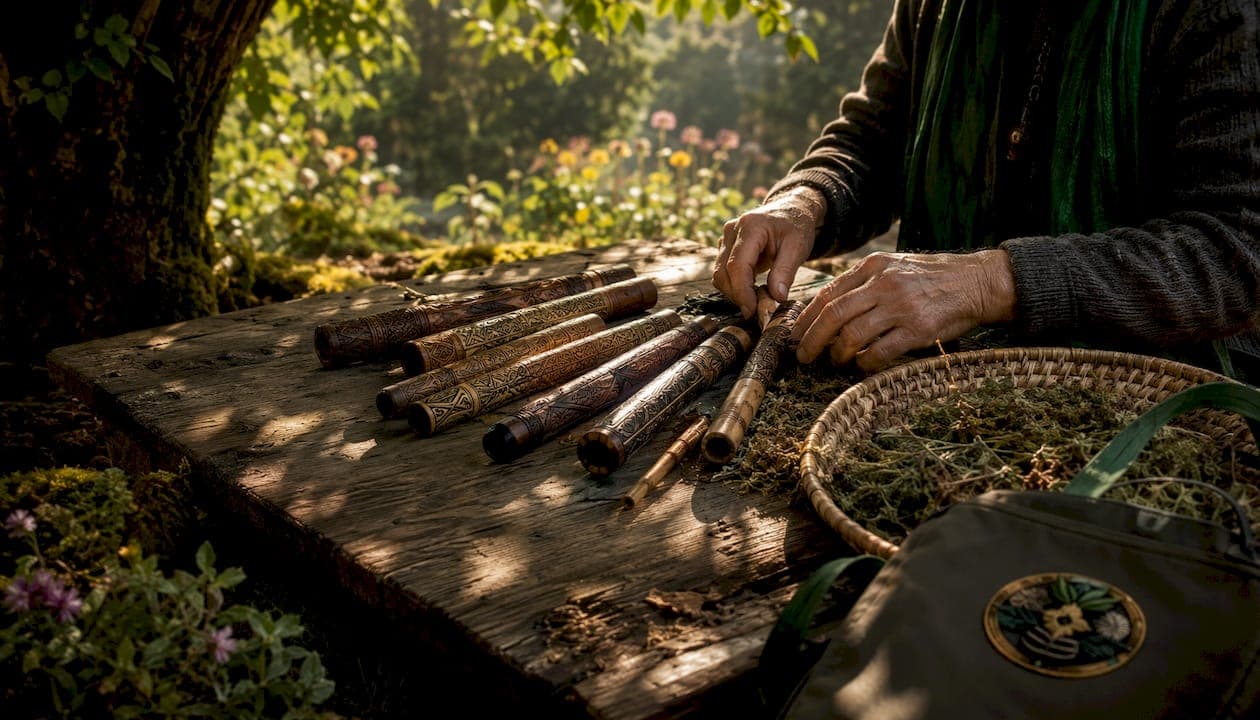
For personal Hapé practice, a handcrafted kuripe is the right starting tool. For facilitated ceremony, a Shipibo tepí is what you want. The top ceremonial pipes for plant medicine come down to four core options, all available from Pillars of Light hap'e, sourced directly from Fulni-ô and Shipibo artisans and shipped from Old Town Spring, Texas.
Quick shortlist:
- Single Condor Kuripe — best for daily self-application; ergonomic condor shape, Fulni-ô provenance
- Condor Double Kuripe — best for self-use with occasional assisted application; double-mouthed, versatile
- Jaguar Tepí – Shipibo Collection — best for facilitators; Shipibo artisan-made, ceremony-ready mouthpiece
- Alpaca bone tepí — best for traditional material preference; authentic bone, Shipibo origin
All four carry named artisan provenance. None are mass-produced.
Table of Contents
- Which ceremonial pipe is right for your practice?
- How to use and care for your kuripe or tepí
- What to check before you buy: size, weight, and portability
- Trusted sources for authentic ceremonial pipes in the United States
- Pillars of Light hap'e: handcrafted pipes, shipped from Texas
Which ceremonial pipe is right for your practice?
The table below compares the full range of kuripes and tepís available from Pillars of Light hap'e across the dimensions that actually matter at purchase.
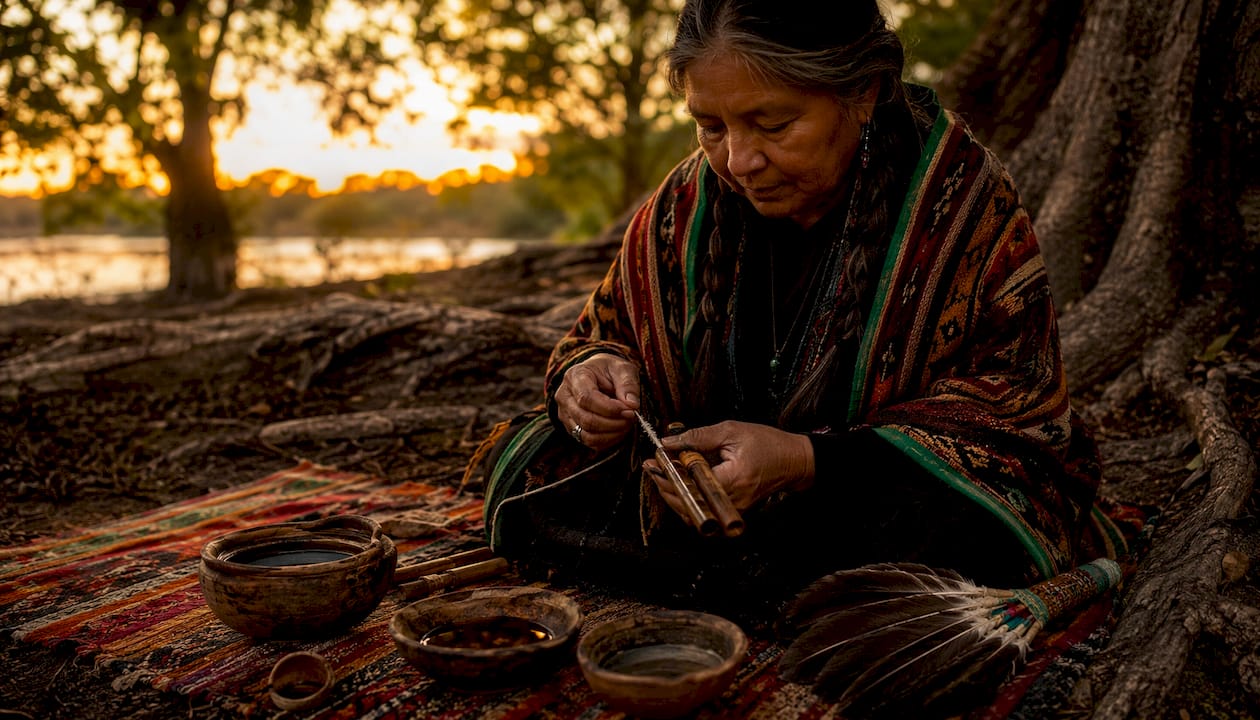
| Product | Best For | Material & Durability | Artisan Provenance | Ease of Cleaning | Recommended Hapé Pairings |
|---|---|---|---|---|---|
| Single Condor Kuripe | Daily self-application | Hardwood, durable | Fulni-ô Tribe | Dry brush; simple | Light, floral, or grounding blends |
| Condor Double Kuripe | Self-use + assisted hybrid | Hardwood, durable | Traditional craft | Dry brush; simple | Versatile; most blends |
| Jaguar Tepí – Shipibo Collection | Facilitator/ceremony use | Hardwood, sturdy | Shipibo artisans | Dry brush; moderate | Strong, resinous, ceremonial blends |
| Alpaca bone tepí | Traditional material, facilitator | Bone, very durable | Shipibo artisans | Dry cloth; gentle | Earthy, tobacco-forward blends |
| Handcrafted Wooden Kuripe | Beginners, daily practice | Natural wood | Amazonian artisans | Dry brush; simple | Lighter, introductory blends |
| Pyrographic Wooden Tepí | Ceremony leaders, aesthetic detail | Decorated wood | Amazonian artisans | Dry cloth; careful | Ceremonial, aromatic blends |
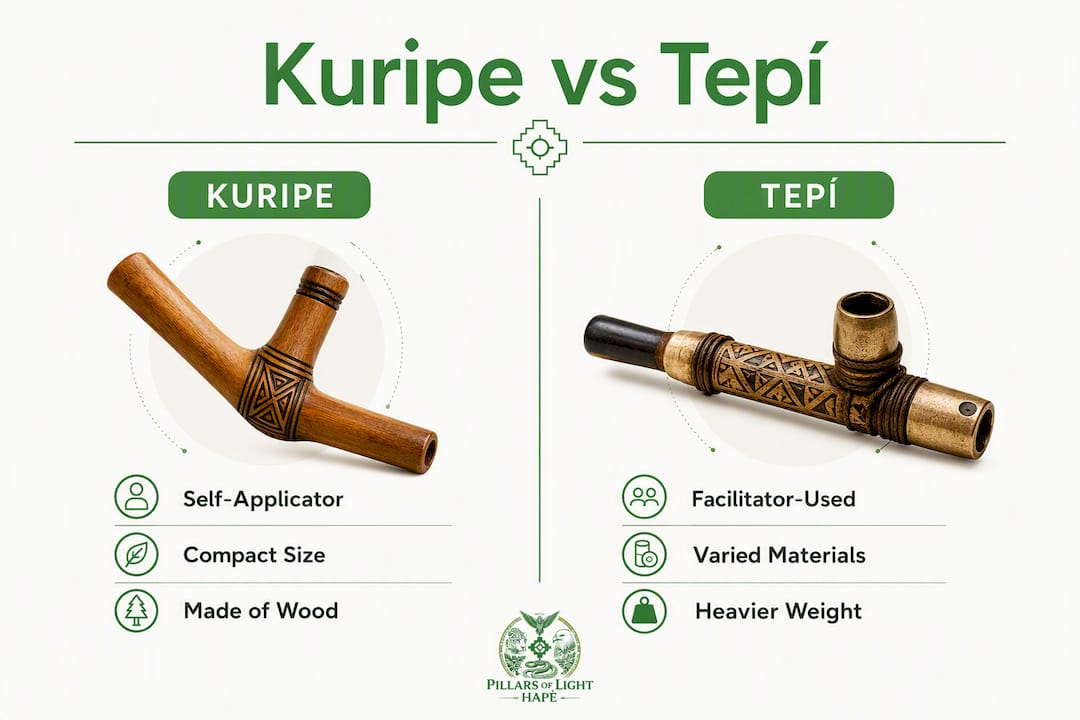
Kuripe vs. tepí at a glance: A kuripe is a self-applicator. You place one end at your nostril and the other at your mouth, then blow. A tepí is longer, designed for one person to administer Hapé to another. Single-condor kuripes have one mouthpiece; double/condor variants have two, giving you the option to receive assistance without switching tools.
Pro Tip: When buying any ceremonial pipe, look for a named tribal or artisan origin on the product page. Listings that say only "tribal style" or "handmade" with no specific community named are a red flag. Pipestone quarries and sacred materials carry stewardship rules tied to specific Indigenous communities — the same principle applies to Amazonian tools.
Red flags to avoid:
- No artisan name, tribe, or region listed
- Synthetic mouthpieces described as "traditional"
- Unrealistically low prices that do not reflect handcraft quality
- Vague "Amazonian style" language with no sourcing notes
- Sellers who reduce ceremonial items to decorative objects without cultural context
How to use and care for your kuripe or tepí
Using a kuripe safely
Kuripes are personal tools. The pipe belongs to your practice alone and should be treated as a sacred instrument, not a casual accessory.
- Set intention. Sit quietly, clear the space, and state your purpose before you begin. Traditional use involves offering to the Four Directions and prayer.
- Load the pipe. Use a small, measured amount of Hapé. Start conservatively, especially with a new blend.
- Position and breathe. Place the nostril end gently at one nostril, seal your lips around the mouthpiece, and blow with a single, steady breath. Exhale through the mouth after.
- Rest and receive. Sit still. Allow the medicine to work. Avoid standing immediately.
- Aftercare. Drink water. Ground yourself. Many practitioners close with a moment of gratitude.
For deeper ceremonial protocol, the Indigenous ceremony etiquette guide covers the full context.
Tepí etiquette for facilitators
A tepí is a two-person tool. The facilitator holds the long end; the recipient receives at the mouthpiece end. Community and relational context shapes how this tool is used — it is not meant for casual or unsanctioned application. Facilitators should have direct training and lineage connection before working with others.
Care and cleaning
- Wooden kuripes and tepís: Wipe the interior channel with a dry pipe cleaner after each use. Never soak in water. Periodically apply a light food-safe oil (coconut or jojoba) to the exterior to prevent cracking.
- Bone tepís: Use a dry cloth only. Bone is porous and sensitive to moisture. Avoid alcohol-based cleaners on the surface.
- Pyrographic pieces: Handle the decorated surface with care. A damp cloth on the exterior is fine; keep the channel dry.
- Storage: Wrap in natural cloth or leather. Keep away from direct sunlight and humidity.
Pro Tip: For a clogged mouthpiece, use a thin, dry pipe cleaner or a single breath of air blown back through the channel. Never use metal tools or sharp objects inside carved or pyrographic pieces — they will damage the finish.
What to check before you buy: size, weight, and portability
Choosing the right pipe is practical as much as it is spiritual. Here is what to assess before purchasing:
Size and fit: Kuripes are compact by design, typically fitting in a palm. If you have smaller hands or plan to travel frequently, the Single Condor Kuripe's ergonomic shape makes it easier to hold steady during self-application. Tepís are longer and require more deliberate storage.
Weight: Bone tepís carry more heft than wooden ones. That weight is part of their durability, but it matters if you are packing for travel or ceremony away from home.
Portability: Wooden kuripes are the most travel-friendly. Wrap them in cloth and they fit in any bag. Pyrographic tepís deserve a dedicated pouch to protect the surface artwork.
Mouthpiece style: A well-fitted mouthpiece makes self-application accurate and comfortable. Check product photos for mouthpiece diameter and angle before buying.
Provenance and ethics: Named tribal origin is not a luxury feature. Ceremonial pipes across Indigenous traditions carry materials and markings tied to specific communities. Buying from a named artisan source supports the people who carry this knowledge.
Trusted sources for authentic ceremonial pipes in the United States
Pillars of Light hap'e is one of the few U.S. retailers carrying handcrafted Amazonian kuripes and tepís with named artisan provenance. Their collection includes Fulni-ô Tribe pieces and Shipibo-made tepís, with product pages that list sourcing notes, artisan origin, and ethical sourcing commitments. The store operates both online and from its physical location in Old Town Spring, Texas, with direct contact available through the website.
For readers who want deeper background on Amazonian plant traditions before purchasing, the Pillars of Light blog covers cultural context, ceremony types, and safe use in detail.
When evaluating any seller, ask three questions: Is the artisan or tribe named? Does the seller explain sourcing? Is there a physical location or direct contact? A seller who cannot answer all three clearly is not the right source for a sacred tool.
Pillars of Light hap'e: handcrafted pipes, shipped from Texas

Pillars of Light hap'e carries the full range of kuripes and tepís described in this guide, all sourced directly from Fulni-ô and Shipibo artisans. Every piece on the ceremonial items collection page includes artisan provenance notes and ethical sourcing details. You can order online with U.S. shipping or visit the store in Old Town Spring, Texas. The collection also includes 75+ Hapé blends. You can pair your new pipe with the right medicine from the same trusted source. Browse the full kuripe and tepí collection and find the tool that fits your practice.