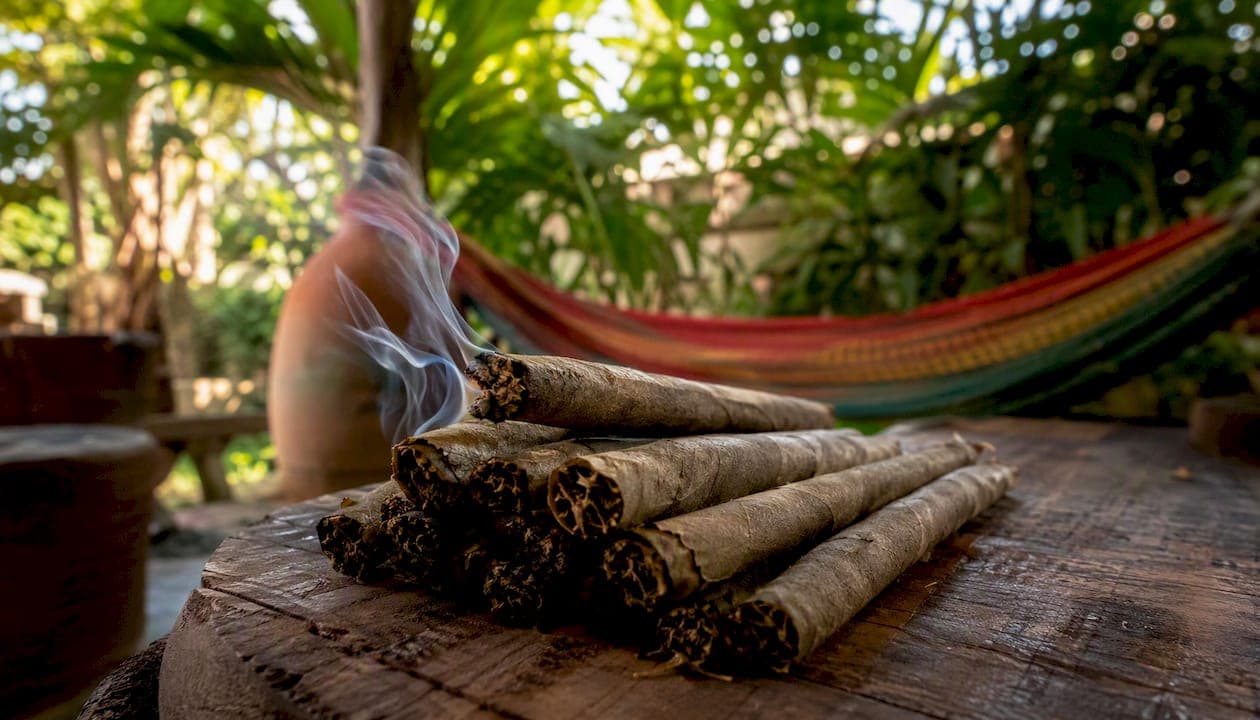
Mapacho (Nicotiana rustica) serves three core functions in Amazonian and related Indigenous ceremonies: it protects by clearing and sealing ceremonial space, teaches by centering and guiding participants, and connects practitioners to ancestral and spirit realms. These are not metaphors. Across dozens of lineages documented by ethnographers and researchers including Berlowitz et al., tobacco is the plant most consistently described as the backbone of healing work. A Maestro Tabaquero — a traditional tobacco specialist trained through years of dieta apprenticeship — is the recognized authority for intensive protocols. For U.S. seekers, Pillars of Light hap'e offers ethically sourced Mapacho and ceremonial tools alongside educational resources grounded in these same traditions.
The three primary ceremonial roles of Mapacho at a glance:
- Protector: Smoke clears, seals, and guards ceremonial space and participants
- Teacher: The plant is treated as a master plant that centers, instructs, and guides
- Connector: Smoke and prayer carry intention to ancestors, spirit allies, and guiding forces
Safety note: Mapacho contains high concentrations of nicotine and other alkaloids. Oral preparations, intensive inhalation, and nasal insufflation carry real physiological risk. Anyone with heart disease, psychiatric medication use, pregnancy, a history of substance dependence, or a seizure disorder should not engage with intensive Mapacho protocols without medical clearance and an experienced practitioner present.
Key Takeaways
Mapacho (Nicotiana rustica) functions as protector, teacher, and connector in Amazonian ceremony, and its safety depends entirely on practitioner skill, proper dieta, and honest medical screening.
| Point | Details |
|---|---|
| Three ceremonial roles | Mapacho protects by clearing space, teaches as a master plant, and connects practitioners to ancestral and spirit realms. |
| Distinct from commercial tobacco | N. rustica carries a markedly higher nicotine concentration and broader alkaloid profile than N. tabacum used in cigarettes. |
| Practitioner training is non-negotiable | A Maestro Tabaquero's years of dieta apprenticeship are the primary safety variable in intensive tobacco work, per Berlowitz et al. |
| Medical screening before ceremony | Pregnancy, heart disease, psychiatric medications, history of substance dependence, and seizure disorders are contraindications requiring medical clearance or full avoidance. |
| Pillars of Light hap'e | Offers ethically sourced Mapacho rolls, kuripes, tepis, and ceremonial tools for U.S. seekers through its ceremonial items collection. |
Table of Contents
- What is Mapacho sacred tobacco, and how does it differ from commercial tobacco?
- How does Mapacho serve as protector, teacher, and connector in ceremony?
- How is Mapacho used in ceremony? The main techniques explained
- How does Mapacho relate to ayahuasca and the dieta?
- Growing, harvesting, curing, and storing Mapacho
- What are the health risks and ethical considerations for U.S. participants?
- How do you find responsible ceremonial guidance in the United States?
- What does the academic and ethnographic research actually say?
- A word from Pillars of Light hap'e
- Pillars of Light hap'e: ethical sourcing for your ceremonial practice
- Sources
What is Mapacho sacred tobacco, and how does it differ from commercial tobacco?
Mapacho is the common ceremonial name for Nicotiana rustica, a species of tobacco native to the Americas that predates the commercial tobacco industry by thousands of years. It is distinct from Nicotiana tabacum, the species used in cigarettes and cigars worldwide. The difference is not trivial.
N. rustica contains significantly higher nicotine concentrations than N. tabacum, along with a broader alkaloid profile that includes harman and norharman compounds, which may contribute to its psychoactive and mood-modulating properties. Ethnobotanical reviews of N. rustica situate its phytochemistry within its ceremonial uses, noting that protection, grounding, and cleansing are the primary cultural functions attributed to the plant.
In several Amazonian languages, the word for "healer" is etymologically linked to tobacco. Ethnographic work from the upper Peruvian Amazon documents this linguistic connection directly, underscoring that Mapacho is not simply a plant used in ceremonies but is, in many traditions, the defining plant of the healer's identity. The term ampiri appears in some lineages to describe the medicine-versus-poison distinction that governs how tobacco is prepared and administered.
| Feature | Nicotiana rustica (Mapacho) | Nicotiana tabacum (Commercial tobacco) |
|---|---|---|
| Nicotine concentration | Markedly higher; traditionally described as potent | Lower; standardized for consumer products |
| Alkaloid profile | Includes harman/norharman compounds | Primarily nicotine-focused |
| Ceremonial status | Master plant; healer's primary tool across Amazonian lineages | Not used ceremonially in Indigenous contexts |
| Common preparation forms | Hand-rolled cigars, oral infusions, nasal insufflation, topical | Cigarettes, cigars, chewing tobacco, pipe tobacco |
| Cultural classification | Sacred, teacher plant, protector | Commercial commodity |
Understanding this distinction matters practically. Mapacho is not a stronger cigarette. Its preparation, intent, and application are governed by lineage protocols that have no equivalent in commercial tobacco culture.
How does Mapacho serve as protector, teacher, and connector in ceremony?
These three roles are not separate ceremonies. They often overlap within a single session, with the Tabaquero moving fluidly between them as the work requires.
Mapacho as protector
The protective function is the most visible. A practitioner performing a soplada — blowing smoke with directed breath — applies smoke to a person's body, to objects, or to the perimeter of ceremonial space. This is understood across lineages as clearing stagnant or harmful energies and sealing the space against interference. Practice-oriented sources confirm that smoke is typically held in the mouth and directed rather than inhaled into the lungs, and that the plant's role is most often described as removal and clearing rather than the addition of visions or sensations.
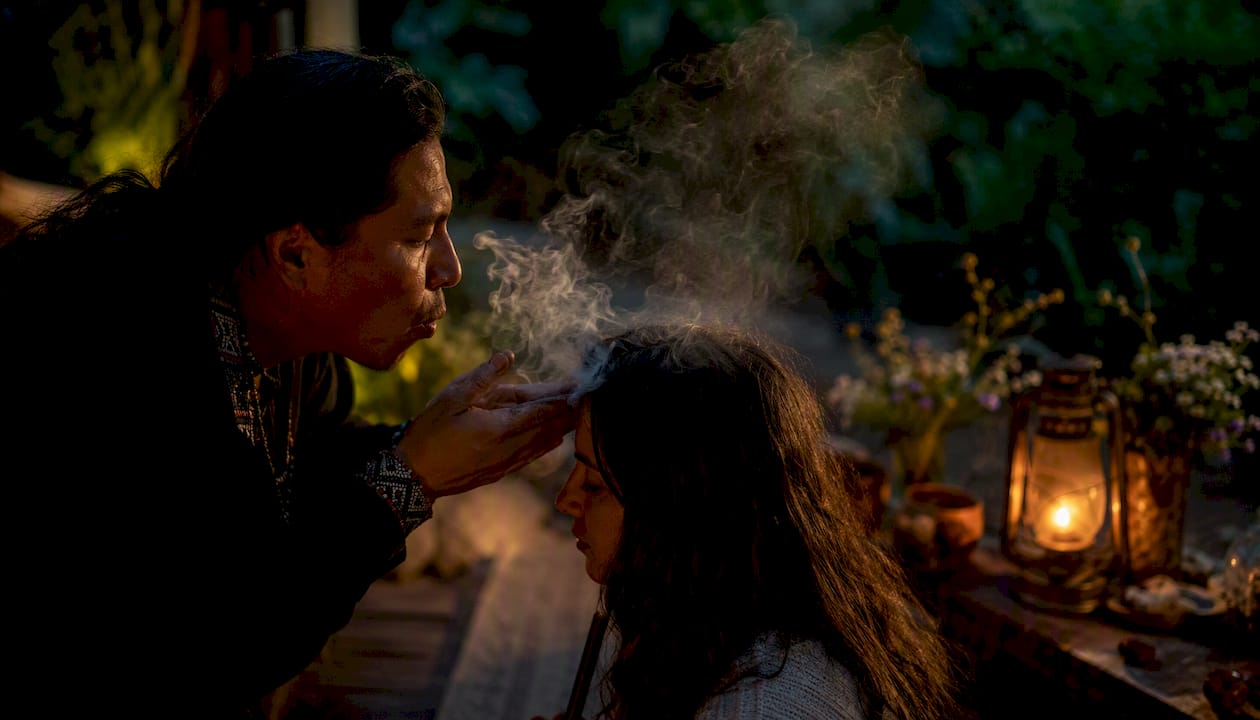
Smoke applied to an ayahuasca brew before ceremony, to a participant's crown before ingestion, or to the four directions of a ceremonial circle all reflect this protective logic. The Amazonian master plants page at Pillars of Light hap'e situates this within the broader framework of sacred plant relationships.
Mapacho as teacher
Many Amazonian traditions classify Mapacho as a planta maestra — a master plant that carries its own intelligence and can instruct those who approach it with respect. This is not a poetic label. Practitioners describe the plant as actively communicating during dieta and ceremony, offering clarity, correction, and guidance. A Maestro Tabaquero's training involves years of direct relationship with the plant through extended dietas, during which the tobacco's "teaching" is received and integrated.
"Tobacco is the chief medicinal plant in my work," states the Maestro Tabaquero documented in Frontiers research on Peruvian Amazonian medicine, describing how tobacco anchors every aspect of his healing practice — from diagnosis to treatment delivery to post-ceremony care.
Mapacho as connector
Smoke has carried prayer across cultures for millennia, and in Amazonian traditions, Mapacho smoke is the medium through which a practitioner communicates with ancestors, plant allies, and guiding spirits. Icaros — sacred songs sung during ceremony — are often accompanied by or directed through tobacco smoke. The smoke is understood to carry the healer's intention and to open channels of communication that would otherwise remain closed.
Practices vary significantly by lineage. Shipibo-Conibo practitioners use tobacco differently than Shuar or Yawanawá communities. There is no universal protocol, and any presentation that flattens these traditions into a single "Amazonian practice" misrepresents the cultural diversity involved. The sacred plants guide at Pillars of Light hap'e addresses this diversity directly.
How is Mapacho used in ceremony? The main techniques explained
The methods are specific, purposeful, and governed by lineage tradition. Each technique serves a different intention and carries different physiological and energetic effects.
-
Soplada (directed smoke blowing): The practitioner draws smoke into the mouth — not the lungs — and blows it with focused breath onto a person, object, or space. The direction, force, and location of the blow are intentional. This is the most common ceremonial application and is used for clearing, sealing, and blessing. It is not casual inhalation.
-
Hand-rolled cigars and pipes (cachimba/shimitapon): Mapacho is rolled into thick cigars or packed into traditional pipes. In ceremony, smoke may be held in the mouth, exhaled slowly, or directed through the nose. Lung inhalation does occur in some lineages but is not universal. The ethnographic record from the upper Peruvian Amazon documents the cachimba (pipe) as a primary ceremonial tool alongside soplar techniques.
-
Drinking tobacco (oral preparations): Aqueous infusions of Mapacho are consumed as part of specific dieta protocols. This is among the most physiologically intense applications. Emesis — vomiting — frequently follows and is understood in traditional epistemology as therapeutic depuration. Case study data documents this response and notes that clinical caution is warranted for participants with medical vulnerabilities.
-
Singado (nasal insufflation): Liquid tobacco preparations are drawn up through the nostrils. This technique appears in specific Amazonian lineages and is distinct from Hapé (Rapé) snuff. It produces rapid physiological effects and requires practitioner oversight.
-
Topical applications: Tobacco preparations are applied to the skin, particularly to energetic points, wounds, or areas of pain. This is a pragmatic healing application documented across multiple traditions.
-
Kuripe and tepi applicators: These tools are used primarily for Hapé (Rapé) snuff rather than Mapacho smoke, but they appear in the same ceremonial context. A kuripe is a self-applicator; a tepi is used by a facilitator to administer to another person. Pillars of Light hap'e carries handcrafted kuripes and tepis for those working within these traditions.
Pro Tip: If you are attending a ceremony where Mapacho smoke will be directed at you, breathe normally and stay relaxed. Tensing against a soplada disrupts the practitioner's work. Ask beforehand whether you will be expected to hold smoke in your mouth — and if you have any respiratory conditions, disclose them before the ceremony begins.
How does Mapacho relate to ayahuasca and the dieta?
Mapacho and ayahuasca are deeply intertwined in Amazonian healing traditions, but Mapacho is not subordinate to ayahuasca. In many lineages, tobacco is the more foundational plant. It opens ceremony, grounds participants during intense ayahuasca experiences, seals the work at the close, and is used throughout to manage the energetic and psychological intensity of the session.
The dieta is frequently misunderstood in Western contexts as a simple dietary restriction. It is not. Frontiers research on Peruvian Amazonian medicine describes dieta as a structured apprenticeship involving social seclusion, strict dietary and sexual abstentions, and a regimen designed to prepare the body and nervous system for potent plant medicines. Neglecting dieta protocols is not a minor oversight — it increases risk and, in traditional understanding, disrupts the relationship with the plant.
A tobacco-centered dieta, as documented in field research by Berlowitz et al., typically unfolds over the course of a week or more. The Maestro Tabaquero determines dosage based on the participant's condition and his own energetic assessment. Emesis follows oral tobacco ingestion and is treated as a cleansing event. Icaros are sung throughout. A corte — a formal closing ritual — marks the end of the treatment period and is considered as important as the opening.
The Berlowitz et al. case study documents a weeklong tobacco-based treatment in which participants underwent ritualized dosing, emesis, and icaros-guided sessions, with the Maestro Tabaquero adjusting protocols based on individual responses. The MDPI case study notes that authors observed symptom improvements in a small sample while calling explicitly for controlled trials before broader clinical claims are made.
For participants attending ayahuasca ceremonies where Mapacho is present, pre-ceremony dieta requirements typically include avoiding pork, alcohol, fermented foods, recreational drugs, and sexual activity for a minimum of several days before and after. These restrictions are not arbitrary. They reflect a coherent physiological and energetic logic that experienced practitioners take seriously. The Amazonian healing traditions guide at Pillars of Light hap'e offers further context on this framework.
Growing, harvesting, curing, and storing Mapacho
Quality Mapacho begins with the plant itself. N. rustica grows readily in tropical and subtropical climates, and traditional cultivators in Peru, Colombia, and Brazil have developed regional varieties with distinct alkaloid profiles and ceremonial reputations.
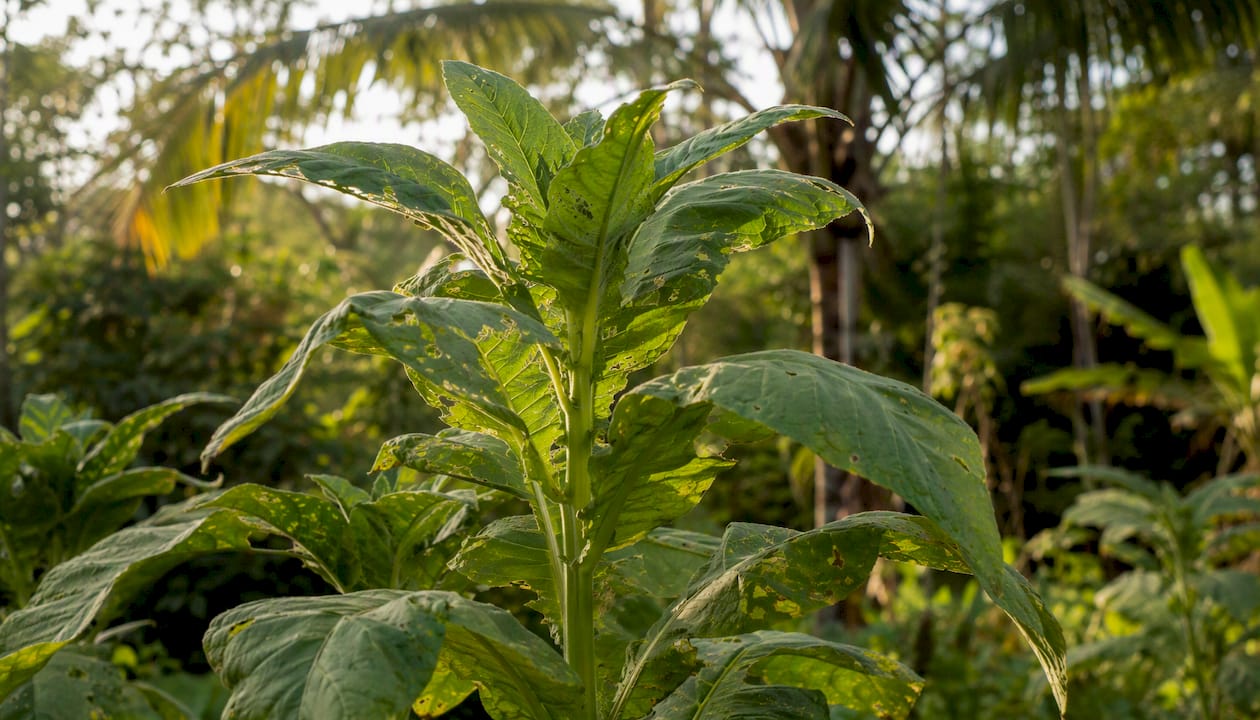
Harvest timing is determined by leaf maturity, not the calendar. Leaves are ready when they begin to yellow from the bottom of the plant upward, after the plant has been "topped" — the flower head removed to redirect energy into the leaves. Harvesting too early produces thin, low-potency leaf. Harvesting too late risks degradation and increased susceptibility to mold.
Curing in traditional contexts involves air-drying in shade, often bundled and hung in well-ventilated spaces. This slow cure preserves alkaloid content and develops the characteristic earthy, slightly sweet aroma of quality Mapacho. Commercial curing methods using heat or chemical treatment are not used in ceremonial-grade preparation.
Storage best practices:
- Keep Mapacho in breathable natural materials (cotton cloth, paper) rather than sealed plastic, which traps moisture
- Store in a cool, dry, dark space away from direct sunlight
- Maintain moderate humidity — too dry and the leaf becomes brittle; too moist and mold develops
- Whole rolls store better than loose leaf for long-term ceremonial use
- Inspect regularly for mold, which appears as fuzzy white or gray growth
Mold vs. "frog-eye": Frog-eye is a natural leaf spot condition caused by Cercospora nicotianae that appears as circular tan or brown spots with darker borders. It is a cosmetic issue and does not indicate spoilage. True mold is fuzzy, spreads, and carries a musty smell. Discard any Mapacho with active mold growth.
Pro Tip: For small-batch ceremonial storage, wrap Mapacho rolls in unbleached cotton cloth, place them in a wooden box with a small piece of cedar, and store in a drawer away from heat sources. Cedar naturally regulates humidity and adds a protective aromatic layer. Check monthly.
Pillars of Light hap'e sources fresh Mapacho rolls directly from Peru, with sourcing notes that reflect the traditional preparation methods described here.
What are the health risks and ethical considerations for U.S. participants?
Mapacho is not a gentle plant. Its potency is the source of its ceremonial power and its risk. Any honest engagement with these traditions requires clear-eyed awareness of both.
Medical contraindications
The following conditions represent significant risk factors for intensive Mapacho use, particularly oral preparations and heavy inhalation:
| Condition | Risk | Recommended action |
|---|---|---|
| Pregnancy | Nicotine and alkaloids cross the placental barrier; risk of fetal harm | Do not participate in any Mapacho protocol |
| Heart disease or hypertension | Nicotine raises heart rate and blood pressure acutely | Medical clearance required; avoid oral preparations |
| Psychiatric medication use (MAOIs, SSRIs, antipsychotics) | Potential pharmacological interactions with alkaloids | Consult prescribing physician before any ceremony |
| History of nicotine dependence | Risk of reactivating dependence patterns | Disclose to practitioner; proceed with caution |
| Seizure disorders | Nicotine toxicity can lower seizure threshold | Medical clearance required |
| Youth | Developing nervous system; heightened vulnerability | Not appropriate |
Research from Berlowitz et al. emphasizes that a Tabaquero's capacity to manage toxicity and dosing is the central safety variable in intensive tobacco work. The medicine-versus-poison distinction is not philosophical — it is pharmacological, and it depends entirely on practitioner skill.
Ethical considerations
Cultural appropriation is a real concern in U.S. ceremonial contexts. Attending a ceremony led by someone without genuine lineage training and community accountability is not only potentially unsafe — it disrespects the traditions these practices come from. Seek practitioners with verifiable training, named teachers, and ongoing relationships with source communities.
Informed consent is non-negotiable. You have the right to know what substances will be used, what the physiological effects may be, and what the emergency protocol is before you agree to participate.
Legal notes for U.S. readers
Nicotiana rustica is legal to purchase, possess, and grow in the United States as of this writing. It is not a controlled substance. However, laws vary by state and municipality, and the legal status of ceremonial contexts involving other plants (such as ayahuasca) is a separate and evolving matter. Verify current local law independently and consult a qualified legal professional for specific guidance.
Harm-reduction checklist
- Ask the practitioner directly about their training lineage and named teachers
- Confirm there is an emergency protocol and that someone present has first-aid training
- Disclose all medications, supplements, and health conditions before ceremony
- Follow pre- and post-ceremony dieta requirements fully
- Arrange transportation — do not drive after intensive Mapacho work
- Plan for integration support in the days following ceremony
How do you find responsible ceremonial guidance in the United States?
The U.S. ceremonial plant medicine scene ranges from deeply trained traditional practitioners to individuals with weekend workshop certificates. The difference matters enormously for safety.
Questions to ask before attending any ceremony:
- Who trained you, and for how long?
- Do you maintain an ongoing relationship with your source community?
- What is your emergency protocol if someone has an adverse reaction?
- What dieta requirements do you give participants, and why?
- How do you source your Mapacho and other plants?
- What integration support do you offer after the ceremony?
Red flags to watch for:
- No dietary guidance or dismissal of dieta as unnecessary
- Pressure to ingest more than you feel comfortable with
- No informed consent process
- Vague or evasive answers about training
- No emergency plan or first-aid presence
- Combining multiple potent plants without clear rationale
For sourcing, look for suppliers who can speak specifically to their supply chain, name their Indigenous partners, and demonstrate ongoing support for source communities rather than extractive purchasing. The role of Indigenous elders in medicine is a useful reference for understanding what genuine community accountability looks like.
Pillars of Light hap'e, based in Old Town Spring, Texas, emphasizes ethical sourcing and cultural preservation partnerships in its procurement practices. Its offerings include Mapacho rolls, ceremonial tools, and educational resources that reflect the traditions described in this article.
What does the academic and ethnographic research actually say?
The research base on ceremonial Mapacho is small but coherent. The most substantive published work comes from Berlowitz and colleagues, whose mixed-methods case study documented a weeklong tobacco-based treatment administered by a Peruvian Maestro Tabaquero. The study recorded pre- and post-treatment symptom data on a small sample and observed improvements on psychiatric symptom scales. The authors were explicit: these are observational findings, not clinical proof, and controlled trials are needed before generalizing outcomes.
The Frontiers study on therapeutic uses of tobacco in Peruvian Amazonian medicine adds practitioner-level detail, documenting the Maestro Tabaquero's descriptions of dosing logic, the role of icaros, and the centrality of the practitioner's own dieta training to safe and effective work. This is not a study of tobacco pharmacology in isolation. It is a study of a complete therapeutic system in which tobacco is one element among many.
The PMC-indexed case study concludes that Amazonian tobacco is used across lineages in smoked, oral, and nasal forms, each governed by specific cultural protocols, and that therapeutic outcomes in small observational contexts are promising — while noting that the evidence base requires expansion through rigorous study designs.
Field research suggests that emesis following oral tobacco ingestion is not a side effect to be managed but a therapeutic mechanism in traditional epistemology. The body's purging response is understood as depuration — a physical clearing that mirrors the energetic clearing performed by smoke. This framing does not make emesis medically safe for all participants, but it explains why practitioners do not treat it as a problem to be prevented.
The mechanisms behind any therapeutic effects remain incompletely understood. Nicotine and harman-class alkaloids are pharmacologically active, but researchers also point to extra-pharmacological factors: the ritual container, the practitioner's presence and skill, the participant's preparation, and the social and relational dimensions of ceremony. Reducing Mapacho's effects to nicotine alone misses most of what the research actually describes.
Core academic and ethnographic sources:
- Berlowitz et al., PMC — Indigenous-Amazonian Traditional Medicine's Usage of the Tobacco Plant
- Berlowitz et al., Frontiers — Therapeutic Uses of Tobacco in Peruvian Amazonian Medicine
- Berlowitz et al., MDPI — Case Study PDF
- Sinchi, Sinchi, Negrito — Takiwasi Center ethnographic paper
- Mapacho
- ARK Ethnobotany — Nicotiana rustica
A word from Pillars of Light hap'e
We carry these traditions with care because we believe the plants deserve it. Every Mapacho roll, kuripe, and ceremonial tool we source comes through relationships with Indigenous partners who have asked us to represent their work honestly and respectfully. We are not a pharmaceutical company and we are not a retreat center. We are a small apothecary in Old Town Spring, Texas, committed to making authentic ceremonial materials accessible to U.S. seekers who approach them with genuine respect.
If you are considering intensive Mapacho work, please consult both a medical professional and an experienced Tabaquero before proceeding. The plant is powerful, the traditions are deep, and the guidance of trained practitioners is not optional — it is the foundation of safe practice. Our educational resources and product offerings are here to support that path, not to replace it.
Pillars of Light hap'e: ethical sourcing for your ceremonial practice
Sourcing authentic Mapacho and ceremonial tools in the United States means navigating a market where quality and cultural integrity vary widely. Pillars of Light hap'e cuts through that uncertainty with direct-sourced Mapacho rolls from Peru, handcrafted kuripes and tepis, and a curated ceremonial items collection built around the traditions this article describes.
Every product reflects the same ethical sourcing principles outlined here: named Indigenous partners, support for rainforest preservation, and no extractive purchasing. The master plant allies collection offers deeper educational context alongside the plants themselves, for seekers who want to understand what they are working with before they begin.
This is not medical advice. Vet your practitioners, follow dieta protocols, and approach these traditions with the respect they have earned over thousands of years. When you are ready to source with confidence, Pillars of Light hap'e is here — browse the ceremonial collection or reach out directly through the website to ask questions before you buy.
Sources
- Indigenous-Amazonian Traditional Medicine’s Usage of the Tobacco Plant: A Transdisciplinary Ethnopsychological Mixed-Methods Case Study
- “Tobacco Is the Chief Medicinal Plant in My Work”: Therapeutic Uses of Tobacco in Peruvian Amazonian Medicine Exemplified by the Work of a Maestro Tabaquero — Frontiers
- Indigenous-Amazonian Traditional Medicine’s Usage of the Tobacco Plant: A Transdisciplinary Ethnopsychological Mixed-Methods Case Study (MDPI PDF)
- Sinchi, Sinchi, Negrito: Medicinal Use of Tobacco in the Upper Peruvian Amazon
- Traditional Use — Mapacho
- Nicotiana rustica (Mapacho Tobacco)
This article is general information, not a substitute for advice from a qualified doctor. Consult a qualified healthcare professional about your own circumstances before acting on anything here.