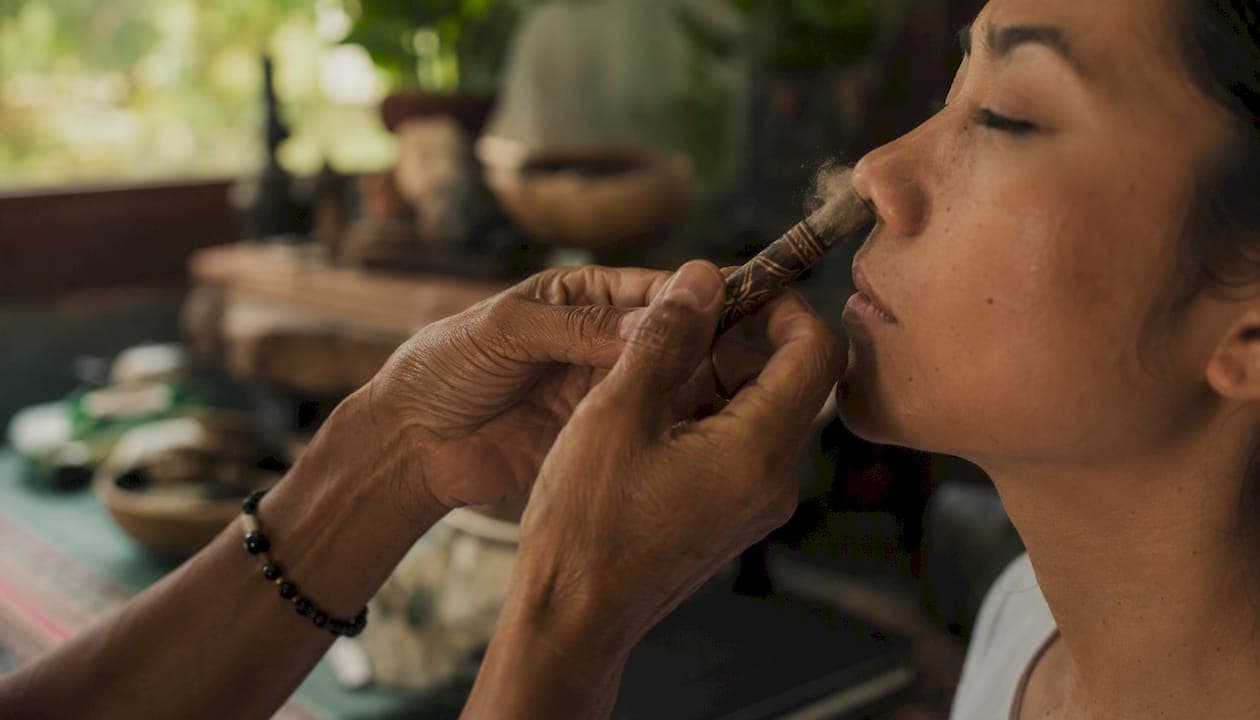
Yes, you can use hapé in a breathwork session, and for many practitioners it deepens the work considerably, but only with real precautions in place. Hapé is a powdered Amazonian snuff made from Nicotiana rustica and tree ash, and its nicotine content moves fast through the bloodstream once it crosses the nasal mucosa, producing a sharp, brief physiological reset that many breathwork facilitators use to anchor the body before or during deeper rounds. That reset is what makes it useful: it clears the head, settles the nervous system, and gives the practitioner a somatic marker to return to when a breathwork technique starts to feel dispersed.
Three rules keep this pairing safe:
- Start gentle. A light blend and a small dose tell you how your body responds before you push into stronger material.
- Screen for contraindications first. Cardiovascular conditions, certain medications, and pregnancy rule hapé out entirely, no exceptions.
- Plan the aftercare before the session starts. Hydration, quiet time, and a few minutes of stillness matter as much as the hapé itself.
Pro Tip: If you have a cardiovascular condition, take stimulant medication, or are pregnant, hapé is not for you. Nasal tobacco absorption reaches the bloodstream quickly, and the cardiovascular load, brief as it is, isn't worth the risk for these groups.
Key Takeaways
Hapé pairs safely and effectively with breathwork when used at a light dose, with real medical screening, and inside a deliberate sequence that separates the acute peak from deeper breath techniques.
| Point | Details |
|---|---|
| Screen before every session | Rule out cardiovascular conditions, pregnancy, and interacting medications before using hapé. |
| Sequence matters | Warm up breath first, apply hapé second, move into gentle breathwork once the acute wave passes. |
| Start with a gentle blend | Apurinã or Tsunu suit first attempts better than Nukini or Paricá. |
| Aftercare is not optional | Hydrate, rest, and sit in quiet integration for several minutes after your session. |
| Source with lineage in mind | Pillars of Light hap'e offers 75+ traceable blends alongside kuripes and tepis for breathwork practitioners choosing ethically sourced tools. |
Table of Contents
- Hapé for Breathwork Practices: A Quick Starter Protocol
- What Hapé Is and How It Affects the Body
- Safety Checklist and Contraindications for Hapé and Breathwork
- How to Use a Kuripe and Tepi Safely
- Choosing a Hapé Blend and Dose for Breathwork
- Integration and Aftercare After a Hapé and Breathwork Session
- Cultural Context and Ethical Sourcing for Hapé in Breathwork
- What the Research Says About Hapé and Breathwork Physiology
- Why Pillars of Light hap'e Approaches This Practice the Way It Does
- Where to Find Ethically Sourced Hapé and Ceremony Tools
- Sources
Hapé for Breathwork Practices: A Quick Starter Protocol
You don't need a shamanic apprenticeship to run a safe first session. You need a clean environment, a clear intention, and a sequence that respects how fast hapé moves through your system.
- Prepare the space. Dim the lights, silence your phone, and do a two-minute honest check-in: any recent illness, medication changes, or elevated stress that would make today the wrong day.
- Set an intention out loud or on paper. Grounding, clarity, and closure are the three most common goals paired with hapé, and naming one before you start sharpens the effect.
- Warm up your breath first. Three to five minutes of slow nasal breathing settles your nervous system before you introduce anything else.
- Administer the hapé. Use a kuripe for self-application or have a partner serve you with a tepi. One light application per nostril is enough for a first round.
- Sit with the peak. The first sixty to ninety seconds after application often bring tears, mucus, or a wave of clarity. Let it move through you without forcing a breath pattern yet.
- Move into gentle breathwork. Once the acute wave settles, roughly two to three minutes in, shift into a grounding or slow diaphragmatic pattern rather than an intense holotropic-style round.
- Hold five to fifteen minutes of integration. Hapé's acute window typically runs five to fifteen minutes, so let that window close before layering on anything more intense.
- Close in silence. A few minutes of unstructured stillness lets the grounding effect settle rather than fading under new stimulation.
Pro Tip: Stagger your rounds so the hapé peak lines up with your grounding phase, not your most intense breathwork technique. Save rapid or activating breath patterns for a separate round, once the nicotine wave has passed and your body has settled.
What Hapé Is and How It Affects the Body
Hapé is a finely ground powder made primarily from mapacho (Nicotiana rustica), a tobacco relative far more potent than the leaf used in commercial cigarettes, blended with the ash of specific trees and, in some lineages, other plant admixtures. It's administered through a kuripe or a tepi, a self-blow pipe and a facilitator-blown pipe respectively, both designed to push the powder deep into the nasal cavity in a single controlled burst.
This is the point worth stating plainly: hapé is not a psychedelic. It contains no DMT, no psilocybin, nothing that alters perception the way ayahuasca or mushrooms do. Its effects are nicotine driven, not compound driven, which is why practitioners describe it as physical and energetic rather than visionary. That distinction matters for anyone weighing whether hapé belongs in a breathwork session built around clarity rather than altered states.
The physiological pathway is straightforward. Nicotine crosses the nasal mucosa within seconds, hits the bloodstream, and produces a fast cardiovascular and neurological response, a spike in alertness followed by a settling wave. The acute window runs roughly five to fifteen minutes, with lingering clarity and grounding that can persist for hours afterward.
Common subjective experiences during that window include:
- A sharp clearing sensation through the sinuses and head
- Tearing and mucus discharge, often within the first minute
- A brief wave of light-headedness that passes quickly
- A grounded, settled feeling once the acute phase fades
Safety Checklist and Contraindications for Hapé and Breathwork
Before you combine hapé with breathwork, run through a real screening, not a mental shrug. This is where most guides get thin, and where the actual risk sits.
Skip hapé entirely if any of these apply to you:
- You have diagnosed cardiovascular disease or uncontrolled hypertension
- You are pregnant or breastfeeding
- You take stimulant medications or anything with known interactions with nicotine
- You've used other substances recently that could compound cardiovascular strain
- You're currently unwell, dehydrated, or under acute physical stress
The reason for that caution list is concentration, not mystique. Nicotiana rustica typically carries a much higher nicotine concentration than commercial tobacco, which means the cardiovascular and neurological load lands faster and harder than a cigarette would deliver. For someone with a healthy heart, that's a brief, manageable spike. For someone with existing cardiovascular strain or a medication that already affects heart rate, it's a real risk, not a hypothetical one.
Harm reduction here is simple: choose a gentler blend when in doubt, apply less rather than more on a first attempt, and stop immediately if you notice chest tightness, unusual heart rhythm, or prolonged dizziness beyond the normal acute wave. Any of those signs warrants stopping the session and seeking medical attention, not pushing through for the sake of the ceremony.
Pro Tip: Write down every medication you're currently taking before your first hapé session, and if anything on that list affects blood pressure or heart rate, talk to a practitioner or your doctor first. Supervision from someone experienced with breathwork and rapé pairings is worth the extra step.
How to Use a Kuripe and Tepi Safely
The technique matters as much as the blend. Poor application technique can bruise the nasal passage, waste the medicine, or turn a grounding practice into an uncomfortable one.
Using a kuripe (self-application):
- Load a small amount of hapé into the short end of the kuripe.
- Place the short end in one nostril, the long end in your mouth.
- Close your throat slightly, take a breath, and blow firmly and briefly into the pipe.
- Exhale through your mouth immediately after, letting your body respond naturally.
- Repeat on the other nostril if your protocol calls for a double application.
- Clean the kuripe after each use, especially if you share it with anyone else.
Being served with a tepi (facilitator application):
- The facilitator loads the tepi and positions it a few inches from your nostril, never inserted directly inside.
- A clear verbal cue, "ready" or a nod, should pass between you before the blow happens.
- Consent runs both directions: you can ask for a lighter application, request a pause, or decline mid-session without any explanation owed.
- Facilitators should use a fresh applicator or a properly sanitized shared tool between participants, a hygiene step that group breathwork settings sometimes skip and shouldn't.
Distance and force matter more than most first-timers expect. A tepi blown too hard or too close can bruise nasal tissue, and a kuripe applied with too much force does the same. Gentle and deliberate beats forceful every time. If you're building out instructional material for a group session, a straightforward side-angle photo of proper kuripe grip, paired with a close-up of correct tepi distance, communicates the technique far better than text alone. Pillars of Light hap'e's guide on incorporating hapé into shamanic breathwork sessions walks through facilitation etiquette in more depth if you're planning to lead others.
Choosing a Hapé Blend and Dose for Breathwork
Not every blend suits every breathwork goal, and this is where a lot of newcomers make the wrong call, reaching for a strong blend because it sounds more serious when a gentle one would serve their session better.
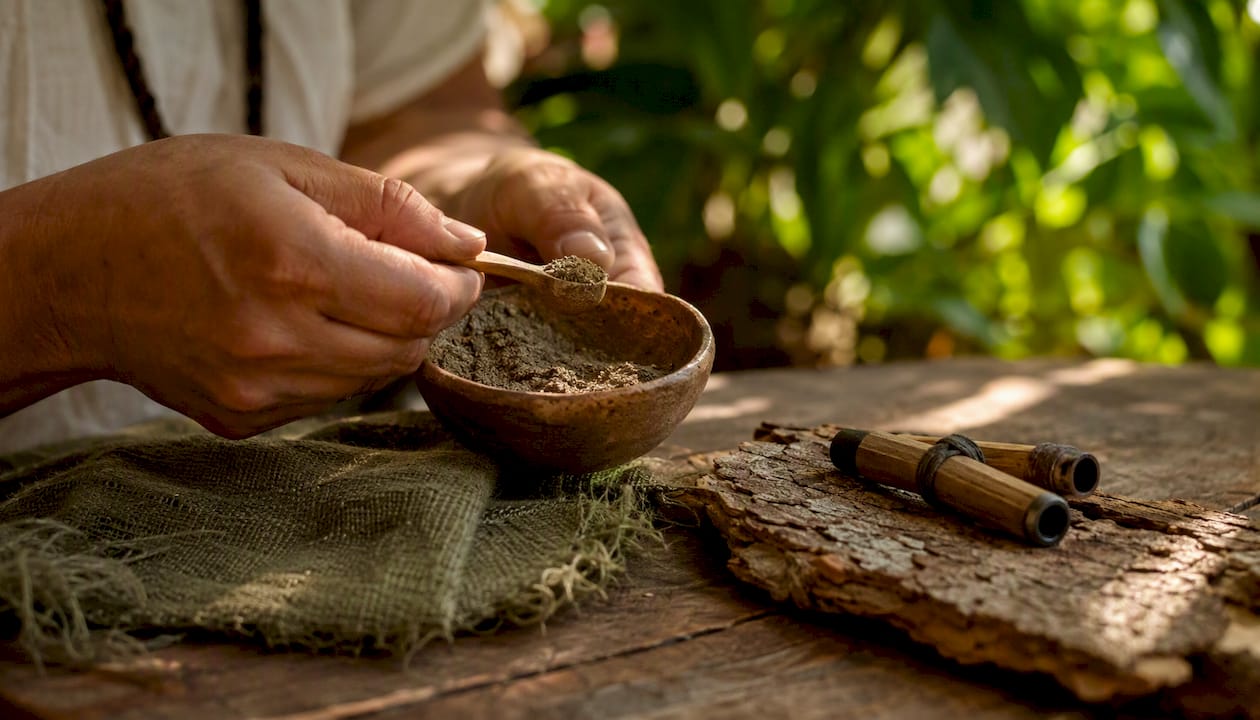
Blend strength breaks down into three rough categories. Gentle blends suit opening rounds and grounding work, where you want clarity without a heavy physical jolt. Moderate blends work well mid-session, when you're transitioning between breathwork phases and want a stronger reset. Strong blends belong in closing or deep-centering work, when the goal is a decisive somatic anchor rather than a light touch.
Among the blends practitioners commonly reach for:
- Apurinã is widely regarded as one of the gentler options, well suited to first-timers or anyone easing into a breathwork pairing for the first time.
- Tsunu sits in the gentle-to-moderate range, often used for opening a session or clearing mental static before a breathwork round begins.
- Nukini runs moderate to strong, a solid mid-session choice once your body has already responded well to a gentler blend.
- Paricá is a strong, deep-centering blend, generally reserved for closing rounds or experienced practitioners who want a decisive grounding effect at the end of a session.
| Blend | Strength | Best for | Administration | Recommended frequency for breathwork | Lineage / traditional source |
|---|---|---|---|---|---|
| Apurinã | Gentle | First-time users, opening rounds | Kuripe (self) | Start here, once per session | Apurinã lineage |
| Tsunu | Gentle to moderate | Clearing before deeper breathwork | Kuripe or tepi | Once per session | Traditional Amazonian sourcing |
| Nukini | Moderate to strong | Mid-session grounding | Tepi (served) or kuripe | Once per session, spaced sessions | Nukini lineage |
| Paricá | Strong | Closing, deep-centering | Tepi (served) | Closing round only, experienced users | Traditional Amazonian sourcing |
Beyond strength, look at particle fineness, since a coarser grind feels rougher on application, and pay attention to how transparently a seller describes lineage and sourcing. A few practical buying cues: start with a small quantity rather than a bulk order, test a micro-dose of any new blend before a full session, and favor sellers who pair blends with kuripe and tepi bundles rather than selling powder alone. Ethical sourcing and clear lineage information are among the strongest trust signals a buyer can look for.
Integration and Aftercare After a Hapé and Breathwork Session
What happens in the twenty minutes after your session matters almost as much as the protocol itself. Hapé and breathwork both move the nervous system, and skipping aftercare is how people end up feeling scattered instead of grounded.
A basic aftercare checklist:
- Drink water. Nicotine's cardiovascular spike settles faster with hydration.
- Rest for at least ten to fifteen minutes before jumping into anything demanding.
- Eat something light if you feel depleted, nothing heavy or hard to digest.
- Move gently, a short walk or light stretching, rather than intense exercise right after.
- Journal or sit in silence for a few minutes to let any insight or physical sensation settle before you rush back into your day.
Frequency matters too. Practitioner guidance generally recommends against daily use, with some suggesting no more than every other day for routine, non-ceremonial practice. Daily hapé use risks habituation and blunts the acute effect that makes it useful in the first place. If you notice you're reaching for it out of habit rather than intention, or that sessions feel routine instead of purposeful, that's a signal to pull back and reassess with a practitioner rather than push through.
Watch for signs of overuse: a diminishing effect at your usual dose, irritability between sessions, or nasal discomfort that lingers longer than a day. Any of those warrants a pause and, if they persist, a conversation with a practitioner experienced in plant medicine integration.

Cultural Context and Ethical Sourcing for Hapé in Breathwork
Hapé didn't originate as a breathwork accessory. It comes from specific Amazonian lineages with their own histories, protocols, and relationships to the land that produces it, and treating it as a wellness commodity without acknowledging that context does a disservice to the tradition and the communities who hold it.
Lineage, maker, and traceability matter for a practical reason beyond respect: a seller who can name the specific community or lineage behind a blend is usually a seller who has an actual relationship with that source, not a middleman reselling anonymous powder. A short ethics checklist worth applying to any purchase:
- Ask whether the seller credits the specific lineage or community the blend comes from.
- Look for language about community benefit or reciprocity, not just "ethically sourced" as a marketing line with no detail behind it.
- Check whether packaging or product pages name the maker or region, a sign of real traceability rather than vague sourcing claims.
- Be wary of blends priced suspiciously low, since genuine traditional sourcing rarely comes at bargain prices.
Reading about why Indigenous tribes use hapé before your first session gives useful context that most quick guides skip entirely, and it changes how you approach the practice once you understand its origin beyond the breathwork studio.
Pro Tip: Treat your hapé purchases as a relationship, not a transaction. Buying consistently from sellers who reinvest in the communities and forests their blends come from does more for the tradition's survival than any single ceremony ever will.
What the Research Says About Hapé and Breathwork Physiology
The scientific literature on hapé specifically is thin. Most of what's published focuses on tobacco and nicotine physiology broadly, not hapé as a distinct preparation, which means a lot of what practitioners know comes from ethnographic accounts and practitioner-vetted guides rather than clinical trials.
Nicotine absorbed through the nasal mucosa reaches systemic circulation quickly, producing measurable cardiovascular and neurological effects within a short window, a pattern consistent with what practitioners describe as hapé's near-immediate onset.
That gap between hard science and lived practitioner knowledge is worth naming honestly rather than glossing over. Here's what the available sources actually establish:
| Source | What it covers | Evidence type |
|---|---|---|
| PMCID: PMC6137615 | Nasal tobacco absorption and cardiovascular response | Scientific review |
| HealingMaps | Composition, dosing, practitioner vetting | Practitioner guide |
| Sanctuary Healing Arts | Non-psychedelic status, ceremonial framing | Practitioner/educational |
| Juana Wellness | Breathwork pairing, subjective benefits | Practitioner summary |
| Wikipedia | Historical snuff terminology | General reference |
The honest summary: nicotine's absorption and cardiovascular effects are well documented in general tobacco research, but hapé-specific clinical data is essentially absent. What exists instead is a consistent, cross-source practitioner consensus on dosing, timing, and grounding effects, which is useful but should be read as informed practice knowledge, not peer-reviewed proof.
Why Pillars of Light hap'e Approaches This Practice the Way It Does
Most guides to hapé treat it as either a curiosity or a shortcut to a spiritual experience, and both framings undersell what actually makes it useful in breathwork. The real value isn't mystique. It's the fact that hapé gives you an objective, physical marker, a sharp clearing sensation you can feel happen, in a practice like breathwork where progress otherwise feels entirely subjective.
What gets underestimated is how much dosing discipline matters compared to blend selection. Beginners fixate on choosing the "right" blend, Nukini versus Paricá versus something else, when the bigger variable is almost always how much they use and how well they've screened themselves beforehand. A gentle blend used carelessly causes more problems than a strong blend used with proper screening and a light hand.
The other overlooked piece is timing relative to the breathwork itself. Sessions that fail tend to introduce hapé at the wrong moment, either too early, before the nervous system has any breath-based foundation to settle into, or stacked directly against an intense breathwork peak, which just compounds physiological load rather than grounding it. The sequence in this guide, breath warm-up first, hapé second, gentle integration third, exists because that order respects how the nervous system actually processes stacked interventions rather than fighting against it.
None of this replaces the deeper cultural and spiritual dimension of the practice. But for readers approaching hapé specifically as a breathwork tool, the technical discipline around dosing and timing deserves as much attention as the ceremonial framing usually gets.
Where to Find Ethically Sourced Hapé and Ceremony Tools
Pillars of Light hap'e stocks more than 75 varieties of hapé, sourced with documented lineage rather than anonymous bulk supply, alongside handcrafted kuripes and tepis built for exactly the technique this guide walks through. That range matters for breathwork specifically: you're not locked into one blend strength when your practice calls for something gentler on an opening round and something stronger for closing.

If this is your first purchase, a light blend like Apurinã paired with a kuripe covers most beginner breathwork sessions without overwhelming your system. Browse the ceremonial items collection for starter bundles that pair a gentle blend with a self-applicator, or check the kuripe and tepi selection directly if you already have a blend in mind and just need the right tool. Every listing includes lineage and sourcing details, so you can confirm traceability before you buy rather than guessing. Head to the ceremonial items collection now to pick a starter bundle for your next session.
Sources
For readers who want to go deeper than this guide covers, a few sources stand out for different reasons. The PMCID review on nasal tobacco absorption is the strongest scientific anchor here, useful if you want the physiology behind nicotine's cardiovascular effects. HealingMaps offers the most detailed practitioner vetting information, particularly useful for understanding blend differences and dosing norms. Sanctuary Healing Arts provides solid context on hapé's non-psychedelic status and ceremonial role. Juana Wellness is worth reading for its focus specifically on breathwork pairing and subjective benefits. And the Wikipedia entry on snuff gives useful general background on powdered tobacco traditions, though it isn't specialized to hapé itself. For related wellness techniques that complement aftercare and integration, Onyx Wellness's guide to relaxation techniques offers practical breathing and grounding methods worth pairing with your post-session routine.
This article is general information, not a substitute for advice from a qualified doctor. Consult a qualified healthcare professional about your own circumstances before acting on anything here.
- PMCID: PMC6137615 — (relevant review on nicotine/tobacco physiology)
- Hape (Rapé): Effects, Safety & Practitioner Vetting (2026) — HealingMaps
- The Benefits of Hapé - Juana Wellness
- What Is Hapé? — Sanctuary Healing Arts (2024)
- Snuff (tobacco) — Wikipedia