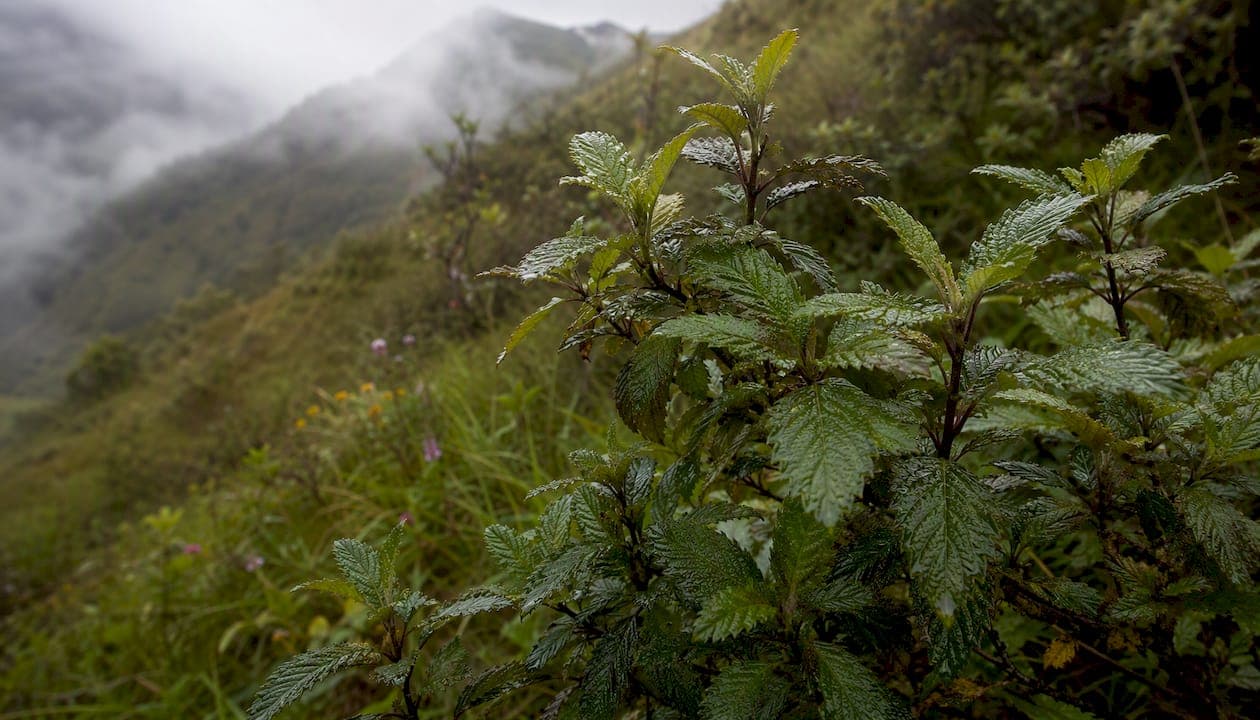
Muna tea, also called muña, is an herbal infusion made from Minthostachys mollis, a wild aromatic shrub that grows in the high Andes of Peru, Bolivia, Ecuador, and parts of Colombia. Andean communities have brewed it for generations to calm nausea, ease digestion, and clear congestion, and travelers heading to altitude often reach for it first. One thing worth knowing up front: muña can soothe the nausea and discomfort that come with high-altitude travel, but no conclusive clinical evidence supports it as a preventive for acute mountain sickness. That distinction matters if you're planning a trip to Cusco or La Paz.
- Botanical name: Minthostachys mollis, family Lamiaceae
- Common names: muña, muna, Andean mint, poleo, tipo, tipollo
- Primary traditional uses: digestive relief, respiratory decongestion, altitude-related nausea
- Evidence level: strong ethnobotanical record; limited clinical trial data
- Caffeine content: none
Key Takeaways
Muna tea is a caffeine-free Andean herbal infusion from Minthostachys mollis that relieves digestive and altitude-related symptoms but does not prevent acute mountain sickness.
| Point | Details |
|---|---|
| What it is | An herbal infusion from Minthostachys mollis, a high-Andes mint-family shrub also called muña. |
| Evidence level | Strong ethnobotanical tradition; no clinical proof it prevents acute mountain sickness. |
| Brewing method | 1 tsp dried leaf per 8 oz water, steep 5–7 minutes covered to retain volatile oils. |
| Safety reminder | Pulegone content means pregnant people and those with liver conditions should avoid it. |
| Sourcing tip | Look for the botanical name Minthostachys mollis and a Peru or Bolivia origin on the label. |
Table of Contents
- What is muna tea, exactly? The plant behind the cup
- How Andean communities have used muña for centuries
- What's actually in muña, and what does science say?
- How to make muna tea the traditional way
- Is muna tea safe, and can you buy it in the United States?
- Where to find authentic muña in the United States
- When a cup of muña makes sense, and when it doesn't
- A note from Pillars of Light hap'e
- Sources
What is muna tea, exactly? The plant behind the cup
Minthostachys mollis is a compact, woody-stemmed shrub in the mint family (Lamiaceae) that thrives between roughly 2,400 and 3,800 meters above sea level across the Andes. Its leaves are small, serrated, and intensely aromatic, releasing a sharp, cooling scent when crushed. The genus Minthostachys is native exclusively to South America, and M. mollis is its most widely distributed species, with notable morphological variability across different elevations and microclimates.
The name muña comes from Quechua, the language of the Inca civilization and still spoken by millions across the Andes today. You'll also see it labeled as tipo or poleo in some Peruvian and Bolivian markets. When you're sourcing it in the U.S., the botanical name on the label is your clearest guarantee that you're getting the real plant rather than a generic peppermint substitute. Authentic muña originates from Peru or Bolivia; anything labeled simply "Andean mint" without a species name deserves a closer look.
How Andean communities have used muña for centuries
The ethnobotanical record for muña is broad and well-documented across multiple preparation styles:
- Infusions (tea): The most common form. Fresh or dried leaves steeped in hot water, drunk after meals or at the first sign of altitude-related nausea.
- Decoctions: Leaves simmered longer in water, typically for stronger respiratory or antimicrobial applications.
- Topical rubs and plasters: Crushed leaves or macerated preparations applied to the skin for muscle aches and joint pain.
- Vapor inhalation: Leaning over a covered pot of steeping muña to inhale the steam, used for nasal congestion and head colds.
- Culinary use: Fresh leaves added to stews and soups in Andean cooking, functioning similarly to how cooks in other traditions use fresh mint or oregano.
In traditional practice, muña tea is typically drunk in short courses: a cup or two after meals during a bout of indigestion, or daily for two to three days when congestion or altitude symptoms appear. It's not a daily tonic in the way some Western herbal supplements are marketed. The timing is purposeful and symptom-driven, which reflects the practical wisdom embedded in Indigenous plant medicine traditions across the Andes.
What's actually in muña, and what does science say?
The therapeutic reputation of muña traces directly to its volatile oil profile. Chemical analyses of Minthostachys mollis identify menthone, menthol, and pulegone as the dominant oxygenated monoterpenes, with additional minor compounds contributing to its characteristic sharp, cooling aroma. These compounds are well-studied in other mint-family plants:
- Menthol produces the cooling sensation and acts as a mild antispasmodic, which may explain muña's traditional use for stomach cramps and intestinal discomfort.
- Menthone contributes to the carminative (gas-relieving) effect and the decongestant quality when inhaled.
- Pulegone is the compound that demands the most caution. At high doses, pulegone carries documented hepatotoxicity risk, meaning it can stress the liver. Moderate, short-term use of muña tea is generally considered safe for healthy adults, but concentrated extracts or prolonged high-dose use are a different matter.
On altitude sickness specifically: The ethnobotanical and chemical evidence is coherent but limited, and muña's antispasmodic and carminative properties plausibly explain why it eases nausea and stomach upset at altitude. What it cannot do, based on current evidence, is prevent acute mountain sickness (AMS) itself. AMS is a physiological response to reduced oxygen at elevation, and no volatile-oil infusion addresses that mechanism. Treat muña as a comfort measure, not a medical intervention.
Because the key compounds are volatile by nature, preparation method directly affects potency. Steeping with the vessel uncovered lets the aromatics escape into the air rather than into your cup.
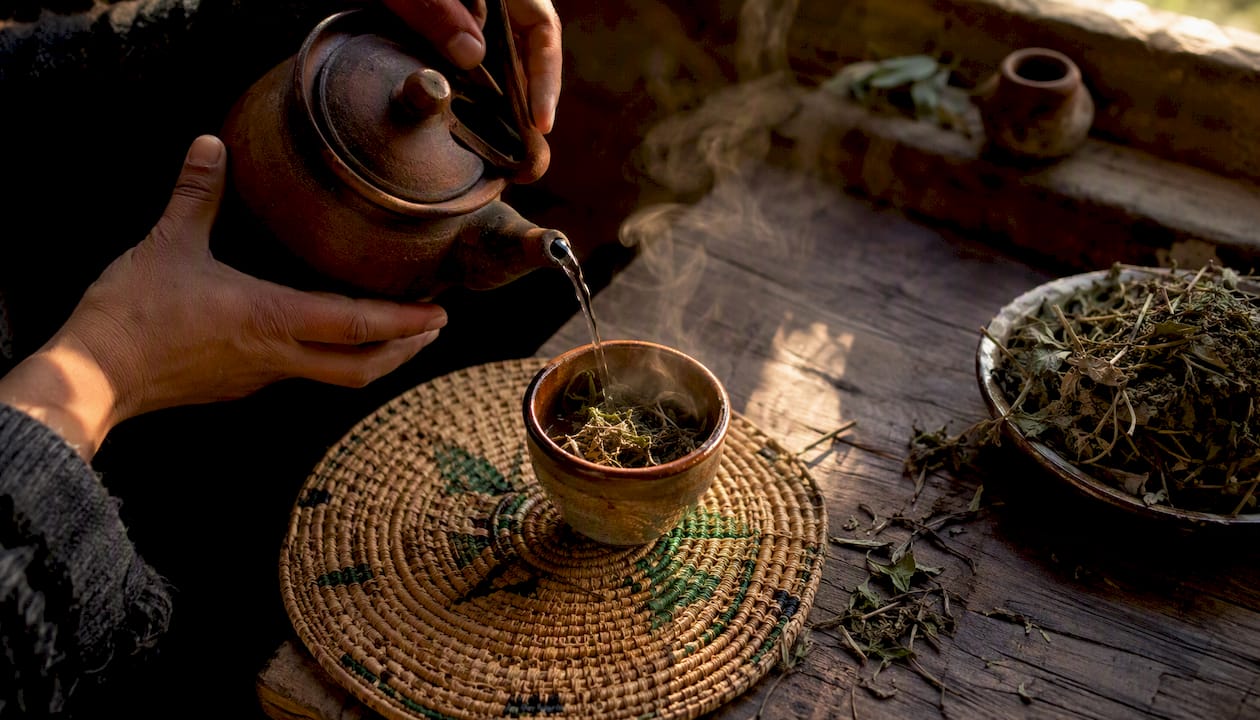
How to make muna tea the traditional way
The classic preparation is simple, but a few details make a real difference in flavor and effectiveness.
Classic infusion (the standard method):
- Bring fresh water to just below a boil, around 195–205°F. Fully boiling water can degrade delicate volatile oils.
- Add approximately 1 teaspoon of dried muña leaf per 8 oz of water directly to your cup or a small teapot.
- Pour the hot water over the leaves.
- Cover the cup or pot immediately with a lid, saucer, or small plate. This step is not optional if you want the full aroma and effect.
- Steep for several minutes until aromatic compounds are released.
- Strain and drink while warm.
Decoction method: For a stronger preparation, simmer the leaves in water for 10–15 minutes in a covered pot, then strain. This method is more common for respiratory applications or when using coarser, older dried material.
Traveler tips:
- Fresh leaves produce a brighter, greener flavor; dried leaves are more concentrated and easier to pack.
- For symptom relief at altitude, drink in small amounts over a short course of a few days as needed.
- To inhale vapors safely, steep a slightly larger amount, keep the pot covered until you're ready, then lean over the uncovered pot with a towel over your head for 5–10 minutes.
Pro Tip: Store dried muña in an airtight glass jar away from direct sunlight. Volatile oils degrade quickly in heat and light, so a zip-lock bag in a hot backpack pocket will leave you with flavorless leaves within days.
Is muna tea safe, and can you buy it in the United States?
Safety profile: Muña is caffeine-free and generally well-tolerated by healthy adults in short courses. The populations who should exercise caution or consult a clinician before use:
- Pregnant and breastfeeding people: Pulegone has a historical association with uterine stimulation; avoid muña during pregnancy.
- People with liver disease: The hepatotoxic potential of pulegone at higher doses makes muña a poor choice for anyone with compromised liver function.
- Children: Mint-family volatile oils can be overwhelming for young children's respiratory systems; keep muña tea away from infants and toddlers.
- People on anticoagulants or liver-metabolized medications: Muña may interact with blood thinners and drugs processed by hepatic enzymes. Check with a clinician before combining.
The safety concern with pulegone is dose-dependent. A cup or two of muña tea brewed from dried leaves carries far less pulegone than a concentrated extract or essential oil. Stick to the infusion, keep the course short, and you're working within the range that traditional use has established as reasonable.
Legal status in the U.S.: Muña is sold legally in the United States as an herbal tea and culinary herb. There are no federal prohibitions on its sale or possession. You'll find it in Latin American grocery stores, specialty herbal retailers, and online. As with any herbal product, the FDA does not evaluate muña for safety or efficacy as a drug, so product quality varies. Check labels carefully.
This article provides general information, not medical advice. Confirm any health-related decisions with a qualified clinician.
Where to find authentic muña in the United States
Sourcing matters more with muña than with common herbs because the U.S. market mixes genuine Minthostachys mollis with generic mint blends sold under similar names.
- Look for the botanical name: The label should say Minthostachys mollis, not just "Andean mint" or "muña blend."
- Check the origin: Peru or Bolivia are the primary growing regions. Provenance listed on the label is a good sign of a serious supplier.
- Prefer airtight packaging: Volatile oils degrade in permeable packaging. Sealed foil bags or glass jars indicate the supplier understands the product.
- Seek ethical sourcing notes: Suppliers who name their sourcing partners or describe fair-trade relationships with Andean growers are more likely to deliver authentic, quality material. Reading about ethical sourcing in plant medicine helps you ask the right questions before you buy.
- Bulk vs. packaged: Bulk loose leaf from a reputable herbal retailer often gives you better value and fresher material than pre-bagged tea bags, which may contain more stem than leaf.
When muña isn't available: Peppermint (Mentha piperita) or spearmint (Mentha spicata) share some flavor characteristics and mild carminative properties, but they are different species with different volatile-oil profiles. They're reasonable flavor substitutes; they're not botanical equivalents and shouldn't be treated as interchangeable for therapeutic purposes.
When a cup of muña makes sense, and when it doesn't
Muña is a reasonable self-care choice in these situations:
- Mild nausea or stomach upset after a heavy meal or during the first day at altitude
- Post-meal indigestion or gas discomfort
- Mild nasal congestion from a cold or dry mountain air
- General comfort during short-term altitude adjustment (not as a preventive, but as a soothing ritual)
Seek medical attention, not herbal tea, when you notice:
- Severe headache that doesn't respond to rest and hydration
- Vomiting, loss of coordination, or confusion at altitude (these are signs of serious AMS or high-altitude cerebral edema)
- Persistent high fever
- Any sign of a severe allergic reaction (hives, difficulty breathing, swelling)
The sensible approach to altitude travel combines gradual ascent, adequate hydration, and, when prescribed, acetazolamide (Diamox). Muña fits alongside those measures as a comfort tool, not a replacement for them. Plant medicine plays a real role in healing, but that role has limits, and knowing those limits is part of respecting the tradition.
A note from Pillars of Light hap'e
At Pillars of Light hap'e, we approach every traditional plant with the same reverence we bring to our Amazonian Hapé blends: respect for the people who cultivated this knowledge, care about how the plant is sourced, and honesty about what it can and cannot do. Muña is a beautiful example of Andean wisdom, a plant that has served communities at altitude for generations. It deserves to be understood on its own terms, not oversold as a miracle cure or dismissed as folklore.
If you're drawn to traditional plant allies from the Andes and beyond, explore our Amazonian master plant collection and ceremonial items for ethically sourced tools and medicines that carry the same spirit of care.

Sources
- Minthostachys mollis
- RGSA open access article (muña volatile compounds)
- Muña Tea in Peru: Benefits, History, and Where to Experience | Andean Travel Experience
- Andes Mint Tea - Muna Tea - Muña Tea FAQ - Linden Botanicals
This article is general information, not a substitute for advice from a qualified doctor. Consult a qualified healthcare professional about your own circumstances before acting on anything here.