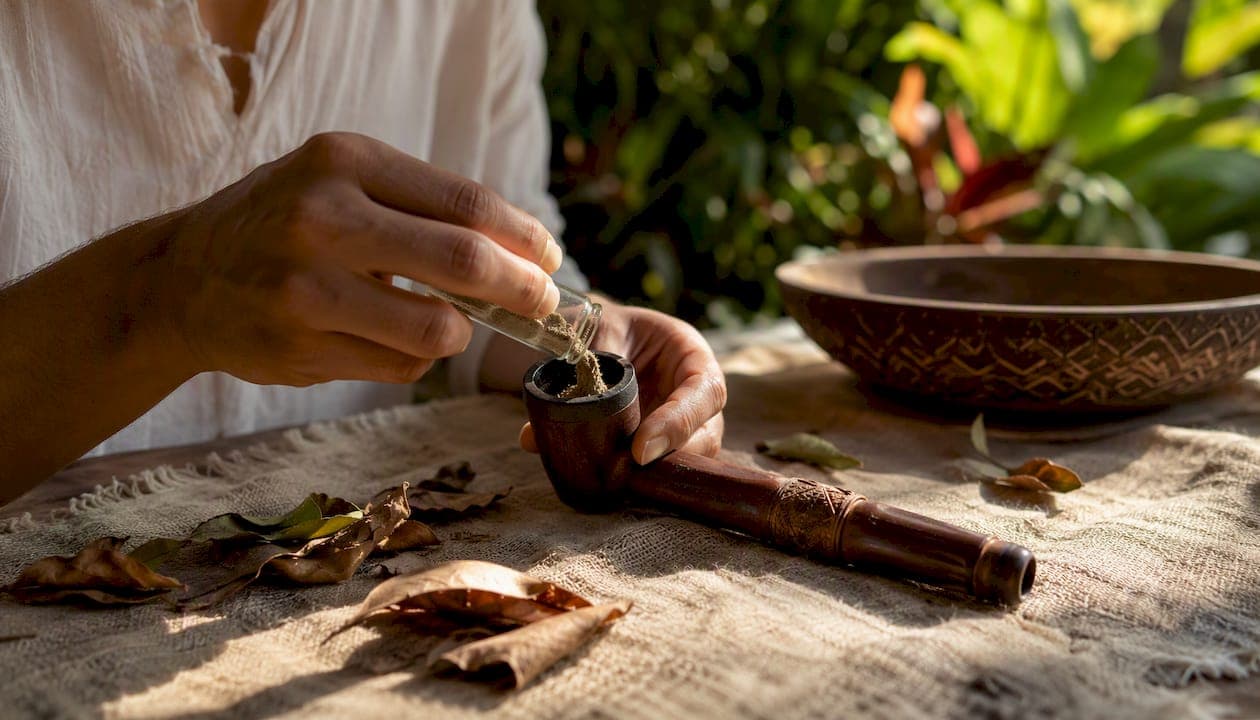
Hapé (also spelled rapé, pronounced "ha-PAY") is a finely milled, powdered snuff made from Amazonian plants and used ceremonially by indigenous tribes across the Amazon basin for generations. Many blends contain Nicotiana rustica, a tobacco species with significantly higher nicotine concentrations than commercial cigarette tobacco. Before you go further: peer-reviewed lab analysis has detected total nicotine ranging from 6.32 to 47.6 mg/g in rapé samples, alongside tobacco-specific nitrosamines (TSNAs), polycyclic aromatic hydrocarbons (PAHs), and undeclared chemical constituents. That is the chemical reality sitting beneath the ceremonial tradition, and every serious reader deserves to know it upfront.
- Hapé is not a recreational drug product. It is a sacred tool in living indigenous traditions.
- Nicotine content varies dramatically by blend. Ash-based tribal blends tend to be the most potent.
- Chemical contaminants including TSNAs and PAHs have been detected in tobacco-containing products.
- Non-tobacco blends exist and carry a different risk profile.
- Pillars of Light hap'e, a retail apothecary in Old Town Spring, Texas, publishes this guide as part of its commitment to education and transparency.
Pro Tip: If you are new to hapé, read this entire article before purchasing or using any blend. The chemical data in Section 3 is the most important thing to understand before you begin.
Key Takeaways
Hapé (rapé) is a finely milled Amazonian ceremonial snuff whose chemical content, nicotine potency, and safety profile vary dramatically by blend type, and responsible use requires understanding both its sacred roots and its measurable chemical risks.
| Point | Details |
|---|---|
| Chemical content varies widely | Total nicotine ranges from 6.32 to 47.6 mg/g; ash-based tribal blends reach the highest un-ionized nicotine levels due to alkaline pH. |
| pH drives absorption risk | Alkaline ash blends convert more nicotine to its bioavailable un-ionized form, raising addiction and acute exposure risk. |
| TSNAs and PAHs are present | Carcinogens classified by IARC as Group 1 or 2B have been detected in tobacco-containing rapé; undeclared constituents including coumarin and camphor also appear. |
| Sourcing and lineage matter | Ask for tribal origin, full ingredient lists, and lab data before buying; traceable products carry lower adulteration risk. |
| Pillars of Light hap'e | Offers 75+ ethically sourced blends with tribal attribution, handcrafted tools, and educational support from Old Town Spring, Texas. |
Table of Contents
- What is hapé tobacco, and where does it come from?
- What chemicals are actually inside hapé?
- What types of hapé will you actually find?
- How is hapé traditionally administered?
- What does hapé actually feel like, and how long does it last?
- What are the real health risks of using hapé?
- What U.S. laws and regulations apply to hapé?
- How do you buy hapé responsibly in the U.S.?
- A perspective on hapé, sourcing, and what education actually requires
- Ethically sourced hapé and ceremonial tools, shipped from Texas
- Sources
What is hapé tobacco, and where does it come from?
Hapé is rooted in the Amazon basin, where dozens of tribes have used it for centuries as a tool for prayer, healing, energetic clearing, and communion with plant spirits. The Yawanawá, Huni Kuin (Kaxinawá), Katukina, Nukini, and Kuntanawa are among the tribes most associated with its preparation and ceremonial use. Each group carries its own recipes, intentions, and protocols, passed down through lineages of healers called pajés or curandeiros.
Within these traditions, hapé is not simply inhaled. It is offered. The act of receiving hapé in ceremony is understood as an invitation for the plant to work on the physical, emotional, and spiritual bodies simultaneously. Common ceremonial purposes include:
- Grounding and centering before or during ceremony
- Energetic clearing of the mind and sinuses
- Prayer and intention setting at the opening of ritual space
- Healing support for physical or emotional imbalance, as guided by a trained facilitator
Hapé also sits within a broader system of Amazonian plant medicine that includes master plants like ayahuasca, sananga, and copaíba. In many traditions, hapé is used to prepare the body and mind before deeper plant medicine work. A facilitator may offer it to participants at the start of a ceremony to quiet mental chatter and open the senses. You can read more about why indigenous tribes use hapé and its sacred ceremonial roles in Pillars of Light hap'e's dedicated blog post.
Pro Tip: When buying hapé in the U.S., ask the vendor which tribe prepared the blend and which region it comes from. A vendor who cannot answer that question is selling you something without a lineage, and lineage is both a cultural and a safety matter.
What chemicals are actually inside hapé?
This is where the conversation gets specific, and where most articles fall short. A comprehensive 2015 chemical characterization by Stanfill and colleagues, published in Food and Chemical Toxicology and indexed on PubMed, analyzed manufactured and hand-made rapé products and produced the most detailed public dataset available on what these products actually contain.
Nicotine: total and un-ionized
Total nicotine in the analyzed samples ranged from low to high levels consistent with published data. That upper end is striking. For comparison, commercial moist snuff (dip) in the U.S. typically contains roughly 6–20 mg/g of total nicotine. Some tribal ash blends in the Stanfill dataset exceeded that range substantially.
The more important figure for absorption is un-ionized nicotine, which ranged from 0.03 to 18.5 mg/g across samples. Un-ionized nicotine is the form that crosses mucosal membranes readily. The higher the pH of the blend, the greater the proportion of nicotine that exists in this bioavailable form.
Why pH matters more than most people realize
Alkaline plant ashes, commonly added to tribal blends for both ceremonial and practical reasons, raise the pH of the mixture. Manufactured rapés in the Stanfill study showed mildly acidic to neutral pH values while custom tribal ash blends reached much higher, alkaline pH levels. At that alkaline extreme, a much larger fraction of total nicotine converts to the un-ionized form, which absorbs rapidly through nasal mucosa. The practical result: a tribal ash blend with moderate total nicotine can deliver a far more intense nicotine hit than a manufactured product with higher total nicotine but lower pH.
Statistic callout: The EPA HERO reference record for the Stanfill study confirms un-ionized nicotine reached 18.5 mg/g in some samples, a level that reflects the combined effect of high total nicotine and highly alkaline pH in ash-containing tribal blends.
TSNAs, PAHs, and undeclared constituents
TSNAs (tobacco-specific N-nitrosamines) are among the most studied tobacco carcinogens. Several are classified by the International Agency for Research on Cancer (IARC) as Group 1 (carcinogenic to humans) or Group 2B (possibly carcinogenic). PAHs (polycyclic aromatic hydrocarbons), also IARC-classified, were detected in many tobacco-containing rapé samples in the Stanfill analysis.
Beyond those, the study found milligram-level concentrations of compounds including coumarin (a liver toxin banned as a food additive in the U.S.), camphor (a neurotoxin in high doses), and eugenol (a clove-derived compound with both therapeutic and toxic properties at elevated exposure). These were not always declared on product labels.
Data source: Stanfill et al., 2015, PMC5704902
Moisture content across samples varied within a range typical for such powders, affecting flow and texture. These numbers are not alarming on their own, but they illustrate how much variation exists across products that may look identical on a shelf.
What types of hapé will you actually find?
Not all rapé is the same, and the differences matter for both experience and risk. Practitioner guidance distinguishes three broad product categories you are likely to encounter in the U.S. market:
Manufactured non-tobacco blends
These products contain no Nicotiana species. They are typically made from medicinal herbs, tree barks, seeds, and plant ashes without any tobacco component. Their nicotine content is negligible to zero, and their pH tends to be lower than ash-heavy tribal blends. For people who want the ceremonial experience without nicotine exposure, these are the gentler entry point. Pillars of Light hap'e carries several tobacco-free options, including the 7 Ervas Hapé, a multi-herb blend that illustrates what ingredient transparency looks like in practice.
Manufactured tobacco-containing blends
These include Nicotiana rustica or Nicotiana tabacum alongside other plant materials. They are commercially produced with more consistent particle size and moisture. Their pH tends to be mildly acidic to neutral, meaning un-ionized nicotine proportions are lower than in ash-based tribal blends, though total nicotine can still be substantial.
Custom tribal ash blends
Hand-prepared by tribal artisans, these blends often incorporate wood or plant ashes (cassava ash is common) that push pH into the alkaline range. The ash serves ceremonial, energetic, and practical purposes in the tradition. Chemically, it is also what drives un-ionized nicotine to its highest measured values. These are the blends that require the most respect and the most conservative approach to dosing.
Common plant additives across all categories include:
- Tonka bean (contains coumarin; banned as a food additive in the U.S.)
- Clove (eugenol source)
- Camphor-bearing plants
- Medicinal tree barks and resins
- Cassava ash, banana ash, or other plant ashes for alkalinity
Pro Tip: If a product label lists only "sacred herbs" or "Amazonian plants" without naming specific botanicals, that is a red flag. The Stanfill study found undeclared constituents in multiple analyzed products. Ask for a full ingredient list before purchasing.
How is hapé traditionally administered?
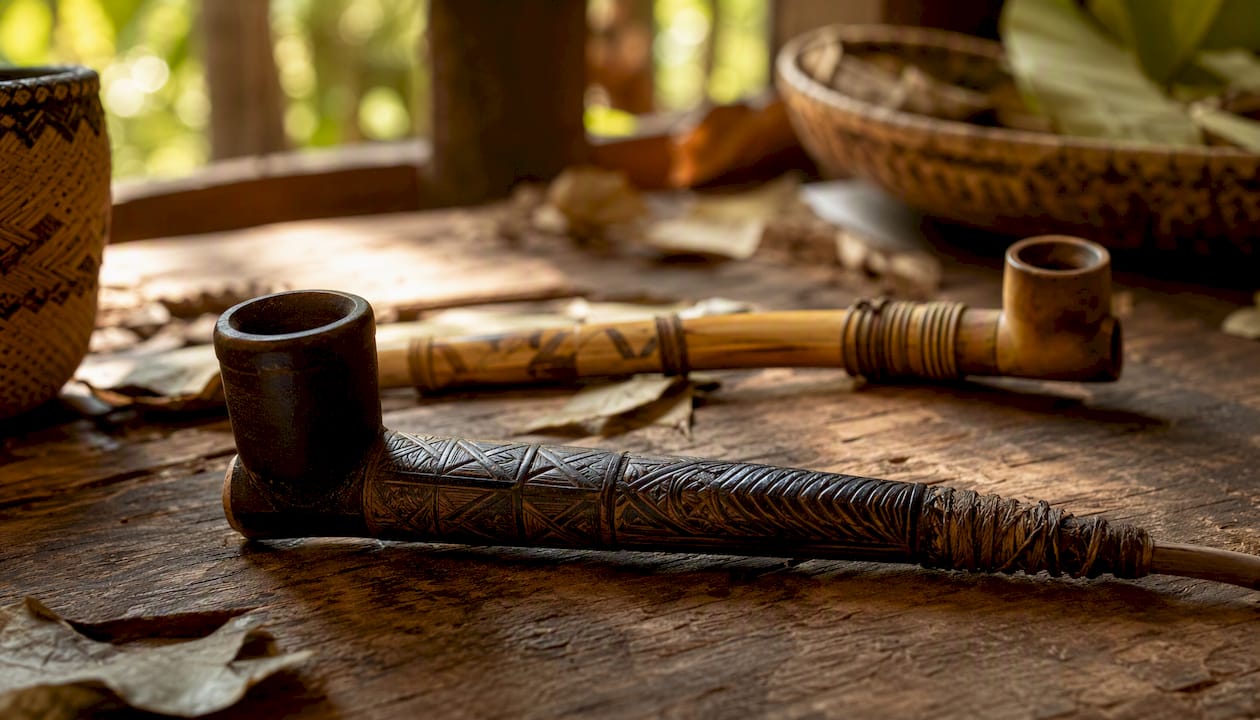
The two traditional tools for administering hapé are the kuripé (also spelled kuripe) and the tepi. Understanding the difference between them is central to safe use, and ethnographic practitioner guides describe both in detail.
Kuripé: self-application
A kuripé is a V-shaped pipe, typically made from bamboo, bone, or wood, with one end placed at the nostril and the other at the mouth. The user loads a small amount of hapé into the nostril end, places the mouth end between their lips, and blows the powder into one nostril with a single, controlled breath. The process is then repeated for the other nostril.
Traditional materials carry their own ceremonial significance. Bone kuripés, often made from bird or animal bone, are associated with specific tribal aesthetics and energetic qualities. Bamboo versions are lighter and more accessible. The bore diameter and length of the pipe affect how forcefully the powder is delivered, which is why tool selection matters for comfort and safety.
Tepi: facilitator administration
A tepi is a longer pipe, typically 30–60 cm, designed for one person to blow hapé into another's nostril. The facilitator controls the dose and the force of delivery. In traditional ceremony, the facilitator's breath carries intention alongside the medicine. This is why many practitioners consider tepi administration the more traditional and complete form of receiving hapé.
Practical safety cues for both methods:
- Start with a very small amount. Less than a matchhead-sized portion for a first experience.
- Sit upright with the spine straight and the chin slightly tucked.
- Receive each nostril in sequence, not simultaneously.
- Breathe through the mouth after administration to avoid inhaling powder deeper into the airway.
- Clean your tools before and after each use. Shared tepis require particular hygiene attention.
- Avoid forceful blasts. Nasal trauma from excessive force is a real risk, especially with self-administration.
Pro Tip: If you are self-administering for the first time, do not do it alone. Have a trusted person present who is familiar with hapé. Excessive dosing can cause rapid nicotine absorption, dizziness, nausea, and in rare cases, loss of consciousness. A facilitator-led tepi session is the safer starting point.
Pillars of Light hap'e carries a range of handcrafted kuripes and tepis made by Amazonian artisans, including bamboo, wood, and bone options that reflect genuine tribal craft traditions.
What does hapé actually feel like, and how long does it last?
The experience of hapé unfolds in a predictable sequence, though the intensity and duration shift considerably based on blend, dose, and individual sensitivity.
Immediate onset (0–2 minutes): A sharp nasal burn is almost universal. Sneezing, watering eyes, and increased saliva are common somatic responses. Some users experience a brief wave of nausea, particularly with higher-nicotine blends or larger doses. This phase is the body's direct response to the powder and its chemical constituents.
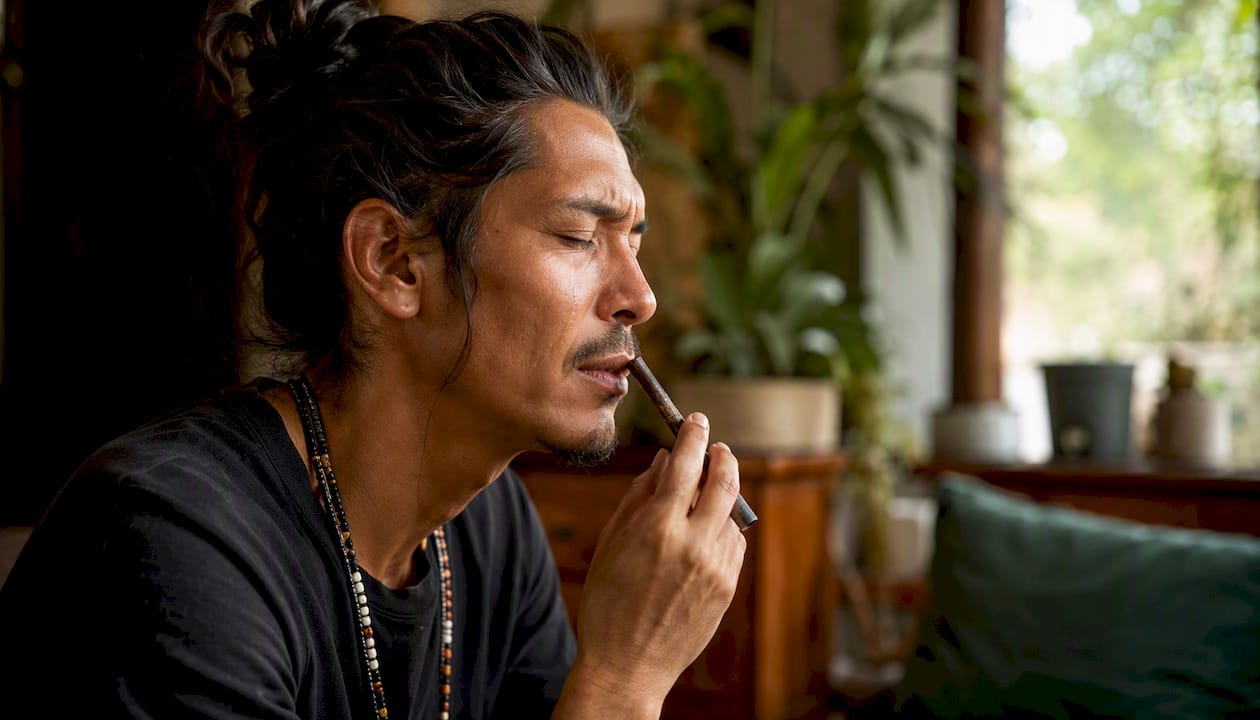
Peak phase (2–10 minutes): The nicotine effect, when present, peaks quickly. Users commonly report a strong grounding sensation, a quieting of mental noise, and heightened sensory awareness. Some describe a feeling of pressure or warmth at the crown of the head. Sinus passages often clear noticeably during this phase, which is one reason hapé has been used traditionally as a respiratory support tool.
Integration phase (10 minutes to several hours): The acute intensity fades, but many users report a sustained sense of clarity, calm, or emotional openness that can last well beyond the initial peak. This is the phase most associated with the spiritual and ceremonial benefits practitioners describe, including a sense of presence, grounded focus, and readiness for deeper ceremony work. You can explore how this integrates with aura cleansing and ceremonial practice in Pillars of Light hap'e's educational content.
Common subjective effects reported across traditions and practitioner accounts:
- Grounding and a sense of being fully present in the body
- Mental clarity and reduction of anxious thought loops
- Emotional release, sometimes including tears or laughter
- Sinus clearing and a feeling of respiratory openness
- Heightened connection to intention or prayer
- Nausea or dizziness (especially with high-nicotine blends or excessive dose)
Blend composition is the single biggest variable. A tobacco-free herbal blend produces a gentler, shorter experience. A high-pH ash blend with elevated Nicotiana rustica content can produce an intense, fast-onset nicotine response that some users find overwhelming rather than grounding.
What are the real health risks of using hapé?
Hapé carries genuine health risks that deserve honest discussion, especially for U.S. readers who may be encountering it outside of a traditional ceremonial context.
Nicotine addiction
Nicotiana rustica, the tobacco species most commonly found in rapé, contains substantially higher nicotine concentrations than Nicotiana tabacum, the species used in commercial cigarettes. When combined with alkaline ash that shifts nicotine to its un-ionized, bioavailable form, the addiction potential of some tribal blends is significant. Regular use of high-nicotine rapé can establish physical nicotine dependence in the same way that other smokeless tobacco products do.
Carcinogen exposure
The Stanfill et al. analysis confirmed TSNAs and PAHs in many tobacco-containing rapé products. TSNAs like NNN and NNK are IARC Group 1 carcinogens. Long-term nasal exposure to these compounds carries cancer risk, particularly for the nasal passages, nasopharynx, and potentially the esophagus and stomach through mucus drainage. This is not a theoretical risk. It is the same carcinogen class that drives cancer risk in other smokeless tobacco products.
Toxic plant constituents
Coumarin, detected in some samples, is a liver toxin banned as a food additive by the FDA. Camphor at sufficient doses is a neurotoxin. Eugenol, while used therapeutically in dentistry, can cause mucosal irritation and systemic toxicity at elevated exposures. These compounds appearing in products without label disclosure is a serious transparency problem.
Harm-reduction note: The combination of high un-ionized nicotine, alkaline pH, and undeclared constituents in some ash-based blends means that "natural" and "traditional" do not equal "safe" in a chemical sense. Frequency of use, dose, and blend selection all directly affect your cumulative exposure to these compounds.
Medical contraindications for hapé use include:
- Pregnancy or breastfeeding (nicotine and other constituents cross the placental barrier and enter breast milk)
- Cardiovascular disease or uncontrolled hypertension (nicotine raises heart rate and blood pressure acutely)
- Active nicotine dependence (hapé use can reinforce or deepen addiction)
- Certain psychiatric conditions, particularly those involving psychosis or severe anxiety, where altered states may be destabilizing
- Nasal or sinus conditions including active infection, polyps, or recent surgery
Harm-reduction practices for those who choose to use hapé:
- Limit frequency. Ceremonial use means occasional, intentional use, not daily habit.
- Avoid combining with other nicotine products or psychoactive substances.
- Choose tobacco-free blends if nicotine exposure is a concern.
- Prefer vendors who disclose full ingredient lists and, where available, lab testing data.
- Start with the smallest possible dose and increase only with experience and guidance.
Pro Tip: Consult a physician before using any tobacco-containing hapé if you have cardiovascular disease, hypertension, a history of nicotine dependence, or are pregnant. This is general educational information, not medical advice.
What U.S. laws and regulations apply to hapé?
The legal picture for hapé in the United States depends primarily on whether a product contains tobacco.
FDA jurisdiction: The FDA regulates tobacco products under the Family Smoking Prevention and Tobacco Control Act. A hapé blend containing Nicotiana rustica or any other tobacco species is subject to FDA tobacco product regulations, including labeling requirements and restrictions on marketing claims. Non-tobacco herbal snuffs fall under a different regulatory framework, typically as botanical or herbal products, though they are not FDA-approved for any health claim.
Import considerations: Importing tobacco products into the U.S. for personal use is subject to U.S. Customs and Border Protection rules and may require duty payment. Commercial importation of tobacco products requires compliance with FDA registration and reporting requirements. Non-tobacco botanical products face different but still real scrutiny at the border, particularly if they contain substances that appear on controlled or restricted lists.
State-level variation: Some states have additional restrictions on smokeless tobacco products, including minimum age requirements, flavor bans, or additional taxes. Verify your state's current rules before purchasing tobacco-containing hapé.
Buyer's checklist before purchasing hapé in the U.S.:
- Confirm whether the product contains tobacco. Ask the vendor directly and check the label.
- Verify that the label lists all ingredients. Unlabeled constituents are a chemical and legal concern.
- Check whether the vendor ships tobacco products to your state. Some states restrict shipment of tobacco.
- Confirm that packaging meets U.S. import and labeling standards if the product is imported.
- For non-tobacco blends, verify that no ingredient appears on DEA or FDA restricted substance lists.
- When in doubt, contact the vendor and consult FDA guidance at Fda or a licensed customs broker.
This is general information, not legal advice. Regulations change, and your specific situation may require professional guidance.
How do you buy hapé responsibly in the U.S.?
Buying hapé responsibly means asking the right questions before money changes hands. Lineage and provenance are not just cultural courtesies. They are practical safety signals. A product with a traceable tribal origin and a named ingredient list is far less likely to contain undeclared or adulterated constituents than one sold under vague "sacred herbs" branding.
The Stanfill chemical data makes this concrete: undeclared constituents appeared in multiple analyzed products. Traceability reduces that risk. A vendor who can tell you which tribe prepared a blend, which region it comes from, and what plant materials it contains is operating at a different standard of transparency than one who cannot.
Numbered buyer's checklist:
- Ask for tribal lineage. Which tribe prepared this blend? Which region of the Amazon?
- Request a full ingredient list. Every plant, ash, and additive should be named.
- Ask about lab testing. Does the vendor have nicotine, TSNA, or PAH data for this product?
- Understand harvest and preparation methods. Wild-harvested vs. cultivated, hand-ground vs. machine-processed.
- Ask about fair-trade or benefit-sharing policies. Does purchasing this product support the originating community?
- Verify tobacco status before purchase, especially if you are in a state with tobacco shipping restrictions.
Vendor questions you can use directly:
- "Which tribe and region does this blend come from?"
- "Can you provide a full ingredient list, including all ashes and additives?"
- "Do you have lab analysis for nicotine content, TSNAs, or PAHs?"
- "How does your sourcing support the originating community?"
- "Is this blend tobacco-containing or tobacco-free?"
Why lineage matters beyond ethics: a blend with a named tribal origin and a documented preparation method is a product with accountability. When something goes wrong, or when a constituent causes an unexpected reaction, traceability is what allows you to identify the source. Adulterated or mislabeled products are harder to trace and harder to avoid when you buy from vendors who treat provenance as optional.
For a concrete example of what transparent product presentation looks like, the Mulateiro Hapé from the Yawanawá tribe at Pillars of Light hap'e includes tribe attribution and a product description grounded in cultural context, which is the standard to look for.
A perspective on hapé, sourcing, and what education actually requires
Most articles about hapé either romanticize it completely or reduce it to a toxicology report. Neither serves the reader well.
The chemical data from Stanfill et al. is not an argument against hapé. It is an argument for honesty. The same alkaline ashes that make a tribal blend ceremonially distinct are the chemical mechanism that raises un-ionized nicotine to its highest measured values. That is not a contradiction. It is the full picture, and anyone working with these plants deserves to hold both truths at once.
What concerns me about the current U.S. market is not hapé itself. It is the gap between how some vendors present these products and what lab analysis actually finds inside them. "Sacred," "natural," and "traditional" are real and meaningful descriptors. They are not chemical safety guarantees. A coumarin-containing blend is still coumarin-containing whether it was prepared with ceremony or not.
The tribes who have carried these traditions for generations understand the plants they work with at a depth that no lab report captures. That knowledge is worth respecting. Respecting it means sourcing from vendors who maintain real relationships with those communities, not just aesthetic borrowings from them. It means asking hard questions about ingredients and provenance. And it means being honest with yourself about frequency, dose, and your own health context.
Pillars of Light hap'e was built on the premise that education and sourcing are inseparable. You cannot responsibly sell these products without also teaching people what they are, where they come from, and how to use them with care. That is the standard we hold ourselves to, and it is the standard we encourage every buyer to demand.
Ethically sourced hapé and ceremonial tools, shipped from Texas
Pillars of Light hap'e carries 75+ varieties of Amazonian hapé alongside handcrafted kuripes, tepis, and ceremonial tools, all sourced with documented tribal lineage and a commitment to fair-trade relationships with originating communities. The physical apothecary is in Old Town Spring, Texas. Online ordering is available across the U.S.
For readers who are new to rapé, the Ceremonial Items Collection is the best starting point: it brings together blends, application tools, and accessories curated for both first-time and experienced practitioners. Every product page includes tribal attribution and ingredient context so you can ask informed questions before you buy. If you want to go deeper before purchasing, the Hapé, Kuripes & Amazonian Ceremonial Tools homepage gives you a full view of what is available and how to reach the team directly for sourcing or educational questions. Reach out before you buy. The team at Pillars of Light hap'e welcomes questions about lineage, ingredients, and safe use, and that conversation is part of what responsible sourcing looks like.
Sources
These are the primary sources behind the chemical data, cultural context, and practical guidance in this article. Each one is worth reading directly.
- Comprehensive Chemical Characterization of Rapé Tobacco Products: Nicotine, Un‑ionized Nicotine, Tobacco‑specific N’-Nitrosamines, Polycyclic Aromatic Hydrocarbons, and Flavor Constituents
- PubMed: Food Chem Toxicol Stanfill 2015 rapé study
- HERO: Reference record for rapé chemical characterization (Stanfill et al., 2015)
- Tobacco or No Tobacco? Choosing the Right Rapé Snuff Blend for Your Ceremony
- What is Hapé (aka Rapé) - The Sacred Tobacco Plant of the Amazon
This article is general information, not a substitute for advice from a qualified doctor. Consult a qualified healthcare professional about your own circumstances before acting on anything here.