
Prevent cracking in your wooden Tepi by keeping its moisture stable: never soak it, flush the airway with 91%+ isopropyl alcohol or a neutral high-proof spirit after each shared use, dry completely for at least 24 hours, and condition the exterior sparingly with a tiny amount of beeswax or food-safe oil. Those four steps cover the vast majority of cracking cases.
- Do: flush the airway with high-proof isopropyl or vodka after shared use
- Do: air-dry fully, upright, in a ventilated spot for 24+ hours before storing
- Do: store away from direct sun, heating vents, and temperature swings
- Don't: soak the pipe in water or any liquid, ever
- Don't: apply conditioning oil or wax until the wood is completely dry
Pro Tip: Alcohol is flammable. Always work in a ventilated space away from open flame, and confirm the pipe is bone-dry before applying any wax or oil and before sealing it in a storage pouch.
Table of Contents
- Why does wood crack in a Tepi pipe?
- How to clean a Tepi pipe safely without damaging the wood
- How should you store a Tepi to avoid moisture-driven cracking?
- Which oils and finishes are safe for a wooden Tepi?
- What to do when your Tepi develops a crack
- A simple maintenance schedule you can actually follow
- Key Takeaways
- Treating your Tepi as a living companion changes everything
- Pillars of Light hap'e: handcrafted Tepis, care support, and more
Why does wood crack in a Tepi pipe?
Wood is hygroscopic: it absorbs and releases moisture constantly in response to the air around it. When the surface dries faster than the core, the outer fibers shrink and harden while the interior stays swollen. That mismatch creates tension, and the wood splits along the grain to relieve it.
Preventing cracks is almost always about preventing surface-to-core moisture mismatch. Avoiding direct heat and UV, and keeping relative humidity (RH) stable, stops most cracking before it starts — trying to fix the wood after damage is far harder than protecting it from the beginning.
The most common triggers for a wooden Tepi are:
- Soaking then fast drying: saturates the core, then rapid evaporation from the surface creates maximum mismatch stress
- Direct heat or UV exposure: outer fibers harden and dry faster than the interior, the classic split scenario
- Large RH swings: moving a pipe from a humid bathroom to a dry heated room repeatedly forces constant expansion and contraction
- Aggressive solvents on the exterior: strip the wood's natural oils, accelerating surface drying and leaving the grain unprotected
Understanding these mechanisms is what makes every care step below feel logical rather than arbitrary.
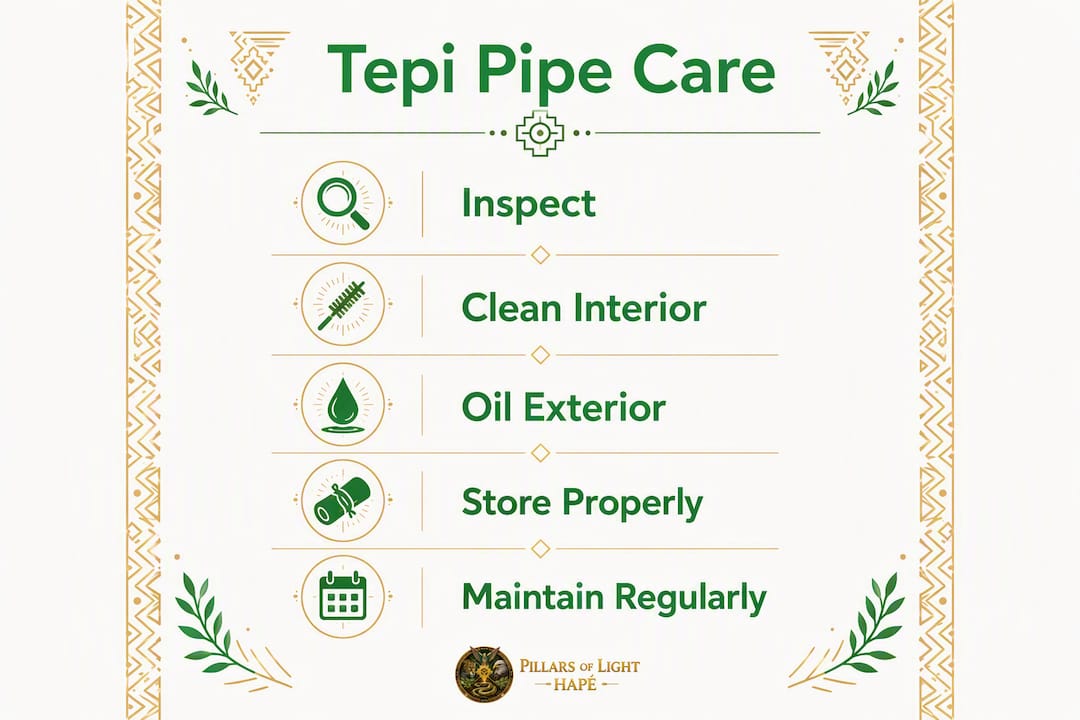
How to clean a Tepi pipe safely without damaging the wood
The core rule: clean the airway channel, not the whole pipe. Submerging or soaking a wooden Tepi is the single fastest route to warping and cracking.
After each use or before sharing:
- Let the pipe cool completely before handling the stem or mouthpiece. Thermal stress on warm wood can cause micro-cracks.
- Run a dry pipe cleaner or soft brush through the channel to remove loose residue.
- Dip a fresh pipe cleaner in 91%+ isopropyl alcohol or a neutral high-proof spirit (plain vodka works well). Pass it through the airway two or three times until it comes out clean.
- Follow with one dry pipe cleaner pass to wick away excess alcohol.
- Stand the pipe upright in a ventilated area and allow it to air-dry for a full 24 hours before reassembly or storage.
- Before storing, verify the channel is dry. A dry cotton swab passed through should come out clean and odorless.
Keep alcohol contact to the interior channel only. Bathing the exterior in isopropyl strips wax finishes and natural oils, which accelerates the very drying you are trying to prevent. Excessive moisture at wood junctions can also alter wax coatings and invite mold.
Pro Tip: Stand the pipe mouthpiece-up so gravity pulls any residual alcohol away from wood joints. A small cup or a folded cloth works as a stable base.

How should you store a Tepi to avoid moisture-driven cracking?
Keep your Tepi in a stable, moderate-humidity environment, away from heat sources and direct light. The goal is a consistent microclimate where the wood neither dries out nor absorbs excess moisture.
A dedicated padded pouch, a small wooden box, or a hard-shell case all work well. The key is that the container buffers against sudden RH changes rather than trapping moisture. Avoid storing a Tepi in a bathroom (high humidity, frequent swings), near a heating vent, on a windowsill, or in a car trunk where temperatures swing dramatically.
| Condition | RH / Temp Range | Risk |
|---|---|---|
| Too dry | Low relative humidity | Surface drying cracks, grain checking |
| Ideal | Moderate relative humidity and temperature | Stable wood, minimal expansion/contraction |
| Too humid | High relative humidity | Mold growth, swelling, joint failure |
| Heat or UV exposure | Any RH, direct sun or heat source | Rapid surface hardening, splitting |
Humidity swings are more damaging than a consistently moderate level in either direction. If your home runs dry in winter, a small passive humidifier near your storage area helps. For those who gift or transport Tepis, a padded travel case with a small humidity buffer packet is worth the investment.
Which oils and finishes are safe for a wooden Tepi?
Apply conditioning products to the exterior only, and only when the wood is fully dry. The goal is to replenish surface oils that slow moisture exchange, not to seal the wood hermetically.
Safe options:
- Beeswax: the traditional choice; conditions without trapping moisture, buffers minor RH swings, easy to buff to a thin protective layer
- Food-safe neutral oils (almond, fractionated coconut): penetrate the grain gently, hydrate dry exterior fibers, and leave no harmful residue near the airway
- Mineral oil (food-grade): acceptable as a secondary option; does not go rancid, though it conditions less deeply than beeswax
Avoid:
- Aggressive solvents or paint strippers: remove natural oils and accelerate drying
- Petroleum-based products not rated food-safe: potential off-gassing near the airway
- Film-forming varnishes or lacquers: crack with wood movement and can trap moisture beneath the surface
- Any product applied while the wood is still damp: seals in moisture and creates conditions for internal mold
Pro Tip: Use less than you think you need. A single drop of oil or a pea-sized amount of beeswax, worked in with a soft cloth and then buffed off, is enough for most Tepis. Sticky residue near the mouthpiece or airway opening is a sign you used too much.
What to do when your Tepi develops a crack
For hairline surface cracks, the approach is stabilization and conditioning, not aggressive repair. Clean and dry the pipe thoroughly first. Then work a tiny amount of beeswax into the crack with a soft cloth, allow it to absorb, and buff away the excess. This fills the micro-gap and slows further moisture loss from that point.
A small surface crack treated early rarely becomes a structural problem. A structural split ignored for months almost always does.
What not to do:
- No cyanoacrylate (CA) glue inside or near the airway — fumes are harmful and the bond is rigid, which fights the wood's natural movement
- No soaking to "swell the crack shut" — this causes the very moisture mismatch that opened the crack in the first place
- No aggressive sanding to flatten the surface — removes structural wood and thins the wall
When to stop DIY: visible splits that run through the full wall thickness, a compromised or blocked airway, or any sign of mold inside the channel. A handcrafted ceremonial pipe with cultural or sentimental significance deserves professional assessment before any intervention.
Pro Tip: If you are unsure whether a crack is surface-level or structural, hold the pipe up to a light source and look through the airway. A structural split often lets light through the wall.
Pillars of Light hap'e can advise on repair options or help you find a suitable replacement. Reach out through the store or website if your Tepi has sustained damage beyond surface conditioning.
A simple maintenance schedule you can actually follow
Consistent, light maintenance prevents the buildup of residue and the neglect that leads to cracking. Adjust frequency upward for shared-use tools: sanitize the airway after every other-person use, not just weekly.
| Frequency | Action |
|---|---|
| After each use | Wipe exterior, pass dry pipe cleaner through airway, air-dry upright |
| Weekly (if used often) | Flush airway with high-proof spirit, dry 24 hours, inspect mouthpiece |
| Monthly | Inspect exterior for hairline cracks, condition lightly with beeswax or food-safe oil if surface looks dry |
| Quarterly | Deeper inspection of joints and airway, assess storage environment, adjust humidity if seasonal RH has shifted |
In dry winter months, check your storage RH more often. Central heating drops indoor humidity quickly, and a pipe stored in a 20% RH environment through January will show it by spring.
Key Takeaways
Wooden Tepi pipe cracking prevention comes down to one discipline: keep moisture stable, clean the airway with high-proof spirit, dry completely, and condition the exterior sparingly.
| Point | Details |
|---|---|
| Never soak | Water saturation followed by drying creates the surface-to-core mismatch that splits wood. |
| Clean the airway safely | Flush with 91%+ isopropyl or neutral high-proof spirit; air-dry upright for 24 hours before storage. |
| Control storage environment | Keep RH in a stable moderate range and temperature at comfortable room levels; avoid heat sources and direct UV. |
| Condition sparingly | Apply beeswax or food-safe oil to a fully dry exterior only; a small amount buffed thin is enough. |
| Pillars of Light hap'e | Offers handcrafted Tepis, care guidance, and repair advice — contact the store in Old Town Spring, Texas for replacement or restoration support. |
Treating your Tepi as a living companion changes everything
There is a quiet shift that happens when you stop thinking of a Tepi as an object to maintain and start treating it as a living companion in your practice. Wood breathes. It responds to its environment the way any living material does: with patience when conditions are stable, with stress when they are not.
That mindset makes the practical steps feel natural rather than burdensome. You check the pipe after each use the way you would check in on something you care for. You dry it patiently because rushing would cause harm. You store it thoughtfully because where it rests matters. Ceremonial tools carry the weight of tradition, and the sacred purposes they serve are honored partly through how well you keep them.
Pillars of Light hap'e sources its Tepis from Indigenous artisans who understand this relationship. The craftsmanship already carries that respect. Your maintenance practice extends it.
Pillars of Light hap'e: handcrafted Tepis, care support, and more

When a Tepi cracks beyond surface conditioning, or when you are ready to add a well-made ceremonial tool to your practice, Pillars of Light hap'e is the place to start. Every Kuripe and Tepí in the collection is handcrafted by Amazonian artisans using traditional methods, ethically sourced, and selected with the same respect for Indigenous tradition that this care guide reflects.
The store in Old Town Spring, Texas carries the full range of ceremonial items, and the team can advise on repair options, replacement tools, and proper care for specific wood types and finishes. Online ordering ships from Texas, and educational guides are available through the blog for owners who want to go deeper on any aspect of ceremonial stewardship.
If your Tepi has sustained structural damage or you want guidance on a specific piece, reach out directly through the website or visit the Old Town Spring location.