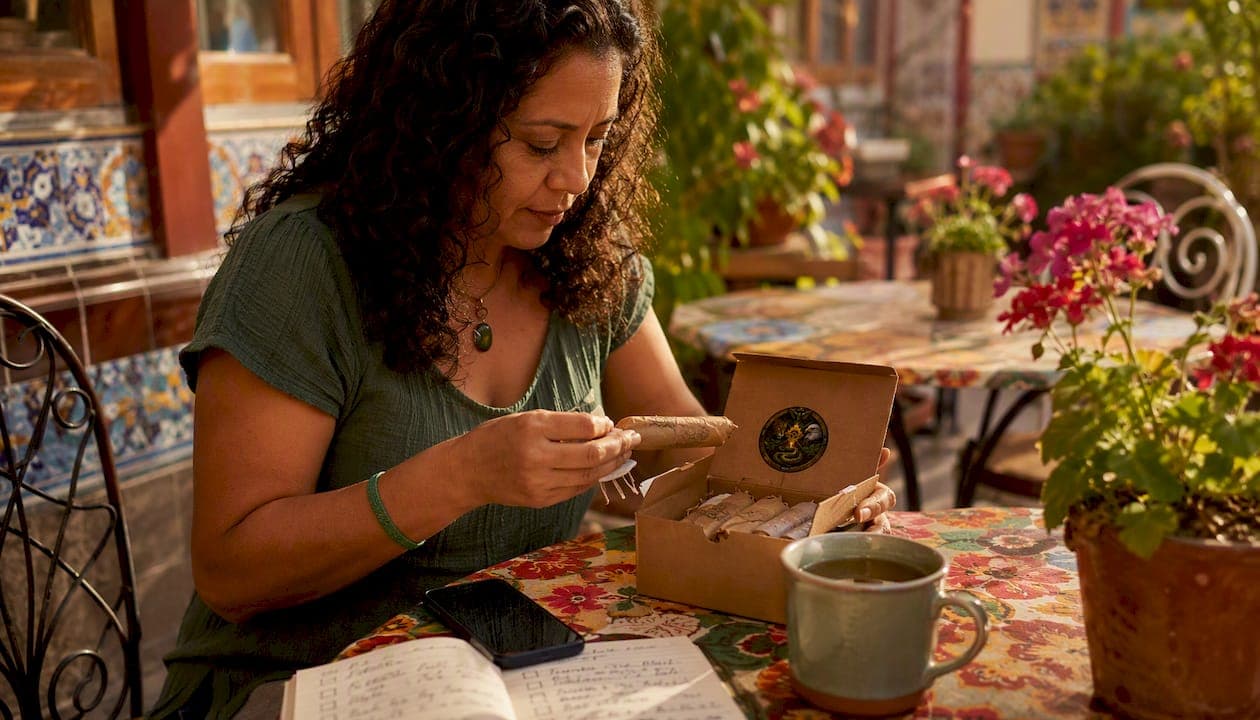
Yes — adults in California can order authentic, ethically sourced hapé online. The key is treating the purchase the way it actually is: a tobacco-based ceremonial snuff that requires age verification, clear labeling, and a vendor you can genuinely trust.
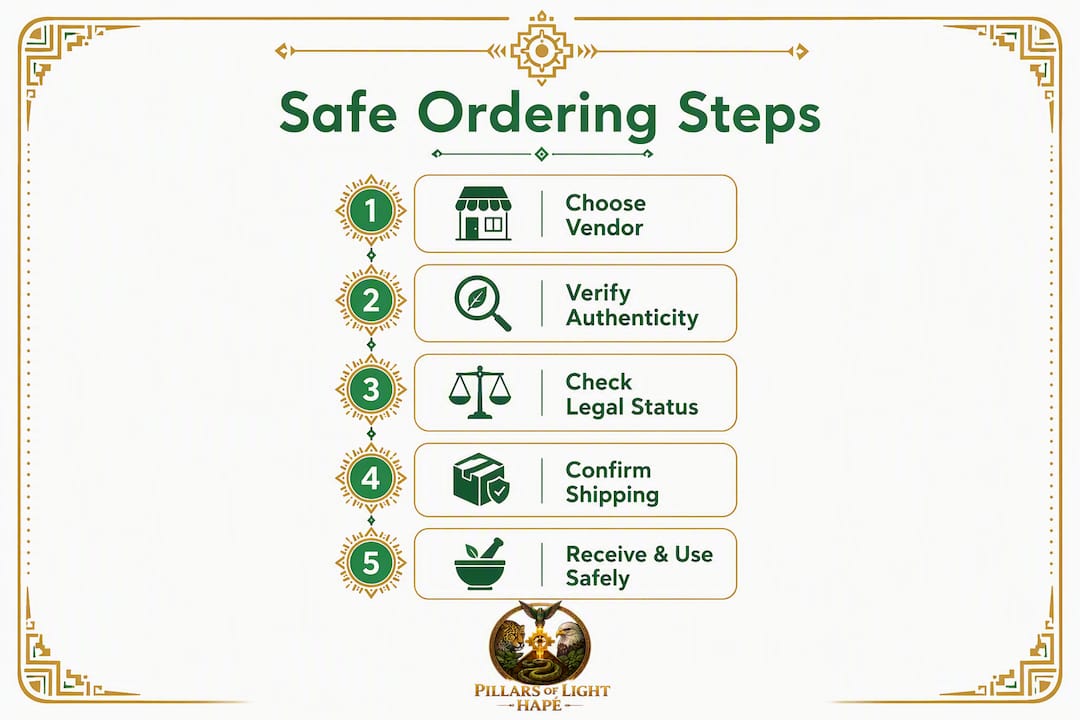
Hapé (also spelled rapé or hap'e) is a sacred Amazonian preparation traditionally made with Nicotiana rustica tobacco and medicinal plant ashes. It is not a scheduled controlled substance under federal law. That said, it falls under tobacco regulations, which means the 21+ age rule applies, and how your order is labeled and declared matters more than most buyers realize.
Quick checklist before you order:
- Confirm you are 21 or older and that the vendor enforces age verification at checkout
- Verify the vendor names specific tribal partners and documents fair compensation
- Check that the product is explicitly labeled as a tobacco-based ceremonial snuff
- Order personal-use quantities only, not wholesale volumes
- Save your receipt, product description, and any vendor correspondence
Table of Contents
- How to order hapé online safely in California: step-by-step
- Is it legal to buy and ship hapé to California?
- How do you verify a vendor's sourcing and authenticity claims?
- How to use hapé safely after your order arrives
- What to expect when your order arrives
- Pillars of Light hap'e: a vetted U.S. vendor for California buyers
- Key Takeaways
- Why reciprocity matters more than the transaction
- Pillars of Light hap'e brings vetted sourcing directly to California buyers
- Useful sources
How to order hapé online safely in California: step-by-step
Walk through these checks before you click "buy" and again when your package arrives.
Before purchase:
- Confirm the vendor's age-verification process. Responsible sellers require 21+ verification at checkout and sometimes at delivery. If a site skips this step entirely, move on.
- Read the sourcing page carefully. Look for named tribal communities, not just "Indigenous-sourced" as a marketing phrase. Documented fair compensation and long-term partnerships are the real signals.
- Check the ingredient list. Authentic hapé typically uses Nicotiana rustica as its tobacco base combined with specific plant ashes. A product with no ingredient disclosure is a red flag.
- Confirm tobacco labeling. The product should be explicitly identified as a tobacco-based ceremonial snuff, not vaguely described as "herbal" or "botanical."
- Review the return and shipping policy before paying. Many vendors treat opened ceremonial products as final sale.
At purchase:
- Order personal-use quantities. Customs and import issues arise most often from shipments that look like wholesale orders, not from the product itself.
- Keep your order confirmation, receipt, and any product description emails. These documents resolve most customs questions quickly.
After delivery:
- Inspect the packaging immediately. The label should state tobacco content, list ingredients, and show a date code or batch number.
- If the labeling looks vague or the quantity shipped differs from what you ordered, contact the vendor before opening additional units.
- Store receipts and product photos together. If a question ever arises about the shipment, documentation is your fastest path to resolution.
Pro Tip: Avoid any vendor that labels hapé as purely "herbal" or "botanical" when the product contains tobacco. That mislabeling is the single most common reason shipments get flagged at customs, and it signals the vendor either does not understand the product or is cutting corners on compliance.

Is it legal to buy and ship hapé to California?
Hapé is not scheduled as a controlled substance under federal law. The legal framework that actually governs your purchase is tobacco regulation, not drug law.
The U.S. Customs and Border Protection (CBP) does not maintain an approved hapé list. Instead, CBP processes hapé shipments under existing Harmonized Tariff Schedule codes for tobacco products. Problems arise from paperwork gaps and quantity signals, not from a blanket prohibition. A well-labeled, personal-use order from a compliant vendor clears without issue in the vast majority of cases.
| Legal factor | What applies | Key detail |
|---|---|---|
| Federal classification | Tobacco product (not a controlled substance) | Regulated under tobacco law, not the Controlled Substances Act |
| Minimum age (U.S.) | 21+ | Federal Tobacco 21 law; California follows this rule |
| Customs classification | HTS tobacco codes | Vague labeling or wholesale quantities trigger flags |
| California state rules | Follows federal tobacco age rules | California has product-specific tobacco regulations; check before bulk purchases |
| Carrier policies | Varies by carrier | Major carriers restrict tobacco shipments; confirm vendor uses a compliant carrier |
California generally follows federal tobacco age rules, though the state does have its own product-specific tobacco regulations worth reviewing before any bulk purchase. For personal ceremonial quantities, the federal framework is the primary concern.
Pro Tip: Ask your vendor directly: "How do you declare the shipment contents, and which carrier do you use for California orders?" A vendor who answers clearly and mentions tobacco declaration is one who has done this before.
How do you verify a vendor's sourcing and authenticity claims?
The gap between "ethically sourced" as a marketing phrase and ethical sourcing as a verifiable practice is wide. Practical sourcing evaluation is less about the language on a product page and more about the relationships a vendor can actually document.
What genuine transparency looks like:
- Named tribal communities, not just a region or country of origin
- Photos or bios of harvesters and community partners
- Documented fair-compensation statements or long-term partnership agreements
- Evidence of repeated collaboration rather than one-off purchases
- Nonprofit or reforestation ties when the vendor claims conservation support
Product signals worth checking:
Authentic hapé uses Nicotiana rustica as its tobacco base, combined with specific plant ashes and medicinal additives that vary by blend and intended ceremonial use. The texture, aroma, and color differ meaningfully across blends. Small-batch packaging with minimal commercial marketing language is a positive sign. Flashy branding that treats hapé like a wellness trend is not.
Red flags:
- Tribal claims with no names, no photos, and no documentation
- No ingredient list or a list that omits the tobacco base
- Prices dramatically below market without any explanation
- Marketing copy that emphasizes novelty or recreational effects over ceremony
What to ask before you buy:
Request supplier references or ask whether the vendor can share photos of sourcing partnerships. Ask whether they handle customs documentation for U.S. shipments and whether they have worked with the same tribal partners over multiple seasons. Vendors who publish this kind of detail are demonstrating the kind of accountability that protects both the buyer and the communities involved.
Pro Tip: Search the vendor's site for the tribal name they cite. If that name appears only in one marketing paragraph and nowhere else on the site, the relationship may be superficial. Genuine partnerships show up in blog posts, sourcing stories, and product descriptions across the catalog.
How to use hapé safely after your order arrives
Safe use starts with the right tool and a clear understanding of your own health situation.

Kuripe vs. tepi: choosing your applicator
A kuripe is a V-shaped self-applicator. One end goes to your nostril, the other to your mouth, and you deliver the hapé to yourself with a single breath. It is the standard tool for solo practice. A tepi is a longer pipe used by a facilitator to administer hapé to another person. If you are new to hapé, a kuripe is the natural starting point for personal practice.
Dosing and pacing
- Start with a very small amount, smaller than you think you need.
- Sit quietly for several minutes after each application before considering a second.
- Watch for intensity: strong clearing sensations, increased salivation, and a grounding effect are normal. Dizziness, nausea, or racing heart are signals to stop.
- Never combine hapé with stimulant medications, MAOIs, or other plant medicines without guidance from a knowledgeable practitioner.
Medical contraindications
Hapé contains Nicotiana rustica, which is significantly more potent than common tobacco. Medical cautions include:
- Pregnancy — avoid entirely
- Cardiovascular conditions — consult a physician before use
- Respiratory conditions — use with caution; the nasal application affects airways
- Stimulant medications — risk of interaction; check with your prescriber
- Serious mental health conditions — seek guidance from a qualified practitioner
Practical safety for ceremony settings:
- Have a sober sitter or trusted partner present, especially for your first experience
- Stay hydrated before and after
- Keep tissues nearby; nasal clearing is part of the process
- Do not drive immediately after use
- If you have any doubt about your health status, speak with a healthcare provider before your first session
This article provides general information, not medical advice. Confirm your personal health situation with a qualified healthcare provider before using hapé.
What to expect when your order arrives
Packaging and labeling
Accurate packaging on a compliant hapé order includes an explicit statement that the product is a tobacco-based ceremonial snuff, a full or partial ingredient list, and a batch or date code. Vague or overly commercial packaging is a warning sign. Authentic hapé is typically packaged simply, in small glass or sealed containers, with minimal decoration. That simplicity reflects both freshness preservation and the product's ceremonial nature.
Shipping timeline and tracking
Domestic U.S. orders from Texas-based vendors typically arrive within 3–7 business days depending on the carrier and your location in California. Vendors sourcing directly from South America may have longer lead times if they consolidate shipments before domestic fulfillment. Ask your vendor whether they ship from a U.S. location or directly from origin.
Taxes and fees
California buyers should expect standard state sales tax on their order. If the vendor ships internationally before a domestic handoff, there may be import duties applied under tobacco HTS codes. A U.S.-based vendor who ships domestically eliminates most of that customs complexity.
Returns and refunds
Most vendors treat opened ceremonial products as final sale. Before purchasing, photograph the sealed packaging. If your order arrives damaged, mislabeled, or significantly different from the product description, contact the vendor immediately with photos and your order documentation.
Pro Tip: Ask your vendor to declare shipment contents as "tobacco-based ceremonial snuff" and keep a copy of your order confirmation alongside any tracking information. Documentation prevents mistaken classification and supports quick release if a package is ever held for review.
Pillars of Light hap'e: a vetted U.S. vendor for California buyers
For California buyers who want to skip the uncertainty of sourcing verification, Pillars of Light hap'e is a clear, vetted option. Based in Old Town Spring, Texas, the brand ships domestically across the U.S. and carries 75+ varieties of traditional Amazonian hapé blends.
What sets Pillars of Light hap'e apart from generic online listings:
-
Named tribal sourcing and ethical partnerships. The brand documents its relationships with Amazonian communities, including named tribal partners, fair-compensation commitments, and long-term collaboration rather than one-off purchasing.
-
Clear tobacco labeling and age verification. Products are explicitly labeled as tobacco-based ceremonial snuff, and the site enforces 21+ age verification at checkout.
-
Educational depth. Pillars of Light hap'e publishes guides on safe and traditional hapé use, ceremonial context, and sourcing transparency, so buyers understand what they are purchasing before it arrives.
-
A large blend selection. The hapé apothecary covers a wide range of tribal traditions and ceremonial intentions, from grounding blends to those used for clarity and focus.
-
Handcrafted applicators. Kuripes and tepis made by Amazonian artisans are available alongside the blends, so California buyers can order everything they need in one place.
-
Retail presence and customer support. The physical Old Town Spring location and active online support mean you have a real point of contact if questions arise about your order.
For buyers new to hapé, the educational resources alone make Pillars of Light hap'e worth starting with before exploring other options.
Key Takeaways
Adults in California can order hapé online legally and safely when they choose a vendor with verified tribal sourcing, explicit tobacco labeling, and enforced age verification, and keep their order to personal-use quantities.
| Point | Details |
|---|---|
| Legal status | Hapé is not a controlled substance; it is regulated as a tobacco product, requiring 21+ age verification. |
| Customs and labeling | Declare as tobacco-based ceremonial snuff and order personal-use quantities to avoid customs flags. |
| Sourcing verification | Look for named tribal partners, documented fair pay, and long-term partnerships, not just marketing language. |
| Safe use | Start with small doses using a kuripe; avoid use if pregnant, cardiovascular conditions apply, or stimulant medications are involved. |
| Pillars of Light hap'e | A vetted U.S.-based vendor with 75+ blends, named tribal sourcing, clear tobacco labeling, and domestic shipping to California. |
Why reciprocity matters more than the transaction
Buying hapé is not like buying a supplement. These blends carry the knowledge, labor, and spiritual tradition of Amazonian communities who have tended these plants and practices for generations. When a vendor cannot name their tribal partners or document fair compensation, the buyer is not just taking a sourcing risk. They are participating in a chain that may extract value from those communities without returning anything meaningful.
The most grounded approach is to treat the purchase as the beginning of a relationship, not the end of a transaction. That means choosing vendors who invest in long-term partnerships, supporting brands that fund cultural preservation, and learning enough about the tradition to use hapé with the respect it deserves. Price should be the last filter, not the first.
Pillars of Light hap'e brings vetted sourcing directly to California buyers
Sourcing authentic hapé with confidence means knowing exactly where it came from, who made it, and how they were compensated. Pillars of Light hap'e does that work so you do not have to guess.
The brand's hapé apothecary offers 75+ tribal blends shipped from Texas with explicit tobacco labeling, 21+ age verification, and documented Indigenous partnerships. Every order comes with the kind of sourcing transparency that makes a safe hapé purchase in California straightforward rather than stressful. Need an applicator too? The ceremonial items collection includes handcrafted kuripes and tepis made by Amazonian artisans, ready to ship alongside your blend.
Browse the full apothecary at pillarsoflighthape.com or reach out directly for guidance on choosing the right blend for your practice.
Useful sources
- Comprehensive Chemical Characterization of Rapé Tobacco (PMC/NIH) — Peer-reviewed analysis of hapé's chemical composition, Nicotiana rustica base, and variability across blends; supports safe-use and ingredient guidance.
- Hapé (Rapé): Sacred Amazonian Medicine — Benefits, Traditions, and Safe Use — In-depth guide from Pillars of Light hap'e covering traditional use, ceremonial context, and safe-use principles.
- What is Hapé? A Foundational Guide to Sacred Amazonian Snuff — Foundational educational resource on hapé's origins, preparation, and traditional significance.
- Keep It Sacred — Traditional Tobacco — Resource on the cultural and ceremonial role of traditional tobacco in Indigenous communities; useful context for understanding reciprocity and respect.