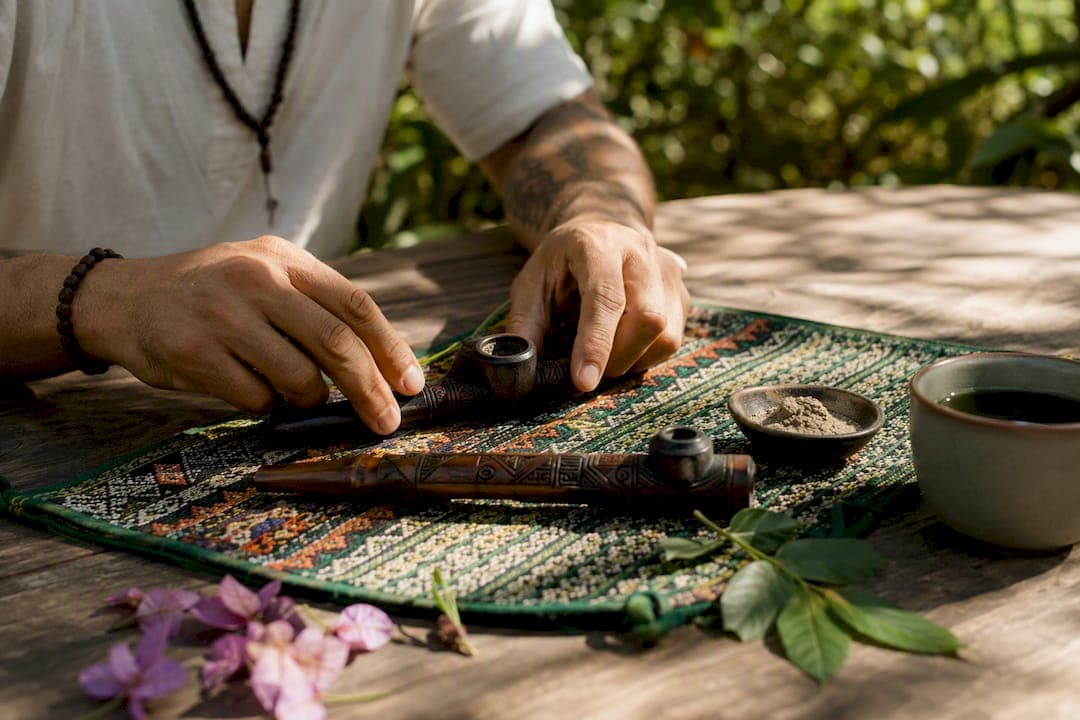
To use hapé, you apply it exclusively through the nose, using either a kuripe (a short self-applicator pipe) to blow it into your own nostril, or a tepi (a longer pipe) held by a partner or facilitator who blows it for you. Intention and hygiene matter as much as technique.
- Kuripe: self-applied, V-shaped, one nostril at a time
- Tepi: partner-assisted, longer pipe, used ceremonially between giver and receiver
- Application is nasal only, never sniffed or inhaled through the mouth
Start with a portion no bigger than a pine nut seed. Beginner doses run small on purpose, and "less is more" is the standard first-time rule among experienced practitioners.
If you have a cardiovascular condition, are pregnant, or take psychiatric medication, talk to a doctor before trying hapé. This guide covers respectful, traditional technique, not medical advice.
Key Takeaways
Respectful hapé practice depends on small, titrated doses, proper tool hygiene, clear consent in partner sessions, and sourcing that honors the Indigenous communities behind the medicine.
| Point | Details |
|---|---|
| Choose the right tool | Use a kuripe for solo practice and a tepi for partner-assisted ceremonial sessions. |
| Start small every time | Begin with a pine-nut-sized portion and wait before considering more. |
| Clean tools after each use | Knock dry, brush residue, and flush shared pipes with high-proof alcohol before storing. |
| Know your contraindications | Avoid hapé with cardiovascular conditions, pregnancy, nasal injury, or psychiatric medication without medical advice. |
| Source with intention | Pillars of Light hap'e offers 75+ ethically sourced hapé varieties and handcrafted kuripes and tepis from its Texas apothecary. |
This article is general information, not a substitute for advice from a qualified doctor. Consult a qualified healthcare professional about your own circumstances before acting on anything here.
Table of Contents
- How to Use Hapé Step by Step, With Kuripe or Tepi
- Kuripe, Tepi, and Blend Types: Choosing Your Tools
- Setting Up Your Space Before You Begin
- Who Should Avoid Hapé, and What to Do If Something Goes Wrong
- What to Expect After: Effects, Timing, and How Often to Use Hapé
- Approaching Hapé With Cultural Respect
- Why Sourcing and Craftsmanship Actually Matter
- Sources
How to Use Hapé Step by Step, With Kuripe or Tepi
Hapé (pronounced ha-PEH) is a powdered Amazonian snuff blown into the nostrils for grounding, clarity, or ceremonial focus. It comes from Indigenous traditions across the Amazon basin, and its application method hasn't changed much in generations: one tool, two nostrils, a breath, and an intention. Here's how each application method actually works.
Self-application with a kuripe
- Sit upright in a quiet space. Slouching restricts your airway and makes the transfer awkward.
- Take two or three slow breaths to settle before you load the pipe. This isn't optional ceremony fluff. It steadies your hand and your exhale.
- Load a small amount into the short end of the kuripe. Beginners should use a portion closer to a pine nut than a pea.
- Place the long end in your nostril, seal your lips around the mouthpiece, and blow in one firm, short breath.
- Pause. Let the first side settle for 30 to 60 seconds before doing the other nostril.
- Repeat on the other side with the same portion size, not more.
- Sit quietly afterward with your eyes closed. Don't rush into conversation or movement.
Partner-assisted application with a tepi
- The recipient sits upright, often with eyes closed, hands resting open on their knees.
- The facilitator loads the tepi, typically starting with the recipient's left nostril in many traditional lineages, though practices vary by lineage and facilitator.
- The facilitator takes a controlled breath, not a hard exhale. A tepi requires more airflow than a kuripe, and a facilitator with steady breath control makes the difference between a clean, calm application and a jarring one.
- A brief pause between nostrils gives the recipient time to process the first side. Rushing the second side is one of the most common mistakes new facilitators make.
- The recipient stays seated and quiet for several minutes after, ideally in the same space, with the facilitator nearby.
Dosing: how much is enough
Start small every single time you try a new blend, even if you've used hapé before. A portion the size of a pine nut seed is standard for a first dose. Wait several minutes, notice how you feel, and only consider a second application in a future session, not mid session. Amazonian ceremonial guides consistently reinforce this: more powder does not mean a deeper experience, and overdoing it usually just means a rougher one.
What not to do
- Never sniff or inhale hapé through your nose voluntarily. It has to be blown in, not drawn up.
- Don't use large portions "to feel more." That's not how the medicine works, and it raises your risk of discomfort or nausea.
- Don't share a kuripe or tepi with another person without disinfecting it first.
- Avoid using hapé while intoxicated, sleep-deprived, or otherwise impaired. Your judgment and breath control both suffer.
Before an assisted session, check these boxes
- Both people have talked through what to expect, including possible sneezing, watery eyes, or a strong initial sensation.
- The recipient has given clear consent, and knows they can say "stop" or "wait" at any point.
- The room is calm, private, and free of interruptions.
- Water and tissues are within reach before you start, not after.
Kuripe, Tepi, and Blend Types: Choosing Your Tools
Your first real decision isn't about blend flavor or origin. It's about which tool matches how you actually plan to practice.
A kuripe is a short, V-shaped pipe, typically 5 to 15 centimeters, designed for solo, self-directed use. It's the right choice for daily or personal practice, since you control the dose, the timing, and the pace without needing anyone else present. A tepi is longer, 15 to 35 centimeters, and built for one person to blow hapé into another's nostril. It's a ceremonial tool by design. The connection between giver and receiver is part of the point, which is why tepi work is usually reserved for guided sessions rather than casual use.
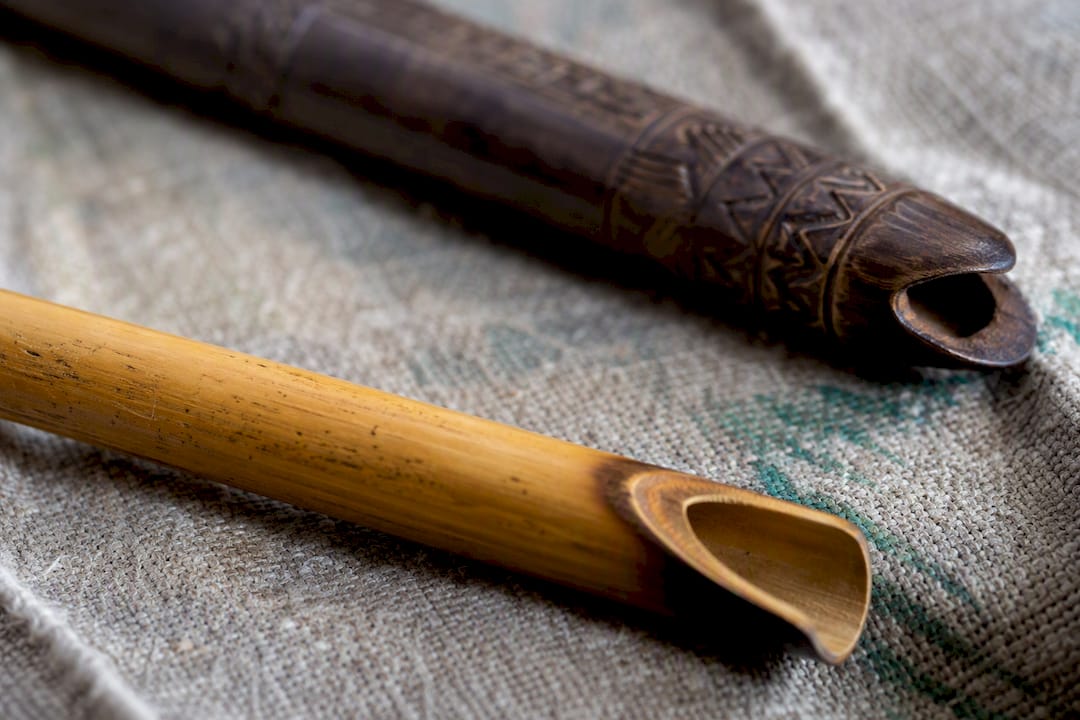
Materials matter beyond looks. Bamboo is light and traditional but absorbs moisture, so it needs to dry fully between uses. Palm wood and bone pipes are denser and more durable for daily handling. Carved or beaded pipes often carry tribal or personal symbolism, which is worth asking about before you buy one.
Blends vary just as much as the tools. Tobacco-forward blends tend to be more stimulating and grounding, often used for focus or clearing. Blends built around ash from other plants, sometimes mixed with mint, clove, or other botanicals, tend to feel softer and are often chosen for heart-centered or gentler intentions. Neither is "better." The right choice depends on what you're working toward that day.
Cleaning keeps a tool safe and functional:
- Knock the pipe gently against your palm to release loose residue after each use.
- Use a thin brush or a soft pipe cleaner to pull out anything stuck inside the channel.
- For shared tools, flush with high-proof alcohol periodically, then rinse and dry completely before storing it away.
Pro Tip: Never store a kuripe or tepi while it's still damp. Trapped moisture in bamboo or wood is exactly how mold takes hold, and you won't always see it before you use the pipe again.
Leftover hapé powder should go in an airtight container, labeled with the blend name and date, kept somewhere dry and away from direct light.
Setting Up Your Space Before You Begin
The technique matters, but so does everything around it. A rushed, cluttered environment changes the experience more than most people expect.
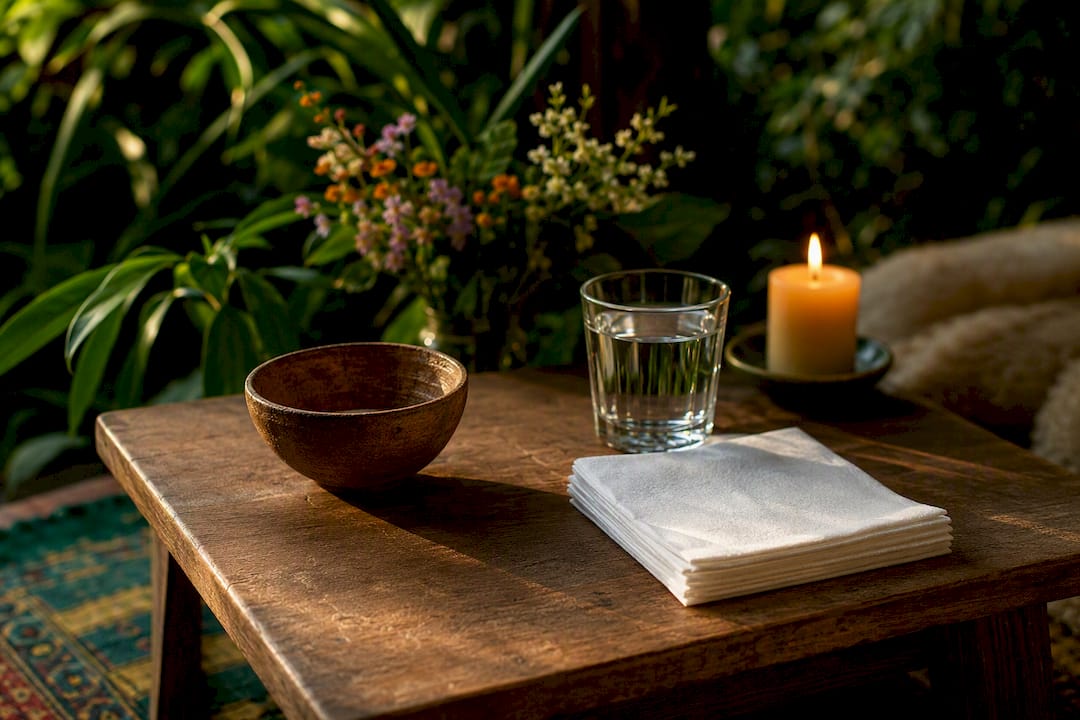
Before you sit down, gather what you need: water, tissues, a small bowl or bucket nearby in case of nausea, and a comfortable place to sit upright. Some people prefer silence. Others use soft instrumental music. Either works, as long as it's not distracting.
Take a moment to set an intention, even a simple one. Something like "I'm here to clear my head" or "I want to feel grounded before this decision" gives the session a direction instead of leaving it open-ended.
A short breathing sequence helps you arrive before you apply anything:
- Breathe in for a count of four.
- Hold for a count of four.
- Exhale slowly for a count of six.
- Repeat this three to five times.
Pro Tip: Do your breathing sequence right before loading the pipe, not ten minutes earlier. The point is to carry that calm straight into the application, not to relax and then rush back into a scattered headspace.
If you're working with a partner, agree beforehand on a stop signal, whether that's a word or a raised hand, and decide who handles water and quiet company afterward. Deciding this in advance, rather than mid-session, keeps the experience calm even if something unexpected comes up.
Who Should Avoid Hapé, and What to Do If Something Goes Wrong
Hapé is a tobacco-based product in most traditional blends, and tobacco carries real health considerations that deserve a straight answer, not a vague caveat.
Avoid hapé, or check with a doctor first, if you fall into any of these categories:
- You're pregnant or breastfeeding.
- You have a diagnosed cardiovascular condition, including high blood pressure or arrhythmia.
- You're sensitive to nicotine or have a history of nicotine-related health issues.
- You've had recent nasal surgery or currently have a nasal infection.
- You have a severe respiratory condition, including uncontrolled asthma.
Health-safety resources consistently recommend that anyone with cardiovascular or psychiatric conditions consult a clinician before using tobacco-based products, hapé included.
Nicotine content is also worth flagging if you take psychiatric medication, MAOIs, or stimulants. These combinations can amplify side effects in ways that aren't always predictable, so a conversation with your prescriber is worth the five minutes it takes.
If something does go wrong mid-session, here's how to respond:
- Dizziness: Sit or lie down immediately. Keep your head lower than your heart if you feel faint, and breathe slowly through your nose.
- Strong nausea or purging: Lean forward over your bucket or bowl. This is a known response to hapé for some people and usually passes within a few minutes. Sip water once it settles.
- Severe nasal pain or bleeding: Stop the session entirely. Pinch the nostril gently, sit upright, and seek medical attention if pain or bleeding doesn't resolve quickly.
None of this replaces a real medical evaluation. If you're unsure whether hapé is safe for you, the honest answer is to ask a doctor before your first session, not after a bad one.
What to Expect After: Effects, Timing, and How Often to Use Hapé
The first few minutes after application are usually the most intense. In the first 0 to 15 minutes, expect watery eyes, a runny nose, and sometimes a wave of nausea or a strong head sensation. Between 15 and 60 minutes, most people report a settling into clarity, calm, or grounded focus. By the end of the hour, the physical sensations have typically faded, though a sense of mental clearness can linger longer.
How often you use hapé matters more than most beginners assume. This isn't a daily habit tool. Frequent, tobacco-heavy use can build tolerance and nicotine dependence over time, the same risk that applies to any regular tobacco product. Spacing sessions out, rather than reaching for hapé every day, keeps the practice meaningful and keeps your body from adapting to it.
Weekly or occasional use tends to preserve the medicine's effect far better than daily use does.
A few integration habits make a real difference:
- Journal for five minutes right after your session. Note what came up, what felt different, and anything you want to sit with longer.
- Do a short grounding practice, like feeling your feet on the floor or a slow walk outside, before jumping back into your day.
- Wait at least 30 to 60 minutes before driving or doing anything that requires sharp focus.
- Track your dose and reaction each time. If a portion felt like too much, note it and use less next time.
Pro Tip: Keep a simple log, even three lines per session, noting blend, dose, and how you felt an hour later. Patterns show up faster than you'd expect, and it takes the guesswork out of adjusting your next dose.
Approaching Hapé With Cultural Respect
Hapé didn't come from a wellness trend. It comes from specific Indigenous lineages across the Amazon, and treating it as a sacred medicine rather than a novelty product changes how you should engage with it.
Before you buy or use a blend, ask a few honest questions:
- Where does this blend come from, and which community made it?
- Was it prepared following traditional protocols, including any prayer or ceremony involved in its making?
- Does purchasing this blend fairly compensate the Indigenous community that produced it?
Resources on traditional tobacco stewardship are clear that respectful use means honoring the knowledge behind the medicine, not just the substance itself. That means avoiding vendors who can't answer basic provenance questions, and being wary of anyone marketing hapé purely as a wellness hack stripped of its origins.
Pro Tip: If a seller can't tell you which region or community a blend comes from, treat that as a red flag, not a minor detail. Provenance is part of what you're paying for.
Prioritize vendors who show real partnerships with Indigenous producers, transparent sourcing, and some visible commitment to the rainforest ecosystems these plants come from.
Why Sourcing and Craftsmanship Actually Matter
Not every hapé blend or pipe on the market comes from the same place, and the differences aren't cosmetic.
Pillars of Light hap'e is a Texas-based apothecary carrying more than 75 varieties of hapé, alongside handcrafted kuripes, tepis, and Amazonian master plant products, with both in-store and online access. The business builds its offering around a few consistent commitments:
- Ethical sourcing practices, with attention to fair relationships with Indigenous producers.
- A focus on cultural preservation and respect for the traditions these medicines come from.
- Support for rainforest preservation tied to the communities that steward these plants.
- Educational content published through blog and social channels for practitioners still learning.
When you're evaluating a kuripe or tepi before buying, look closely at the craftsmanship. Seams should be smooth, the bore should be clean and unobstructed, and carved or beaded details should look intentional rather than mass-produced. Blend labeling should tell you something real, not just a marketing name. Look for tribal provenance, the base ingredients, and whether the blend leans tobacco-forward or plant-ash based.
If you want a fuller picture of what's involved in a first hapé session, the beginner's guide to kuripes and tepis walks through tool selection in more depth.
A note on approaching this practice slowly
My understanding of hapé comes from studying how these traditions actually work, not from treating it as a shortcut to insight. The medicine rewards patience. Rushing your dose, your breath, or your first ceremony almost always produces a rougher experience than a slower, more deliberate one does.
If you're drawn to tepi work specifically, find an experienced facilitator before attempting it with a friend who has no more knowledge than you do. Partner-assisted sessions carry real weight, and that weight deserves someone who has sat with the medicine long enough to guide it responsibly.
Where to Find Ethically Sourced Hapé and Ceremonial Tools
If you're ready to build a respectful practice rather than experiment with whatever's cheapest online, sourcing matters as much as technique. Pillars of Light hap'e carries over 75 hapé varieties alongside handcrafted kuripes and tepis, all shipped from its Texas location with the same ethical sourcing standards discussed throughout this guide.

Before you buy anywhere, ask about tribal provenance, blend composition, and whether the community that made it was fairly compensated. That's not a formality. It's the difference between supporting a tradition and extracting from one. If you're ready to start or expand your practice, the ceremonial tools collection is a good place to compare kuripe and tepi craftsmanship side by side, and check current availability before your next session.
Sources
- Rapé: The Ultimate Guide to Amazonian Snuff – amama
- Tobacco facts sheet — UTEP Herbal Safety
- Traditional tobacco — Keep It Sacred (ITCMI)