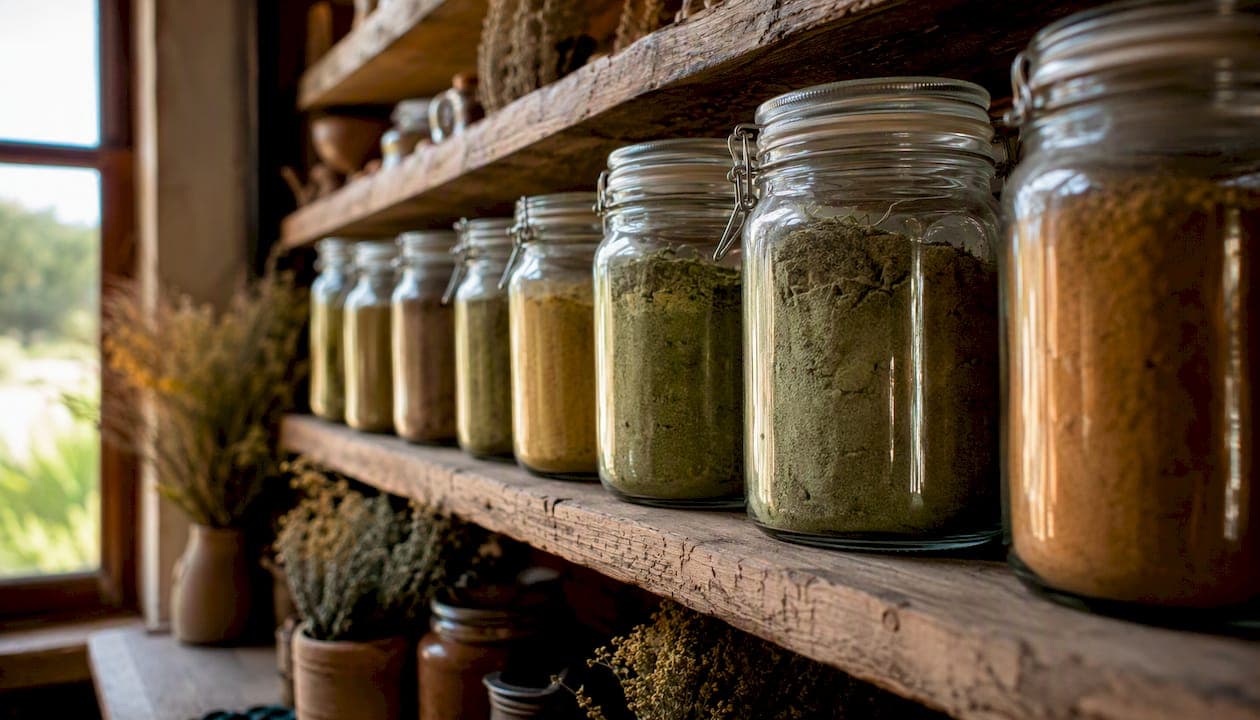
In Texas, the single best thing you can do right now is transfer your hapé into an amber or cobalt glass jar with a gasket-sealed or clamp lid, drop in a food-grade silica gel packet, and place it in the coolest, darkest spot in your home. That one move addresses the two forces that quietly destroy Rapé blends here: heat and humidity.
- Container: Amber or cobalt glass with a mechanical gasket seal, not a friction-fit lid. Dark glass blocks light-induced degradation and prevents chemical migration that plastic allows over time.
- Seal: Gasket or clamp closure only. A friction-fit lid lets humid air seep in every time the pressure shifts.
- Desiccant: One food-grade silica gel packet sized for your jar volume. Replace or recharge it periodically.
- Hygrometer: Keep a small digital hygrometer near your storage spot. Aim to keep relative humidity below about 60% and temperature below about 25°C (77°F).
- Refrigeration caveat: Cold storage can work, but only in a truly airtight container. Always let the jar warm to room temperature before opening to prevent condensation from forming on the powder inside.
Pro Tip: Keep your bulk supply sealed and untouched. Decant only a small daily-use jar each morning with a clean, dry implement. This limits how often the main jar is exposed to ambient air.
Table of Contents
- What you need to remember about Texas heat and hapé storage
- Why Texas humidity is genuinely hard on hapé
- Pillars of Light hap'e has your storage starter-kit ready
- Useful sources for deeper reading
What you need to remember about Texas heat and hapé storage
- RH target: Below 60%. Relative humidity above 60% allows dormant fungal spores to reactivate, even in powders that feel completely dry.
Why Texas humidity is genuinely hard on hapé
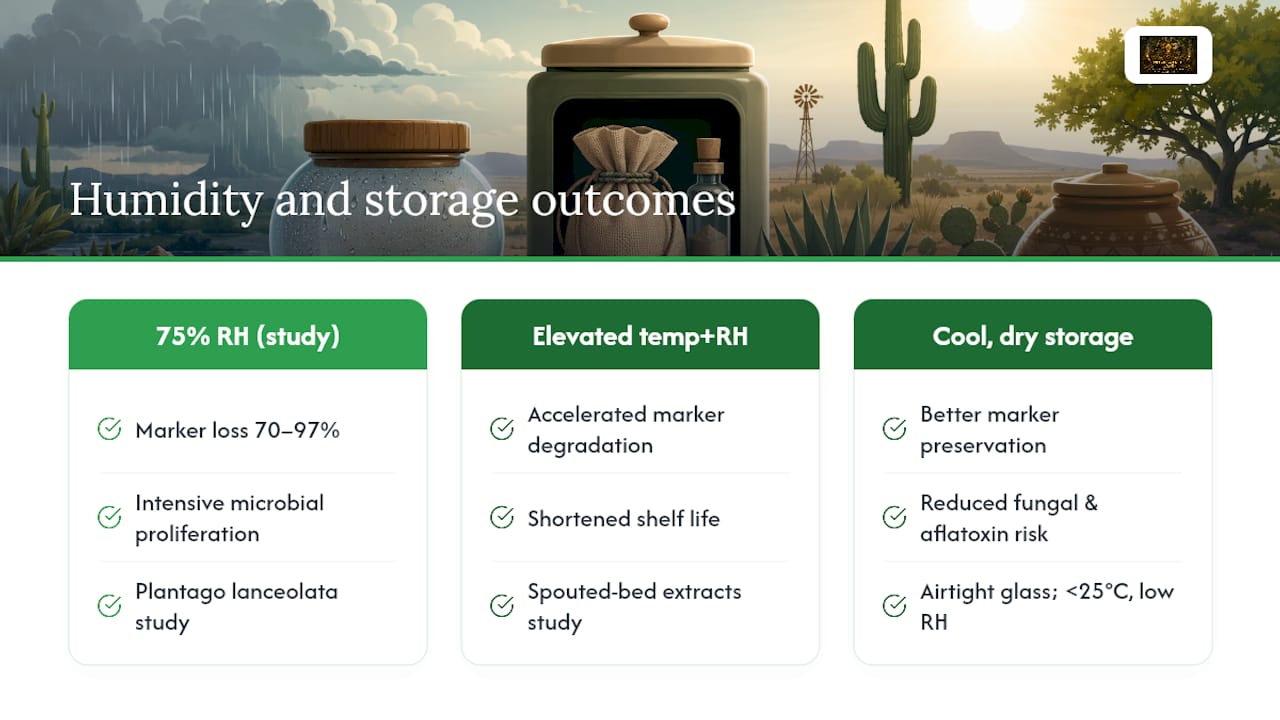
Texas summers routinely push outdoor RH above 70%, and indoor RH follows unless you run active climate control. That matters because research on dried Plantago lanceolata found that storage at 75% RH caused losses of key bioactive markers between 70–97%, alongside intensive microbial proliferation. A separate study on spouted-bed dried botanical extracts found that elevated temperature and RH accelerate marker degradation and shorten shelf life considerably. The science is consistent: moisture is the single most reliable driver of contamination in dried plant powders, and airtight glass with minimal air exposure is the safest long-term vessel.
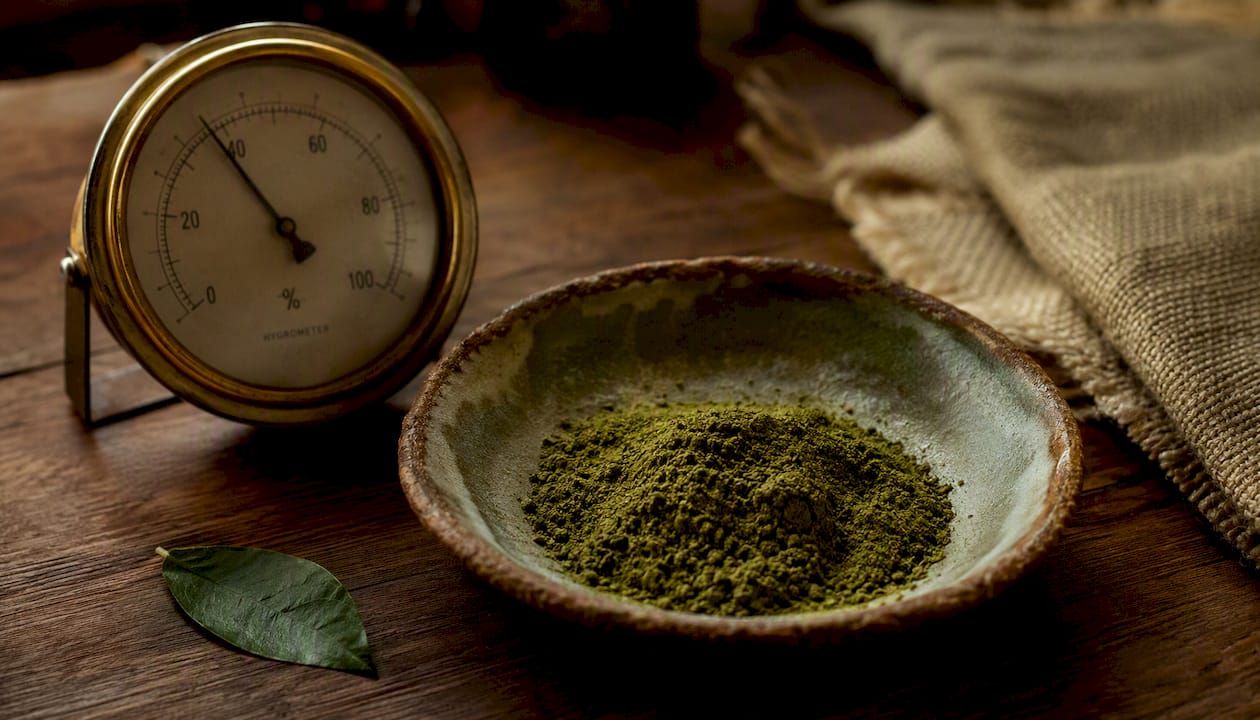
For storage in warm, humid climates, keeping temperatures below 25°C and RH as low as practically possible reduces fungal growth and aflatoxin risk. A small dehumidifier in a storage closet can hold RH below that 60% threshold year-round in a Texas home.
Pillars of Light hap'e has your storage starter-kit ready

Pillars of Light hap'e is a local Texas apothecary in Old Town Spring carrying 75+ authentic Rapé blends alongside the storage supplies you need to protect them. The ceremonial items collection includes amber glass jars with gasket seals, food-grade silica gel packets, and small digital hygrometers — everything on the checklist above, sourced and stocked in Texas. Stop by the Old Town Spring retail location for a hands-on storage demo, or order online at pillarsoflighthape.com and get your starter kit shipped directly to you.
Useful sources for deeper reading
- National Center for Home Food Preservation (NCHFP)
- EPA — Mold
- Effect of High Relative Humidity on Dried Plantago lanceolata L. Leaves during Long‐term Storage
- Quality evaluation of Alpinia oxyphylla after Aspergillus flavus infection for storage conditions optimization
- Storage and contamination risk in herbs (AncientHerbsWisdom)
- Pillars of Light Hapé — Hapé apothecary
Statistic to keep in mind: At 75% relative humidity, key bioactive markers in dried plant matter dropped by 70–97% during long-term storage — a range that makes the case for humidity control more clearly than any general rule of thumb.